Chef Thomas
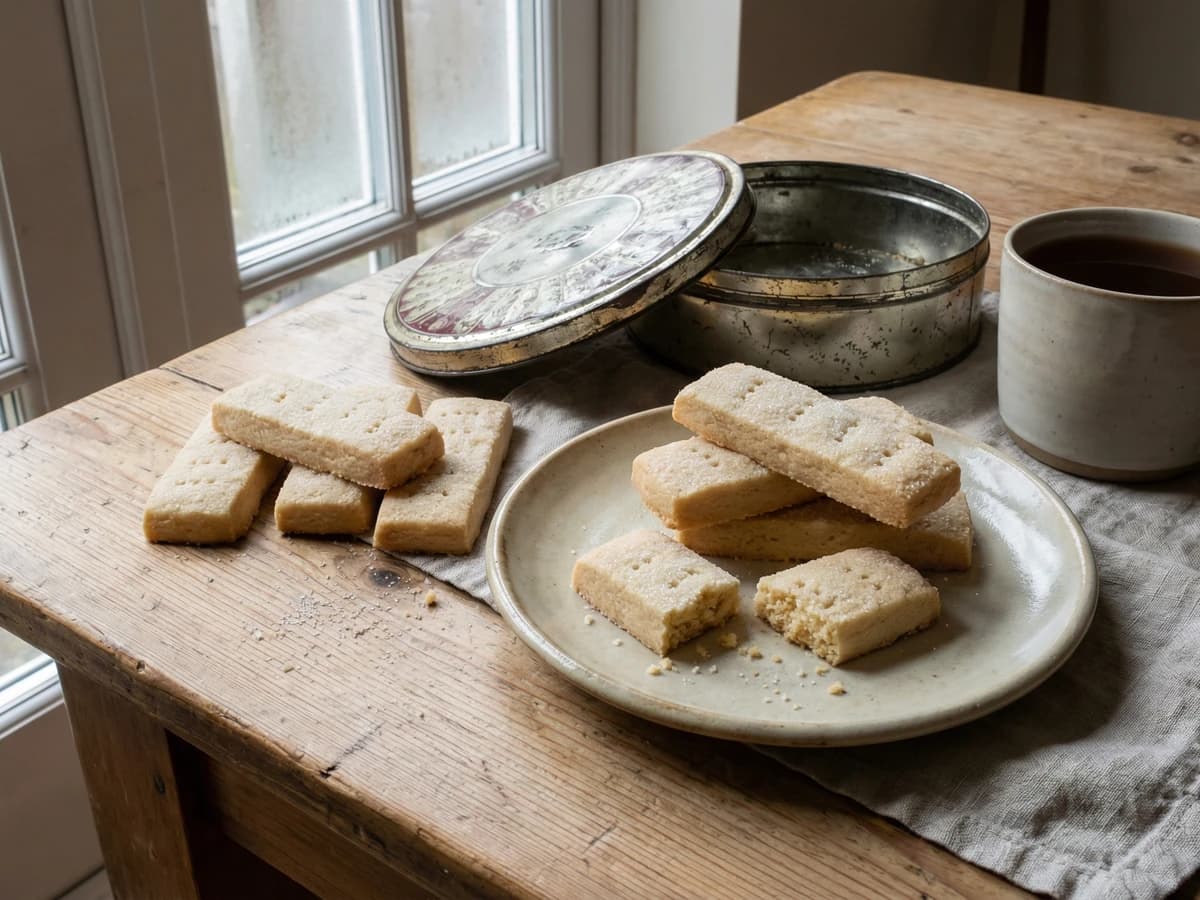
All-Butter Shortbread Fingers
The plainest biscuit in the tin and the hardest one to stop eating, three ingredients and a slow oven turning good butter into something quietly perfect with a cup of tea.
A cooking platform built around craft, culture, and the stories behind what we eat.
Created by Chef Thomas
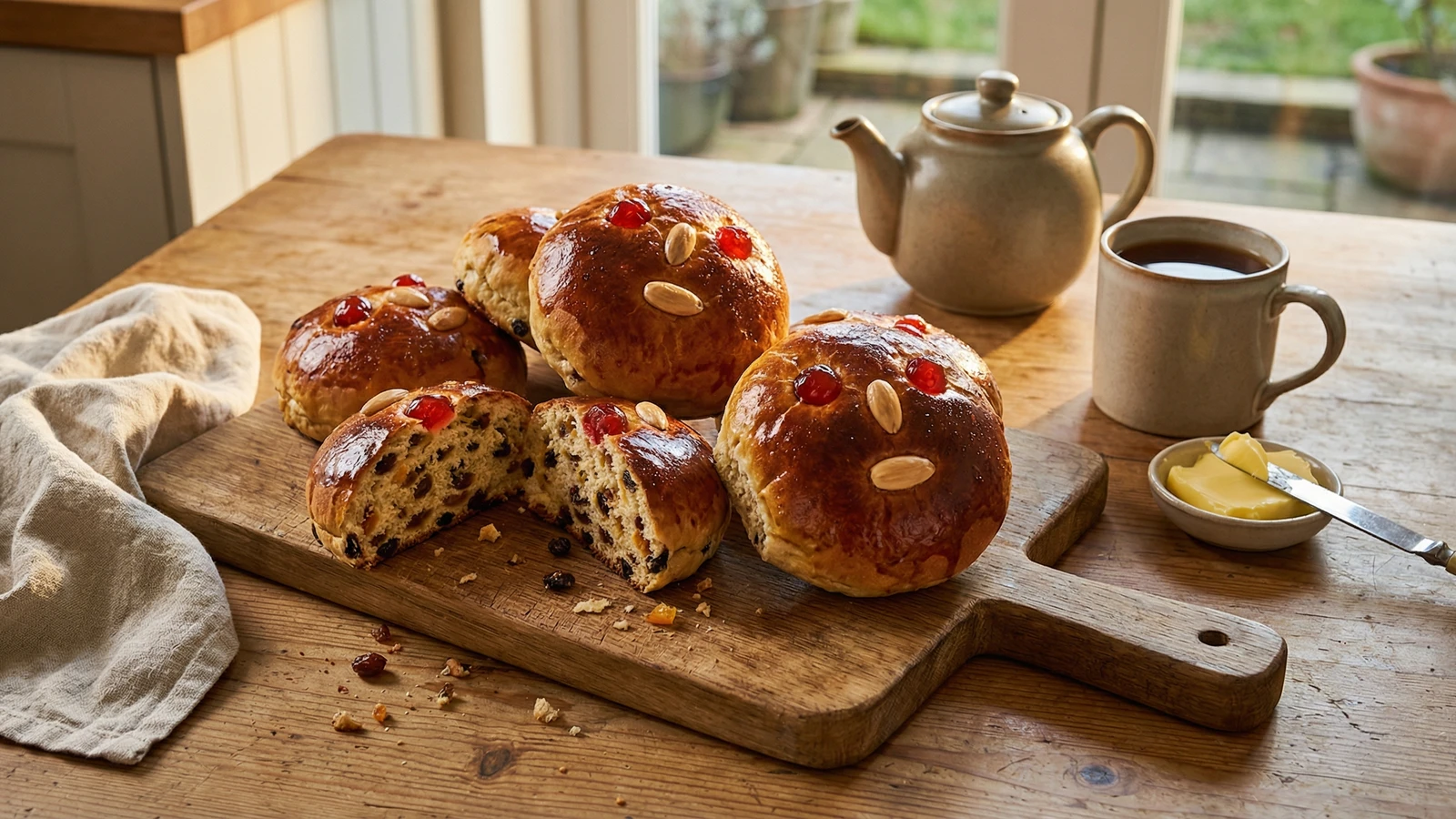
Burnished, fruit-studded scone-cakes from the Dales, glossy with egg wash and grinning back at you with cherry eyes and almond teeth, the kind of bake that makes a grey afternoon feel like an event.
There's a particular kind of afternoon these are made for. The light has gone flat by three. The wind is doing something irritable at the windows. You've been promising yourself you'd put the kettle on for an hour and not quite managing it. That's when a fat rascal earns its name.
They're a Yorkshire thing, properly. Half scone, half rock cake, half fruitcake, which is too many halves but that's the trouble with describing them. Bettys of Harrogate made them famous and rightly so, but the recipe is older than any tearoom and belongs in home kitchens. Spice, citrus zest, dried fruit, butter rubbed cold into flour, and a glossy egg-washed top studded with almonds and glacé cherries arranged as a face. The face is non-negotiable. A fat rascal without a face is just a fruit scone with delusions.
The trick, if there is one, is restraint. Don't overwork the dough. Don't be shy with the spice. Don't bake them pale; they want to come out of the oven properly burnished, almost too dark, the glaze caught and shining and the almonds tipped with brown. And don't, whatever you do, eat one straight away. Five minutes on the rack is the difference between a hot, crumbly mouthful and one that holds together long enough to taste like itself.
I wrote them down in the notebook the first time I made a batch that came out right. The note says: cherries for eyes, almonds for grin, January, two cups of tea. That was years ago. The recipe hasn't changed since.
Quantity
250g
Quantity
1 teaspoon
Quantity
1 teaspoon
Quantity
generous grating
Quantity
pinch
Quantity
125g
cubed
Quantity
75g
Quantity
75g
Quantity
50g
Quantity
50g
chopped
Quantity
50g
halved
Quantity
1
zested
Quantity
1
zested
Quantity
1
Quantity
75ml
plus extra for brushing
Quantity
16
for the tops
Quantity
8
halved, for the tops
Quantity
1
beaten with a splash of milk, for glazing
| Ingredient | Quantity |
|---|---|
| self-raising flour | 250g |
| baking powder | 1 teaspoon |
| mixed spice | 1 teaspoon |
| fresh nutmeg | generous grating |
| fine sea salt | pinch |
| cold unsalted buttercubed | 125g |
| golden caster sugar | 75g |
| currants | 75g |
| raisins | 50g |
| mixed candied peelchopped | 50g |
| glacé cherrieshalved | 50g |
| unwaxed lemonzested | 1 |
| unwaxed orangezested | 1 |
| large egg | 1 |
| double creamplus extra for brushing | 75ml |
| blanched almondsfor the tops | 16 |
| glacé cherrieshalved, for the tops | 8 |
| egg yolkbeaten with a splash of milk, for glazing | 1 |
Set the oven to 200C/180C fan. Line a heavy baking sheet with parchment. The oven needs to be properly hot when these go in. A timid oven gives you pale, sad fat rascals, and there's no recovery from that.
Tip the flour, baking powder, mixed spice, nutmeg and salt into a large bowl. Add the cubed butter. Rub it through the flour with your fingertips, lifting your hands to let air in, until the mixture looks like coarse breadcrumbs with a few flecks of butter still visible. Don't overdo it. A bit of unevenness gives you flakes, and flakes are what you want.
Stir in the sugar, currants, raisins, candied peel, halved cherries, and the lemon and orange zest. Use a knife or your hand to fold it through. The fruit should be well distributed but you don't need to be precious about it. The zest is doing more work than you'd think. It's the thing that lifts a fat rascal out of stodgy territory and makes it taste like Yorkshire on a clear afternoon.
Beat the egg with the cream in a jug, then pour most of it into the bowl, holding back a tablespoon or so. Bring it together with a butter knife, then your hands, until you have a rough, slightly sticky dough that just holds its shape. Add the rest of the liquid only if it feels dry. You're not after a smooth dough. You're after something rugged that will hold its shape on the tray.
Divide the dough into eight roughly equal lumps. Shape each into a thick round, about three centimetres tall, and place on the lined tray with plenty of space between them. They should look hand-shaped and a bit irregular. That's the whole charm of them. A fat rascal that looks like it came out of a machine has missed the point.
Brush the tops generously with the egg yolk glaze. Press two almonds and two cherry halves into the top of each one to make a face: two cherries for eyes, two almonds for the mouth, or however the mood takes you. They're called rascals for a reason. Give them a bit of character. Brush the almonds and cherries with a little more glaze so they catch the colour in the oven.
Slide the tray into the hot oven and bake for eighteen to twenty minutes. You're looking for a deep, burnished gold, not a pale tan. The tops should be glossy where the glaze has caught, and the bases should sound hollow when you tap them. The kitchen will smell of warm spice and citrus and butter, and you'll know they're ready before the timer does. Trust your nose.
Lift the tray out and let the rascals settle on the sheet for five minutes, then move them to a wire rack. Eat them just warm, when the fruit is still soft and the butter inside has had a moment to relax. Split one open and add a thick slice of cold salted butter if you like, though they're rich enough to stand on their own. Put the kettle on. We're only making tea.
1 serving (about 110g)
Culinary guides, cultural storytelling, and the editorial depth that makes cooking meaningful.
Discover Culinary ExplorerChef Thomas
The plainest biscuit in the tin and the hardest one to stop eating, three ingredients and a slow oven turning good butter into something quietly perfect with a cup of tea.
Chef Thomas
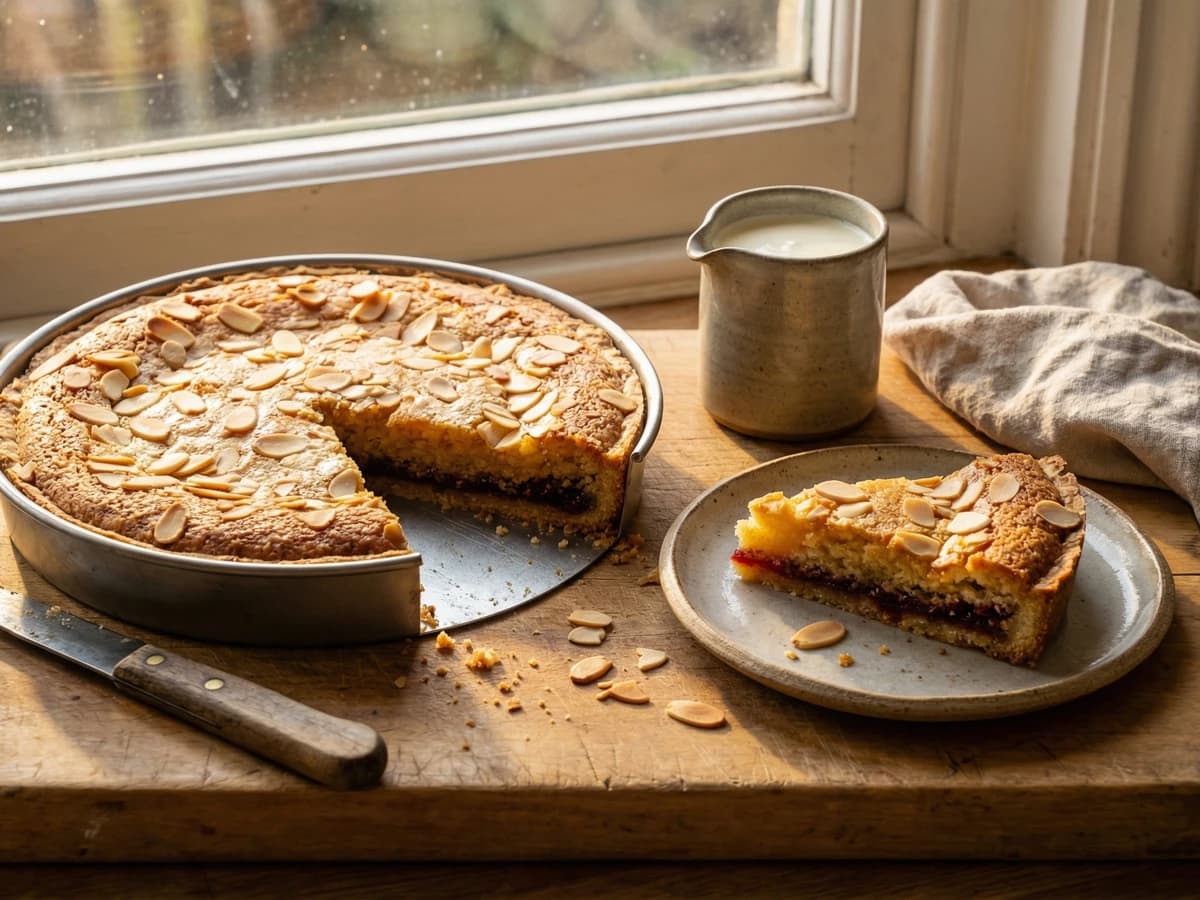
A proper Bakewell tart with buttery shortcrust, a thick layer of raspberry jam, and almond frangipane baked golden under a scattering of flaked almonds. No icing. No nonsense.
Chef Thomas
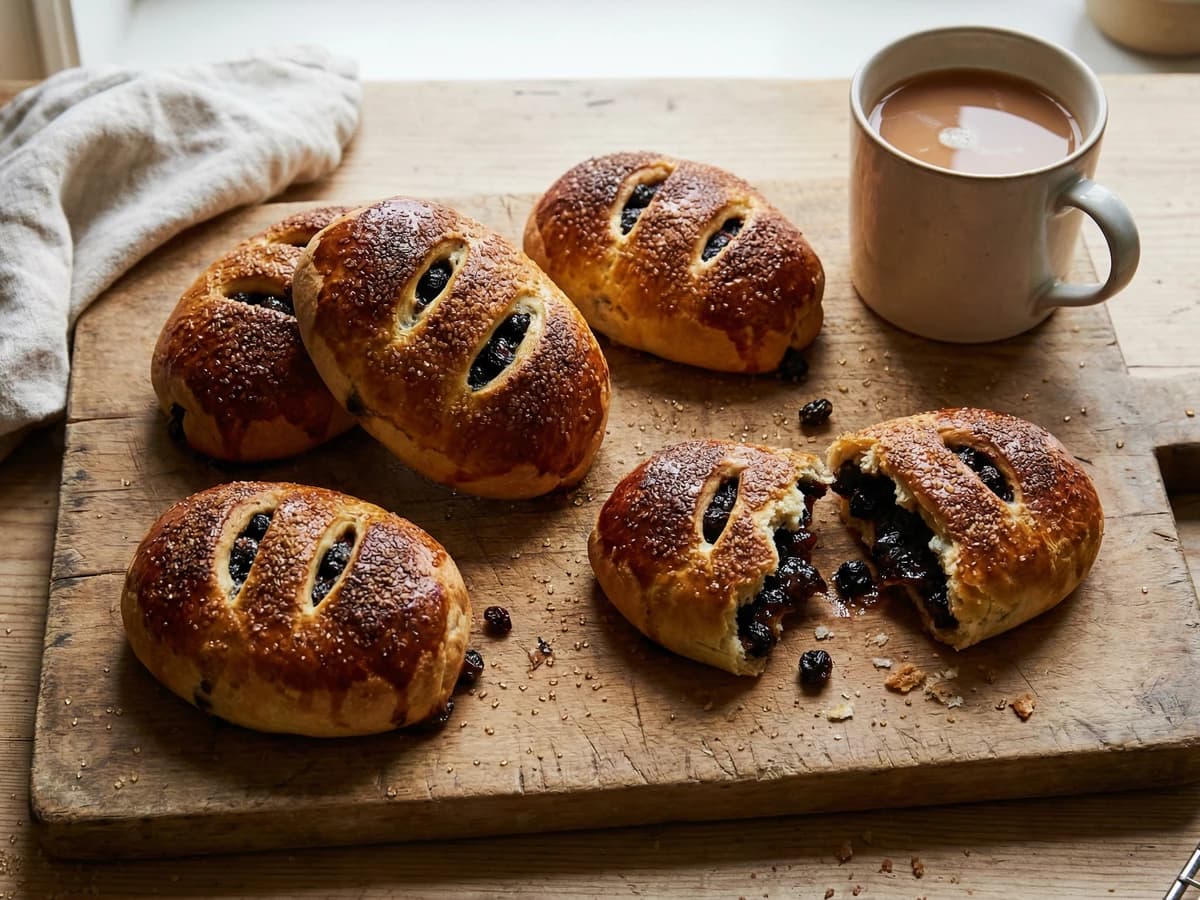
Oval pastries filled with rum-soaked currants and spice, baked until the tops crackle with sugar. The kind of thing to make on a wet Sunday afternoon when you want the kitchen to smell of something.
Chef Thomas
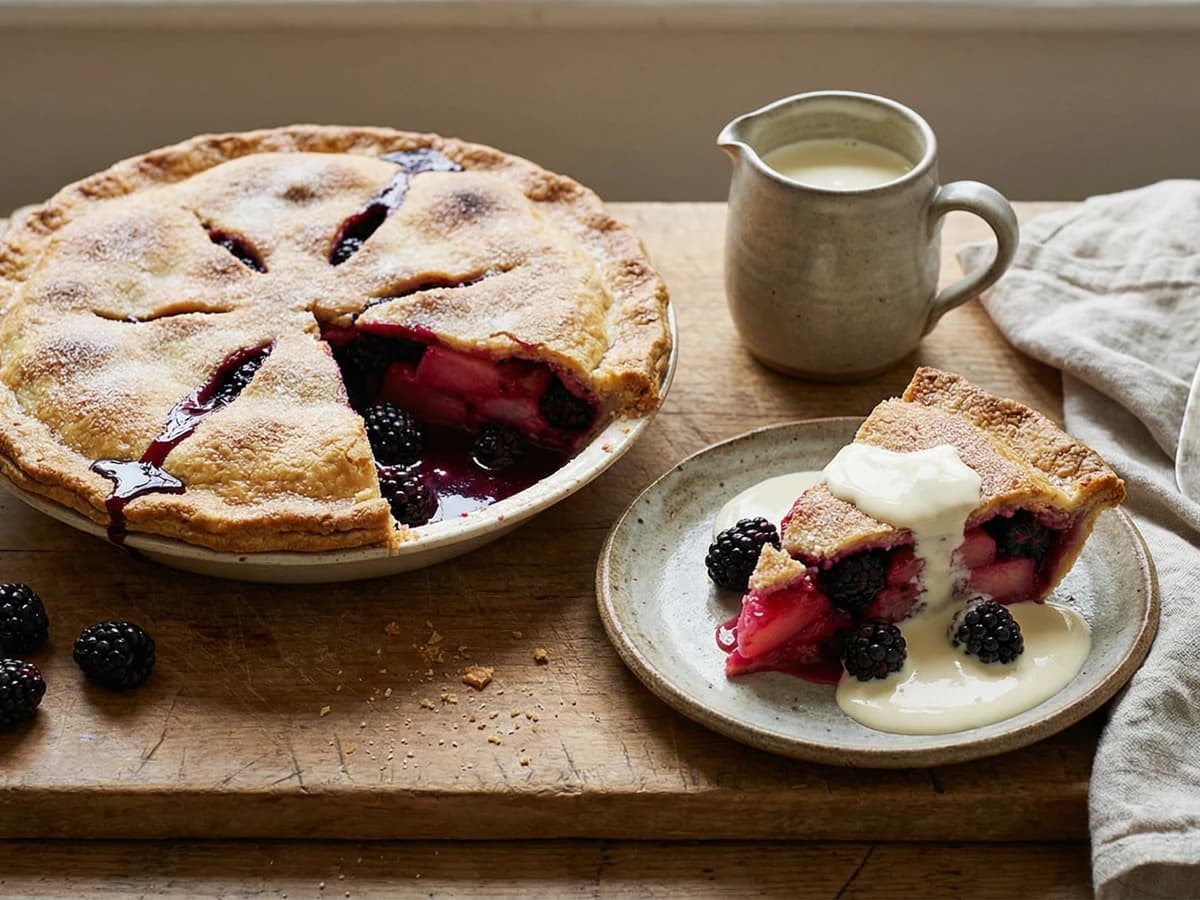
A proper hedgerow pie of Bramley apples and blackberries under a sugar-crusted pastry lid, the kind of pudding that turns a Sunday in September into something you'll remember.