
Chef Takumi
Agar Jelly with Anko and Fruit (あんみつ, Anmitsu)
Anmitsu looks like a tray of small tasks, but the work is calm: dissolve the kanten fully, chill the pieces clean, then let fruit, anko, and kuromitsu do the speaking.
A cooking platform built around craft, culture, and the stories behind what we eat.
Created by
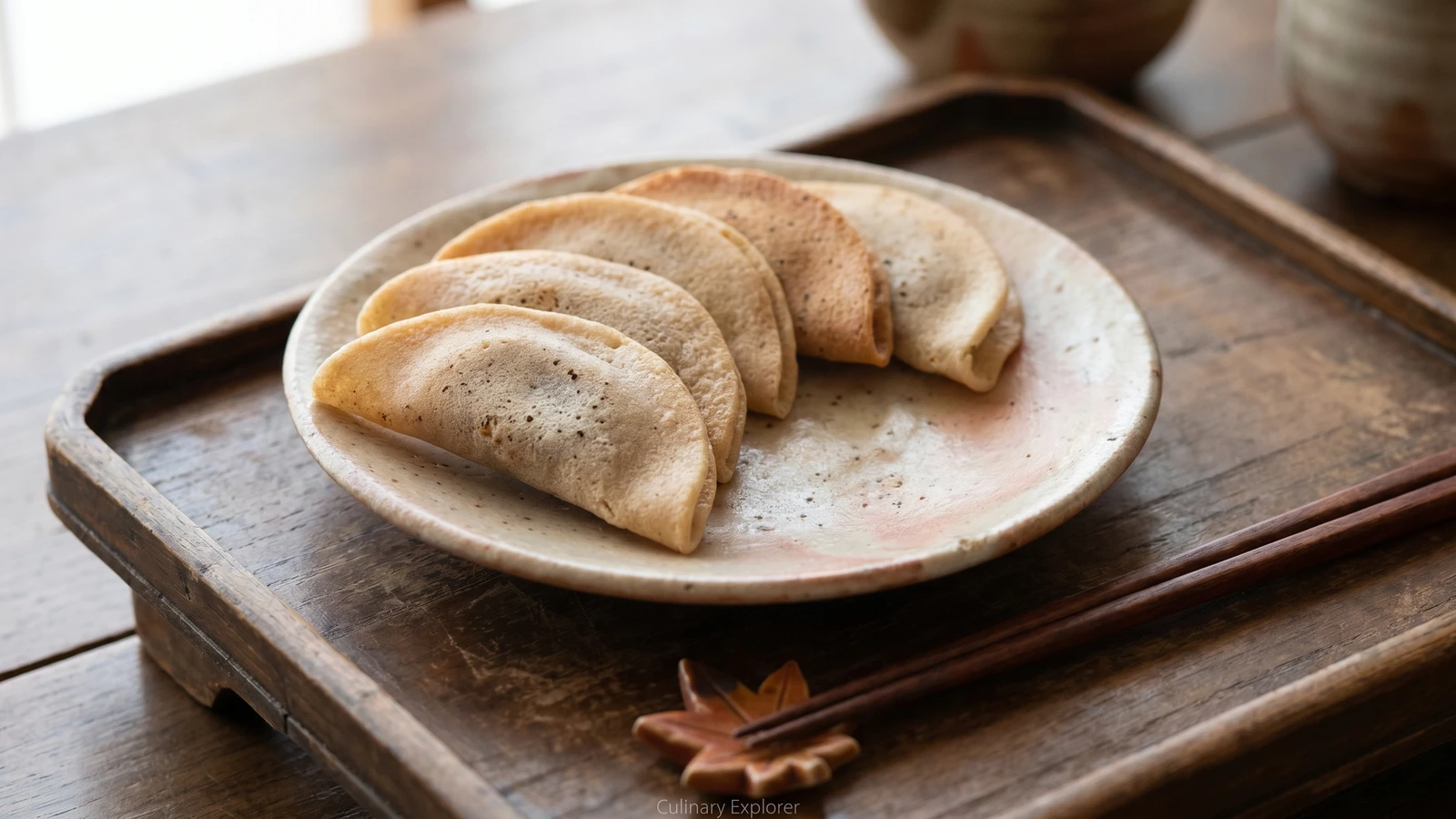
Yatsuhashi is Kyoto made portable: rice flour, sugar, and nikki cinnamon pressed thin, baked dry, then curved while warm into a crisp little bridge.
Yatsuhashi looks like a souvenir, which is a dangerous disguise. The hard-baked kind is older and plainer than the soft folded sweets many travelers meet first: a thin rice-flour wafer, sweet with sugar, warm with nikki cinnamon, curved while it is still willing to bend.
This is not a difficult sweet. It is only particular. The whole matter is thinness and timing. Roll the dough too thick and it turns tough before it turns crisp. Wait too long after baking and the wafer snaps instead of curving. Work while it is warm, and it obeys like a very small student with strong opinions.
The flavor is simple enough that nothing hides. Use fine joshinko, not coarse rice flour, because a smooth dough bakes into a clean, even wafer. Use nikki if you can find it, the Japanese cinnamon with a deeper, slightly woody warmth; cassia cinnamon is a sensible stand-in, but it is not quite the same voice. Honmono here is modest: thin dough, dry bake, quick curve, and enough empty space on the tray that each piece can cool crisp.
Yatsuhashi is closely tied to Kyoto and is commonly dated to 1689, soon after the death of Yatsuhashi Kengyō, the blind koto master whose name the sweet is said to honor. The older baked form is curved in a way that recalls the bridge of a koto, while the soft unbaked nama-yatsuhashi became widely popular much later, especially in the twentieth century as a Kyoto souvenir. The seasoning called nikki came through the older medicinal and confectionery trade, which is why the sweet tastes warming rather than merely sugary.
Quantity
100g
plus a little more for dusting
Quantity
70g
Quantity
1 1/2 teaspoons
or cassia cinnamon
Quantity
1 pinch
Quantity
90ml
Quantity
1 teaspoon
for parchment if needed
| Ingredient | Quantity |
|---|---|
| joshinko (fine Japanese rice flour)plus a little more for dusting | 100g |
| granulated sugar | 70g |
| nikki powder (Japanese cinnamon)or cassia cinnamon | 1 1/2 teaspoons |
| fine sea salt | 1 pinch |
| boiling water | 90ml |
| neutral oil (optional)for parchment if needed | 1 teaspoon |
Whisk the joshinko, sugar, nikki, and salt in a heatproof bowl until the cinnamon is evenly scattered. Do this dry first, because once hot water touches rice flour it thickens quickly, and any little pocket of spice will stay exactly where it is.
Pour in the boiling water and stir hard with a sturdy spoon until the mixture gathers into a warm, sticky dough. The heat partly cooks the rice flour, which lets the dough roll thin instead of crumbling at the edges. When it is cool enough to touch, knead it in the bowl for two minutes until smooth.
Cover the dough and let it rest for ten minutes. This is not ceremony. The rice flour needs time to drink the water evenly, and a rested dough rolls thinner with less tearing.
Heat the oven to 160C. Dust parchment lightly with joshinko, set the dough on it, dust the top, and roll it into a rectangle about 2mm thick. Turn and lift the dough as you roll so it doesn't glue itself down. Thinness is the first secret: a thick wafer dries hard, not crisp.
Trim the edges, then cut the sheet into rectangles about 5 by 8cm. Slide the parchment onto a baking sheet and separate the pieces slightly. Give them room, because crowded wafers trap moisture at the edges and soften instead of drying cleanly.
Bake for 14 to 18 minutes, turning the tray once, until the wafers are dry to the touch and just beginning to color at the edges. They should smell of warm cinnamon and toasted rice, not browned sugar. If they darken too much, the nikki turns harsh.
Working one wafer at a time, lift it while still warm and bend it gently over a rolling pin, a clean bottle, or the handle of a wooden spoon. Hold it for a few seconds until it takes the curve. Once cool, it will snap, which is useful for eating and unhelpful for shaping.
Set the curved wafers on a rack and let them cool completely. If any feel leathery rather than crisp, return them to a low oven for three to five minutes, then cool again. Yatsuhashi keeps because it is dry; leave moisture in it and the old Kyoto souvenir becomes merely a tired biscuit.
1 serving (about 8g)
Culinary guides, cultural storytelling, and the editorial depth that makes cooking meaningful.
Discover Culinary ExplorerChef Takumi
Anmitsu looks like a tray of small tasks, but the work is calm: dissolve the kanten fully, chill the pieces clean, then let fruit, anko, and kuromitsu do the speaking.

Chef Takumi
A cool square of almond-scented milk, set softly and served with mikan in thin syrup, is dinner-party food without theater. The only stern demand is restraint with the fragrance.

Chef Takumi
Azuki bar asks for patience twice: once while the beans soften, and once while the frozen bar yields. That hardness is not a flaw. It is the character of the thing.
Chef Takumi
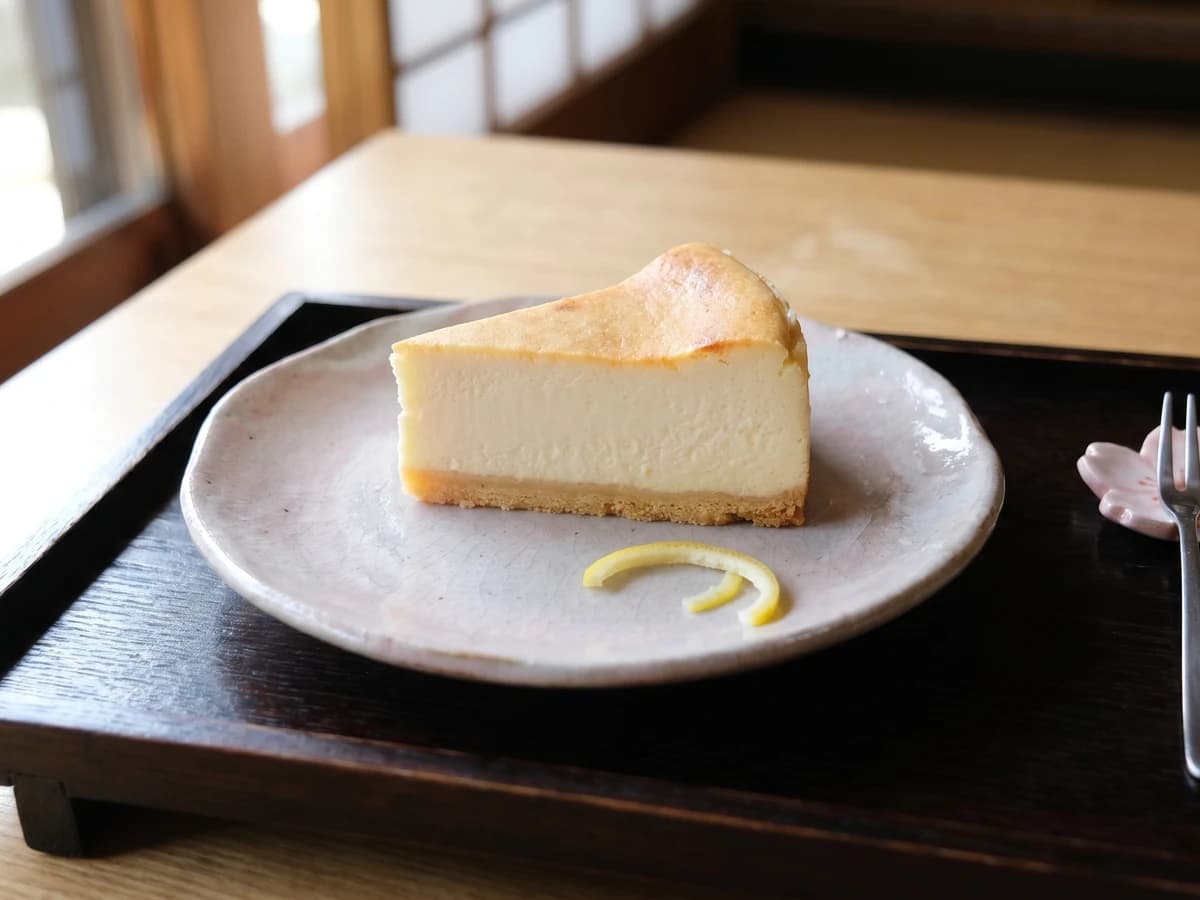
A Japanese baked cheesecake is not trying to float away. It is dense, smooth, and quietly tart, with a clean slice doing the work of decoration.