
Chef Lesia
Buzhenyna (буженина, garlic-studded roast pork)
A whole pork neck takes garlic into little knife pockets, roasts until the crust goes dark and fragrant, then rests overnight so every cold slice tastes better than shop ham.
A cooking platform built around craft, culture, and the stories behind what we eat.
Created by
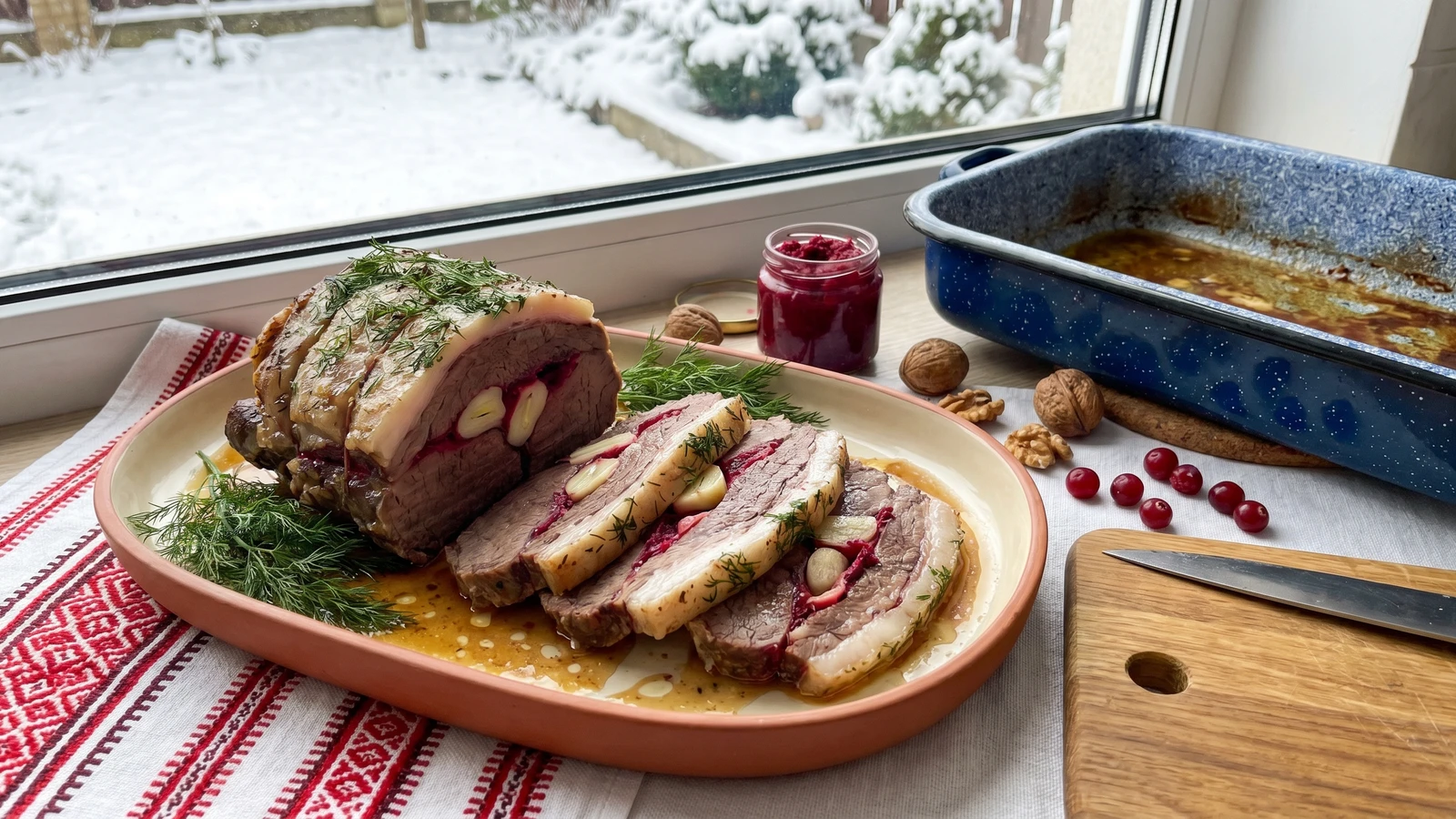
Cut into it and the roast shows its secret: garlic, salo, and beet tucked through the lean beef, basting it from inside while the slices turn crimson at the seams.
The first slice is the drama: brown roast beef cut through with white salo, cured pork fat, red beet, and pale garlic, every piece showing where the cook hid the good things. It looks almost embroidered, but nothing here is decoration. The fat is inside because lean beef needs help from the middle, not a polite brushing on top that melts away before the meat has learned anything.
This is celebration food for cold weather, the kind you roast ahead and serve in generous slices with khrin z buriakom, beet horseradish, and black bread to chase the juices. My southern table would put pickled tomatoes nearby, something sharp from the litnya kuhnia, the summer kitchen, because rich meat wants a sour voice beside it. Aunt Nadia's note on this one says only, 'don't make tunnels, make pockets,' which is rude as instruction and perfect as technique.
The one step that decides the dish is the shpyhuvannia, the larding. Cut narrow pockets with the grain, push in chilled salo, garlic, and beet, then let the meat close around them. As the joint roasts, the salo softens slowly and bastes from the inside out; the beet stains the slices crimson at the seams. Rest it longer than your hunger wants. A roast that has breathed out onto the board will slice cleanly and feed everyone with less fuss.
Shpyhovana comes from the Ukrainian verb shpyhuvaty, to lard or stud meat, a technique found in Ukrainian household notebooks and early twentieth-century cookbooks for festive beef roasts. It sits at the meeting point of city cookery and village pantry logic: a lean, expensive joint is made generous with salo, garlic, roots, and slow covered roasting. Beet batons are not universal, carrot is common in many central and western versions, but the red seams suit southern tables where beet, sunflower oil, and sharp preserved vegetables often share the celebration spread.
Quantity
1.8 to 2 kg
with a little surface fat
Quantity
16g
Quantity
150g
chilled until firm and cut into thin batons
Quantity
8
cut into long slivers
Quantity
1
peeled and cut into thin batons
Quantity
1
cut into thin batons
Quantity
2 teaspoons
Quantity
1 teaspoon
Quantity
1 tablespoon
Quantity
3 tablespoons
divided
Quantity
2
thickly sliced
Quantity
1
sliced into coins
Quantity
2
Quantity
6
lightly crushed
Quantity
250ml
Quantity
2 tablespoons
Quantity
to serve
chopped
Quantity
to serve
| Ingredient | Quantity |
|---|---|
| boneless beef topside, silverside, or rump jointwith a little surface fat | 1.8 to 2 kg |
| fine sea salt | 16g |
| unsmoked salted salo or cured pork fatbackchilled until firm and cut into thin batons | 150g |
| garlic clovescut into long slivers | 8 |
| small beetpeeled and cut into thin batons | 1 |
| small carrot (optional)cut into thin batons | 1 |
| freshly ground black pepper | 2 teaspoons |
| ground coriander | 1 teaspoon |
| strong prepared mustard | 1 tablespoon |
| unrefined sunflower oildivided | 3 tablespoons |
| large onionsthickly sliced | 2 |
| large carrotsliced into coins | 1 |
| bay leaves | 2 |
| allspice berrieslightly crushed | 6 |
| beef stock or water | 250ml |
| fermented tomato brine or sauerkraut brine (optional) | 2 tablespoons |
| fresh dill (optional)chopped | to serve |
| khrin z buriakom (хрін з буряком, beet horseradish) (optional) | to serve |
Put the salo in the freezer for fifteen minutes if it is soft, then cut it into batons about as thick as a pencil and as long as your thumb. Cut the garlic, beet, and optional carrot to match. Cold fat slides into the meat; warm fat smears on your fingers and makes a comedy of the job.
Lay the beef so the grain runs left to right. With a long thin knife or larding needle, make deep narrow pockets along the grain, stopping before you pierce the far side. Push in salo, garlic, beet, and carrot if using, alternating them so every future slice has a little fat, a little sweetness, and a little bite. Pockets, not tunnels. The meat should close around the filling like it is keeping a secret.
Rub the beef all over with the salt, pepper, coriander, mustard, and two tablespoons of the sunflower oil. Tie it with kitchen string if it sprawls. Cover and chill overnight if you can, or for at least a few hours; the salt moves inward and the garlic settles down from sharp to warm. If time is short, cook it anyway. The dish is the act of making it for someone.
Bring the beef out of the fridge while the oven heats to 160C. Warm the remaining tablespoon of sunflower oil in a heavy pan or Dutch oven and brown the joint on all sides until the raw, iron smell turns roasted and sweet. You are not cooking it through here. You are giving the outside a voice before the covered roasting begins.
Lift the beef out for a moment. Lay the sliced onions, carrot coins, bay leaves, and allspice in the pan, then pour in the stock or water and the fermented brine if using. Set the beef on top, cover tightly, and roast gently, basting once or twice when you remember. It is ready when a skewer slides into the centre with little resistance, the visible salo at the ends looks translucent, and the whole kitchen smells rounded and garlicky, not raw. Because the meat has been pierced, a thermometer is a modern kindness: take the centre to at least 63C, or 68 to 72C for cooked-through celebration slices.
Uncover the pan, raise the oven to 200C, and spoon the juices over the beef. Roast until the top darkens, shines, and sounds right when the fat ticks softly against the tin. The beet at the cut ends will look almost jammy. Stop there; lean beef gives you beauty and then takes it back if you bully it.
Move the beef to a board and rest it loosely covered for at least twenty-five minutes. Mash the onion and carrot into the pan juices, or strain them if your table likes a cleaner sauce, then taste for salt and sharpen with a little more brine if it needs lifting. Slice across the grain. Each piece should show white salo threads, beet-crimson seams, and pale garlic tucked through the meat. Serve with the pan juices, chopped dill, and khrin z buriakom.
1 serving (about 280g)
Culinary guides, cultural storytelling, and the editorial depth that makes cooking meaningful.
Discover Culinary ExplorerChef Lesia
A whole pork neck takes garlic into little knife pockets, roasts until the crust goes dark and fragrant, then rests overnight so every cold slice tastes better than shop ham.
Chef Lesia
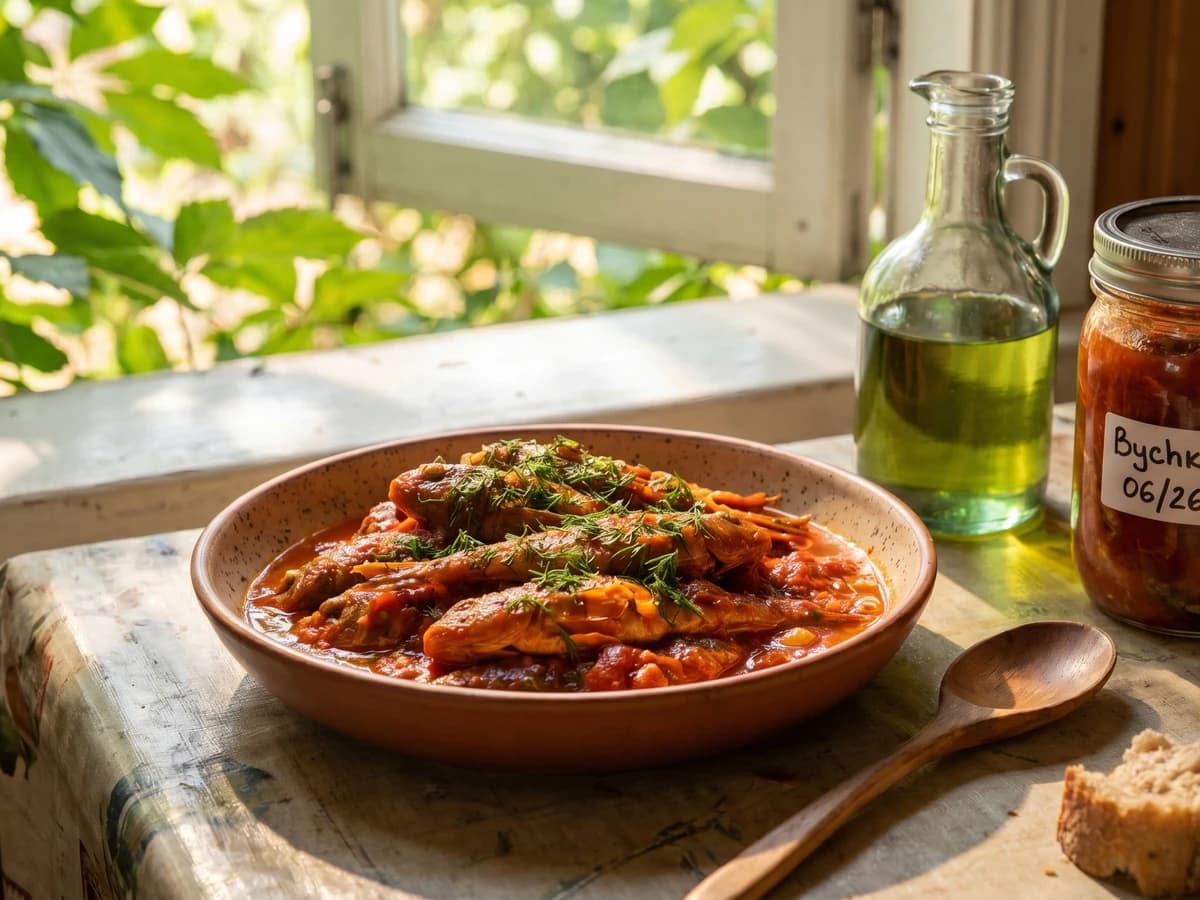
Small Azov gobies go into tomato bright as market cloth and come out soft enough that the bones give up. This is Mariupol food: cheap, red, generous, and better tomorrow.

Chef Lesia
The first sound is the meat against the board: flat, sharp, changing as the fibres loosen. Fry the cutlets fast, then let onion gravy do the soft finishing.

Chef Lesia
A heap of tiny silver fish becomes supper by the oldest Odesa trick: clean them, press them together, fry until the edges crackle, and let lemon and dill do the talking.