
Chef Takumi
Agedashi Tofu (揚げ出し豆腐)
Agedashi tofu looks like a fryer test. It is only drained tofu, potato starch, clean oil, and a hot dashi broth waiting nearby.
A cooking platform built around craft, culture, and the stories behind what we eat.
Created by
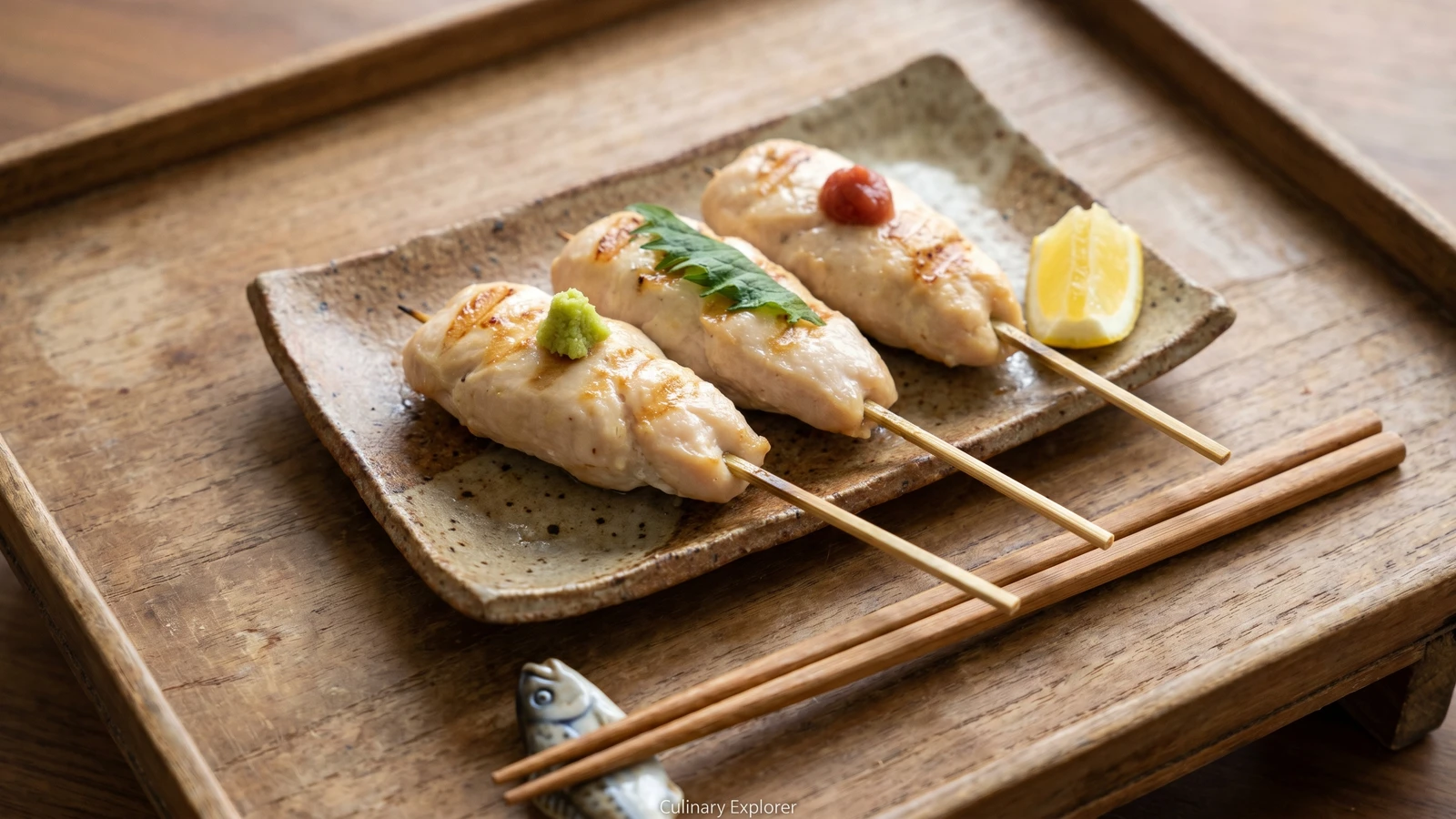
Sasami asks for restraint: good chicken, a clean skewer, brief heat, and a cool finish of shiso, wasabi, or umeboshi that keeps the lean meat honest.
Sasami is the quiet cut: the inner breast fillet, pale, lean, and easily bullied by heat. Many cooks fear it for the wrong reason. They think yakitori is about smoke and force. Here, the whole dish is decided by stopping in time.
The meat should be grilled only until it has just set through, then finished with something cool and sharp: shiso leaf, a dab of wasabi, or umeboshi paste. That last touch is not decoration. Lean chicken has no fat to carry sweetness, so the topping gives scent, acidity, or bite without hiding the meat. Nothing heavy. Nothing hidden.
There is one plain caution. In some Japanese yakitori shops, sasami is served very rare from specially sourced chicken. Don't copy that with ordinary chicken at home. Use glistening fresh chicken tenders, cook them safely, and pull them the moment they reach the line between done and dry. This is honmono made reachable: restraint, not bravado.
Serve sasami early in a yakitori meal, before richer thigh, skin, or tsukune. It cleans the appetite instead of weighing it down. Three skewers on a small plate, a little space between them, and the plate already understands what the cook is trying to say.
Yakitori grew as a popular grilled-chicken food in the Meiji and Taishō periods, when chicken became more widely available in cities and small skewer shops began specializing in different parts of the bird. Sasami, the tenderloin from the inner breast, became valued because its leanness takes brief grilling and sharp toppings especially well. In Japan it is often paired with wasabi, umeboshi, or shiso, finishes that answer the mild meat without covering it.
Quantity
500g
silver skin removed
Quantity
1 teaspoon
Quantity
1 tablespoon
Quantity
8
soaked in water for 30 minutes
Quantity
4
thinly sliced
Quantity
2 teaspoons
Quantity
2 tablespoons
Quantity
1 teaspoon
for the grill grate
Quantity
for serving
| Ingredient | Quantity |
|---|---|
| chicken tenderssilver skin removed | 500g |
| fine sea salt | 1 teaspoon |
| sake | 1 tablespoon |
| bamboo skewerssoaked in water for 30 minutes | 8 |
| shiso leaves (optional)thinly sliced | 4 |
| wasabi (optional) | 2 teaspoons |
| umeboshi paste (optional) | 2 tablespoons |
| neutral oilfor the grill grate | 1 teaspoon |
| lemon wedges (optional) | for serving |
Pat the chicken dry, then remove the white tendon and any ragged bits. Dry meat browns more cleanly, and trimming keeps each skewer cooking at the same pace. Cut any thick tender lengthwise so every piece is close to the same thickness.
Rub the chicken with the salt and sake and let it stand for 10 minutes. The salt seasons the meat directly, while the sake softens the surface aroma and helps the grill take the chicken cleanly. This is not a marinade to hide anything.
Thread each tender onto a soaked bamboo skewer, piercing through the center so the meat lies flat. Keep the pieces slightly compressed but not bunched up. A flat skewer meets the heat evenly, and even heat is how you keep this lean cut tender.
Prepare a charcoal grill, grill pan, or broiler for medium-high heat and oil the grate lightly. You want quick surface color without a long stay over the fire. If the heat is weak, the chicken sits too long and dries before it browns.
Grill the skewers for 2 to 3 minutes per side, turning once or twice, until the outside is lightly marked and the center is just set. At home, check with an instant-read thermometer: cook to 74°C or 165°F for immediate food safety, or to 68 to 70°C, 155 to 158°F, then rest until it reaches 74°C. Pull them the moment they are safe and set, because sasami gives you tenderness only once.
Rest the skewers for 2 minutes, then crown each one with shiso, wasabi, umeboshi paste, or a small combination of shiso and ume. Add the topping after grilling so its cool scent stays bright. Serve at once, with lemon if you like, and leave space on the plate rather than crowding the skewers together.
1 serving (about 110g)
Culinary guides, cultural storytelling, and the editorial depth that makes cooking meaningful.
Discover Culinary ExplorerChef Takumi
Agedashi tofu looks like a fryer test. It is only drained tofu, potato starch, clean oil, and a hot dashi broth waiting nearby.

Chef Takumi
Aspara-bacon is late-spring asparagus treated with common sense: thin bacon, hot grill, and a last brush of shōyu and mirin so the spear stays sweet while the wrap crisps.

Chef Takumi
This is Osaka street food at its plainest and best: good beef cut small, a thin batter, fine panko, hot beef tallow, and one clean dip in sauce.

Chef Takumi
Buta-bara is not a trick of the grill. Good pork belly, even cutting, steady heat, and the patience to let the fat turn glossy do most of the work.