
Chef Juliana
Açaí com Camarão do Pará
You think açaí belongs with banana and granola because that's the version that traveled. In Pará, thick unsweetened açaí sits beside shrimp, rice, and farinha. Anota aí: same fruit, different meal.
A cooking platform built around craft, culture, and the stories behind what we eat.
Created by
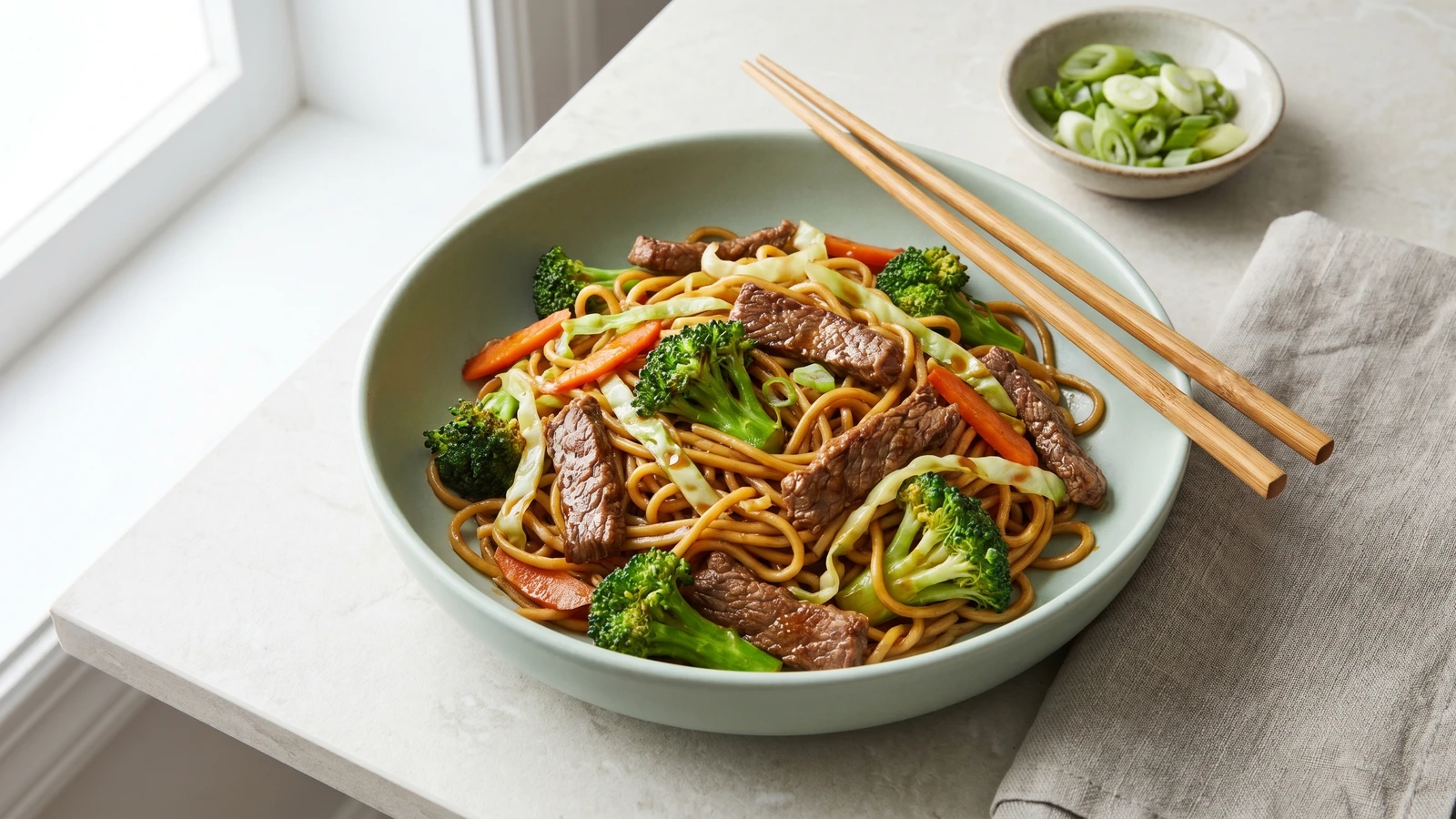
You don't need a food-court counter to resolver o jantar. Hot pan, real vegetables, beef in strips, noodles, and a sauce you make yourself. Anota aí: quick isn't powder.
You look at a pan full of noodles, vegetables, and meat and hear that little voice: isso não é pra mim. Too many things at once. Too fast. Too easy to turn into a sticky heap. I know the voice. Mine used to talk while I burned onions and pretended the pan was the problem.
But this is not magic. Cozinhar não é dom, é um aprendizado. Yakisoba at home is a sequence: cook the noodles until still firm, cut everything before the fire starts, brown the meat in a hot pan, let the vegetables stay bright, then bring it all together with a real sauce. If you crowd the pan, the beef steams grey. If you overcook the noodles, they break. If you add the sauce too early, the vegetables go tired. None of that is a tragedy. It's just method.
For a paulistano, this plate has food-court memory all over it, but a gente can still pull it back toward comida de verdade. No seasoning packet, no mystery powder pretending to be dinner. Onion, garlic, ginger, soy sauce, a little cornstarch to make the sauce cling, and vegetables you can actually see.
It isn't the classic pê-efe, no rice and beans here, but it obeys the same everyday wisdom: starch, meat, something green, something from the feira, all in one honest plate. Fast, filling, and very Tuesday.
Yakisoba came to Brazil through Japanese immigration, especially after the arrival of the ship Kasato Maru in 1908 and the growth of Japanese communities in São Paulo. In Brazil, the dish moved from Japanese family and neighborhood cooking into street fairs, pastel stands, and shopping-mall food courts, where it became a paulistano comfort plate with cabbage, carrot, broccoli, and a thicker soy-based sauce. The Brazilian version is not a museum piece; it's an immigrant dish that changed because cities, markets, and home kitchens changed around it.
Quantity
300g
Quantity
2 tablespoons
divided
Quantity
300g
cut into thin strips
Quantity
1/2 teaspoon
Quantity
1/4 teaspoon
Quantity
1 medium
sliced
Quantity
3 cloves
minced
Quantity
1 tablespoon
grated
Quantity
1 medium
cut into thin half-moons
Quantity
2 cups
small
Quantity
2 cups
sliced into thick ribbons
Quantity
1 cup
Quantity
1/2 cup
Quantity
1 cup
Quantity
1 tablespoon
Quantity
1 tablespoon
Quantity
1 tablespoon
Quantity
1 teaspoon
Quantity
2
sliced
| Ingredient | Quantity |
|---|---|
| yakisoba noodles or fresh wheat noodles | 300g |
| oildivided | 2 tablespoons |
| beef sirloin or rump steakcut into thin strips | 300g |
| salt | 1/2 teaspoon |
| black pepper | 1/4 teaspoon |
| onionsliced | 1 medium |
| garlicminced | 3 cloves |
| fresh gingergrated | 1 tablespoon |
| carrotcut into thin half-moons | 1 medium |
| broccoli floretssmall | 2 cups |
| cabbagesliced into thick ribbons | 2 cups |
| cauliflower florets (optional) | 1 cup |
| soy sauce | 1/2 cup |
| water or unsalted homemade vegetable broth | 1 cup |
| cornstarch | 1 tablespoon |
| sugar | 1 tablespoon |
| rice vinegar or white vinegar | 1 tablespoon |
| toasted sesame oil (optional) | 1 teaspoon |
| scallions (optional)sliced | 2 |
Slice the beef, onion, carrot, cabbage, broccoli, and cauliflower before you turn on the stove. Keep them in separate piles. This pan moves fast, and if you start hunting for a carrot while the garlic is already in, the garlic burns and brings bitterness to the whole dinner. Organization is not fussiness. It's how a Tuesday survives.
In a cup or small bowl, stir the soy sauce, water, cornstarch, sugar, vinegar, and sesame oil if using until the cornstarch disappears. Scrape the bottom with the spoon, because cornstarch likes to sit there pretending it joined the group. This is what makes the sauce glossy and cling to the noodles instead of running to the bottom of the plate.
Boil the noodles in plenty of water until just firm, usually 1 minute less than the package says. Bite one. It should bend but still have a little resistance, because it will finish in the pan with the sauce. Drain, rinse quickly under cold water, and toss with 1 teaspoon of the oil. The rinse stops the cooking and the oil keeps the noodles from clumping into one brick while you cook the rest.
Pat the beef strips dry, season with the salt and pepper, and heat 1 tablespoon of the oil in a large wok or heavy skillet over high heat. Add half the beef in a single layer and leave it alone for about 1 minute, until the underside goes deep brown. Toss once, brown the other side, then move it to a plate and repeat with the rest. Don't crowd the pan. Crowd it and the meat releases water, the heat drops, and you're boiling grey strips instead of building flavor.
Add the remaining oil to the same pan. Add the onion and cook for 2 minutes, stirring, until it softens at the edges and picks up the brown bits left by the beef. Add the garlic and ginger and stir for 30 seconds, just until you smell them. That's the refogado doing its job, giving the sauce a real base. Burn them and the whole pan tastes sharp, so stay there.
Add the carrot, broccoli, cauliflower if using, and 2 tablespoons of water. Toss for 2 minutes, then add the cabbage and cook 2 to 3 minutes more. The vegetables should be bright and still have bite. We're not making hospital vegetables. The little splash of water helps the firm pieces cook through without adding more oil, and the quick heat keeps the greens from going dull.
Return the beef and any juices to the pan. Stir the sauce again, because the cornstarch settles, then pour it in and toss until it bubbles and turns glossy, about 1 minute. Add the noodles and toss with tongs until every strand is coated and the sauce lightly grips the noodles. If it looks too tight, add water 1 tablespoon at a time. If it looks watery, keep tossing another minute so the cornstarch can pegar ponto.
Turn off the heat, scatter the scallions if using, and serve right away. The noodles should be glossy, the beef browned, the cabbage soft at the edges, and the broccoli still green. Taste before you add more soy sauce, because salt is easy to add and impossible to pull back. Eat while the vegetables still remember they were vegetables.
1 serving (about 370g)
Culinary guides, cultural storytelling, and the editorial depth that makes cooking meaningful.
Discover Culinary ExplorerChef Juliana
You think açaí belongs with banana and granola because that's the version that traveled. In Pará, thick unsweetened açaí sits beside shrimp, rice, and farinha. Anota aí: same fruit, different meal.

Chef Juliana
You think savory açaí is not for you. I understand. Then you taste the cold, dark bowl beside hot fried fish, rice, greens, and farinha, and dinner gets very quiet.

Chef Juliana
You think salted beef and rice sound like trouble. Anota aí: soak the charque, brown it properly, build the refogado, and this one pot resolves dinner.

Chef Juliana
You think a Maranhão green rice belongs to somebody else's clever hands. It doesn't. Wilt the vinagreira, build the refogado, fold it through arroz soltinho, and dinner gets bright, coastal, and yours.