
Chef Juliana
Açaí com Camarão do Pará
You think açaí belongs with banana and granola because that's the version that traveled. In Pará, thick unsweetened açaí sits beside shrimp, rice, and farinha. Anota aí: same fruit, different meal.
A cooking platform built around craft, culture, and the stories behind what we eat.
Created by
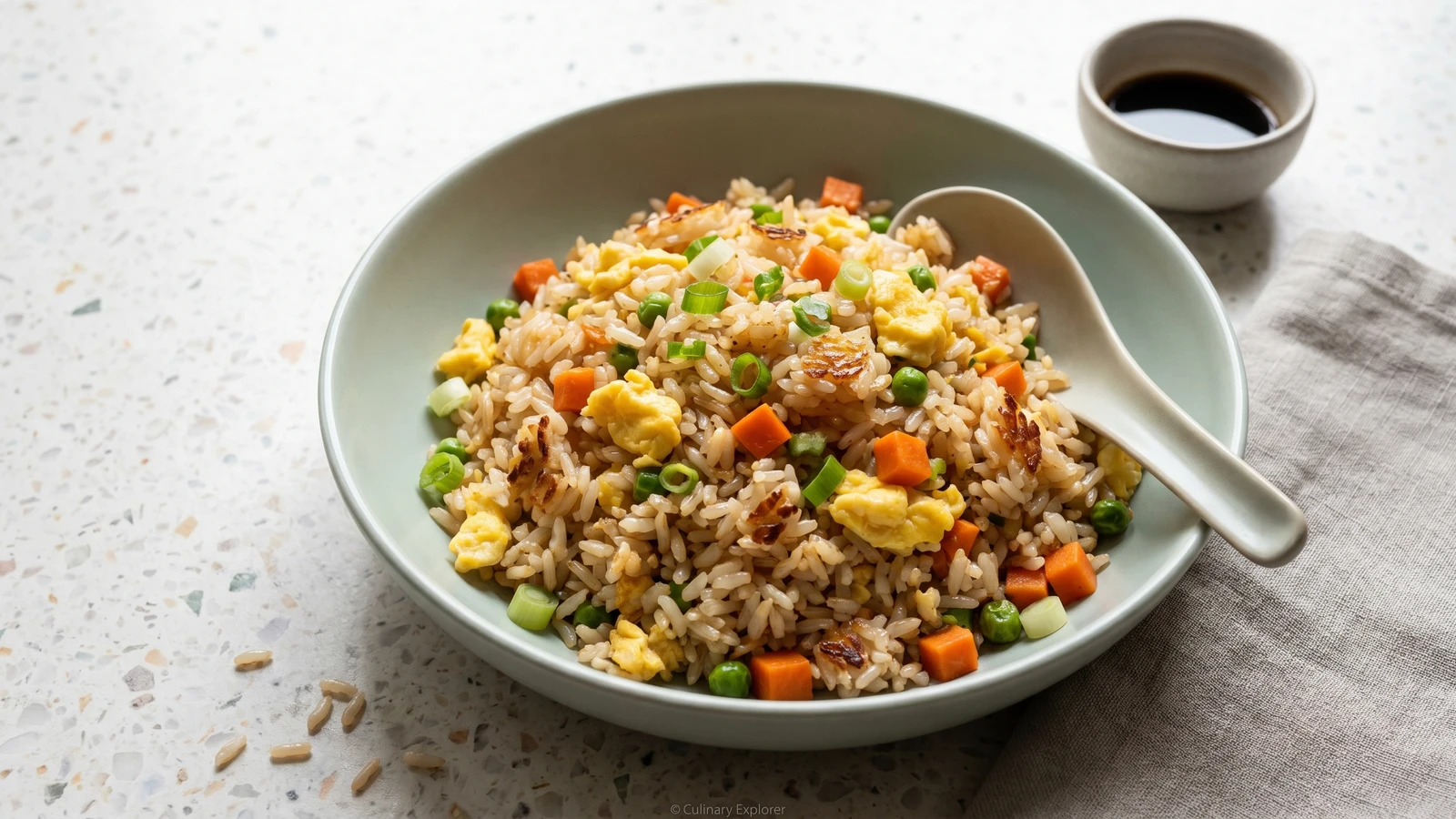
You already did the hard part when you cooked yesterday's rice. Now it goes into the pan cold, meets egg, vegetables, shoyu, and turns a tired fridge into dinner.
You know that moment when you open the fridge, see a pot of cold rice, half a carrot, two eggs, and hear the little voice saying isso não é pra mim? Good. That's dinner trying to introduce itself. Don't make it dramatic.
I learned late, so I have great respect for recipes that rescue a Tuesday. Yakimeshi is one of them. Not the powdered version of flavor, not a packet pretending to solve your life, just arroz soltinho from yesterday, egg, vegetables, shoyu, and a hot pan. Comida de verdade also knows how to use leftovers. Waste is expensive, and a gente is not here to throw away good rice because it got cold.
The method matters more than the ingredient list. Cold rice fries because the grains are dry and separate. Fresh hot rice turns sticky because it's still full of moisture. Egg comes out of the pan before it turns rubbery. Onion and garlic make a quick refogado because flavor has to start somewhere honest. Shoyu goes around the edge of the hot pan so it smells toasted instead of making the rice wet and salty.
This bends the pê-efe without betraying it: rice, egg or leftover meat, vegetables, something green if you have it, and feijão on the side if there's a pot waiting. Cook, taste, adjust, eat. Cozinhar não é dom, é um aprendizado, and this is one of the friendliest lessons in the kitchen.
Japanese immigration to Brazil began in 1908, when the ship Kasato Maru arrived in Santos carrying workers who would help form the largest Japanese community outside Japan. Yakimeshi descends from Japanese fried rice, but in Brazilian homes and neighborhood restaurants it adapted to local pantry habits: leftover white rice, eggs, carrots, peas, scallions, and shoyu bought at the supermarket. In São Paulo especially, it became part of the Japanese-Brazilian everyday table rather than a museum piece.
Quantity
4 cups
preferably day-old, grains separated
Quantity
3 tablespoons
divided
Quantity
3 large
beaten
Quantity
1/4 teaspoon, plus more to taste
Quantity
1 small
finely chopped
Quantity
2 cloves
minced
Quantity
1 medium, about 1/2 cup
cut into small cubes
Quantity
1/2 cup
Quantity
1 cup
Quantity
2 tablespoons, plus more to taste
Quantity
2
thinly sliced
Quantity
1 teaspoon
| Ingredient | Quantity |
|---|---|
| cold cooked white ricepreferably day-old, grains separated | 4 cups |
| neutral oildivided | 3 tablespoons |
| eggsbeaten | 3 large |
| salt | 1/4 teaspoon, plus more to taste |
| onionfinely chopped | 1 small |
| garlicminced | 2 cloves |
| carrotcut into small cubes | 1 medium, about 1/2 cup |
| frozen peas | 1/2 cup |
| shredded cooked chicken or diced cooked pork (optional) | 1 cup |
| shoyu | 2 tablespoons, plus more to taste |
| scallionsthinly sliced | 2 |
| toasted sesame oil (optional) | 1 teaspoon |
Break the cold rice apart with your fingers or a fork until the grains are mostly separate. If you find hard clumps, crumble them now, not in the pan. Cold, dry grains fry and stay soltinhos; big clumps stay pale inside and turn pasty when you attack them too late.
Beat the eggs with the salt, chop the onion and garlic, measure the vegetables, and keep the shoyu beside the stove. Once the pan is hot, this moves fast. If you're still hunting for a spoon while the garlic is browning, the garlic will punish you. Ask me how I know.
Heat a wide skillet or wok over medium-high heat and add 1 tablespoon of oil. Pour in the beaten eggs and push them gently with a spatula until they form soft, shiny curds, about 1 minute. Take them out while they still look a little tender, because they'll finish later and nobody invited rubbery egg to dinner.
Add 1 tablespoon of oil to the same pan. Add the onion and cook until it goes soft and see-through, about 3 minutes. Add the garlic and stir for 30 seconds, just until you smell it. This quick refogado is where the flavor starts; burnt garlic is bitter and it follows you through the whole pan.
Add the carrot and cook until the cubes brighten and lose their raw edge, about 2 minutes. Add the peas and stir until they look glossy and green, about 1 minute. Small pieces matter here, because they cook in the time the rice fries. Big chunks stay raw and then you blame the recipe, coitada.
Turn the heat to high, add the last 1 tablespoon of oil, then add the rice. Spread it across the pan and let it sit for 30 seconds before stirring. You should hear a steady sizzle and smell the rice getting toasty. Stir, spread, and let it hit the pan again. This is frying, not warming. If the pan is crowded, the rice sweats and goes heavy.
Add the cooked chicken or pork, if using, and toss until it is hot through. Pour the shoyu around the edge of the pan, not straight into the center, and stir fast. The hot metal wakes up the shoyu and gives you that toasted smell. Dump it into one wet spot and you get salty patches instead of seasoned rice.
Return the eggs to the pan and break them into pieces with the spatula. Add most of the scallions and the sesame oil, if using, then toss once more. Taste before adding salt, because shoyu already brings plenty. The rice should look separate and glossy, with yellow egg, orange carrot, green peas, and little browned edges. Serve right away, with feijão or a simple green salad if that's how you're resolving the plate tonight.
1 serving (about 290g)
Culinary guides, cultural storytelling, and the editorial depth that makes cooking meaningful.
Discover Culinary ExplorerChef Juliana
You think açaí belongs with banana and granola because that's the version that traveled. In Pará, thick unsweetened açaí sits beside shrimp, rice, and farinha. Anota aí: same fruit, different meal.

Chef Juliana
You think savory açaí is not for you. I understand. Then you taste the cold, dark bowl beside hot fried fish, rice, greens, and farinha, and dinner gets very quiet.

Chef Juliana
You think salted beef and rice sound like trouble. Anota aí: soak the charque, brown it properly, build the refogado, and this one pot resolves dinner.

Chef Juliana
You think a Maranhão green rice belongs to somebody else's clever hands. It doesn't. Wilt the vinagreira, build the refogado, fold it through arroz soltinho, and dinner gets bright, coastal, and yours.