Culinary Explorer
A cooking platform built around craft, culture, and the stories behind what we eat.
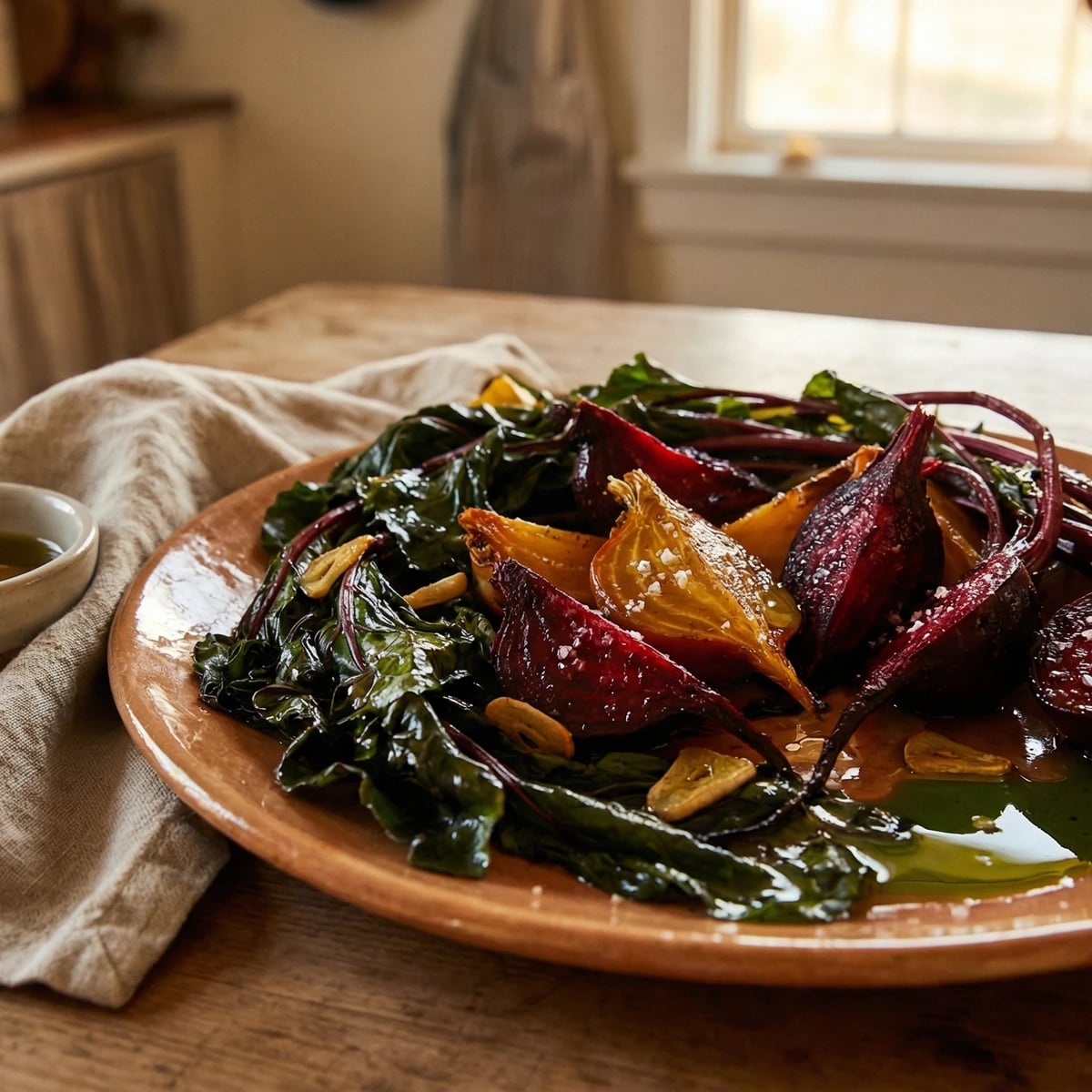
Wood-Fired Beets with Their Greens
Created by Chef Ally
Earthy beets roasted until their sugars concentrate and caramelize, reunited on the plate with their own greens, wilted simply with garlic and finished with good olive oil and a bright squeeze of lemon.
Buy beets with their greens still attached. This is how you know they are fresh. The leaves should look alive, not wilted or yellowed or sad. When you find beets like this at the market, you are buying two vegetables in one: the sweet, earthy root and the mineral-rich greens that taste like a cross between chard and spinach.
Roasting transforms beets. The dry heat concentrates their natural sugars until they caramelize at the edges, and the flesh turns tender and almost creamy. If you have access to a wood-fired oven or can nestle them into the coals of a dying fire, all the better. That smoky char adds something a conventional oven cannot replicate.
The greens need almost nothing. A quick sauté with garlic and good olive oil. A splash of vinegar to brighten. The contrast on the plate tells the whole story: root and leaf, slow and fast, sweet and mineral. This is what it means to cook with the whole plant, to waste nothing, to honor what the farmer grew.
Ingredients
small to medium beets
Quantity
3 pounds
with fresh greens attached
extra-virgin olive oil
Quantity
4 tablespoons, divided, plus more for finishing
flaky sea salt
Quantity
to taste
| Ingredient | Quantity |
|---|---|
| small to medium beetswith fresh greens attached | 3 pounds |
| extra-virgin olive oil | 4 tablespoons, divided, plus more for finishing |
| flaky sea salt | to taste |
Where cooking meets culture.
Culinary guides, cultural storytelling, and the editorial depth that makes cooking meaningful.
Discover Culinary Explorer