Chef Joost
Aardappelgratin
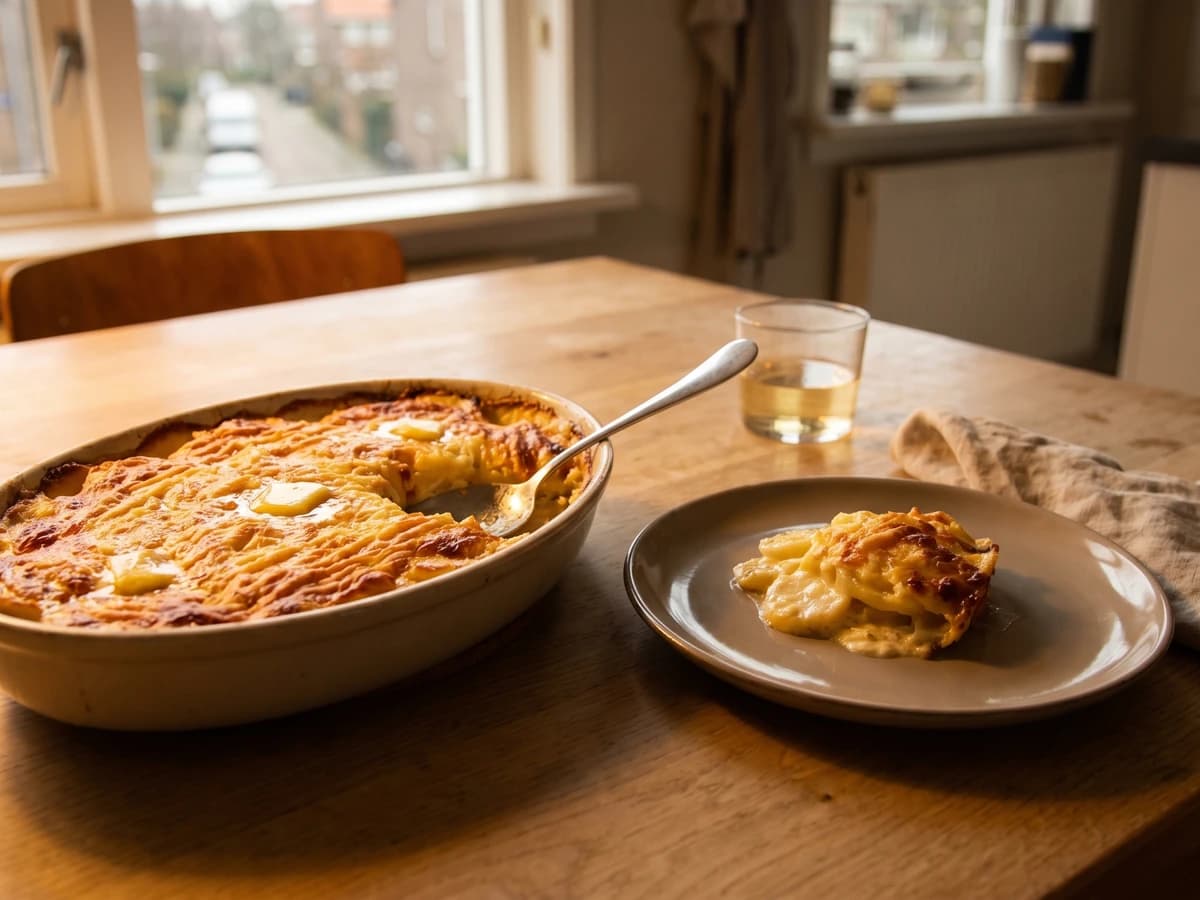
A French name, a Dutch potato, and a Sunday table: aardappelgratin is what happens when a frugal kitchen borrows richness and behaves as if it had always belonged.
A cooking platform built around craft, culture, and the stories behind what we eat.

Created by
The tin made it famous, but the pot makes it worth remembering: white beans softened slowly, then folded into tomato, onion, bay, and a little Dutch thrift.
In my grandmother's second notebook, the grand dishes have careful handwriting. The humble ones do not. Witte bonen in tomatensaus, white beans in tomato sauce, appears as a margin note between pickled beetroot and stewed pears, which tells you exactly where it belonged: not at the centre of ceremony, but on a Tuesday, beside potatoes, sausage, or a fried egg when the household money had to stretch without announcing itself.
But let me tell you a secret. The tinned version did not invent this dish; it only made it shy. Dutch cooks had been eating dried beans through the winter for centuries before tomato sauce became the bright red cloak that children would accept without negotiation. Beans are patient food. Soak them and they forgive you. Rush them and they sit in the pot like little stones, for obvious reasons.
The name already tells you almost everything, so I won't invent a romance for it. Witte bonen are white beans, and tomatensaus is tomato sauce. The story is not hidden in the words but in the cupboard: dried legumes, a spoon of fat, an onion, a bay leaf, and the modern tomato, cooked down until it tastes less like summer and more like supper. Hou het altijd simpel, always keep it simple. Let the beans become tender first, salt them after they soften, and give the sauce enough time to lose its raw edge. That is the whole wisdom.
Dried beans were a practical staple in Dutch winter kitchens for centuries because they stored well, travelled easily, and supplied cheap protein when fresh produce was scarce. Tomatoes entered Dutch cooking much later, becoming common household ingredients only in the nineteenth and especially twentieth century as greenhouse cultivation expanded in areas such as the Westland. Witte bonen in tomatensaus became a familiar weekday side through canning and preserving in the postwar period, but the homemade version belongs to an older Dutch habit: making the cupboard generous.
Quantity
250g
soaked overnight
Quantity
1 tablespoon
Quantity
1 medium
finely chopped
Quantity
1
finely diced
Quantity
1
finely diced
Quantity
2
minced
Quantity
2 tablespoons
Quantity
400g
Quantity
250ml
Quantity
1
Quantity
1 teaspoon
Quantity
1 teaspoon
Quantity
1 tablespoon
Quantity
to taste
Quantity
1 tablespoon
| Ingredient | Quantity |
|---|---|
| dried white beanssoaked overnight | 250g |
| neutral oil or butter | 1 tablespoon |
| onionfinely chopped | 1 medium |
| carrotfinely diced | 1 |
| celery stalkfinely diced | 1 |
| garlic clovesminced | 2 |
| tomato paste | 2 tablespoons |
| canned chopped tomatoes | 400g |
| bean cooking liquid or water | 250ml |
| bay leaf | 1 |
| brown sugar | 1 teaspoon |
| mild mustard | 1 teaspoon |
| apple cider vinegar | 1 tablespoon |
| salt and black pepper | to taste |
| chopped parsley (optional) | 1 tablespoon |
Put the dried white beans in a large bowl, cover them with plenty of cold water, and leave them overnight. They will swell quietly while you sleep, which is exactly the sort of kitchen labour I approve of. Drain them before cooking and discard the soaking water.
Put the soaked beans in a pot and cover with fresh water by about five centimetres. Bring to a boil, then lower to a gentle simmer and cook for 60 to 75 minutes, until a bean squashes easily between finger and thumb. Do not salt them heavily at the start; let them soften first, then season. Save 250ml of the cooking liquid and drain the rest.
Warm the oil or butter in a wide pan and cook the onion, carrot, and celery with a pinch of salt for 8 to 10 minutes, until soft and sweet-smelling but not browned. Add the garlic and cook for one minute. Stir in the tomato paste and let it darken for two minutes; this small patience takes the tinny edge off the tomato, and no amount of sugar can do that work later.
Add the chopped tomatoes, bean cooking liquid, bay leaf, brown sugar, mustard, and the cooked beans. Let everything simmer uncovered for 25 to 30 minutes, stirring now and then, until the sauce clings to the beans instead of running around them. The pan should look glossy and settled, with the beans whole but tender.
Remove the bay leaf. Stir in the vinegar, then taste for salt and black pepper. The sauce should be bright, gently sweet, and a little sharp at the end. Scatter parsley over the top if you like, and serve warm beside boiled potatoes, rookworst, a fried egg, or thick bread.
1 serving (about 300g)
Culinary guides, cultural storytelling, and the editorial depth that makes cooking meaningful.
Discover Culinary ExplorerChef Joost
A French name, a Dutch potato, and a Sunday table: aardappelgratin is what happens when a frugal kitchen borrows richness and behaves as if it had always belonged.
Chef Joost
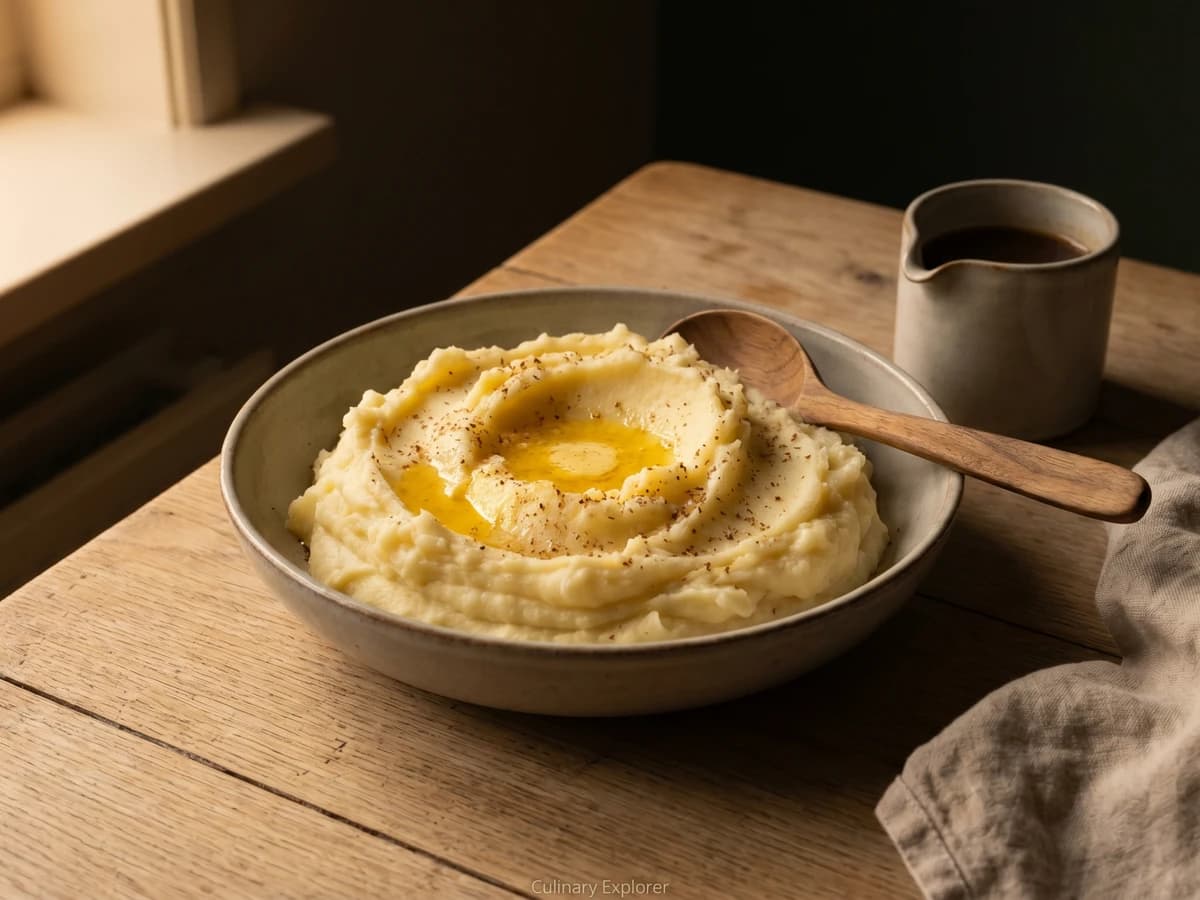
Aardappelpuree is the quiet heart of the Dutch AVG'tje: floury potatoes, warm milk, butter, nutmeg, and a small kuiltje, little well, built for the jus.

Chef Joost
Flower cabbage under old Gouda sauce: the quiet Dutch side dish that turns one boiled vegetable into the reason everyone reaches for the spoon twice.

Chef Joost
White beans peeking through green snijbonen give this old Dutch side its nursery-table joke: bare little children in the grass, sweet garden thrift with butter, nutmeg, and no apology.