
Chef Dean
American Goulash
A Midwestern one-pot supper of seasoned ground beef, tender elbow macaroni, and tomatoes simmered into a thick, soul-satisfying stew. This is the dish that fed factory workers and farm families alike.
A cooking platform built around craft, culture, and the stories behind what we eat.
Created by
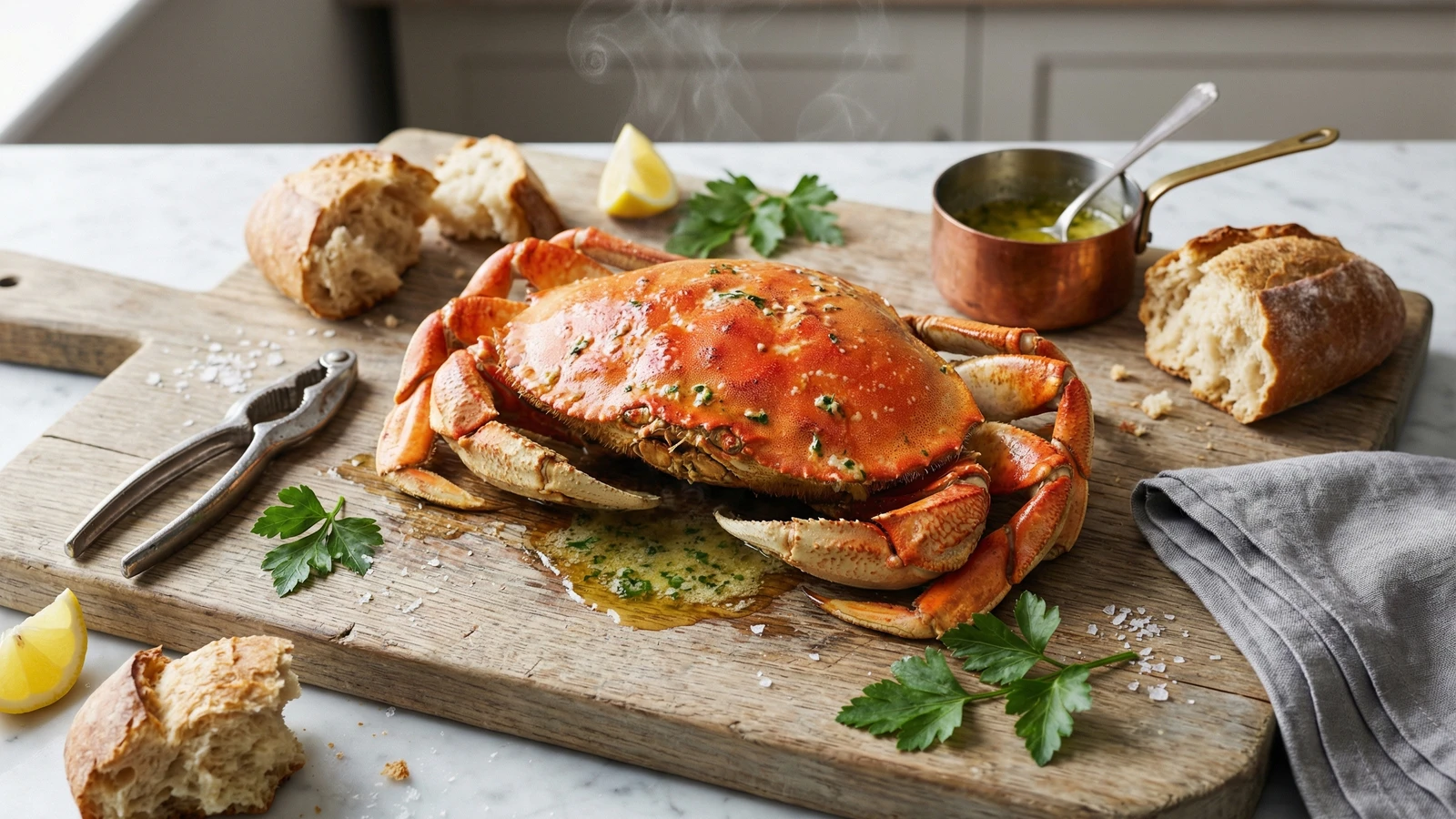
Sweet Pacific Dungeness crab roasted in a bath of sizzling garlic butter and dry white wine, the shell turning brilliant orange while the meat inside stays impossibly tender and briny. This is coastal abundance at its finest.
Iwas raised on these waters. The first Dungeness crab I ever pulled from a trap was off the Oregon coast, and I can still feel the cold fog on my face, still smell the salt and kelp. The crab came up fighting, claws spread wide, orange and furious. We cooked it within the hour. That memory lives in my bones.
Dungeness crab built the Pacific Northwest. Coast Salish peoples harvested these waters for thousands of years before European ships arrived. Chinese and Japanese fishermen transformed the commercial industry in the nineteenth century. Scandinavian immigrants brought their own traditions of butter and bread. This dish carries all of that history to your table.
Roasting a whole crab concentrates its sweetness in a way boiling never achieves. The high heat caramelizes the shell slightly, infusing the garlic butter with toasted, almost nutty notes. The wine steams through the body cavity, perfuming every strand of meat. When you crack into that first claw at the table, the aroma will stop conversation.
Buy your crab live from a reputable fishmonger who can tell you where it was caught. Dungeness season runs from late fall through early summer along the West Coast. Sustainable harvest matters here. These waters have fed generations. They deserve our respect.
Quantity
1 (2 to 2.5 pounds)
Quantity
8 tablespoons
Quantity
6 cloves
minced
Quantity
1/2 cup
Quantity
2 tablespoons
chopped
Quantity
1 tablespoon
minced
Quantity
1 teaspoon
Quantity
2 tablespoons
Quantity
1/2 teaspoon
Quantity
1 teaspoon, plus more for finishing
Quantity
1/2 teaspoon
Quantity
1
| Ingredient | Quantity |
|---|---|
| live Dungeness crab | 1 (2 to 2.5 pounds) |
| unsalted butter | 8 tablespoons |
| garlicminced | 6 cloves |
| dry white wine | 1/2 cup |
| fresh flat-leaf parsleychopped | 2 tablespoons |
| fresh chivesminced | 1 tablespoon |
| lemon zest | 1 teaspoon |
| fresh lemon juice | 2 tablespoons |
| red pepper flakes | 1/2 teaspoon |
| flaky sea salt | 1 teaspoon, plus more for finishing |
| freshly ground black pepper | 1/2 teaspoon |
| crusty sourdough loaf | 1 |
Place your live crab in the freezer for 15 to 20 minutes. This sedates the crab humanely before cooking. While it chills, fill a large pot with heavily salted water and bring to a rolling boil. When the crab is sedated and moving slowly, grasp it firmly from behind at the base of the back legs where the claws cannot reach you. Plunge it headfirst into the boiling water and cook for exactly 8 minutes. This parcooks the crab just enough to make cleaning easier while leaving most of the cooking to the roasting.
Transfer the parcooked crab to an ice bath to stop the cooking. After 5 minutes, remove and place belly-up on a cutting board. Pull off the triangular apron flap on the underside and discard. Lift off the top shell (carapace) by inserting your thumb under the shell at the back and pulling firmly upward. Reserve the shell. Remove and discard the feathery gills (dead man's fingers) from both sides of the body. Rinse away the greenish-gray guts under cold water, preserving any golden crab butter (tomalley) if you enjoy it. The crab is now ready for roasting.
Preheat your oven to 450 degrees Fahrenheit. In a small saucepan over medium-low heat, melt the butter until it foams. Add the minced garlic and cook, stirring frequently, until fragrant and just beginning to turn golden at the edges. This takes about 2 minutes. Do not let it brown. Remove from heat and stir in the lemon zest, red pepper flakes, half the parsley, salt, and black pepper. The butter should smell intensely aromatic, sharp with garlic and bright with citrus.
Place the cleaned crab body, legs spread, in a large roasting pan or cast iron skillet. Nestle the reserved top shell alongside if space permits. Pour the white wine into the bottom of the pan. Spoon half the garlic butter generously over the exposed crab meat, working it into the leg joints and body cavity. Reserve the remaining butter for serving. Slide the pan into the hot oven and roast for 10 to 12 minutes. The shell will turn brilliant orange-red, the butter will sizzle and brown slightly at the edges, and the kitchen will fill with an aroma that makes patience difficult.
Remove the pan from the oven. The crab is done when the meat at the leg joints is opaque and pulls away cleanly from the shell. Transfer to a large wooden board or serving platter. Pour any pan juices into the reserved garlic butter, add the lemon juice, and whisk to combine. Taste and adjust salt. Scatter the remaining fresh parsley and the chives over the crab. Finish with a pinch of flaky sea salt. Serve immediately with the warm garlic butter in a bowl for dipping and thick slices of crusty bread to soak up every drop.
1 serving (about 710g)
Culinary guides, cultural storytelling, and the editorial depth that makes cooking meaningful.
Discover Culinary ExplorerChef Dean
A Midwestern one-pot supper of seasoned ground beef, tender elbow macaroni, and tomatoes simmered into a thick, soul-satisfying stew. This is the dish that fed factory workers and farm families alike.

Chef Dean
A golden-crusted casserole of tender elbow macaroni swaddled in velvety cheese sauce, this is the macaroni and cheese that defines American comfort cooking. No boxed shortcuts. No apologies.

Chef Dean
Silky strips of seared beef and earthy mushrooms draped in a tangy sour cream sauce, ladled generously over buttery egg noodles. This is the dish that warmed a thousand American kitchens.

Chef Dean
A magnificent whole-roasted tenderloin crowned with a glossy red wine reduction, the kind of centerpiece that makes guests fall silent when it arrives at the table. This is holiday cooking at its honest best.