Chef Thomas
Anchovy Sauce
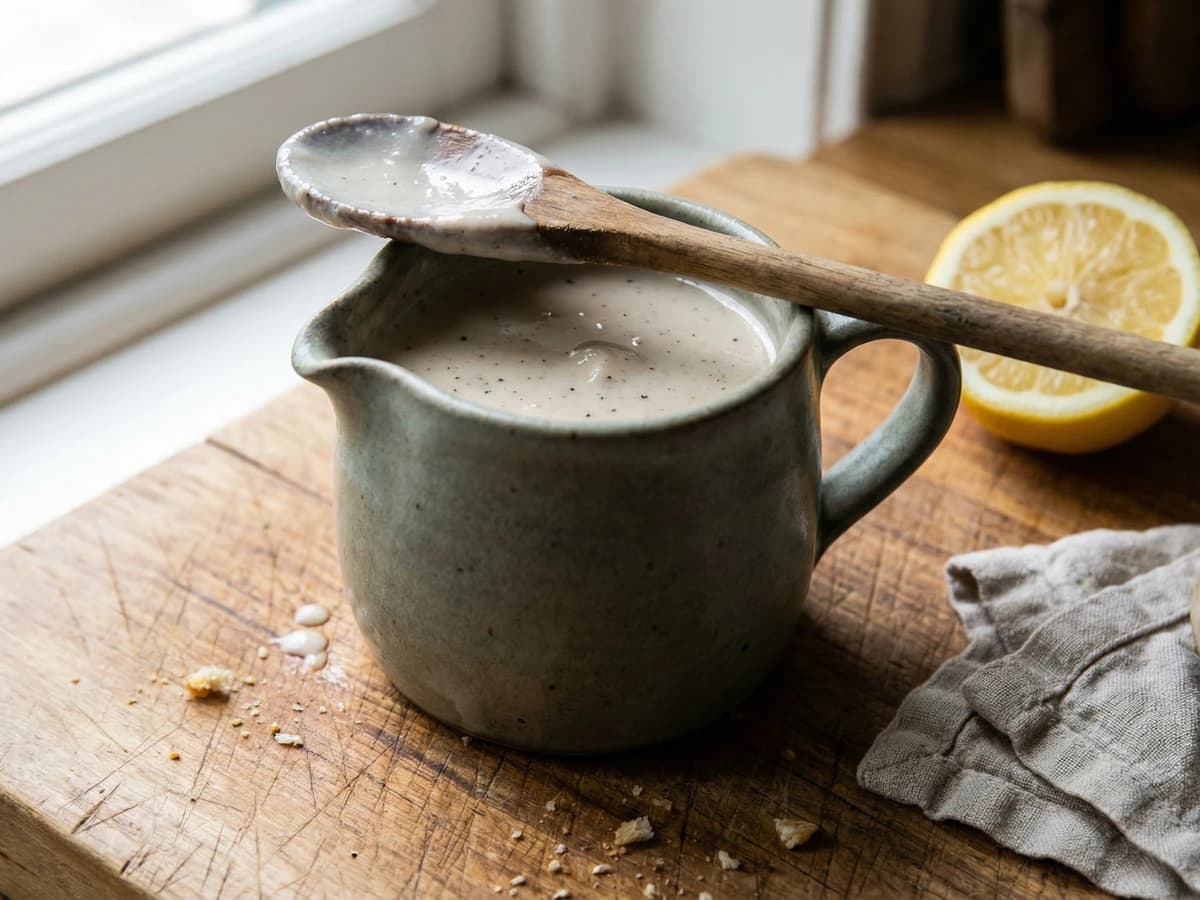
A proper white sauce sharpened with pounded anchovy, the old Georgian trick for waking up a piece of poached fish or a slice of roast lamb on a Sunday in spring.
A cooking platform built around craft, culture, and the stories behind what we eat.

Created by Chef Thomas
The plain white sauce that holds up half of British home cooking, made with butter, flour, and milk and finished with a grating of nutmeg. Learn it once and you'll never need a recipe for it again.
The butter goes in first, a slow golden puddle in the pan. Then the flour, all at once, and a minute of stirring until it stops smelling of raw flour and starts smelling of warm biscuits. That's your roux. That's the first half of half the sauces in British home cooking, and nobody ever told you it was this simple.
A white sauce is the quiet spine of a kitchen. It becomes cauliflower cheese on a Tuesday, fish pie on a Friday, the binding in a lasagne, parsley sauce poured over a piece of poached ham. Learn it once and you'll never need to look at another recipe for any of those things again. You'll just know.
The only real skill is patience. Warm the milk first. Cook the flour long enough that it tastes of something other than flour. Pour the milk in gradually, whisking as you go, and let it simmer for a few minutes more so the sauce comes into itself. A generous grating of nutmeg at the end, more than you think. Salt. White pepper if you have it. We're only making dinner.
I wrote it down in the notebook once, years ago: butter, flour, milk, nutmeg. A recipe is a conversation, not a contract, and this one is mostly about listening. The sauce tells you when it's ready. You just have to pay attention.
Quantity
50g
Quantity
50g
Quantity
600ml
Quantity
1
Quantity
a few
Quantity
1/4
Quantity
to taste
Quantity
to taste
Quantity
for grating
| Ingredient | Quantity |
|---|---|
| unsalted butter | 50g |
| plain flour | 50g |
| whole milk | 600ml |
| bay leaf (optional) | 1 |
| black peppercorns (optional) | a few |
| onion (optional) | 1/4 |
| fine sea salt | to taste |
| white pepper | to taste |
| fresh nutmeg | for grating |
Pour the milk into a small saucepan and set it over a low heat. You're not boiling it, just taking the chill off. Warm milk makes for a smoother sauce because it meets the hot roux without shocking it into lumps. If you want to infuse it, drop in a bay leaf, a few peppercorns, and a quarter onion, and let it sit on the gentlest heat for ten minutes while you get on with the roux. Then strain it before using.
Melt the butter in a heavy-bottomed saucepan over a medium-low heat. Let it foam gently without browning. Tip the flour in all at once and stir with a wooden spoon. It will look like a thick paste at first, then loosen into something the texture of wet sand. Keep stirring. After a minute or two the smell changes. The raw flour note disappears and something warmer takes its place, biscuity, almost toasted. That's when you know the roux is cooked. Don't let it colour. This is a white sauce, not a brown one.
Take the pan off the heat for a moment. Pour in a small splash of the warm milk and stir hard. The sauce will seize and stiffen and look briefly like it's gone wrong. Keep going. Add another splash, stir it in completely, then another. With each addition the sauce loosens. Once about a third of the milk is in, return the pan to a medium heat and add the rest in a steadier stream, whisking as you go. Any lumps at this stage mean you added too much milk too fast. Slow down, whisk harder, and they'll usually work themselves out.
Bring the sauce to a gentle simmer, whisking often. It will thicken as it heats, going from thin and pale to something that coats the back of a spoon. Turn the heat down and let it cook for another three or four minutes. You're cooking out any last trace of raw flour and giving the sauce time to come into itself. Stir often so nothing catches on the bottom of the pan. The surface should be satin and glossy, not matte or grainy.
Take the pan off the heat. Season with salt and white pepper. Grate fresh nutmeg over the top, more than you think, then taste. A white sauce without nutmeg is just wet flour. If it's thicker than you want, loosen it with a splash more warm milk. If it's thinner than you want, let it simmer another minute. Season and taste. Then taste again. Trust your nose. It knows before you do.
1 serving (about 155g)
Culinary guides, cultural storytelling, and the editorial depth that makes cooking meaningful.
Discover Culinary ExplorerChef Thomas
A proper white sauce sharpened with pounded anchovy, the old Georgian trick for waking up a piece of poached fish or a slice of roast lamb on a Sunday in spring.

Chef Thomas
A spiced autumn chutney made from a glut of apples and a quiet afternoon, simmered down until the kitchen smells of October and the jars line up on the counter like a small, useful insurance policy.
Chef Thomas
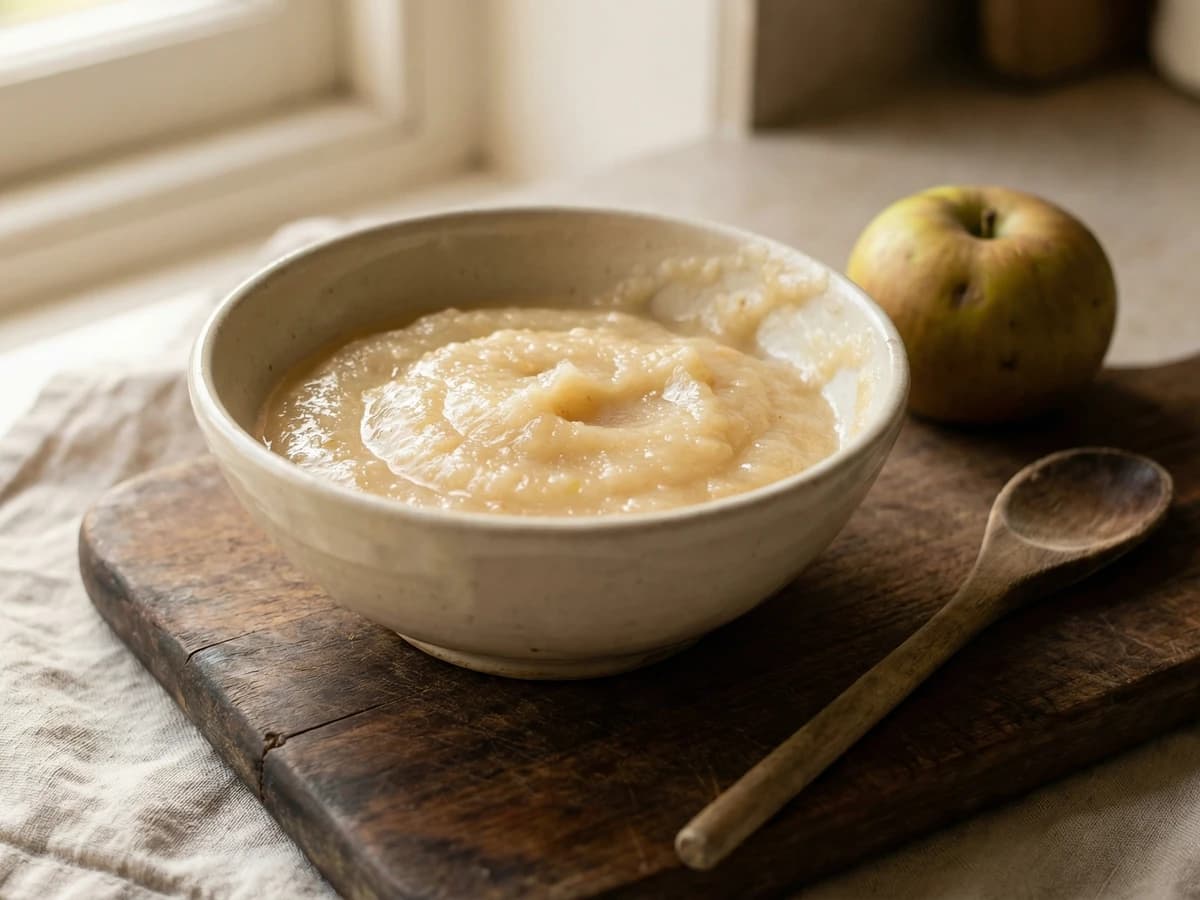
A bowl of sharp, fluffy Bramley apple sauce, made in the time it takes to carve the pork, the kind of small condiment that quietly makes the whole meal make sense.
Chef Thomas
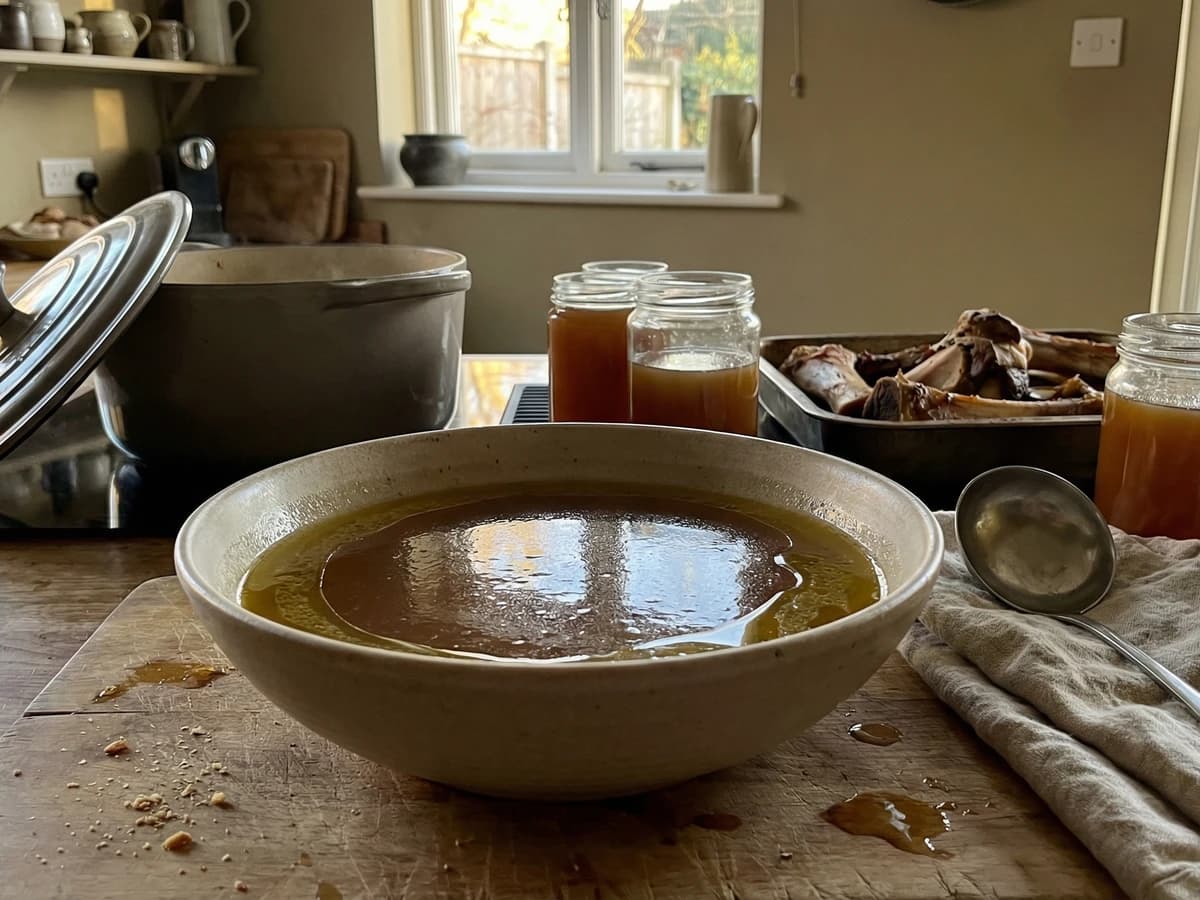
Beef bones roasted until dark, then coaxed for a long afternoon into a deep amber stock, the foundation of every good gravy, every braise, every bowl of winter soup worth the trouble.