Chef Klaus
Allgäuer Kaspressknödel
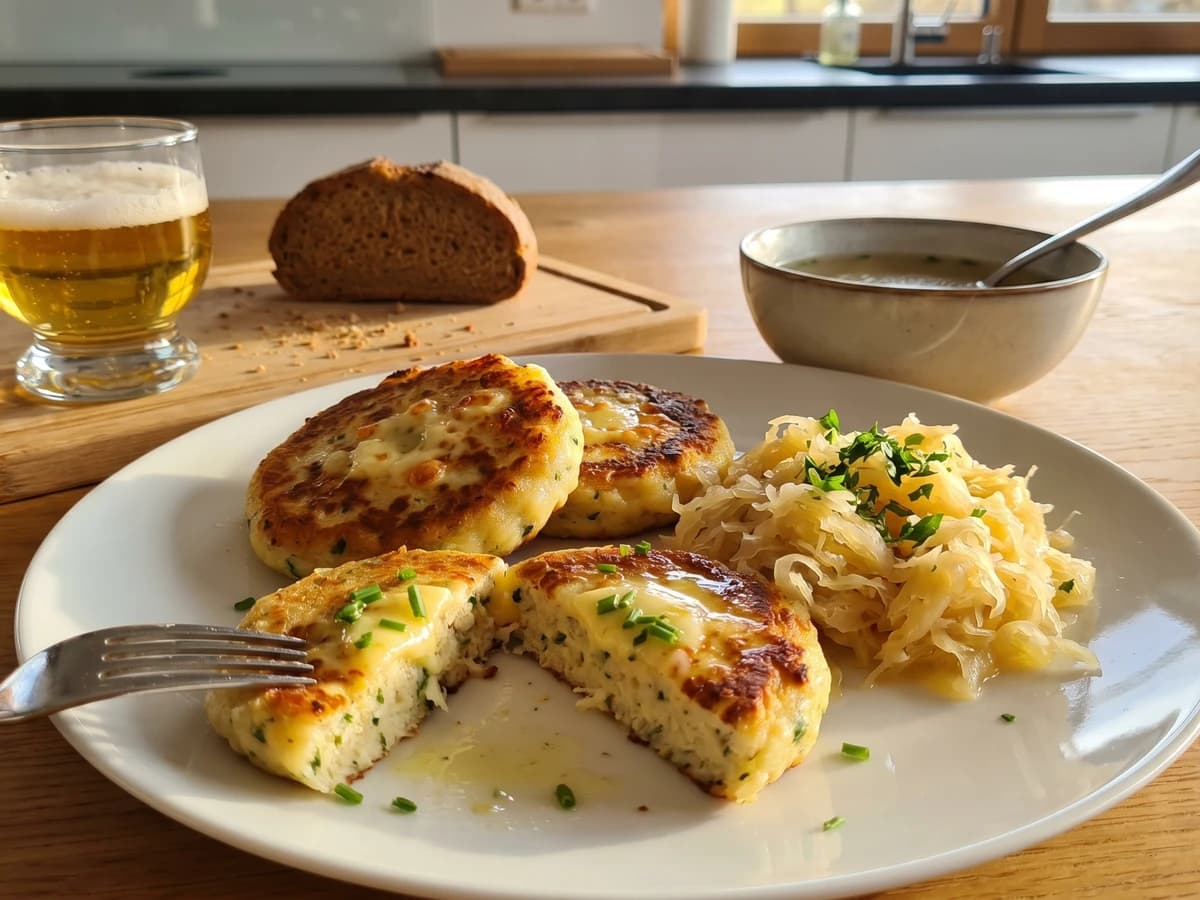
Pressed bread dumplings from the Alpine south, fried until the cheese catches at the edges and the middle stays soft enough for broth, kraut, or a weekday plate.
A cooking platform built around craft, culture, and the stories behind what we eat.
Created by
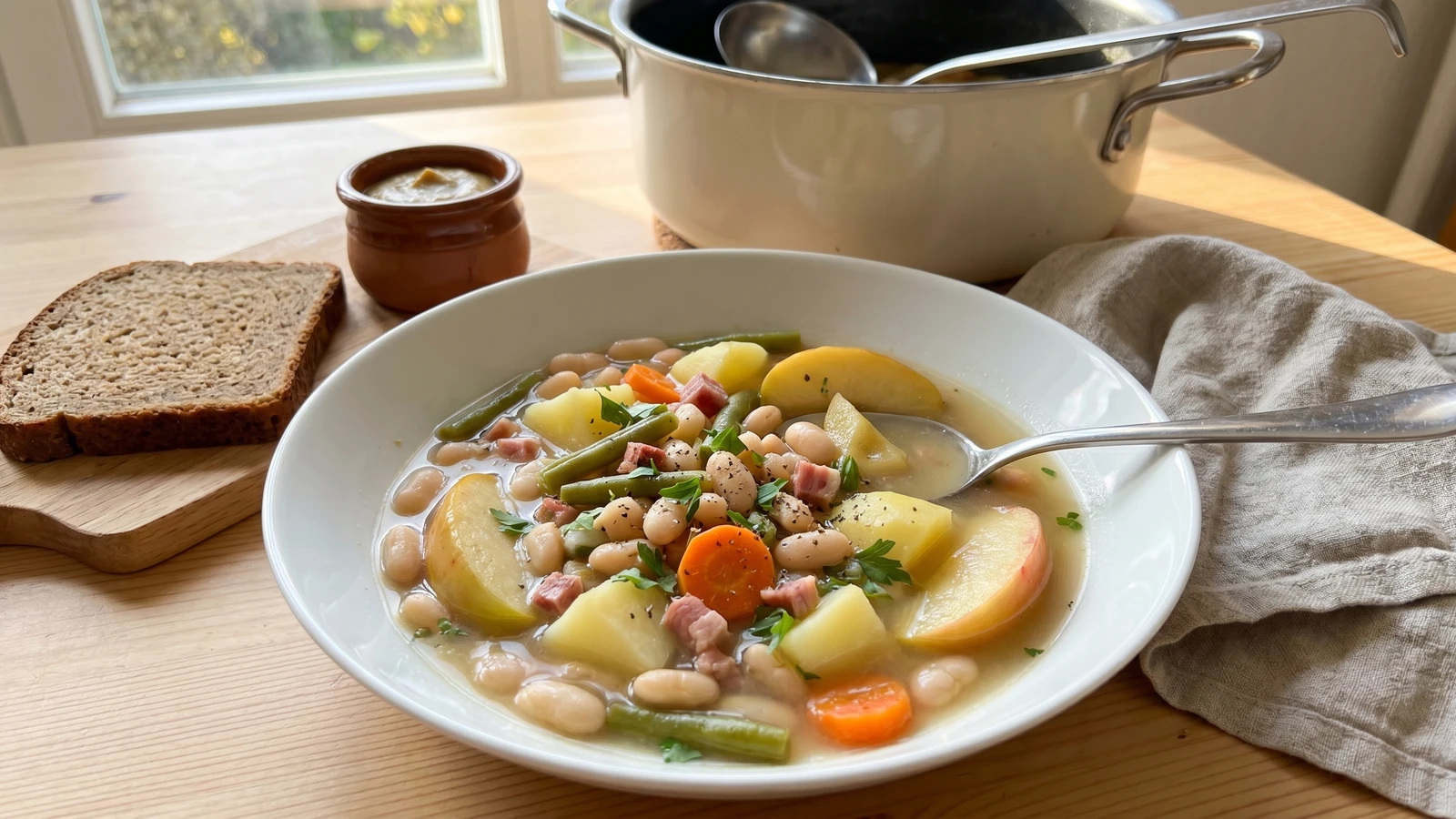
The Westphalian blind hen has no hen in it, just beans, roots, orchard fruit and smoked bacon cooked in the right order so each piece stays itself.
Westfälisches Blindhuhn belongs to autumn in Westphalia, when the last green beans, stored white beans, carrots, potatoes, apples and pears all meet in one pot. It is Hausmannskost, honest home cooking, and a thrift dish with a joke in the name: even a blind hen finds a grain here, because the pot is full of little good things.
Westphalia makes it sweet and savoury with apple, pear and smoked bacon. In Lippe and parts of Lower Saxony the balance shifts, sometimes more potato, sometimes sharper with vinegar, sometimes lighter on fruit. Im Norden anders, im Süden anders. This is not a national bean stew in costume. It is the west of the country eating its garden and larder together.
The deciding technique is the order. Cook the dried white beans first with the bacon, because they need time and salt-touched fat to turn creamy; add green beans, carrots and potatoes later, because they should soften without collapsing; add apple and pear last, because fruit gives up its shape quickly and turns the pot muddy if you bully it. Das braucht seine Zeit, but not much fuss.
Keep the cooking liquor. Weggeworfen wird nichts. That smoky bean broth is the sauce, not something to drain away and replace from a packet. Finish with vinegar, pepper and salt at the end, because the fruit, bacon and beans only tell you what they need after they have cooked together. Erst verstehen, dann kochen.
Blindhuhn is recorded as a Westphalian and Lippian Eintopf, a one-pot dish, from the mixed farm kitchen where field beans, garden vegetables, stored roots and orchard fruit were cooked with smoked pork after the harvest. The name is usually tied to the saying that even a blind hen finds a grain, a nod to the many beans and small pieces hidden in the pot, not to poultry. Its sweet-savoury line is a Westphalian habit also seen in dishes with pears, beans and bacon, where fruit was not dessert but part of the main meal.
Quantity
250g
soaked overnight
Quantity
200g
in one piece
Quantity
1 piece
Quantity
1
Quantity
1
peeled and halved
Quantity
500g
trimmed and cut into short lengths
Quantity
300g
peeled and sliced thickly
Quantity
400g
peeled and cut into chunks
Quantity
2
peeled, cored and cut into wedges
Quantity
2
peeled, cored and cut into wedges
Quantity
1 tablespoon
Quantity
1 teaspoon dried or 1 tablespoon fresh
Quantity
to taste
Quantity
1 small handful
chopped
| Ingredient | Quantity |
|---|---|
| dried white beanssoaked overnight | 250g |
| smoked streaky bacon or smoked pork bellyin one piece | 200g |
| smoked bacon rind (optional) | 1 piece |
| bay leaf | 1 |
| onionpeeled and halved | 1 |
| green beanstrimmed and cut into short lengths | 500g |
| carrotspeeled and sliced thickly | 300g |
| waxy potatoespeeled and cut into chunks | 400g |
| firm cooking pearspeeled, cored and cut into wedges | 2 |
| tart applespeeled, cored and cut into wedges | 2 |
| cider vinegar or mild white wine vinegar | 1 tablespoon |
| dried savory or chopped fresh savory | 1 teaspoon dried or 1 tablespoon fresh |
| salt and black pepper | to taste |
| flat-leaf parsley (optional)chopped | 1 small handful |
Rinse the dried white beans, cover them with plenty of cold water, and leave them overnight. Soaking lets the beans swell evenly before the pot goes on, so the skins soften instead of splitting while the centres stay hard.
Drain the soaked beans and put them in a heavy pot with the bacon, bacon rind if you have it, bay leaf, onion and 1.5 litres fresh water. Bring it gently to a simmer and skim the surface; a quiet simmer keeps the beans whole while the bacon gives its smoke and fat to the broth.
Simmer for 60 to 75 minutes, until the white beans are nearly tender and the bacon is soft enough to cut. The beans must be almost done before the vegetables go in, because carrots and potatoes cannot wait around for another hour without losing their edges.
Lift out the bacon and set it aside. Add the green beans, carrots, potatoes and savory to the pot, then simmer 20 to 25 minutes until the potatoes yield to a knife and the green beans are tender. The savory belongs here because beans like its peppery edge, and adding it with the vegetables lets it season the broth without turning bitter.
Cut the bacon into bite-size pieces and return it to the pot with the apple and pear wedges. Simmer 8 to 10 minutes, just until the fruit softens at the edge but still holds its shape. Fruit goes in last because it thickens the broth with pectin and sweetness, but too much time turns it into sauce. That is not the dish.
Stir in the vinegar, then taste for salt and black pepper. Season at the end because smoked bacon can be salty and the fruit can be sweet, and you only know the balance when both have given themselves to the broth. Remove the bay leaf and onion, scatter parsley over if you want it, and serve in deep bowls with the broth spooned over. Schön ist, was schmeckt.
1 serving (about 540g)
Culinary guides, cultural storytelling, and the editorial depth that makes cooking meaningful.
Discover Culinary ExplorerChef Klaus
Pressed bread dumplings from the Alpine south, fried until the cheese catches at the edges and the middle stays soft enough for broth, kraut, or a weekday plate.

Chef Klaus
The Bavarian potato salad that works because warm waxy slices drink hot broth first, then oil last, until the bowl turns glossy without mayonnaise.

Chef Klaus
White cabbage shaved thin, wilted with hot caraway vinegar, and finished with crisp Speck fat: the Bavarian salad that belongs beside bread, sausages, and roast pork.

Chef Klaus
The south's sweet-sour white cabbage, cooked from fresh Kraut rather than sauerkraut, soft enough for roast pork and sharp enough to wake the plate.