Culinary Explorer
A cooking platform built around craft, culture, and the stories behind what we eat.
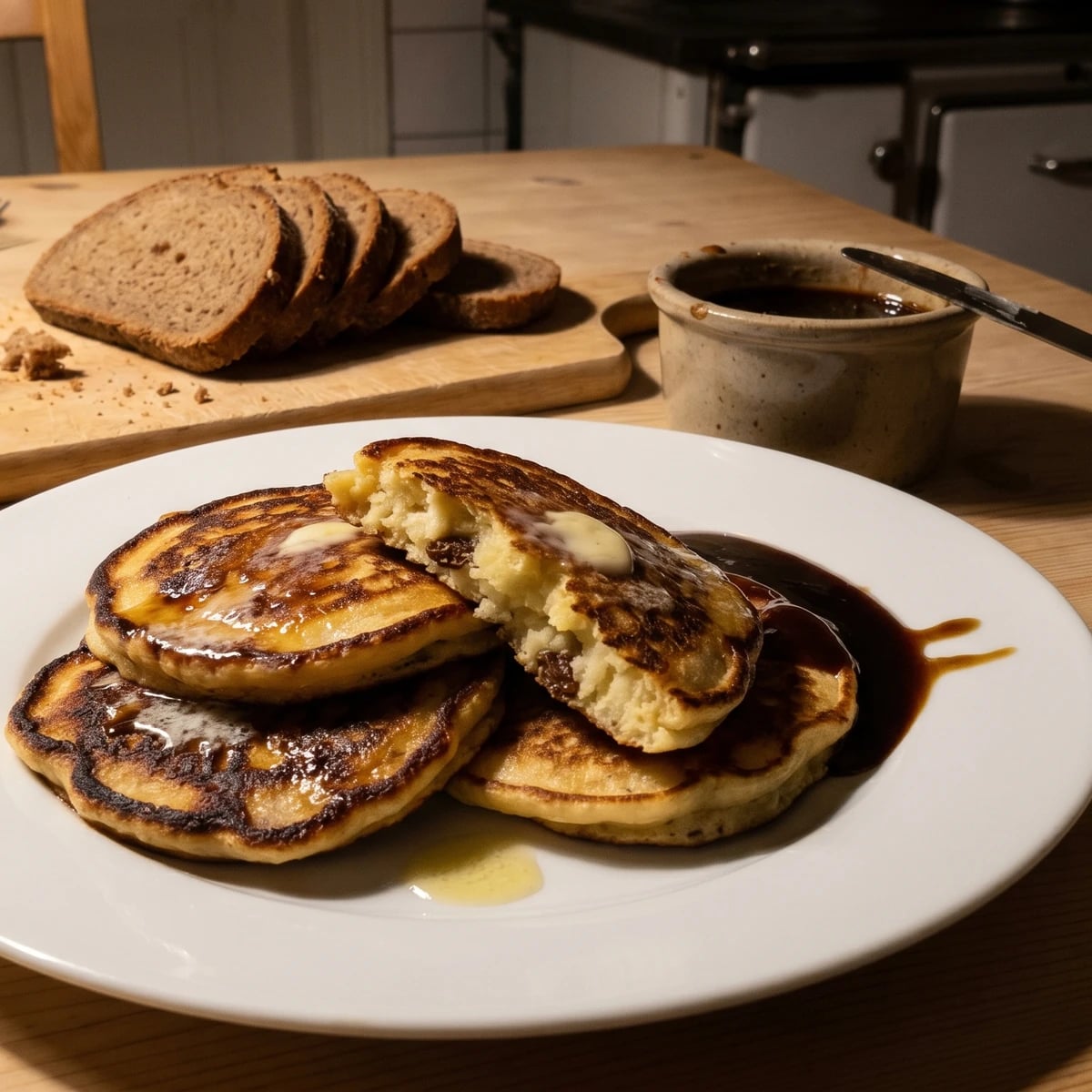
Westfälischer Pickert
Created by Chef Klaus
Lippe's winter potato pancake lives by one job: squeeze the raw grated potatoes dry, keep the settled starch, and fry the batter slowly until the middle cooks through.
Westfälischer Pickert belongs to Lippe and East Westphalia, potato country with a winter cupboard. Grated raw potato, flour, yeast, egg, and milk make a thick batter that cooks into a sturdy pancake, pale gold at the edge and soft inside. You eat it with salted butter and Rübenkraut, the dark sugar beet syrup, or with a slice of Leberwurst, liver sausage, if you grew up on the savoury side of the argument.
The regions split even inside Westphalia. Lippe likes the thick yeast Pickert, often with raisins in the batter; the broader Westphalian Lappenpickert is thinner and spread like a cloth in the pan. Some families sweeten it, some put liver sausage on it, and everyone thinks their grandmother settled the matter. She didn't. Im Norden anders, im Süden anders, and here it's even one valley different from the next.
The step that decides it is squeezing the raw potato and saving the starch. If the grated potato goes in wet, the batter turns heavy and grey before the middle cooks. If you squeeze it, pour off the watery liquid, and scrape the white starch back in, you keep the potato body without drowning the dough. Erst verstehen, dann kochen.
Cook it slower than your impatience wants. The outside browns before the raw potato inside has finished, so runter mit der Temperatur and let the pan do its work. This is not a thin Reibekuchen. Das braucht seine Zeit.
Ingredients
floury potatoes
Quantity
750g
peeled
plain flour
Quantity
250g
lukewarm milk
Quantity
150ml
| Ingredient | Quantity |
|---|---|
| floury potatoespeeled | 750g |
| plain flour | 250g |
| lukewarm milk | 150ml |
Where cooking meets culture.
Culinary guides, cultural storytelling, and the editorial depth that makes cooking meaningful.
Discover Culinary Explorer