Culinary Explorer

A cooking platform built around craft, culture, and the stories behind what we eat.
Discover Culinary Explorer
Watermelon Agua Fresca with Fresh Lime

Watermelon Agua Fresca with Fresh Lime

Created by

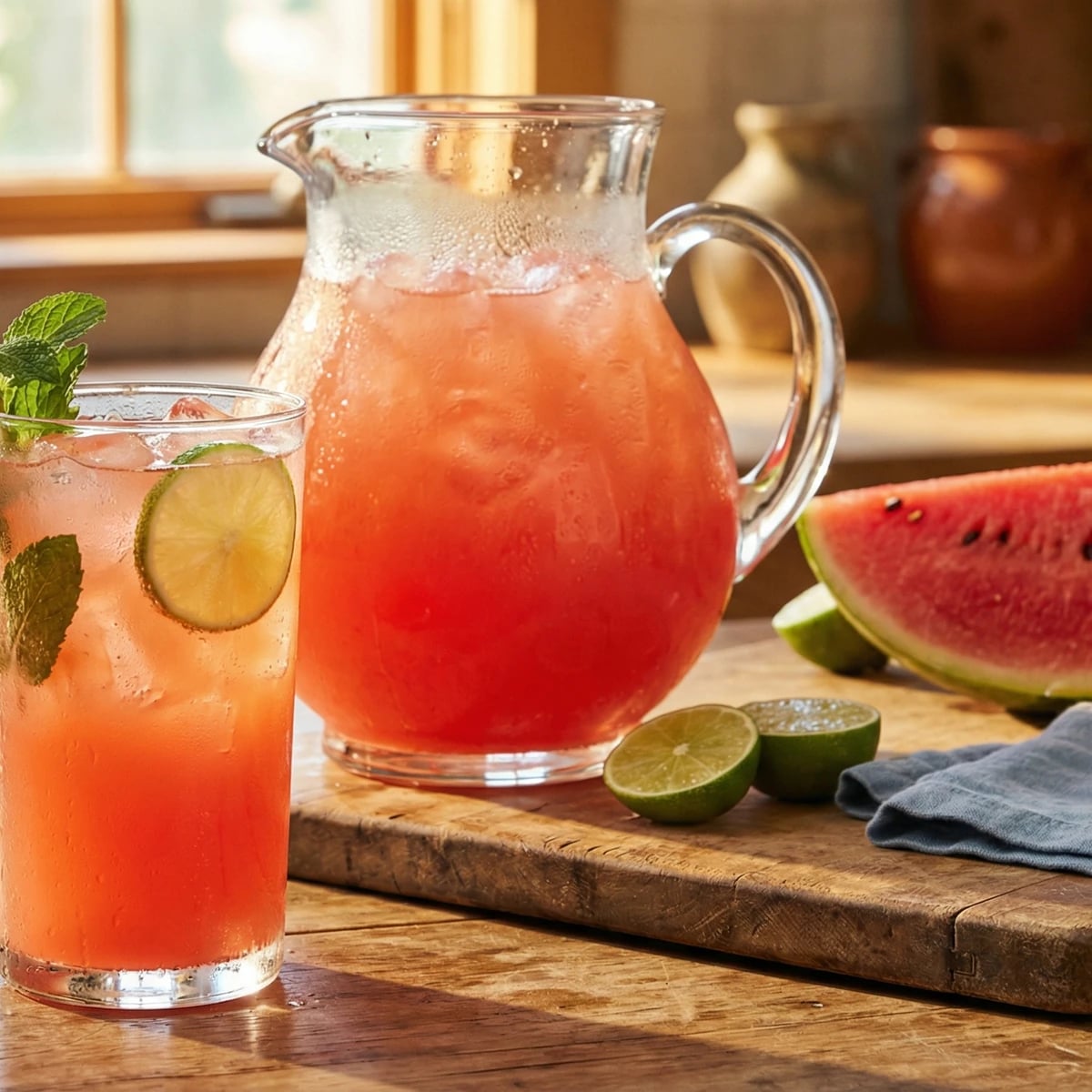
A traditional Mexican refresher that does almost nothing to peak-season watermelon except blend it, brighten it with lime, and pour it over ice for the kind of drink that makes summer feel like a gift.

Beverages
Mexican
BBQ
Picnic
Outdoor Dining
15 min
Active Time
0 min cook15 min total
Yield6 servings (about 8 cups)

Start with the watermelon. It should be heavy for its size, dull on the skin where it rested on warm soil, and when you thump it, you want a deep hollow sound. That is ripeness. That is sugar developed by sun and time. If your melon is pale, watery, or tastes like refrigerator, wait for another one.

Agua fresca means fresh water, and the name tells you everything about the philosophy. In Mexican markets, these drinks are made each morning from whatever fruit is at its peak. Watermelon in July and August. Cantaloupe when the fields are heavy with it. The blender does the work of releasing juice and flesh, and cold water stretches the fruit into something you can drink all afternoon.

Perfect ripeness means you need almost nothing else. A squeeze of lime wakes everything up. A small spoon of local honey if your melon is less than ideal. That is all. Let things taste of what they are.

Every glass is a meaningful choice. Buy your watermelon from someone who grew it. Squeeze your own limes. Skip the bottled juice and the processed sweeteners. The connection matters, and the drink tastes better for it.

The technique, the tradition, and the story behind every dish.

Discover Culinary Explorer

Ingredients

ripe watermelon

Quantity

8 cups (about 4 pounds)

seeded and cubed

cold water

Quantity

1 cup

fresh lime juice

Quantity

3 tablespoons

about 2 limes, freshly squeezed

local honey or simple syrup

Quantity

1-2 tablespoons

to taste

fine sea salt

Quantity

pinch

ice

Quantity

for serving

fresh mint sprigs (optional)

Quantity

for garnish

lime wheels (optional)

Quantity

for garnish

Equipment Needed

  • Blender (high-speed preferred)
  • Fine-mesh strainer (optional)
  • Large pitcher (2-quart capacity)
  • Citrus juicer or reamer

Instructions

  1. 1

    Assess your watermelon

    Cut your watermelon and taste a piece before you begin. This tells you everything. Is it sweet enough on its own? Then you will need less honey. Is it a little flat? The lime and salt will help, but add honey generously. Cooking is responding to what you have, not following instructions blindly.

    The best watermelons come from farmers who pick them ripe rather than shipping them green. Ask at the market when they were harvested.
  2. 2

    Blend the watermelon

    Add the watermelon cubes to your blender in batches if needed. Blend on high for thirty seconds until completely smooth and frothy. The color should be a deep, opaque pink with tiny air bubbles throughout. You will hear the machine working through the flesh, then settling into a smooth hum when the fruit has surrendered.

  3. 3

    Strain or leave whole

    Pour the blended watermelon through a fine-mesh strainer into a large pitcher, pressing gently with a spoon to extract all the juice. This gives you a cleaner drink. Or skip straining entirely if you prefer body and texture. Both are correct. Mexican grandmothers do it both ways.

    Save the strained pulp. Freeze it into ice cubes for your next batch, or stir it into yogurt.
  4. 4

    Add water and lime

    Stir in the cold water to lighten the drink. Add the fresh lime juice and watch the color brighten slightly. The lime does more than add tartness. It wakes up the watermelon and makes the sweetness feel alive rather than flat. Squeeze the limes yourself. Bottled juice tastes tired.

  5. 5

    Season and balance

    Add a small pinch of sea salt. Taste. The salt should be invisible but working, pushing the sweetness forward. Now add honey if needed, starting with one tablespoon. Stir, taste, adjust. A truly ripe watermelon may need nothing at all. Trust your palate more than the recipe.

  6. 6

    Chill and serve

    Refrigerate the agua fresca for at least thirty minutes. It improves as it rests and the flavors marry. Serve over ice in tall glasses. Tuck a sprig of mint against the glass if you have it growing nearby, and float a thin lime wheel on top. Drink it on the porch. Drink it at the picnic table. Drink it standing in the kitchen with the screen door open.

    Agua fresca is best the day it is made. By tomorrow, the aliveness fades. Make only what you will drink.

Chef Tips

  • Buy your watermelon whole, not pre-cut. The moment you slice into a melon, the clock starts. Pre-cut supermarket watermelon has been dying in plastic for days.
  • Local honey from a beekeeper you trust adds complexity that white sugar cannot. The floral notes shift with the season and the source. This matters.
  • If watermelon season has passed, do not force it. Make the drink with whatever fruit is at its peak: cantaloupe in late summer, pomegranate in fall, blood orange in winter. The principle stays the same.
  • A tiny pinch of cayenne stirred in at the end is traditional in some regions of Mexico. It adds warmth without heat if you use restraint.

Advance Preparation

  • Cube and refrigerate watermelon up to one day ahead. Cold fruit blends into a colder drink.
  • Squeeze lime juice up to four hours ahead and refrigerate. Beyond that, the brightness fades.
  • The finished agua fresca keeps refrigerated for one day but is best within hours of making. Stir well before serving as it separates naturally.

Frequently Asked Questions

Nutrition Information

1 serving (about 320g)

Calories
110 calories
Total Fat
0 g
Saturated Fat
0 g
Trans Fat
0 g
Unsaturated Fat
0 g
Cholesterol
0 mg
Sodium
30 mg
Total Carbohydrates
28 g
Dietary Fiber
1 g
Sugars
23 g
Protein
2 g

Note: Chef personas and recipes are created with AI assistance. Cook with care: follow safe food-handling practices, check doneness with a thermometer when needed, and adapt for allergies and your kitchen.

Where cooking meets culture.

Culinary guides, cultural storytelling, and the editorial depth that makes cooking meaningful.

Discover Culinary Explorer

More from Chef Ally's Beverages

Browse the full collection