
Chef Joost
Advocaat (Dutch Egg Liqueur)
Advocaat is the Dutch liqueur you eat with a spoon: brandewijn, yolks and sugar turned into a glossy Easter glass, with a hat of slagroom and no apology.
A cooking platform built around craft, culture, and the stories behind what we eat.
Created by
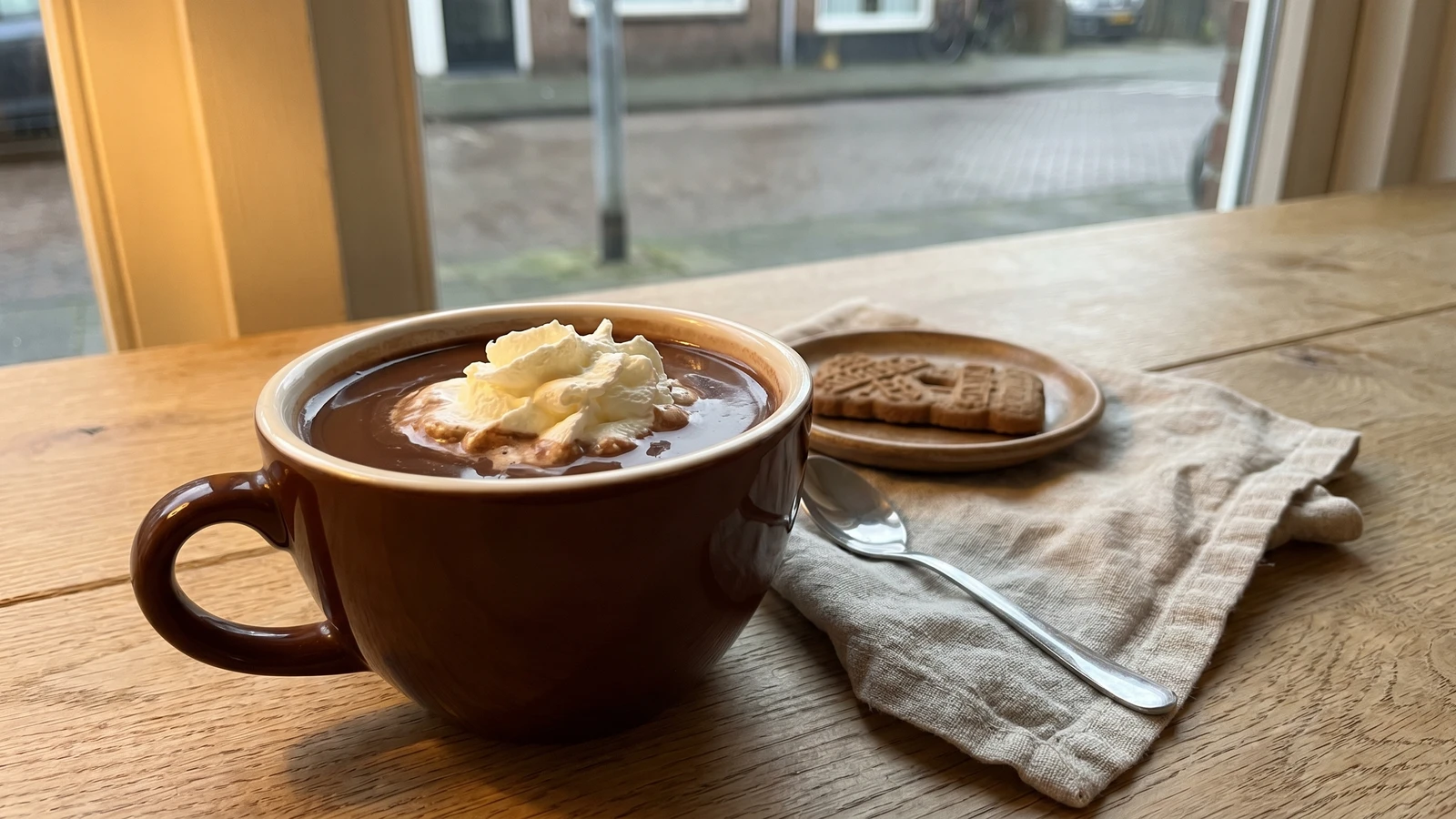
A cup of warm chocolate milk after the ice, dark and glossy under a soft cap of beaten cream, proves the Dutch winter has always known how to apologize.
Some dishes belong to a place, and some belong to a moment. Warme chocolademelk met slagroom belongs to the instant you come in from weather that has taken liberties with your fingers. Rain on the bicycle, wind off the canal, skates unlaced with clumsy hands: then the cup arrives, dark at the rim, white on top, and the room forgives the outdoors.
The name already tells you nearly everything. Chocolademelk is only chocolate milk, no poetry hiding there, but slagroom is the useful word: cream that has been beaten, from slaan, to strike. The Dutch are not sentimental about technique. We beat the cream until it stands softly, spoon it higher than is reasonable, and call the whole thing gezellig, convivial, because the word is not a decoration here. It is the point.
But let me tell you a secret. The mistake is cocoa powder made thin and sweet. Good warme chocolademelk is not brown milk with ambitions; it is real dark chocolate melted slowly into milk, with just enough sugar to steady the bitterness and a pinch of salt to make the chocolate speak clearly. Keep the cream unsweetened. The cup is already sweet enough, and the cold white cream should melt down through the hot chocolate in slow pale rivers. Hou het altijd simpel. One saucepan, one whisk, four cups, and no theatre.
Chocolate drinking reached the Dutch Republic through seventeenth-century Atlantic trade, first as an expensive colonial luxury before becoming a wider household drink. Amsterdam became central to European cocoa processing in the nineteenth century after Coenraad Johannes van Houten patented his cocoa press in 1828, making cocoa powder cheaper, darker, and easier to prepare. The winter pairing of warme chocolademelk with slagroom remains tied to skating culture, especially koek-en-zopie stalls, the temporary food stands that appear beside natural ice when the canals and ponds finally freeze.
Quantity
800ml
Quantity
160g
finely chopped
Quantity
1 tablespoon
Quantity
1 to 2 tablespoons
Quantity
1 pinch
Quantity
200ml
Quantity
1/2 teaspoon
| Ingredient | Quantity |
|---|---|
| whole milk | 800ml |
| dark chocolate, 60 to 70 percent cocoafinely chopped | 160g |
| Dutch cocoa powder | 1 tablespoon |
| sugar (optional) | 1 to 2 tablespoons |
| fine sea salt | 1 pinch |
| cold heavy cream | 200ml |
| vanilla extract (optional) | 1/2 teaspoon |
Chop the chocolate finely so it melts before the milk gets too hot. This is not fussiness. Big chunks sit at the bottom and sulk, and then you turn up the heat, and then the milk catches. Small pieces keep the peace.
Pour the milk into a saucepan and set it over medium-low heat. Whisk in the cocoa powder, sugar, and salt until smooth, then warm the milk until tiny bubbles gather around the edge of the pan. Do not boil it. Boiled milk tastes tired, and we are trying to recover from the weather.
Take the pan off the heat and add the chopped chocolate. Let it sit for one minute, then whisk slowly until the drink turns dark, glossy, and completely smooth. Taste now. If your chocolate is very bitter, add the second spoon of sugar; if it tastes flat, add the smallest extra pinch of salt.
Whip the cold cream with the vanilla, if using, until it holds soft peaks. Stop before it turns stiff. Slagroom should sit on the drink like a snowdrift, not like masonry.
Pour the hot chocolate into warmed mugs and spoon the unsweetened slagroom generously over the top. Serve immediately, with the spoon tucked beside the cup, because half the pleasure is deciding whether to stir it in or let the cream sink at its own slow pace.
1 serving (about 280g)
Culinary guides, cultural storytelling, and the editorial depth that makes cooking meaningful.
Discover Culinary ExplorerChef Joost
Advocaat is the Dutch liqueur you eat with a spoon: brandewijn, yolks and sugar turned into a glossy Easter glass, with a hat of slagroom and no apology.

Chef Joost
Anijsmelk is the Dutch night drink of cold hands and quiet kitchens: milk, anise, a little butter, and the sweet medicinal smell every child remembers.

Chef Joost
Beerenburg is Friesland in a small glass: bitter herbs, old jenever, cold quays, and a name that belongs not to bears but to an Amsterdam spice merchant.

Chef Joost
The bishop's red wine, scented with orange and clove, belongs to Pakjesavond as surely as pepernoten: a small pot of spice-route history passed between cold hands.