Culinary Explorer

A cooking platform built around craft, culture, and the stories behind what we eat.
Discover Culinary Explorer
Warm Farro with Roasted Autumn Vegetables

Warm Farro with Roasted Autumn Vegetables

Created by

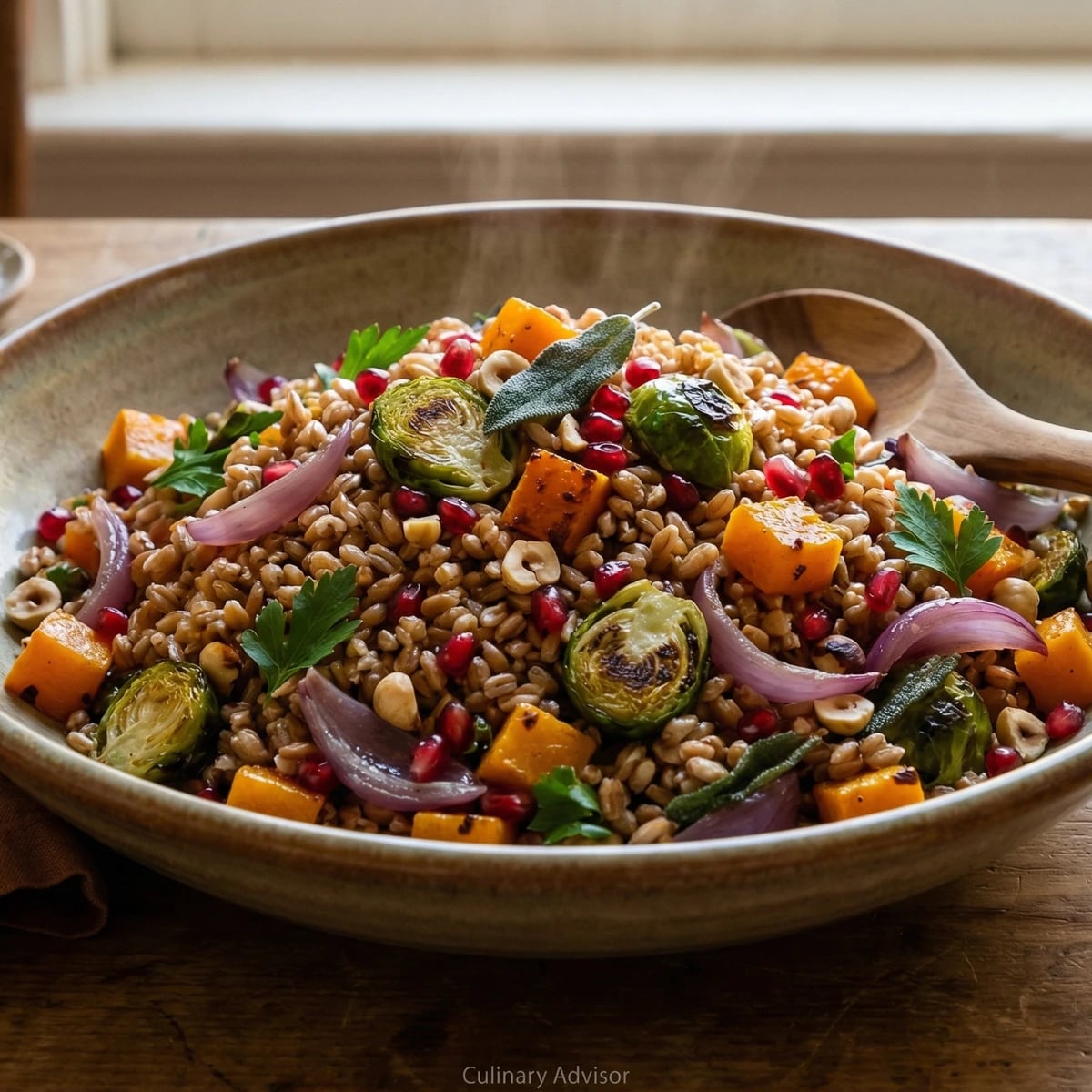
Nutty, chewy farro dressed while warm so it drinks in every drop of sherry vinaigrette, tossed with deeply caramelized squash, Brussels sprouts, and sweet roasted onions from the autumn market.

Salads
Italian
Thanksgiving
Dinner Party
25 min
Active Time
45 min cook1 hr 10 min total
Yield6 servings

Farro is one of the oldest cultivated grains in the world, and it has survived this long because it is nearly perfect. Chewy without being tough. Nutty without overwhelming. It holds its shape through cooking and through dressing, which makes it ideal for a salad like this one.

The secret here is warmth. Toss the farro while it is still steaming from the pot, and it will absorb the vinaigrette like a sponge. Cold grains sit there, resistant. Warm grains welcome the dressing into their structure. This is the difference between a grain salad that tastes dressed and one that tastes alive.

At the market, look for butternut squash that feels heavy for its size with matte, unblemished skin. Brussels sprouts should be tight and bright green, the smaller ones sweeter and more tender. Red onions with papery skins and no soft spots. These vegetables are at their peak now, and roasting them until they caramelize brings out sugars you cannot achieve any other way.

This salad improves with twenty minutes of resting after assembly. The vegetables release their juices, the farro continues to absorb, and everything comes together. But it does not want to sit overnight. Serve it the day you make it, while the textures still have contrast.

The technique, the tradition, and the story behind every dish.

Discover Culinary Explorer

Ingredients

semi-pearled farro

Quantity

1 1/2 cups

butternut squash

Quantity

1 small (about 2 pounds)

peeled and cut into 3/4-inch cubes

Brussels sprouts

Quantity

1 pound

trimmed and halved

red onion

Quantity

1 large

cut into 1/2-inch wedges

garlic cloves

Quantity

6

unpeeled

extra-virgin olive oil

Quantity

8 tablespoons, divided

fine sea salt

Quantity

1 1/2 teaspoons, divided, plus more to taste

black pepper

Quantity

to taste

freshly cracked

fresh sage leaves

Quantity

8

fresh thyme

Quantity

4 sprigs

sherry vinegar

Quantity

2 tablespoons

Dijon mustard

Quantity

1 teaspoon

hazelnuts

Quantity

1/2 cup

toasted and roughly chopped

pomegranate seeds

Quantity

1/2 cup

fresh flat-leaf parsley

Quantity

1/4 cup

roughly chopped

baby arugula

Quantity

2 cups

Equipment Needed

  • Two rimmed sheet pans
  • Large pot for cooking farro
  • Large mixing bowl
  • Small bowl for vinaigrette

Instructions

  1. 1

    Roast the vegetables

    Heat your oven to 425F. Spread the butternut squash on one sheet pan and the Brussels sprouts and onion wedges on another. Tuck the unpeeled garlic cloves among the Brussels sprouts. Drizzle each pan with three tablespoons of olive oil and half a teaspoon of salt. Toss with your hands until everything glistens. Scatter the sage leaves and thyme sprigs over the vegetables. Roast until deeply caramelized, about 35 to 40 minutes, stirring once halfway through. The squash should be tender when pierced, the Brussels sprouts charred at the edges, the onions soft and sweet.

    Do not crowd the pans. Vegetables need space to roast, not steam. Use two sheet pans even if one seems like it would fit everything.
  2. 2

    Cook the farro

    While the vegetables roast, bring a large pot of salted water to a boil. It should taste like the sea. Add the farro and cook until tender but still chewy, about 20 to 25 minutes for semi-pearled. Taste a few grains. You want resistance, not mush. Drain well and transfer to your largest mixing bowl while still hot.

  3. 3

    Make the vinaigrette

    Squeeze the roasted garlic from its papery skins into a small bowl. Mash it to a paste with the back of a fork. Whisk in the sherry vinegar and Dijon mustard until smooth. Slowly drizzle in the remaining two tablespoons of olive oil, whisking constantly until emulsified. Season with a pinch of salt and several grinds of black pepper. Taste. Adjust. The dressing should be bright enough to cut through the sweetness of the roasted vegetables.

    Roasted garlic makes the vinaigrette sweet and mellow. Raw garlic would be too sharp for this salad.
  4. 4

    Dress the warm farro

    Pour the vinaigrette over the warm farro and toss thoroughly. The grains will absorb the dressing as they cool. This is the moment that makes the salad. Do not wait. Warm farro dressed immediately will taste completely different from farro dressed cold.

  5. 5

    Assemble the salad

    Add the roasted vegetables to the dressed farro. Pick out and discard the thyme stems, but leave the crisped sage leaves. They are part of the dish now. Fold everything together gently so the vegetables stay in pieces rather than breaking apart. Add the chopped hazelnuts and half the pomegranate seeds. Fold in the parsley and arugula, tossing until the greens barely wilt from the residual heat.

  6. 6

    Rest and serve

    Let the salad rest at room temperature for fifteen to twenty minutes. The flavors will marry and the farro will continue absorbing. Taste again. Adjust salt if needed. Transfer to a wide serving bowl or platter, scatter the remaining pomegranate seeds over the top, and bring it to the table. This salad does not need to be hot. Warm or room temperature is exactly right.

Chef Tips

  • At the farmers market, choose butternut squash with a long neck and small seed cavity. More neck means more usable flesh and less waste. The skin should be matte and hard. Shiny skin means it was picked too early.
  • Brussels sprouts the size of a large marble are sweeter than bigger ones. Look for tight heads with no yellowing outer leaves. If you can only find large sprouts, quarter them instead of halving.
  • Semi-pearled farro cooks faster than whole farro and absorbs dressing better. If you can only find whole farro, soak it overnight and add fifteen minutes to the cooking time.
  • Toast hazelnuts in the oven while the vegetables roast. Eight minutes at 350F, then rub them in a kitchen towel to remove the papery skins. The warmth releases their oils and transforms their flavor.
  • This salad travels well to a dinner party. Transport the components separately and assemble on arrival. The farro and vegetables can stay at room temperature for several hours. Add the arugula only when you are ready to serve.

Advance Preparation

  • Farro can be cooked up to two days ahead and refrigerated. Bring it to room temperature before dressing, or warm it gently with a splash of water.
  • Vegetables can be roasted up to four hours ahead and held at room temperature. Do not refrigerate, or they will lose their texture.
  • The vinaigrette can be made up to three days ahead and refrigerated. Bring to room temperature and whisk again before using.
  • The complete salad is best served within two hours of assembly. The arugula will wilt and the textures will soften if it sits longer.

Frequently Asked Questions

Nutrition Information

1 serving (about 370g)

Calories
510 calories
Total Fat
27 g
Saturated Fat
3 g
Trans Fat
0 g
Unsaturated Fat
22 g
Cholesterol
0 mg
Sodium
560 mg
Total Carbohydrates
65 g
Dietary Fiber
12 g
Sugars
8 g
Protein
13 g

Note: Chef personas and recipes are created with AI assistance. Cook with care: follow safe food-handling practices, check doneness with a thermometer when needed, and adapt for allergies and your kitchen.

Where cooking meets culture.

Culinary guides, cultural storytelling, and the editorial depth that makes cooking meaningful.

Discover Culinary Explorer

More from Chef Ally's Salads

Browse the full collection