Chef Lesia
Baklazhanna Ikra (баклажанна ікра, eggplant caviar)
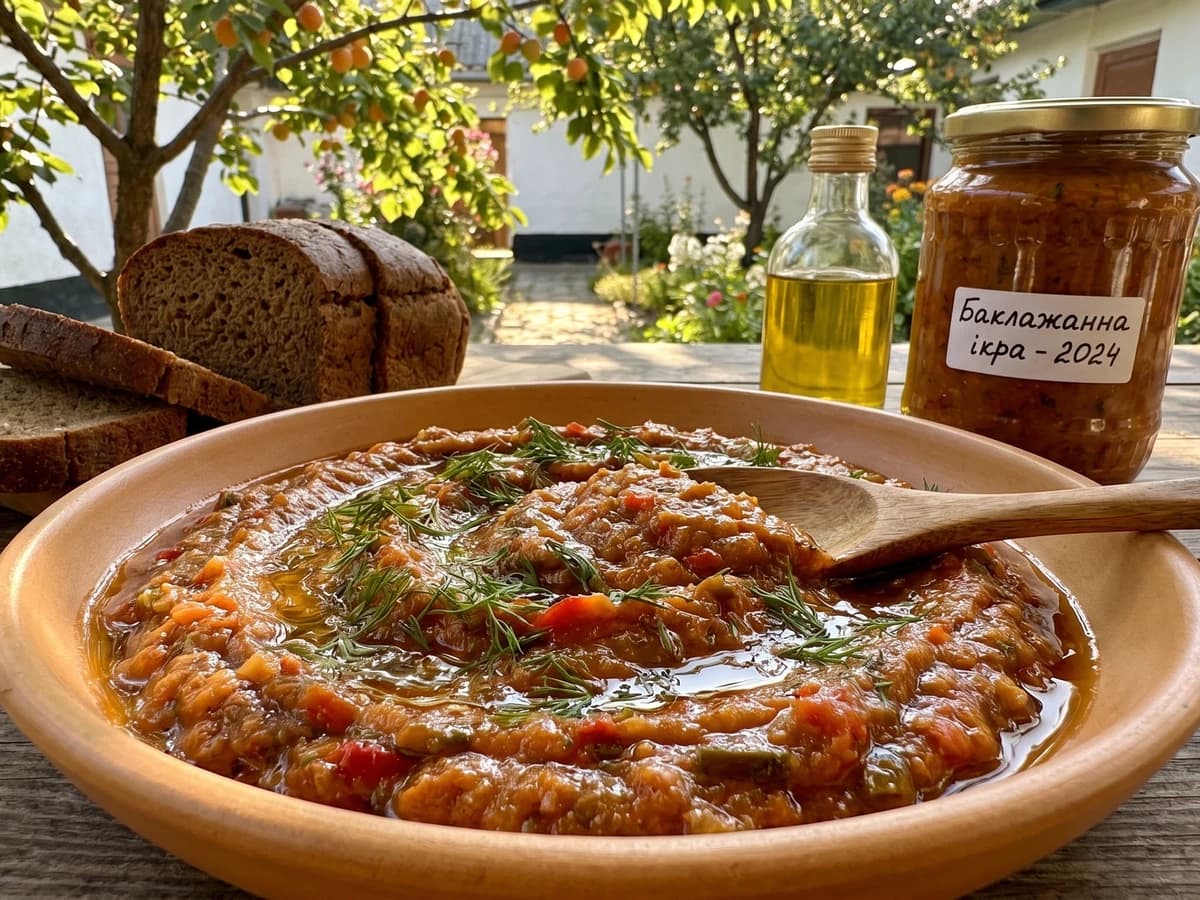
Eggplants collapse into silk, tomatoes give up their summer, and the pan turns sweet and smoky enough that a spoon dragged through leaves a clean path.
A cooking platform built around craft, culture, and the stories behind what we eat.
Created by
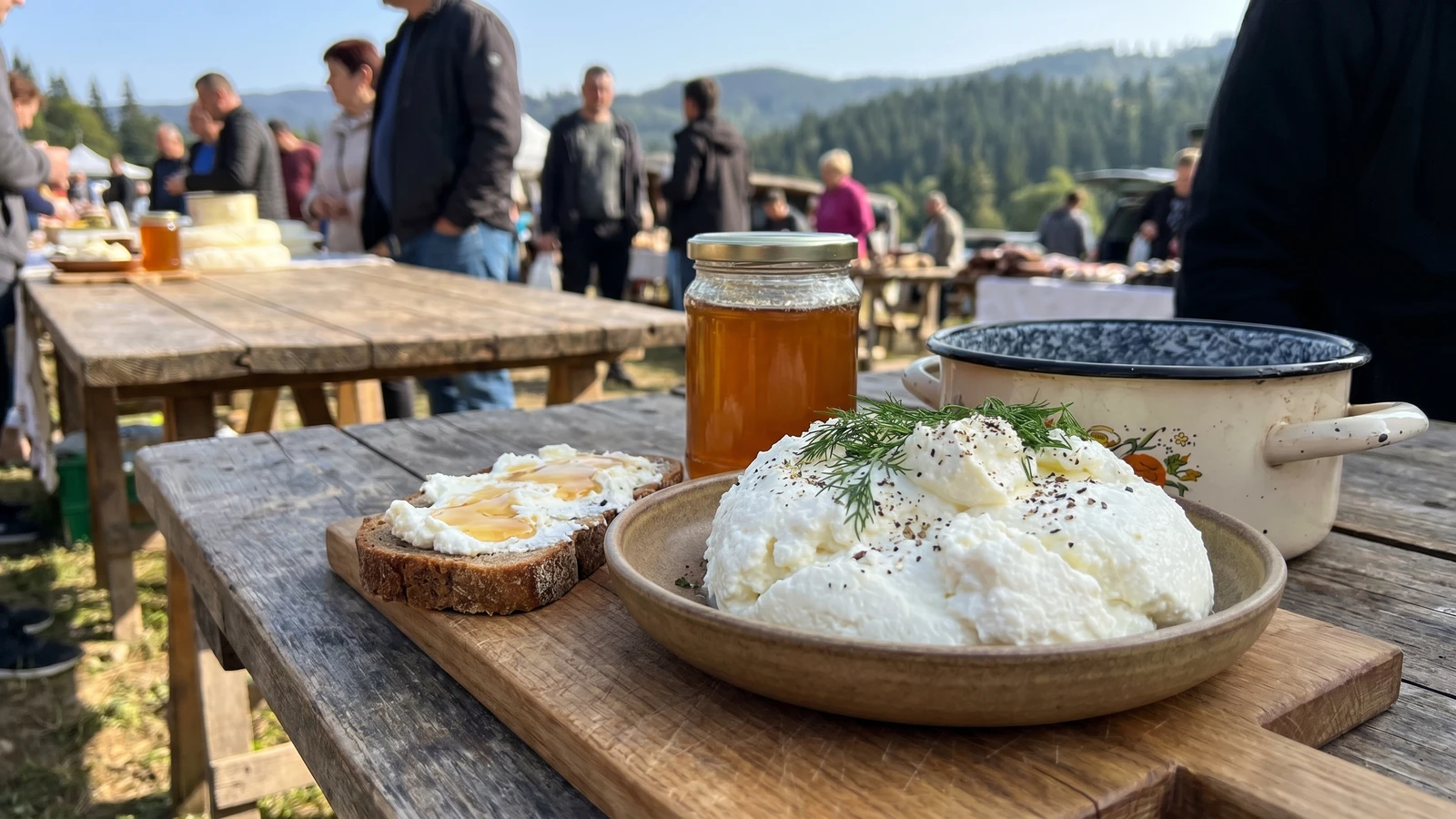
The budz is lifted out first; what looks like pale leftover whey still has a second cheese hiding in it, soft, warm, and sweet enough for bread with honey.
The most honest cheese is the one you nearly poured away. After the budz is lifted from the vat, the whey looks spent, pale and quiet, the sort of thing a tired cook might tip down the sink. Put it back over the heat and it answers with snow: small, milky curds rising through yellow-green liquid, soft as ricotta and sweeter than thrift has any right to be.
This is Carpathian food, not my Kherson steppe food, and I say that because Ukraine is not one kitchen with one accent. In the south, my litnya kuhnia, the summer kitchen, was loud with tomatoes, aubergines, whole watermelons in brine. On the polonyna, the high mountain pasture, milk is the season. Budz first, bryndza later, and vurda from what remains. The same wisdom, really: don't waste what still has food in it.
The whole dish rests on gentleness. Fresh sweet whey still carries delicate proteins, but you have to catch them slowly; boil hard and you beat the cheese into little dry grains, all scold and no tenderness. Warm it until the smell changes, until the edge of the pot sounds right, that quiet tremble before a boil. Then stop and let the curds climb by themselves.
Serve it the day you make it if you can. A spoonful of warm vurda on bread with honey is one kind of comfort; another is dill, black pepper, and green sunflower oil. Enough for eight guests or one hungry Ukrainian who has been standing over the pot too long.
Vurda belongs to the Hutsul dairy culture of the Ukrainian Carpathians, especially the polonyna, the high summer pastures where sheep were milked and budz, a fresh rennet cheese, was made before bryndza was salted and aged. The whey left from budz was heated for a second curd, a no-waste practice shared across the Carpathian arc under related names such as urda, but in Ukrainian mountain kitchens it remains tied to shepherd season and fresh sheep's milk. Hutsul sheep bryndza received Ukraine's first geographical indication registration in 2019, and vurda is part of the same highland milk economy even if it rarely gets the same attention.
Quantity
4 litres
ideally sheep's whey, no older than 24 hours
Quantity
500ml
for a fuller curd
Quantity
2 to 4 tablespoons
only if the curds need help
Quantity
1/2 teaspoon, plus more to taste
Quantity
1 to 2 tablespoons
to loosen
Quantity
to serve
Quantity
to serve
| Ingredient | Quantity |
|---|---|
| fresh sweet whey from rennet-set cheeseideally sheep's whey, no older than 24 hours | 4 litres |
| whole sheep's milk or cow's milk (optional)for a fuller curd | 500ml |
| sour milk, cultured buttermilk, or lemon juice (optional)only if the curds need help | 2 to 4 tablespoons |
| fine sea salt | 1/2 teaspoon, plus more to taste |
| smetana or thick cream (optional)to loosen | 1 to 2 tablespoons |
| dark bread, warm potatoes, or mamalyga (optional) | to serve |
| honey, fresh dill, cracked black pepper, or unrefined sunflower oil (optional) | to serve |
Strain the fresh whey through a fine sieve into a large heavy pot. If you're adding milk for a fuller curd, stir it in now. The whey should smell clean and milky, not sharp enough to make your nose pull back; very sour whey gives a lower, tighter yield.
Set the pot over medium-low heat and warm it without rushing. Stir the bottom now and then so the milk solids don't catch, then leave it mostly alone. Watch the liquid move from clear yellow-green to cloudy opal at the edges. If you use a thermometer, aim for the high 80s C, below a hard boil, but your eyes and nose matter more.
When tiny bubbles tremble around the edge and the smell changes from raw whey to warm sweet milk, lower the heat. White flakes should begin to rise like small snow. If the whey stays stubbornly clear, add sour milk, cultured buttermilk, or lemon juice one tablespoon at a time, waiting between each addition. The curds need coaxing, not bullying.
Turn off the heat and let the pot stand until the curds float clearly on top and the whey beneath looks more transparent. Line a colander with damp butter muslin or a clean thin tea towel, then lift the curds gently with a skimmer. Don't pour the whole pot at once unless your cloth is very fine; the best curds are small and will try to escape.
Let the vurda drain for 20 to 30 minutes for a soft, ricotta-like cheese, or longer if you want it firmer for spreading. It should mound on the spoon but still look tender and damp. Stir in the salt while it is still slightly warm, then loosen with a spoon of smetana, cream, or reserved whey if it has tightened too much.
Eat it warm on dark bread with honey, or savoury with dill, black pepper, and a thread of unrefined sunflower oil. It is good beside warm potatoes and very good against mamalyga. Chill what you don't eat and use it within three days; vurda is fresh cheese, not a cheese for forgetting in the fridge.
1 serving (about 65g)
Culinary guides, cultural storytelling, and the editorial depth that makes cooking meaningful.
Discover Culinary ExplorerChef Lesia
Eggplants collapse into silk, tomatoes give up their summer, and the pan turns sweet and smoky enough that a spoon dragged through leaves a clean path.

Chef Lesia
The salt hits first, then the pasture: sheep's milk turned into a white, crumbly cheese that tastes of grass, weather, and the mountain air that made it.

Chef Lesia
The first cheese from the mountain vat is barely cheese yet: sweet milk caught into a warm springy round, unsalted, alive with whey, waiting to become brynza if you let it.

Chef Lesia
Roasted beets turn almost black at the edges, then grind with garlic and walnuts into a crimson spread so dense the spoon leaves a path through it.