Chef Joost
Amsterdamse Ossenworst
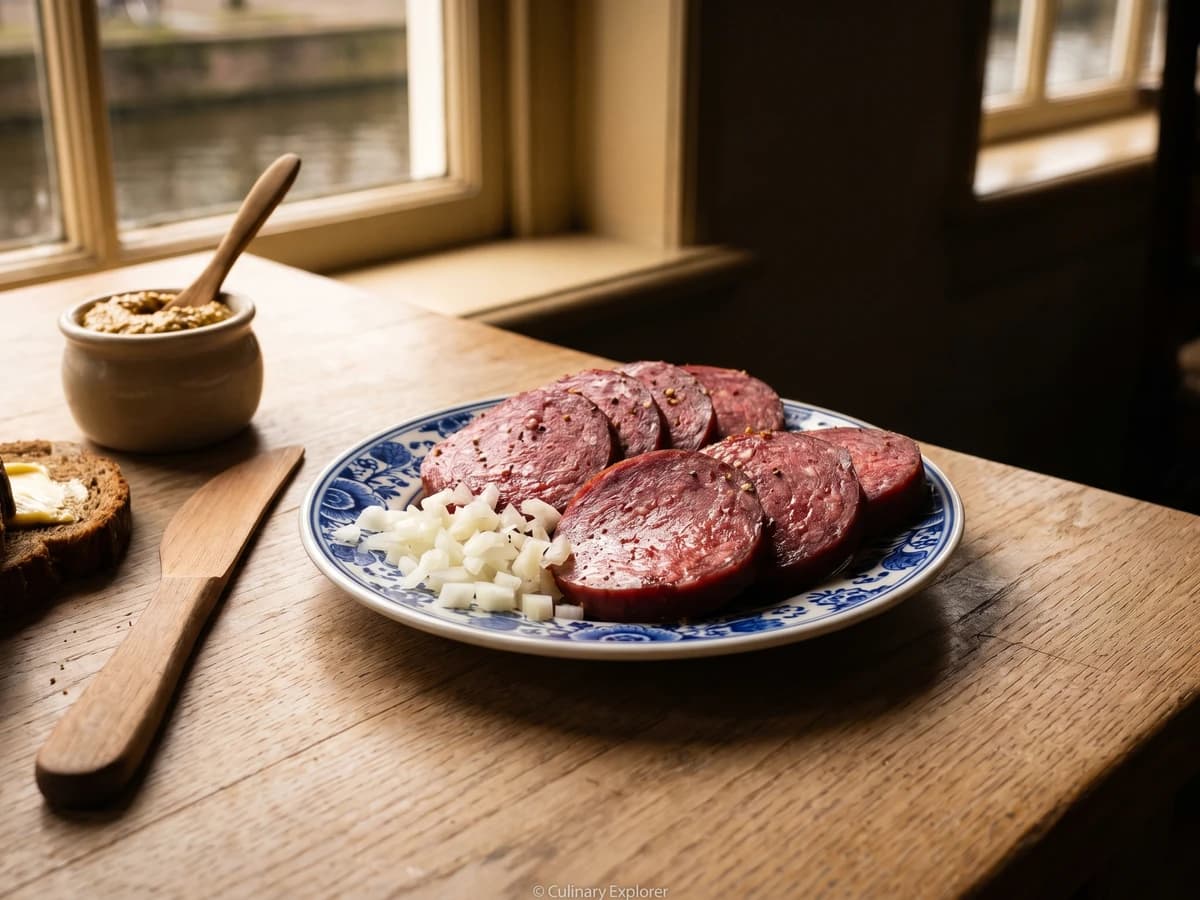
The name means ox sausage, but the real story is Amsterdam itself: cattle trade, Jewish butchers, VOC spices, and raw beef sliced thin with onion.
A cooking platform built around craft, culture, and the stories behind what we eat.
Created by
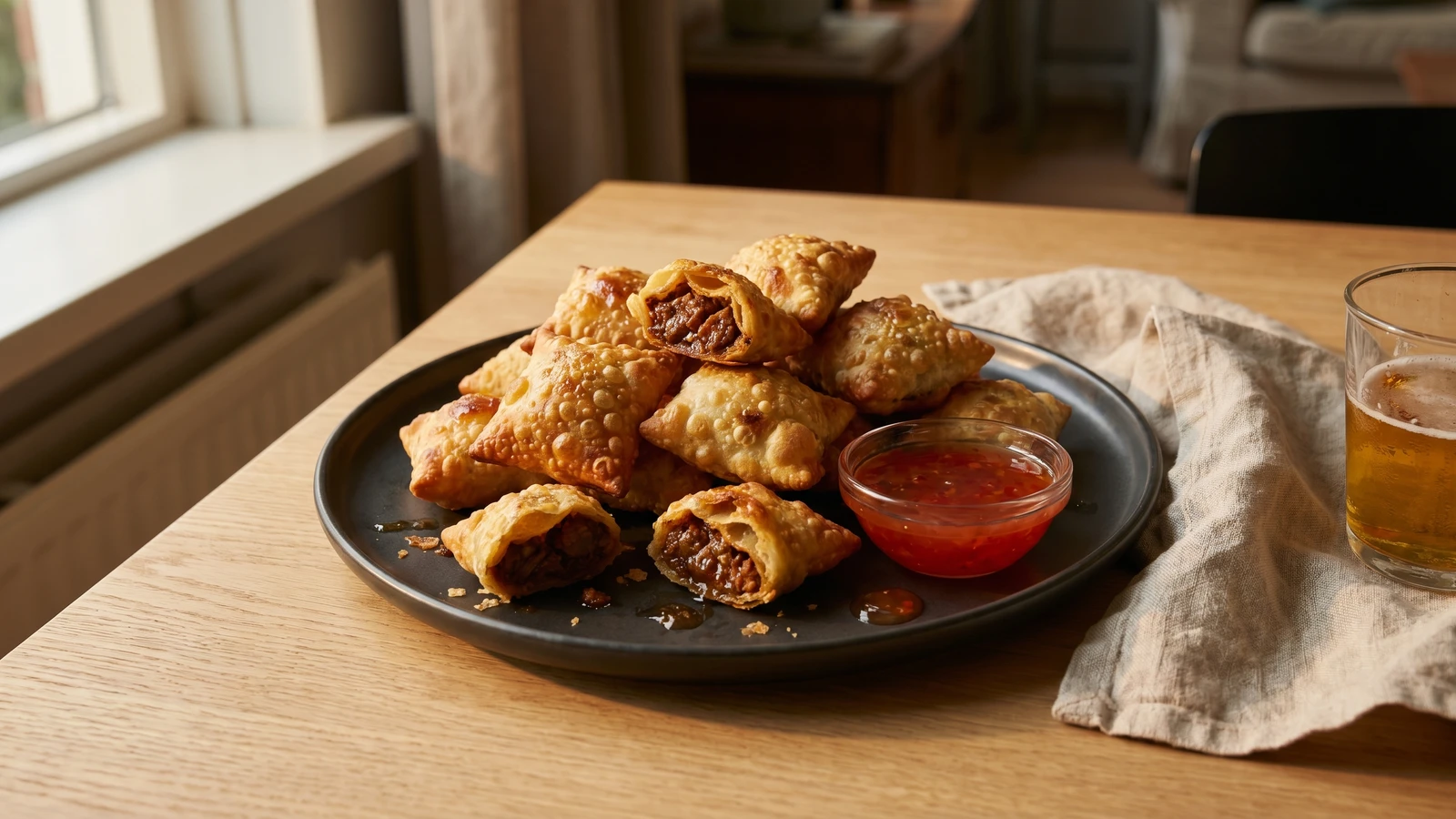
The name means little flames, and this late-night borrel snack earns it: crisp pastry, spiced minced meat, sambal heat, and the Dutch habit of turning fire into finger food.
The name already tells you. Vlammetjes, little flames, are not an old farm dish from a province with clay on its boots. They belong to the borreltafel, the drinks table, where bitterballen, cheese cubes, mustard, and small fried things keep a room gezellig, convivial, long after anyone meant to go home.
But let me tell you a secret. This is Dutch food too. The Dutch kitchen did not stop in 1900, fold its hands, and wait to be called bland by tourists. After the war, Indonesian and Indo-Dutch flavours moved from family kitchens into snack bars, supermarkets, and football evenings: sambal, ketjap, garlic, ginger, heat wrapped neatly in pastry. History and cookery, they cannot be separated, even when the evidence arrives from the freezer aisle.
The trick is restraint with the filling and discipline with the frying. Too wet, and the pastry sulks. Too loose, and the little flame becomes a small disaster with oil around it. Cook the mince first until dry and fragrant, cool it completely, wrap it tightly, then fry until the wrapper is crisp and blistered. Hou het altijd simpel, always keep it simple: good sambal, a thin wrapper, hot oil, and enough napkins for honest people.
Vlammetjes are a late twentieth-century Dutch borrel snack, modeled on the loempia wrapper and filled with spicy minced meat seasoned in the Indo-Dutch register of sambal and ketjap. Their rise belongs to the same snack-bar culture that made Indonesian-derived foods ordinary in the Netherlands after decolonization and the arrival of Indo communities from the former Dutch East Indies. The dish is not provincial heritage but urban Dutch party food, proof that the national table kept absorbing new histories long after the Golden Age spice ships had gone quiet.
Quantity
2 tablespoons, plus more
for frying
Quantity
1 small
very finely minced
Quantity
2
minced
Quantity
1 teaspoon
grated
Quantity
400g
Quantity
2 tablespoons
Quantity
1 tablespoon
Quantity
1 teaspoon
Quantity
1/2 teaspoon
Quantity
1/4 teaspoon
Quantity
1/2 teaspoon
Quantity
1 teaspoon
Quantity
1 tablespoon
Quantity
24 small or 12 large
large wrappers halved
Quantity
1 tablespoon flour mixed with 1 tablespoon water
for sealing
Quantity
to serve
| Ingredient | Quantity |
|---|---|
| neutral oilfor frying | 2 tablespoons, plus more |
| onionvery finely minced | 1 small |
| garlic clovesminced | 2 |
| fresh gingergrated | 1 teaspoon |
| minced beef, or half beef and half pork | 400g |
| sambal oelek | 2 tablespoons |
| ketjap manis | 1 tablespoon |
| ground coriander | 1 teaspoon |
| ground cumin | 1/2 teaspoon |
| ground nutmeg | 1/4 teaspoon |
| fine salt | 1/2 teaspoon |
| cornstarch | 1 teaspoon |
| water | 1 tablespoon |
| spring roll wrapperslarge wrappers halved | 24 small or 12 large |
| flour pastefor sealing | 1 tablespoon flour mixed with 1 tablespoon water |
| sweet chili sauce | to serve |
Warm 2 tablespoons oil in a frying pan over medium heat. Add the onion and cook for 5 minutes until soft and pale gold, then stir in the garlic and ginger for 1 minute. Don't brown them hard; burnt garlic gives a bitter little sermon nobody asked for.
Add the minced meat and break it up finely with a wooden spoon. Cook until no pink remains and the pan looks dry, about 8 to 10 minutes. Vlammetjes need a dry filling, because pastry forgives many sins but not wet mince.
Stir in the sambal, ketjap manis, coriander, cumin, nutmeg, and salt. Mix the cornstarch with 1 tablespoon water, pour it into the pan, and cook for 1 minute until the filling binds lightly and looks glossy rather than loose. Taste carefully and add more sambal if your table expects real flames.
Spread the filling on a plate and let it cool completely, at least 20 minutes. Warm filling softens the wrappers before they reach the oil, and then you are repairing leaks instead of making snacks.
Lay one wrapper with a point facing you. Spoon a narrow line of filling near the bottom, about 1 heaped tablespoon. Fold the bottom point over the filling, tuck in the sides, and roll tightly into a small cylinder or parcel. Seal the edge with flour paste. Keep the unused wrappers covered with a barely damp cloth so they don't crack.
Heat oil in a deep pan to 180C. Fry the vlammetjes in batches for 3 to 4 minutes, turning once, until crisp, blistered, and deep golden. Do not crowd the pan; a crowded pan cools the oil and gives you greasy wrappers, which is how a small flame becomes a damp match.
Lift the vlammetjes onto a rack or paper towel and let them sit for 2 minutes before serving. Pass sweet chili sauce alongside. The first bite should crack under the teeth, then give you warm spice, meat, and a small respectable burn.
1 serving (about 35g)
Culinary guides, cultural storytelling, and the editorial depth that makes cooking meaningful.
Discover Culinary ExplorerChef Joost
The name means ox sausage, but the real story is Amsterdam itself: cattle trade, Jewish butchers, VOC spices, and raw beef sliced thin with onion.

Chef Joost
The little yellow onion on the Amsterdam borrel board looks modest, until vinegar, turmeric, and patience turn it into the sharp bite that wakes cheese, herring, and sausage.

Chef Joost
The bear's claw of the northern snackbar: a seasoned gehaktbal, Dutch meatball, cut into thick discs, skewered with onion, fried until the edges catch, then dragged through peanut sauce.

Chef Joost
The name points to the drink, not the mood: bitterballen are crisp little balls of beef ragout made for the borrel table, mustard beside them, fingers slightly burned by impatience.