
Chef Juliana
Água de Coco
You think opening a coconut belongs to the beach vendor. It doesn't. Chill the fruit, shave the cap, tap a small door, and you've solved the cold drink beside your pê-efe.
A cooking platform built around craft, culture, and the stories behind what we eat.
Created by
You don't need a factory to understand açaí. Hot water, ripe berries, patient hands, and a sieve teach you what real pulp tastes like before the freezer aisle gets involved.
You may be looking at açaí berries and thinking, quietly, isso não é pra mim. Good. That's the exact sentence a gente is going to take apart. This isn't a talent test. It's berries, hot water, rubbing, straining, and paying attention. Cozinhar não é dom, é um aprendizado, and yes, that includes what looks like a mysterious purple bucket from the market.
I learned late enough to respect any food that makes a person nervous. The first time you see fresh açaí worked by hand, it can feel like something that belongs only to people who already know. And the origin of this belongs first to the Indigenous and ribeirinho people of the Amazon, so I won't pretend I invented the chair and sat in it too. What I can do is teach the home-kitchen method plainly, so you understand what real açaí is before anyone sells you powder with a sunset on the package.
The method matters because açaí is all skin and little pulp around a hard seed. Hot water loosens that pulp. Your hands rub it free. The sieve keeps the seeds out. Less water gives you açaí grosso, thick enough to eat with farinha d'água beside fried fish and rice. More water gives you médio or fino, easier to drink. None of this is mystique. It's texture management, anota aí.
This is not the sweet frozen bowl from the south and southeast, with banana and granola, though that has its own life. This is the northern lineage, unsweetened, earthy, deep violet, part of a meal. Put it next to rice, beans, a piece of fish, and something green, and suddenly the pê-efe stretches north without losing itself. Comida de verdade does that. It teaches you the country by feeding you.
In Pará and other parts of the Amazon, vinho de açaí means freshly extracted açaí pulp, not an alcoholic drink, and it is commonly eaten unsweetened with farinha d'água, fish, shrimp, or rice. Açaí comes from Amazonian Indigenous and ribeirinho foodways, where the palm fruit has long been daily food, not a sweet frozen product. The sweet açaí bowl with banana, granola, and guaraná syrup is a later southern and southeastern branch, especially associated with late twentieth-century urban beach culture, and it should not be collapsed into the northern table.
Quantity
4 cups
cleaned and picked over
Quantity
5 cups
about 60°C to 70°C (140°F to 160°F), divided
Quantity
1/4 teaspoon
Quantity
to serve
Quantity
to serve
| Ingredient | Quantity |
|---|---|
| fresh ripe açaí berriescleaned and picked over | 4 cups |
| hot waterabout 60°C to 70°C (140°F to 160°F), divided | 5 cups |
| salt (optional) | 1/4 teaspoon |
| farinha d'água (optional) | to serve |
| cooked white rice and fried fish (optional) | to serve |
Pick through the açaí and remove bits of stem, leaves, and any berries that look dry, pale, or spoiled. Rinse the berries in cool water until the water runs mostly clear. This matters because you're extracting the skin and pulp directly into the bowl, and grit has no business pretending it's tradition.
Put the rinsed berries in a large bowl and cover with 4 cups of hot water, hot enough to sting your finger but not boiling. Let them sit for 10 to 15 minutes, until the skins look darker and rub slightly under your thumb. Boiling water cooks the fruit and dulls the flavor; warm water loosens the pulp without turning it tired.
Drain the soaking water into a measuring cup and save it. Put the softened berries back in the bowl, add 1 cup of the warm soaking water, and rub the berries hard between your hands for 5 to 8 minutes. You'll feel the smooth seeds slipping inside their skins and the water turning thick, dark purple-black. That's the pulp letting go.
Set a coarse sieve over a clean bowl and pour the rubbed mixture through it. Press and scrape the seeds against the sieve with your hand or a spoon until the liquid below looks velvety, not watery. The sieve is doing the honest work here: pulp in the bowl, seeds out of your mouth.
Return the seeds to the mixing bowl, add another 1/2 to 1 cup warm soaking water, and rub again for 2 to 3 minutes. Strain into the same bowl. This second pass pulls what the first rubbing missed, but don't keep adding water forever. That's how açaí grosso becomes fino before you meant it to.
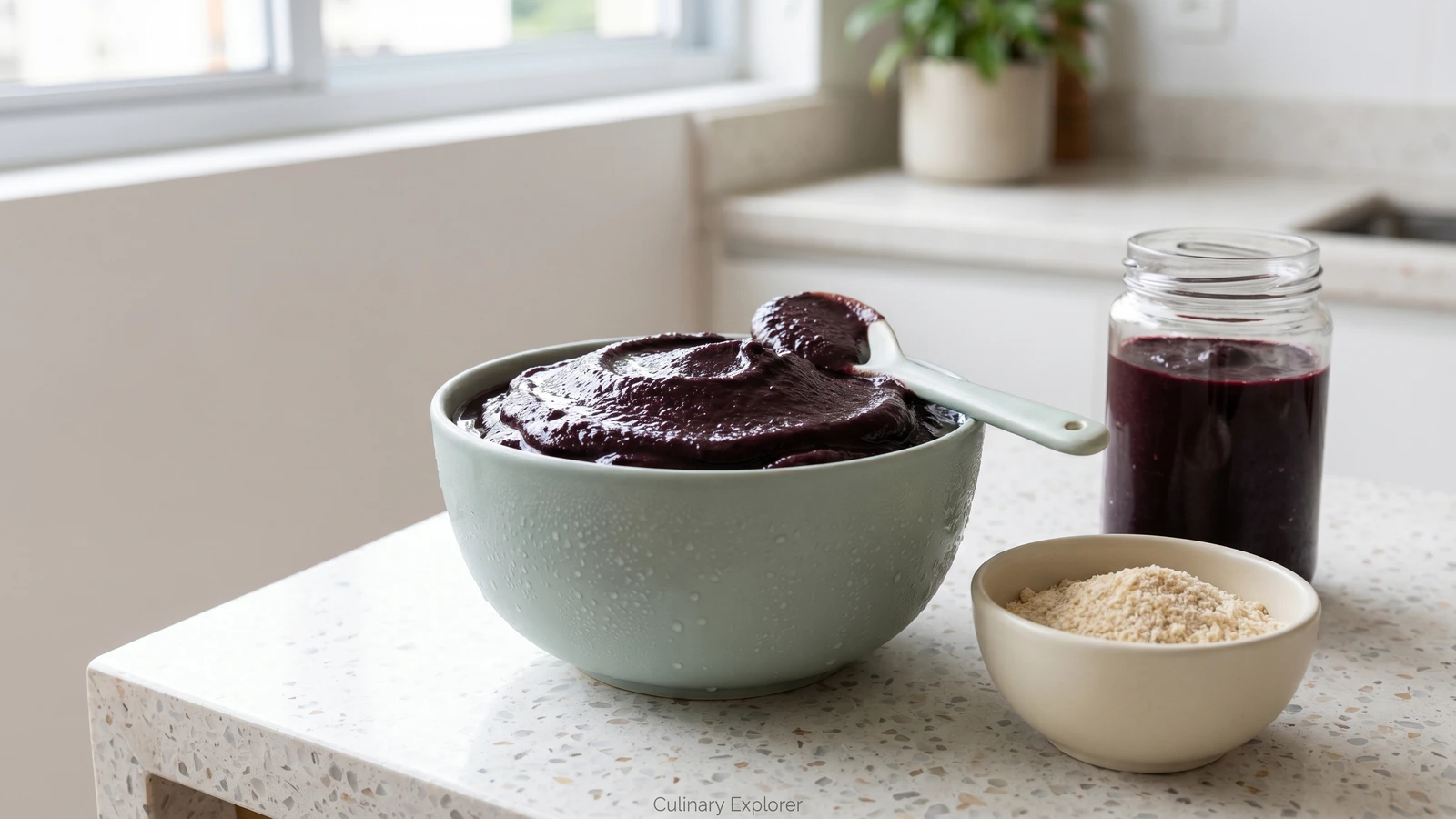
Stir the pulp and check the body. For açaí grosso, it should coat a spoon and fall back slowly, like thin yogurt. For médio, it should pour easily but still look opaque. For fino, it drinks like a thin juice. Add reserved warm water by the tablespoon until it reaches the texture you want, because water is the difference between food and purple disappointment.
Taste first, then add the salt if you want the flavor to open up. Serve right away, still fresh and deep violet, with farinha d'água stirred in at the table or beside rice and fried fish. If you're used to sweet açaí, your mouth may need a minute. Good. Let it learn something.
If you're not serving it right away, chill the pulp quickly in a covered jar and use it within 24 hours. For longer storage, freeze in 1-cup portions. Fresh açaí ferments fast, and ignoring that doesn't make you traditional, it makes you someone with a sad jar in the fridge.
1 serving (about 240g)
Culinary guides, cultural storytelling, and the editorial depth that makes cooking meaningful.
Discover Culinary ExplorerChef Juliana
You think opening a coconut belongs to the beach vendor. It doesn't. Chill the fruit, shave the cap, tap a small door, and you've solved the cold drink beside your pê-efe.

Chef Juliana
Nobody is scared of a blender. Cachaça, coconut milk, condensed milk, and ice go in, and thirty seconds later the churrasco drink is solved.

Chef Juliana
You don't need a bar kit. Fresh maracujá, cachaça, condensed milk, and thirty honest seconds in the blender make a cold Brazilian toast that tastes bright, tart, and grown-up.

Chef Juliana
You don't need a machine to make coffee that smells like a Brazilian kitchen. Hot water, fresh grounds, a clean coador de pano, and the patience to pour like you mean it.