Chef Juliana
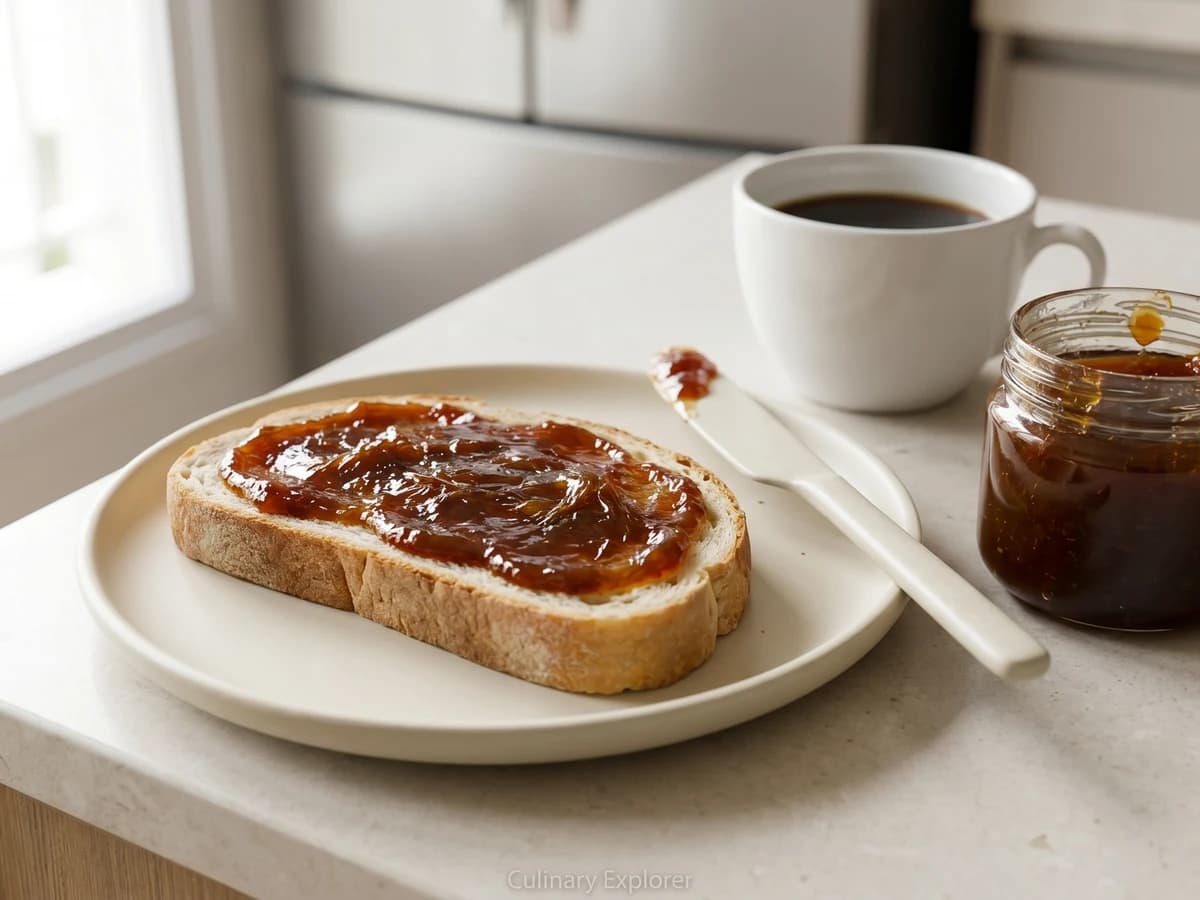
Chimia de Fruta
You don't need a factory jar to put something good on bread. Fruit, sugar, lemon, and patience turn into chimia, the kind of comida de verdade that makes breakfast behave.
A cooking platform built around craft, culture, and the stories behind what we eat.
Created by
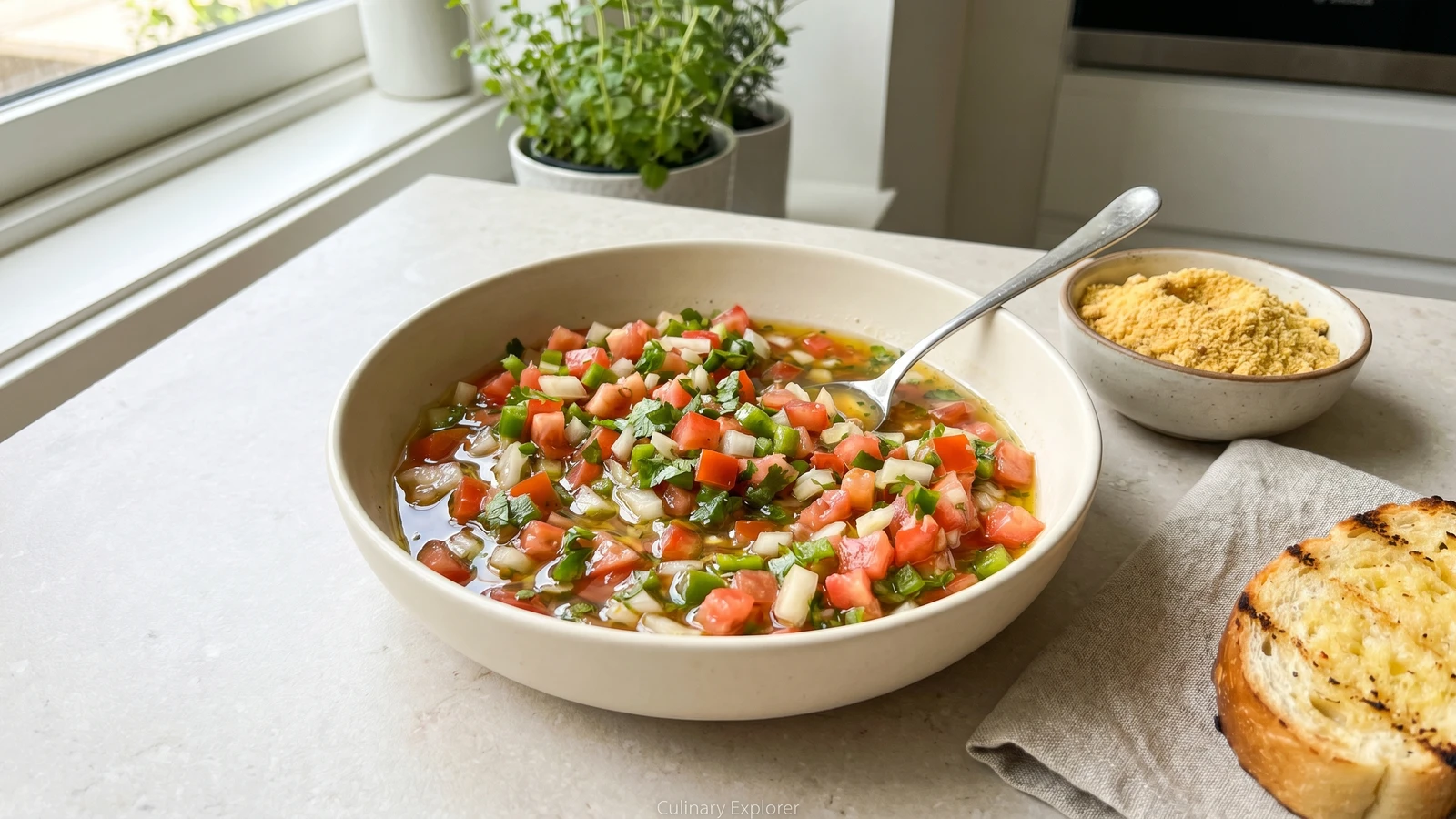
You chop, season, wait, and taste. That's it. Tomato, onion, pepper, vinegar, and a little water turn into the sharp fresh spoonful every churrasco plate needs.
You may be standing there thinking, isso não é pra mim, because someone handed you a knife, three tomatoes, and the responsibility for the churrasco table. Good. Start here. This isn't a test of talent. Cozinhar não é dom, é um aprendizado, and vinagrete is one of the kindest teachers a kitchen has.
It belongs beside grilled meat because every rich plate needs the thing that wakes it up. On a Brazilian table, especially when the pê-efe grows into weekend churrasco, a gente still wants balance: rice, feijão, meat or egg, something green, farofa if we're lucky, and something sharp and fresh to keep the whole plate from feeling heavy.
The method is almost rude in how simple it is. Chop small so every spoonful gets tomato, onion, and pepper. Salt early so the vegetables release their juice. Add vinegar, oil, and a little water, then let it sit so the flavors stop acting like strangers. No packet, no powdered seasoning pretending to be flavor. Comida de verdade, in a bowl.
Make it first. By the time the grill is ready, the onion will have softened, the tomato will have given up its juice, and you'll have solved the fresh part of dinner without drama. Anota aí: this is one of those receitas que funcionam.
In Brazil, vinagrete is the standard fresh condiment for churrasco, especially in the south and southeast, where it is spooned over grilled meats, bread, farofa, rice, and beans. The name points to vinegar, but the Brazilian version is chunkier than a French vinaigrette and closer to a tomato-onion relish. In some regions and homes it is called molho campanha, and the usual argument is not whether it belongs on the table, but whether parsley, cilantro, or both should go in.
Quantity
3 medium
seeded and diced small
Quantity
1 small
diced small
Quantity
1/2
diced small
Quantity
1/4 cup
chopped
Quantity
1/3 cup
Quantity
1/4 cup
Quantity
3 tablespoons
Quantity
1 teaspoon, plus more to taste
Quantity
1/4 teaspoon
| Ingredient | Quantity |
|---|---|
| ripe tomatoesseeded and diced small | 3 medium |
| yellow or red oniondiced small | 1 small |
| green bell pepperdiced small | 1/2 |
| parsley or cilantrochopped | 1/4 cup |
| white wine vinegar or apple cider vinegar | 1/3 cup |
| water | 1/4 cup |
| olive oil or neutral oil | 3 tablespoons |
| fine salt | 1 teaspoon, plus more to taste |
| freshly ground black pepper (optional) | 1/4 teaspoon |
Dice the tomatoes, onion, and bell pepper small, about the size of corn kernels. You want every spoonful to catch a little of everything. Big lazy chunks make people chase onion around the plate, and nobody came to churrasco to negotiate with a condiment.
Put the chopped tomato, onion, and pepper in a medium bowl and sprinkle over the salt. Stir well and let it sit for 10 minutes, until the tomato looks glossy and a little juice gathers at the bottom. The salt pulls out the vegetables' own liquid, which becomes part of the molho instead of leaving you with dry cubes floating in vinegar.
Add the vinegar, water, oil, and black pepper if using. Stir until the liquid turns slightly cloudy and tastes sharp but not harsh. The water matters. It softens the vinegar so the vinagrete wakes up the plate instead of slapping it.
Add the parsley or cilantro and stir gently. The herbs should look fresh and green, not crushed into wet confetti. Put them in after the vinegar so you don't bruise them while you're doing the serious mixing.
Let the vinagrete rest at room temperature for 20 to 30 minutes before serving. Taste it with a spoonful that has tomato, onion, pepper, and liquid. It should be bright, salty enough to stand beside grilled meat, and juicy enough to spoon over rice or farofa. If it tastes flat, add a pinch of salt. If it bites too hard, add one tablespoon of water.
1 serving (about 90g)
Culinary guides, cultural storytelling, and the editorial depth that makes cooking meaningful.
Discover Culinary ExplorerChef Juliana
You don't need a factory jar to put something good on bread. Fruit, sugar, lemon, and patience turn into chimia, the kind of comida de verdade that makes breakfast behave.

Chef Juliana
You think preserves belong to grandmothers and copper pots. Wrong. A heavy pot, ripe pumpkin, sugar, coconut, and attention to the ponto get you there.

Chef Juliana
You don't need a copper pan or a grandmother watching your elbow. Green figs, sugar, cloves, and patience make a glossy preserve that waits in the fridge for the next pê-efe.

Chef Juliana
You don't need a copper pot or a grandmother watching over your shoulder. You need ripe jabuticabas, a heavy pan, and the patience to learn the ponto.