Chef Juliana
Chimia de Fruta
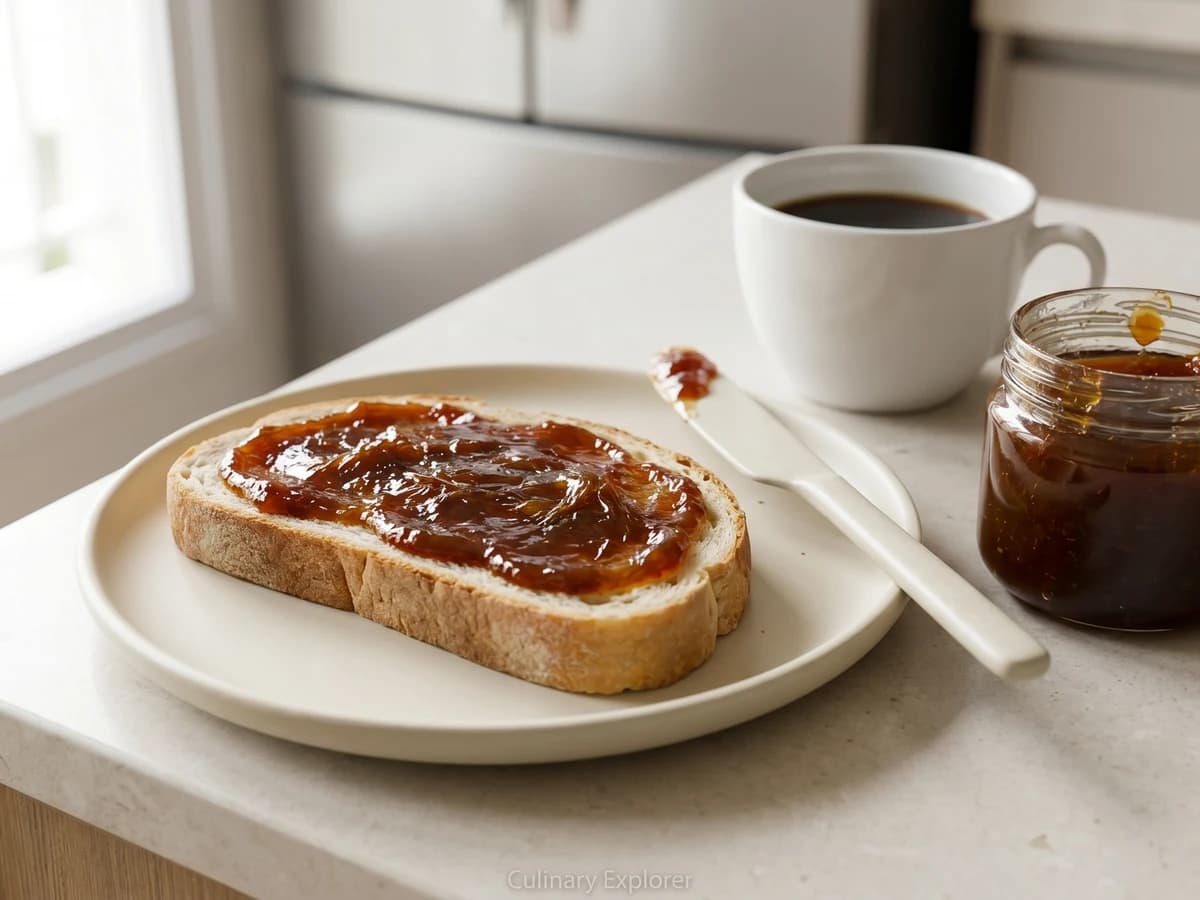
You don't need a factory jar to put something good on bread. Fruit, sugar, lemon, and patience turn into chimia, the kind of comida de verdade that makes breakfast behave.
A cooking platform built around craft, culture, and the stories behind what we eat.

Created by
You don't need a packet to make the plate wake up. Dice small, tame the onion in vinegar, and this sharp little bowl solves rice, beans, grilled meat, even a fried egg.
You know that little voice that says, isso não é pra mim, before you even pick up the knife? For this one, it is being dramatic. A gente is talking about tomato, onion, vinegar, oil, and salt. If you can cut things small and taste with a spoon, you can make it.
What makes it worth learning is the way it fixes the whole plate. The pê-efe already has its spine: rice, beans, a bit of meat or an egg, something green. This sharp spoonful cuts the fat, wakes up the beans, lands on farofa, and makes yesterday's grilled chicken behave like dinner again. Comida de verdade doesn't need a packet pretending to help.
The method is tiny, but it matters. Soak the onion in vinegar first until the smell calms down, because raw onion shouldn't punch you in the face. Dice the tomato and pepper small so every spoonful has a little of everything. Let the bowl rest, and the salt pulls tomato juice into the vinegar, making a bright molho instead of a pile of chopped vegetables.
Anota aí: this is not talent, it's sequence. Cut, soak, mix, rest, taste. Cozinhar não é dom, é um aprendizado, even when the lesson is a little bowl on the side of the plate.
In Brazil, vinagrete usually means a chopped tomato-onion relish, not the French vinaigrette of oil beaten into vinegar. In Rio de Janeiro and parts of the Southeast, the same bowl is often called molho à campanha, a name linked to outdoor meals and barbecues rather than a single inventor. The regional argument is practical: green pepper or not, parsley or cilantro, more vinegar or more oil; the job stays the same, bring acidity to grilled meat, rice, beans, farofa, and pão francês.
Quantity
1 small, about 3/4 cup
finely diced
Quantity
1/4 cup
Quantity
1/2 teaspoon, divided, plus more to taste
Quantity
3, about 2 cups
diced small
Quantity
1/2 small, about 1/2 cup
finely diced
Quantity
3 tablespoons
chopped
Quantity
3 tablespoons
Quantity
1/4 teaspoon
Quantity
1 small
seeded and minced
Quantity
1 to 2 tablespoons
| Ingredient | Quantity |
|---|---|
| onionfinely diced | 1 small, about 3/4 cup |
| white wine vinegar, apple cider vinegar, or plain white vinegar | 1/4 cup |
| fine salt | 1/2 teaspoon, divided, plus more to taste |
| ripe medium tomatoesdiced small | 3, about 2 cups |
| green bell pepperfinely diced | 1/2 small, about 1/2 cup |
| cheiro-verde (parsley and scallion), or cilantrochopped | 3 tablespoons |
| olive oil or neutral oil | 3 tablespoons |
| freshly ground black pepper | 1/4 teaspoon |
| fresh chile, such as dedo-de-moça (optional)seeded and minced | 1 small |
| cold water (optional) | 1 to 2 tablespoons |
Put the diced onion in a 1-liter glass or ceramic bowl. Add the vinegar and 1/4 teaspoon of the salt, stir, and let it sit for 10 minutes, until the onion looks glossy and smells cleaner, less harsh. This is the little bit of discipline that saves the bowl: vinegar softens the raw bite and seasons the onion before it meets the tomato.
While the onion sits, dice the tomatoes and green pepper small, about 1/4 inch. If the tomatoes have big watery seed pockets, scoop out only the excess; keep the good gel and juice because that's flavor. Small pieces mean every spoonful carries tomato, onion, pepper, and molho, instead of one giant onion cube doing all the talking.
Add the tomatoes, green pepper, cheiro-verde, oil, black pepper, optional chile, and the remaining 1/4 teaspoon salt to the onion and vinegar. Toss gently until everything shines, then let it rest for 10 minutes. You should see a red-orange juice gathering at the bottom. That's not watery failure. That's tomato juice meeting vinegar and oil and becoming sauce.
Taste a spoonful with tomato, onion, pepper, and liquid. If it tastes flat, add a pinch of salt. If it is sharp enough to make your jaw clench, add 1 tablespoon cold water or a little more oil. If it tastes sleepy, add a splash more vinegar. This is how you learn to season: not by obeying my bowl, but by reading yours.
Spoon the vinagrete over grilled meat, a fried egg, rice and beans, farofa, or anything on the pê-efe that needs brightness. Serve it the same day if you can, while the tomato still has shape and the herbs still look fresh. After that, salt keeps pulling water and the bowl gets softer, still good, just less lively.
1 serving (about 95g)
Culinary guides, cultural storytelling, and the editorial depth that makes cooking meaningful.
Discover Culinary ExplorerChef Juliana
You don't need a factory jar to put something good on bread. Fruit, sugar, lemon, and patience turn into chimia, the kind of comida de verdade that makes breakfast behave.

Chef Juliana
You think preserves belong to grandmothers and copper pots. Wrong. A heavy pot, ripe pumpkin, sugar, coconut, and attention to the ponto get you there.

Chef Juliana
You don't need a copper pan or a grandmother watching your elbow. Green figs, sugar, cloves, and patience make a glossy preserve that waits in the fridge for the next pê-efe.

Chef Juliana
You don't need a copper pot or a grandmother watching over your shoulder. You need ripe jabuticabas, a heavy pan, and the patience to learn the ponto.