Chef Juliana
Chimia de Fruta
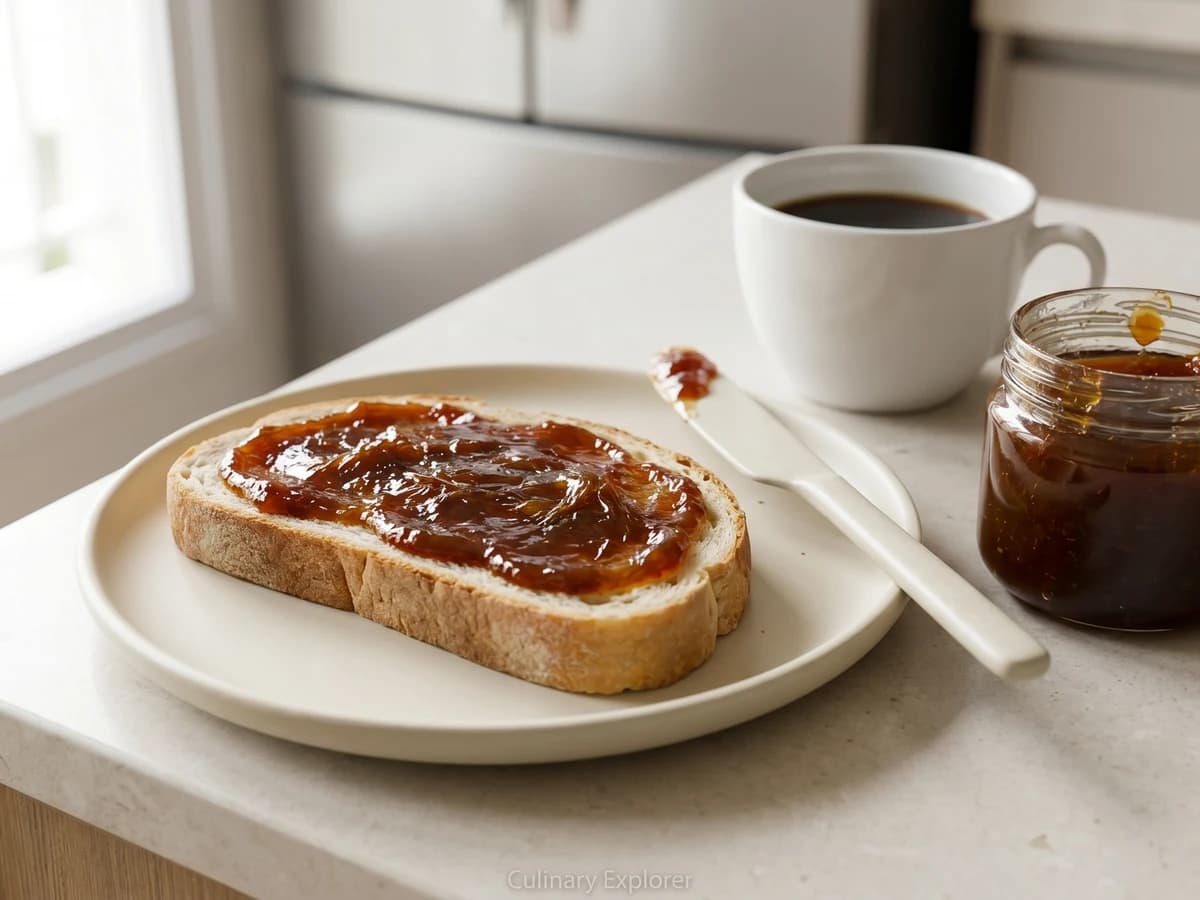
You don't need a factory jar to put something good on bread. Fruit, sugar, lemon, and patience turn into chimia, the kind of comida de verdade that makes breakfast behave.
A cooking platform built around craft, culture, and the stories behind what we eat.

Created by
You don't need a trick here. Chop small, salt early, let the vinegar do its work, and suddenly rice, beans, meat, and greens wake up on the plate.
You look at a bowl of chopped tomato and onion and still hear that little voice: isso não é pra mim. I know. People have made cooking sound so mysterious that even cutting vegetables became a performance. Let's take that nonsense off the counter.
This is comida de verdade at its most democratic. Tomato, onion, pepper, vinegar, oil, salt. Nothing powdered, nothing pretending. Vinagrete sits beside the pê-efe and does a quiet job: it cuts the fat, brightens the beans, wakes up the rice, and makes a simple plate feel alive without turning dinner into an event.
The method matters because small things matter. Chop the vegetables evenly so every spoonful tastes balanced. Salt them before the vinegar so they release their juices and make their own little molho. Let the bowl rest so the onion loses its sharp bite and the tomato gives up its sweetness. That's not talent. Cozinhar não é dom, é um aprendizado.
Make it first, then finish the rest of dinner. By the time the feijão is hot, the rice is soltinho, and the pan is ready, this bowl has done its work. Anota aí: a good vinagrete makes the everyday plate louder, fresher, and much harder to abandon.
In Brazil, vinagrete is also called molho à campanha in many places, especially around Rio de Janeiro, and it became a standard companion to churrasco, feijoada, grilled fish, and pastel. Despite the French-sounding name, the Brazilian version is not just an oil-and-vinegar dressing; it is a chopped table salsa built from tomato, onion, pepper, vinegar, oil, and salt. Regional bowls change the herb, the pepper, and the acidity, but the job stays the same: a fresh, sharp counterpoint to rich food.
Quantity
3 medium
seeded and finely diced
Quantity
1 small
finely diced
Quantity
1/2
finely diced
Quantity
1/4 cup
chopped
Quantity
1/4 cup
Quantity
3 tablespoons
Quantity
1 teaspoon, plus more to taste
Quantity
1/4 teaspoon
Quantity
1 small
minced
| Ingredient | Quantity |
|---|---|
| ripe tomatoesseeded and finely diced | 3 medium |
| onionfinely diced | 1 small |
| green bell pepperfinely diced | 1/2 |
| parsley or cilantrochopped | 1/4 cup |
| white wine vinegar or plain white vinegar | 1/4 cup |
| olive oil or neutral oil | 3 tablespoons |
| salt | 1 teaspoon, plus more to taste |
| black pepper | 1/4 teaspoon |
| fresh chile (optional)minced | 1 small |
Cut the tomatoes, onion, and bell pepper into small, even pieces, about the size of a pea. You want a spoonful to catch a little of everything, not one heroic chunk of onion bullying the bowl. Even chopping is the whole structure here.
Put the tomato, onion, and bell pepper in a bowl and sprinkle in the salt. Stir and let it sit for 5 minutes, until the tomato starts to shine and a little juice gathers at the bottom. The salt pulls out the vegetable juices, and those juices become part of the molho instead of being lost on the cutting board.
Pour in the vinegar and oil, then add the black pepper and chile if using. Stir until the vegetables look glossy and the liquid tastes sharp but not punishing. The vinegar cuts fat and wakes up rice and beans; the oil rounds the edge so the bowl tastes fresh, not harsh.
Let the vinagrete rest at room temperature for 15 minutes, or in the fridge for up to 1 hour. The onion should lose its raw bite, the tomato should sweeten the liquid, and the pepper should stay crisp. Skip the rest and it tastes like separate chopped things. Wait, and it tastes like a molho.
Stir in the parsley or cilantro right before serving and taste again. Add a pinch more salt if the tomato tastes flat, or a splash more vinegar if the plate needs brightness. Spoon it beside feijoada, churrasco, rice and beans, grilled fish, eggs, or anything that needs waking up.
1 serving (about 95g)
Culinary guides, cultural storytelling, and the editorial depth that makes cooking meaningful.
Discover Culinary ExplorerChef Juliana
You don't need a factory jar to put something good on bread. Fruit, sugar, lemon, and patience turn into chimia, the kind of comida de verdade that makes breakfast behave.

Chef Juliana
You think preserves belong to grandmothers and copper pots. Wrong. A heavy pot, ripe pumpkin, sugar, coconut, and attention to the ponto get you there.

Chef Juliana
You don't need a copper pan or a grandmother watching your elbow. Green figs, sugar, cloves, and patience make a glossy preserve that waits in the fridge for the next pê-efe.

Chef Juliana
You don't need a copper pot or a grandmother watching over your shoulder. You need ripe jabuticabas, a heavy pan, and the patience to learn the ponto.