
Chef Lupita
Arroz a la Oaxaqueña
Oaxaca's red rice, stained with tomato and fried in lard, steamed with carrots, ejotes, black beans, and epazote. The side that anchors a Oaxacan family meal and earns its place beside the main.
A cooking platform built around craft, culture, and the stories behind what we eat.

Created by
Michoacán's Meseta P'urhépecha side of wild purslane, charámakua, cooked in manteca with tomatillo, chile serrano, epazote, and a little masa to sit beside churipo or atápakua.
Michoacán, the Meseta P'urhépecha between Cherán, Paracho, Nahuatzen, and the road down toward Lake Pátzcuaro, is where this dish belongs. Verdolagas, called charámakua in this recipe's P'urhépecha register, grow close to the milpa after rain, with thick little leaves that hold water and a sour green bite. They are not garnish. They are food.
The salsa is tomatillo milpero, chile serrano, garlic, onion, epazote, and manteca de cerdo. The sauce is a chilke verde for the greens, not a pan-Mexican salsa poured over anything. You roast on a comal de barro over leña because the tomatillo needs that charred skin and the chile needs the edge of smoke. Then you fry the salsa in lard. La manteca es el sabor, and here it helps the sauce hold to the leaves instead of sliding off like green water.
I learned the rhythm of dishes like this from women in the markets around Pátzcuaro and the Meseta, women who could tell you which greens came from a milpa and which came from a careless roadside bundle. They cooked quelites. They did not serve them raw because somebody saw a salad in a magazine. The cazuela was black clay for the fire, the serving bowl rough red barro, the spoon wood. La cocina no es decoración, es trabajo.
Serve these verdolagas beside churipo, or beside atápakua when the meal is built around sauce and corn. Hand-pressed corn tortillas, always. This is not calabacitas con elote y rajas, which belongs to a broader Mexican home table. This is P'urhépecha Michoacán, and it should taste like that place.
The P'urhépecha state around Lake Pátzcuaro, with Tzintzuntzan as a political center, resisted Mexica expansion until the Spanish conquest in the 1520s, which helped preserve a distinct language and food geography in Michoacán. Quelites such as verdolagas belong to pre-Columbian milpa eating, while pork lard entered after the 16th century and was absorbed into regional home cooking because it made chile and tomatillo sauces cling with more depth than water alone. Atápakua and churipo remain markers of P'urhépecha ceremonial and home kitchens, and small vegetable dishes like charámakua in chilke verde sit beside them without needing permission from national restaurant menus.
Quantity
1 pound
roots trimmed, tender stems and leaves kept, washed in several changes of water
Quantity
12 ounces
husked and rinsed
Quantity
2 to 3
stemmed
Quantity
1/2
split and seeded
Quantity
1 thick slice, about 2 ounces
Quantity
2
unpeeled
Quantity
1 1/2 teaspoons, plus more to taste
Quantity
2 tablespoons
Quantity
2
Quantity
1 tablespoon
mixed with 3 tablespoons water
Quantity
1/4 cup, as needed
Quantity
for serving
warmed on the comal
Quantity
for serving
| Ingredient | Quantity |
|---|---|
| fresh verdolagas (charámakua)roots trimmed, tender stems and leaves kept, washed in several changes of water | 1 pound |
| tomatillo milpero or small tomatilloshusked and rinsed | 12 ounces |
| fresh chile serranostemmed | 2 to 3 |
| fresh chile perón or poncho perón (optional)split and seeded | 1/2 |
| white onion | 1 thick slice, about 2 ounces |
| garlic clovesunpeeled | 2 |
| sea salt | 1 1/2 teaspoons, plus more to taste |
| pork lard (manteca de cerdo) | 2 tablespoons |
| fresh epazote sprigs | 2 |
| fresh nixtamal masa or masa harinamixed with 3 tablespoons water | 1 tablespoon |
| warm water or light bean broth | 1/4 cup, as needed |
| hand-pressed corn tortillas (optional)warmed on the comal | for serving |
| churipo or atápakua (optional) | for serving |
Pick through the verdolagas on the table. Keep the leaves and tender upper stems. Discard roots, yellow leaves, and stems that feel woody. Wash in a deep basin, lift the greens out, dump the sandy water, and repeat until the water runs clean. Verdolagas carry earth because they grow low in the milpa. Quelites are cooked, never raw. That is not a suggestion.
Set a comal de barro over leña until it is hot enough that a drop of water jumps on contact. Lay down the tomatillos, serranos, chile perón if using, onion, and unpeeled garlic. Turn them as they blister. The tomatillos should soften and show blackened spots, the chiles should char in patches, and the garlic skins should look toasted. Do not boil these ingredients. Boiled tomatillo tastes thin.
Peel the roasted garlic. In a molcajete, grind the garlic with the salt first, then work in the chiles, onion, and tomatillos until you have a rough green sauce with tomatillo seeds still visible. If you use a blender, pulse. Do not make a smooth soup. This is the chilke verde for the charámakua, and it needs body.
Set a black clay cazuela over the fire or over the comal. Melt the manteca de cerdo. Add the ground salsa carefully, it will sputter. Stir with a wooden cuchara for 5 to 7 minutes, until the raw green sharpness settles and a light shine of fat gathers at the edge. Stir in the masa mixture and the epazote sprigs. La manteca es el sabor. Vegetable oil will cook the sauce, yes, but it will not make this dish.
Add the cleaned verdolagas by handfuls, folding them into the salsa as they collapse. Cook 6 to 8 minutes, stirring often, until the leaves darken, the tender stems bend without snapping, and the sauce clings instead of pooling at the bottom. If the cazuela gets dry, add a spoonful of warm water or bean broth. Taste for salt. Remove the epazote stems.
Spoon the verdolagas into a rough red barro serving cazuela. Bring them to the table with hand-pressed corn tortillas and, if this is a full Michoacán meal, a pot of churipo or atápakua beside it. No flour tortillas. No cheese blanket. No me vengas con atajos. This is P'urhépecha cooking from Michoacán, not a generic side of calabacitas. Cada estado, su propia cocina.
1 serving (about 220g)
Culinary guides, cultural storytelling, and the editorial depth that makes cooking meaningful.
Discover Culinary ExplorerChef Lupita
Oaxaca's red rice, stained with tomato and fried in lard, steamed with carrots, ejotes, black beans, and epazote. The side that anchors a Oaxacan family meal and earns its place beside the main.
Chef Lupita
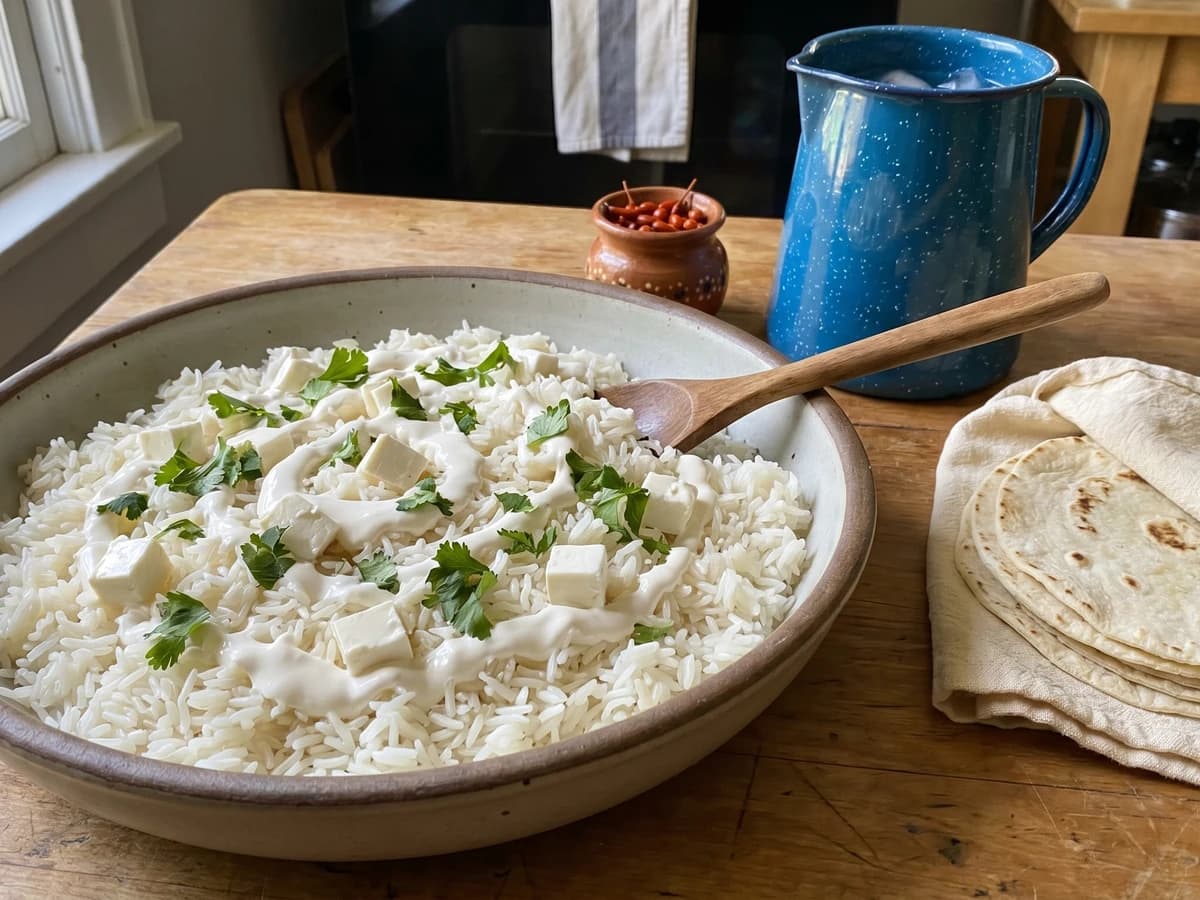
Sinaloa's home-cook white rice topped with cold cubes of cream cheese that soften into the warm grain, finished with crema and a sprinkle of chiltepin at the table. The trick that makes a side dish feel like a small luxury.
Chef Lupita
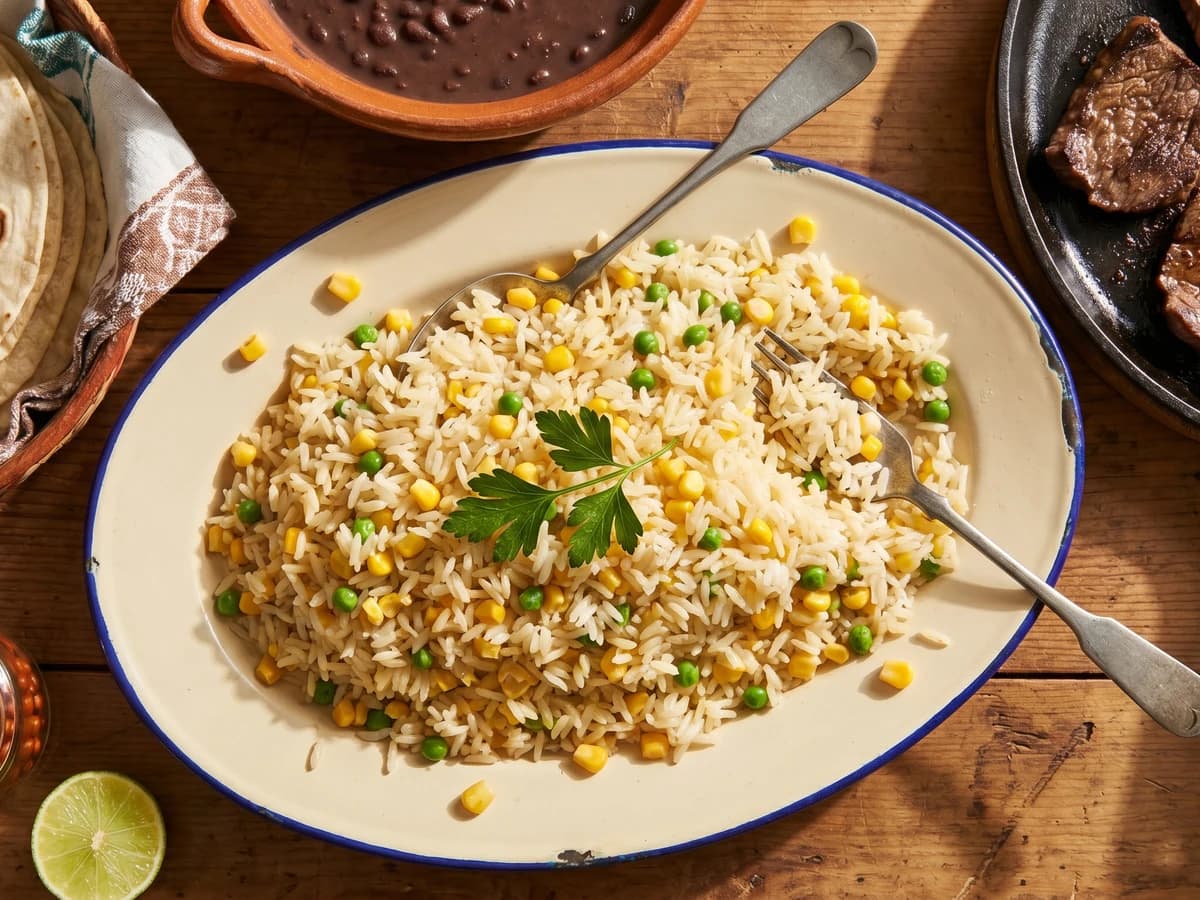
Sonora's white rice, toasted in butter and steamed with sweet corn and tender peas. The clean, quiet partner to a plate of carne asada, not the red rice of central Mexico.

Chef Lupita
Yucatán's white rice with sweet corn kernels, toasted in lard with garlic and onion. The quiet base that holds up against the peninsula's bold achiote-stained stews.