
Chef Isabel
Aguaillo de la Sierra de Cadiz
Aguaillo is from the Sierra de Cadiz: cold water, stale bread, garlic, oil and vinegar, closer to a field drink than a bowl of soup, and sharp enough to wake you in the heat.
A cooking platform built around craft, culture, and the stories behind what we eat.
Created by
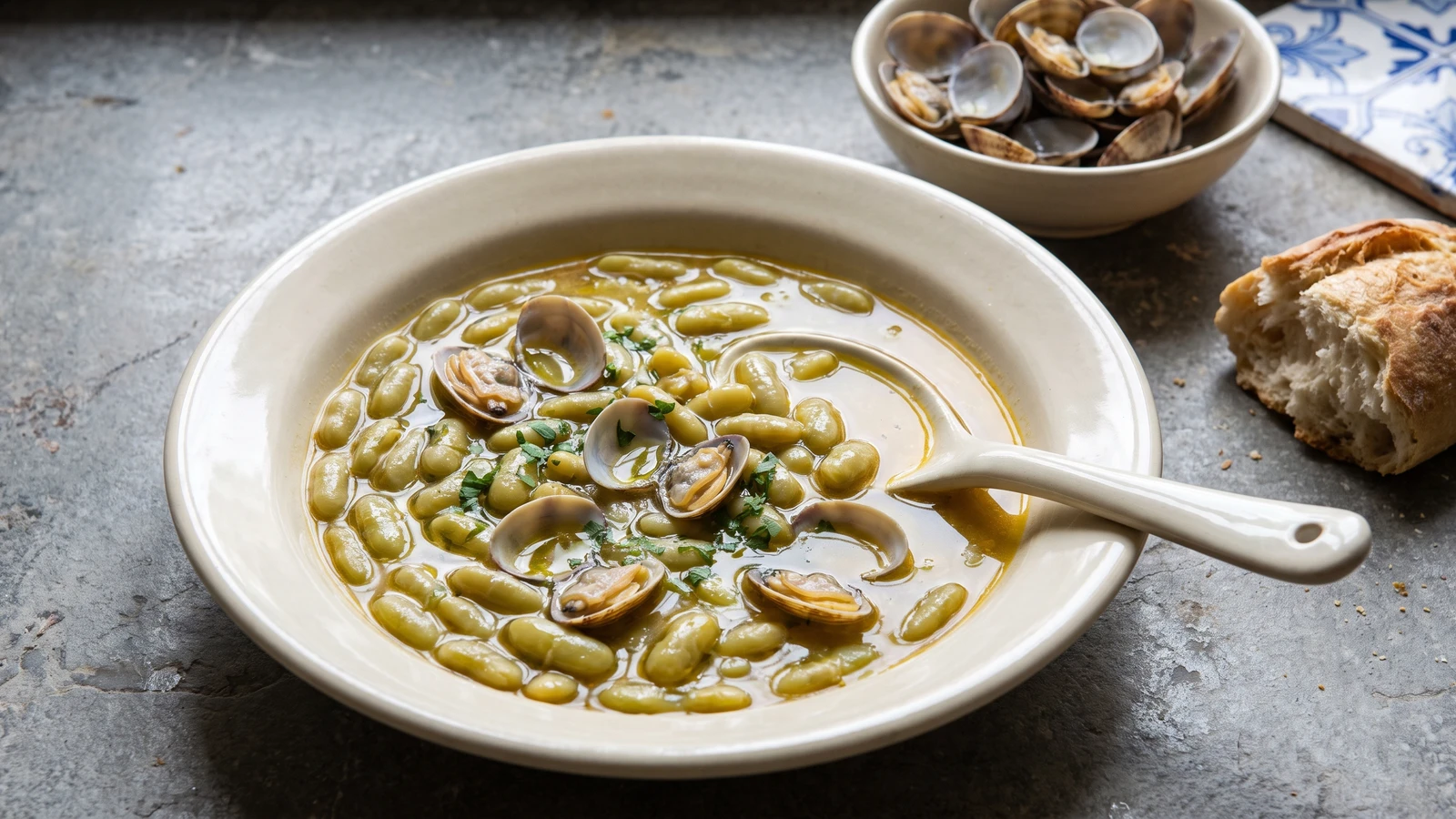
Verdinas con almejas is Asturias at its most delicate: small green fabes, sweet clams, and a broth that tastes of land and sea. Watch the simmer, because verdinas cook faster than fabes.
Verdinas con almejas is Asturian, especially from the eastern coast around Llanes, where the small green faba meets the shellfish of the Cantabrian Sea. This is cocina de cuchara, spoon food, but not a heavy one. The bean is tender and buttery, the clam liquor is clean and briny, and the stew should stay pale, green-gold, and quiet. No chorizo here. That belongs to other pots.
The method that decides it is gentleness. Soak the verdinas overnight, start them in cold water, and keep them at the barest tremble until creamy. A hard boil splits the skins and muddies the broth. The clams go in only at the end, opened separately so their liquor can be strained and any grit stays out of the pot. That little discipline is what makes the dish taste clean.
If you can't find verdinas where you are, use a small dried white bean that cooks creamy, like navy beans or a small cannellini. It won't have the same pale green skin or the same fine Asturian character, but it will give you the right spoonful if you cook it gently. For the clams, buy the best live littlenecks or Manila clams you can find and purge them well. No hace falta haber pisado España. You do need good clams, patience, and a pot you don't let bully the beans.
In the Margin beside this one I keep the same warning every year: the clam is not a sausage. It doesn't need hours. Add it late, let it perfume the beans, and stop. Siempre sale, si lo sigues.
Verdinas belong to eastern Asturias, where this small pale-green bean became known for pairing with seafood from the Cantabrian coast rather than with the cured compango of a fabada. In Llanes and the surrounding comarca, verdinas are often cooked with clams, prawns, or other shellfish because their thin skins and mild flavor take sea broth without becoming heavy. The dish is mar y montaña in a quiet Asturian key: the inland bean and the coastal clam sharing one spoon.
Quantity
400g
soaked overnight
Quantity
1kg
scrubbed and purged
Quantity
2 tablespoons
Quantity
60ml
Quantity
1 medium (about 150g)
finely chopped
Quantity
1 small (about 80g)
finely chopped
Quantity
1 small (about 80g)
finely chopped
Quantity
4 cloves
2 whole and 2 finely chopped
Quantity
1
Quantity
1 small (about 80g)
peeled and left whole
Quantity
120ml
Quantity
1 litre, plus more as needed
Quantity
a few
lightly crushed
Quantity
15g
leaves chopped and stems reserved
Quantity
to taste
| Ingredient | Quantity |
|---|---|
| dried verdinassoaked overnight | 400g |
| live clams, such as almeja fina, littleneck, or Manila clamsscrubbed and purged | 1kg |
| coarse salt, for purging the clams | 2 tablespoons |
| extra virgin olive oil | 60ml |
| onionfinely chopped | 1 medium (about 150g) |
| leek, white part onlyfinely chopped | 1 small (about 80g) |
| green pepperfinely chopped | 1 small (about 80g) |
| garlic2 whole and 2 finely chopped | 4 cloves |
| bay leaf | 1 |
| carrotpeeled and left whole | 1 small (about 80g) |
| dry white wine or natural Asturian cider | 120ml |
| cold water | 1 litre, plus more as needed |
| saffron threads (optional)lightly crushed | a few |
| fresh parsleyleaves chopped and stems reserved | 15g |
| salt | to taste |
The night before, cover the verdinas with plenty of cold water and leave them to soak 10 to 12 hours. Two hours before cooking the clams, dissolve the coarse salt in 1 litre cold water, add the clams, and leave them in a cool place so they spit out sand. Lift them out of the water instead of pouring them into a colander, because grit sits at the bottom and has no business in your stew.
Drain the verdinas and put them in a wide heavy pot with the carrot, bay leaf, parsley stems, 2 whole garlic cloves, and 1 litre cold water. Bring them up slowly over medium heat. When they begin to murmur, lower the heat to the barest tremble. Skim the foam, then cook gently, uncovered or half-covered, until the beans start to soften, about 50 to 70 minutes. Do not salt yet.
While the beans cook, warm the olive oil in a frying pan and add the chopped onion, leek, green pepper, and a small pinch of salt. Cook low and slow for 25 to 30 minutes, stirring often, until the vegetables are soft, sweet, and dark gold at the edges. Add the 2 chopped garlic cloves and cook 2 minutes more. This sofrito, the slow vegetable base, gives the broth its body; rush it and the dish tastes thin.
Remove the carrot, bay leaf, parsley stems, and whole garlic from the bean pot. Mash the carrot and whole garlic with a ladleful of beans and a little broth, then stir that paste back into the pot with the sofrito and the saffron. Shake the pot by the handles instead of stirring hard with a spoon. Continue cooking at a low tremble until the verdinas are creamy all the way through, usually 20 to 40 minutes more.
Put the purged clams in a wide pan with the wine or Asturian cider. Cover and cook over medium-high heat for 3 to 5 minutes, shaking the pan, just until the clams open. Lift the open clams into a bowl as they are ready. Throw away any that stay closed. Strain the clam liquor through a fine sieve lined with kitchen paper or a clean cloth, because one sandy clam can ruin the whole pot.
Add the strained clam liquor to the verdinas and simmer gently for 5 minutes so the broth tastes of the sea. Taste now and salt carefully; the clams bring their own salt. Add the clams and chopped parsley, shake the pot once, and cook only 1 minute more. Rest off the heat for 10 minutes before serving. The broth should be silky, pale, and loose enough to move around the spoon.
1 serving (about 460g)
Culinary guides, cultural storytelling, and the editorial depth that makes cooking meaningful.
Discover Culinary ExplorerChef Isabel
Aguaillo is from the Sierra de Cadiz: cold water, stale bread, garlic, oil and vinegar, closer to a field drink than a bowl of soup, and sharp enough to wake you in the heat.

Chef Isabel
Ajilimojili is Jaen's tomato-free cold soup: potato, roasted red pepper, garlic, olive oil, and vinegar pounded into a cool, silky spoonful.

Chef Isabel
Ajo carretero is Soriano, from the pine country of Soria: lamb cooked in a plain garlicky broth, then served the old way, meat first and bread-soaked soup after.

Chef Isabel
Ajoblanco Extremeño is the poor-kitchen cold soup of Extremadura: bread, garlic, oil, egg yolk, vinegar, and icy water, with no almonds. Whisk it slowly and serve it bien fresquito.