Chef Lupita
Acúmara Tatemada al Comal
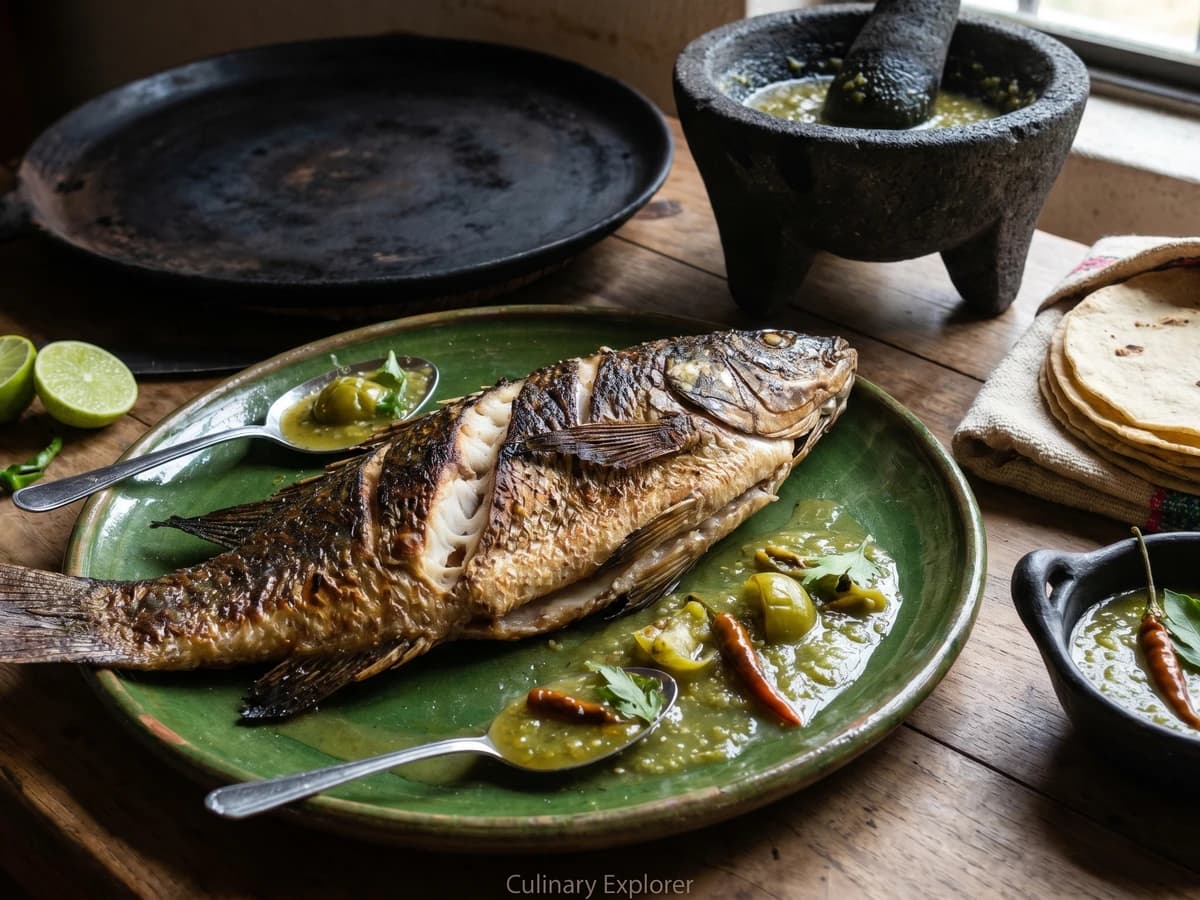
Michoacán's Lake Pátzcuaro acúmara, a whole kurucha from the lago tatemada on a comal de leña and served with chile perón atápakua, corn tortillas, and P'urhépecha discipline.
A cooking platform built around craft, culture, and the stories behind what we eat.
Created by
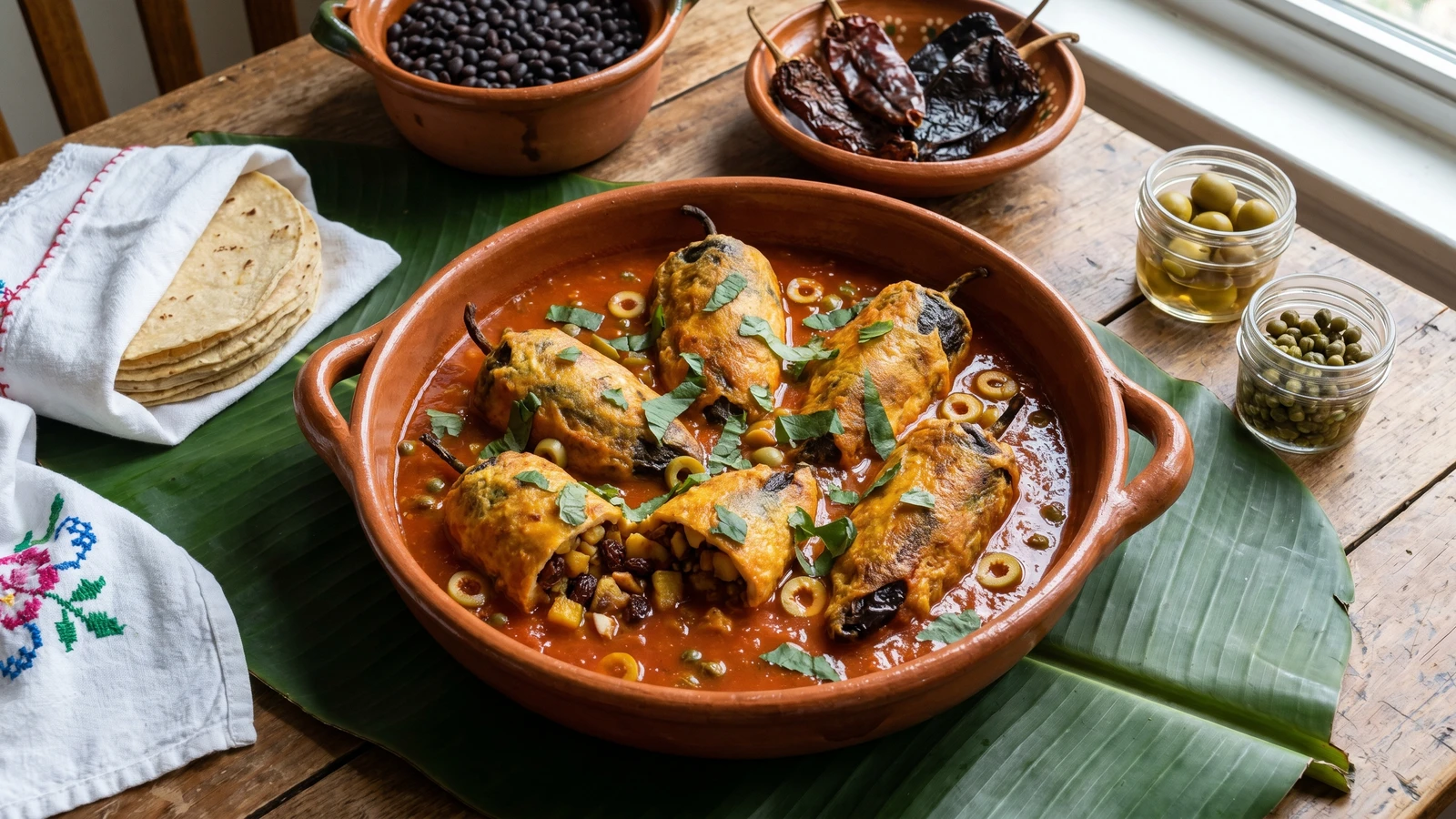
Veracruz's coastal stuffed chipotles, softened until pliable, filled with sweet-savory beef picadillo, capeados in egg batter, and served in a jitomate sauce with olives and capers.
Veracruz, especially the port and the Sotavento coast, cooks with one foot in Mexico and one foot in the sea routes that brought olives, capers, almonds, raisins, and spices into the local kitchen. These chiles rellenos jarochos are not Poblano chiles en nogada and they are not northern stuffed peppers. Cada estado, su propia cocina.
The chile here is chipotle meco, a dried smoked jalapeno with leathery skin and deep tobacco color. You soak it until it softens, open it carefully, fill it with picadillo, pass it through beaten egg, and fry it in manteca de cerdo. No me vengas con atajos. If you tear the chile, patch it with batter. If you rush the soaking, it will crack in your hands.
I learned this version from a woman near the Mercado Hidalgo in Veracruz, who kept the olives and capers in reused glass jars beside the stove. She used beef, ripe plantain, raisins, almonds, jitomate de bola, and a little acuyo leaf tucked near the sauce pot because Veracruz cooks know what grows around them. The dish is generous, sweet, salty, smoky, and sharp. That balance is the port speaking.
Veracruz's cooking was shaped by the port founded by Hernan Cortes in 1519, where Spanish ships brought olives, capers, almonds, raisins, and Mediterranean seasoning into a cuisine already built on corn, chiles, beans, and local herbs. Stuffed chiles in Mexico developed after the colonial introduction of picadillo-style meat fillings, but the Veracruz version is marked by the jarocho habit of pairing jitomate with olives and capers, the same coastal logic seen in pescado a la veracruzana. Chipotle meco, a smoked ripe jalapeno from central Mexico, became valued in Veracruz kitchens because its dense smoke stands up to sweet fruit and briny sauce without disappearing.
Quantity
12 large
wiped clean
Quantity
4 cups
Quantity
2 tablespoons
grated
Quantity
2 tablespoons
Quantity
1 teaspoon, plus more to taste
Quantity
3 tablespoons
divided
Quantity
1 pound
Quantity
1/2 medium
finely chopped
Quantity
3
finely chopped
Quantity
2
finely chopped
Quantity
1
peeled and diced small
Quantity
1/3 cup
Quantity
1/3 cup
chopped
Quantity
1/3 cup
chopped
Quantity
1 tablespoon
rinsed and chopped
Quantity
1/2 teaspoon
Quantity
1/4 teaspoon
Quantity
1/4 teaspoon
freshly ground
Quantity
1/2 cup
Quantity
5
separated
Quantity
1/2 cup
for dusting
Quantity
2 cups
for frying
Quantity
4
roasted
Quantity
1/4 medium
roasted
Quantity
2
roasted
Quantity
1 tablespoon
for the sauce
Quantity
1/2 cup
sliced
Quantity
2 tablespoons
rinsed
Quantity
1 small
Quantity
1
Quantity
1 cup
Quantity
for serving
Quantity
for serving
| Ingredient | Quantity |
|---|---|
| dried chile chipotle mecowiped clean | 12 large |
| hot water | 4 cups |
| piloncillograted | 2 tablespoons |
| apple cider vinegar | 2 tablespoons |
| kosher salt | 1 teaspoon, plus more to taste |
| manteca de cerdodivided | 3 tablespoons |
| ground beef chuck | 1 pound |
| white onionfinely chopped | 1/2 medium |
| garlic clovesfinely chopped | 3 |
| jitomates de bolafinely chopped | 2 |
| ripe platano machopeeled and diced small | 1 |
| raisins | 1/3 cup |
| blanched almondschopped | 1/3 cup |
| pitted green oliveschopped | 1/3 cup |
| capersrinsed and chopped | 1 tablespoon |
| ground cinnamon | 1/2 teaspoon |
| ground clove | 1/4 teaspoon |
| black pepperfreshly ground | 1/4 teaspoon |
| beef broth or water | 1/2 cup |
| large eggsseparated | 5 |
| all-purpose flourfor dusting | 1/2 cup |
| vegetable oil or additional manteca de cerdofor frying | 2 cups |
| jitomates de bolaroasted | 4 |
| white onionroasted | 1/4 medium |
| garlic clovesroasted | 2 |
| manteca de cerdofor the sauce | 1 tablespoon |
| pitted green olivessliced | 1/2 cup |
| capersrinsed | 2 tablespoons |
| hoja santa or acuyo leaf (optional) | 1 small |
| bay leaf | 1 |
| chicken broth or water | 1 cup |
| warm corn tortillas (optional) | for serving |
| black beans (optional) | for serving |
Put the chipotle meco chiles in a bowl with the hot water, piloncillo, vinegar, and salt. Weight them with a plate so they stay submerged. Soak 45 to 60 minutes, until the skin bends without cracking. The piloncillo and vinegar do not make the chile sweet. They tame the smoke and help the flesh soften.
Drain the chiles and save 1 cup of the soaking liquid. With a small knife, cut one slit down the side of each chile. Remove the seeds and veins gently with your fingers or a small spoon. Do not rinse away all the chile flavor. Pat the chiles dry and set them open on a tray.
Melt 2 tablespoons manteca de cerdo in a wide skillet over medium heat. Add the beef and cook until it loses its raw color and begins to brown at the edges. Add the onion and garlic. Cook until the onion turns translucent and the pan smells rounded, not sharp. La manteca es el sabor, especially in picadillo.
Add the chopped jitomate, diced platano macho, raisins, almonds, chopped olives, chopped capers, cinnamon, clove, black pepper, and 1/2 cup beef broth or water. Cook 15 to 20 minutes, stirring often, until the plantain softens, the raisins swell, and the mixture is moist but not wet. Taste for salt. The filling should be sweet, salty, smoky, and sturdy enough to hold inside a chile.
Roast the 4 jitomates, onion, and garlic on a comal until blistered and blackened in spots. Blend them with 1/2 cup of the reserved chile soaking liquid until smooth. Do not add the chipotle seeds unless you want a sauce that shouts over the filling. Veracruzano food has balance. Not all Mexican food is trying to burn your mouth.
Melt 1 tablespoon manteca de cerdo in a cazuela over medium heat. Pour in the blended jitomate sauce. It will sputter. Cook 6 to 8 minutes, until the color deepens and the fat leaves tiny glossy beads on the surface. Add sliced olives, capers, hoja santa if using, bay leaf, and 1 cup chicken broth or water. Simmer 12 minutes. Remove the hoja santa and bay leaf before serving.
Fill each softened chipotle with 2 to 3 tablespoons picadillo, depending on the size of the chile. Close the edges around the filling and secure with a toothpick if needed. Do not overfill them. A chile relleno should look generous, not like it burst because the cook got impatient.
Beat the egg whites with a pinch of salt until they hold firm peaks. Beat the yolks separately, then fold them into the whites with a light hand. This capeado is what protects the chile in the hot fat. Heavy batter makes a greasy coat. Proper egg batter clings, puffs, and stays tender.
Heat the oil or manteca de cerdo in a deep skillet to 350F. Dust each stuffed chile lightly with flour, shake off the excess, dip it in the egg batter, and lower it into the fat seam side up. Fry 2 to 3 minutes per side, until golden and puffed. Work in batches. Crowding the pan drops the temperature and makes the batter heavy.
Set the fried chiles into the warm jitomate, olive, and caper sauce. Spoon sauce over the top and let them sit 3 minutes so the batter drinks a little of the sauce without collapsing. Serve family-style in the cazuela with warm corn tortillas and black beans. Recetas probadas y garantizadas.
1 serving (about 530g)
Culinary guides, cultural storytelling, and the editorial depth that makes cooking meaningful.
Discover Culinary ExplorerChef Lupita
Michoacán's Lake Pátzcuaro acúmara, a whole kurucha from the lago tatemada on a comal de leña and served with chile perón atápakua, corn tortillas, and P'urhépecha discipline.

Chef Lupita
Puebla's weekday adobo of pork shoulder braised in a thick guajillo and ancho sauce sharpened with vinegar, cumin, and clove. The deep red of a market spice stall, the dish a poblana cooks without thinking.

Chef Lupita
Loreto's pit-roasted clams, planted hinge-up in beach sand and tatemadas under a fast fire of dried romerillo brush, the resinous Baja desert shrub that gives this dish its smoke.

Chef Lupita
Oaxaca's eighth mole, the silky, almond-and-cinnamon almendrado, served over poached chicken. Mild, sweet, restrained, and a quiet rebuttal to anyone who thinks Mexican food has to be hot to be Mexican.