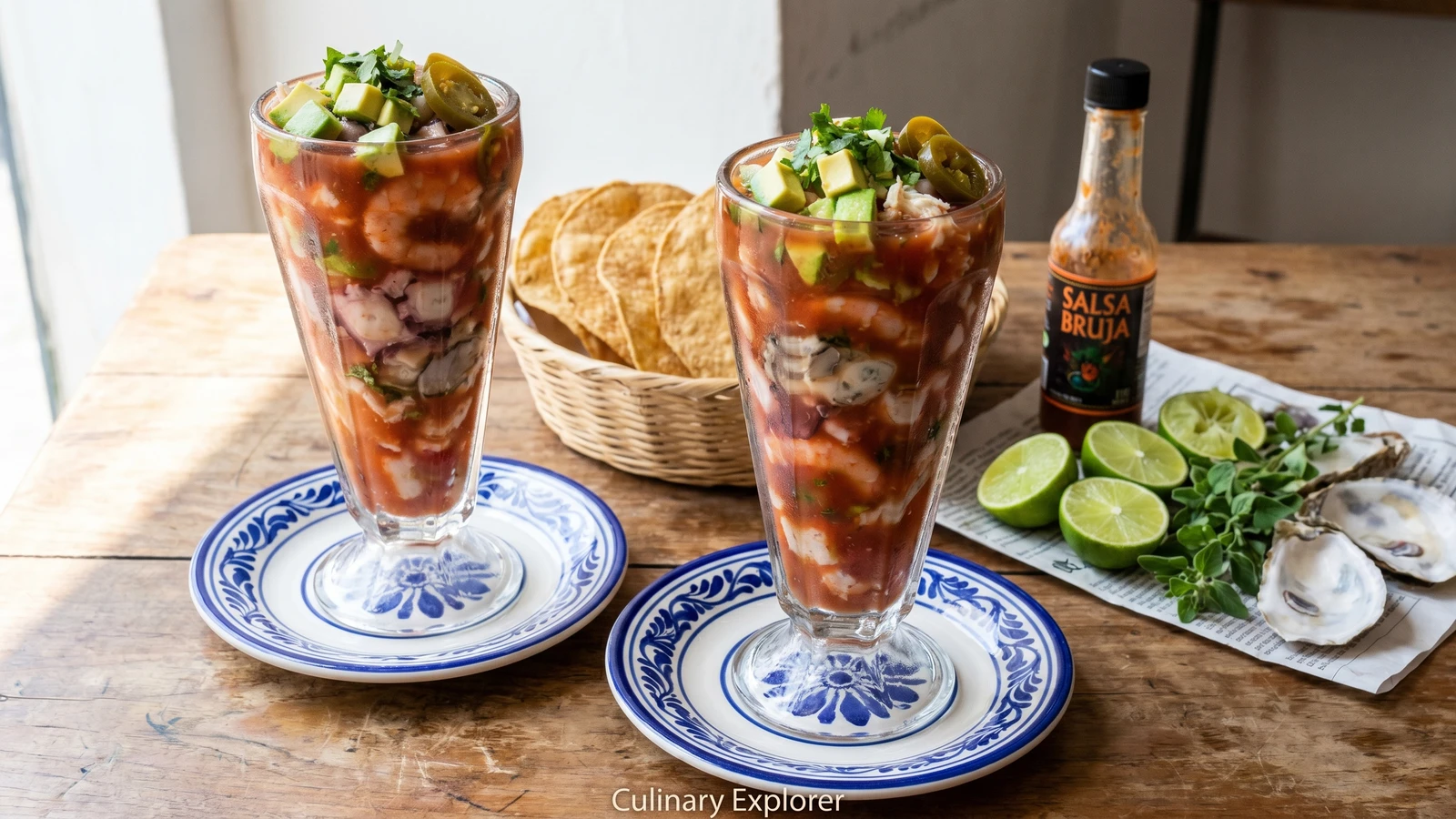
Veracruz's Gulf coast seafood cocktail, cold, briny, sharp with lime and chile jalapeño, served in tall glasses with tostadas when the body needs to come back to life.
Appetizers & Snacks
Mexican
Comfort Food
Dinner Party
BBQ
35 min
Active Time
45 min cook•1 hr 20 min total
Yield6 servings
Veracruz, the port, not the idea of a beach vacation, owns this dish. Vuelve a la Vida lives in the marisquerías near the Gulf, where shrimp, pulpo, ostión, and jaiba go into a cold tomato-lime bath and come to the table in tall glasses with tostadas. This is food from the port's working appetite: salty air, loud tables, limes cut by the dozen, and chile jalapeño from the same state that gave the chile its name.
The sauce is not a French cocktail sauce wearing a sombrero. It is caldillo de jitomate, seafood broth, lime, a little ketchup because Veracruz cooks are practical, chopped white onion, cilantro, and chile jalapeño en escabeche. The oysters bring their liquor. The octopus must be tender, not rubber. The shrimp must taste clean. If the seafood is tired, the cocktail will be tired. Si no conoces el mercado, no conoces la cocina.
I learned a version like this from a woman at the Mercado Hidalgo in Veracruz who sold seafood by weight and judged customers by how they asked for octopus. She told me: cook the pulpo gently, chill everything well, and do not drown the shellfish in sweetness. She was right. The dish should wake you up with brine, lime, tomato, chile, and cold freshness. That's why they call it Vuelve a la Vida. Saber cocinar es saber vivir.
Veracruz's seafood cocktail developed in the 20th century around the port's marisquerías, where Gulf shrimp, oysters, crab, and octopus were served cold in a tomato-based sauce influenced by both local seafood soups and bottled table condiments. The use of chile jalapeño is regionally fitting: the chile is named for Xalapa, Veracruz, and pickled jalapeños became a practical pantry ingredient for coastal cooks. The name Vuelve a la Vida, meaning 'return to life,' refers to its reputation as a hangover remedy, but its deeper logic is older coastal cooking: acid, salt, chile, and fresh seafood served cold in hot weather.
The technique, the tradition, and the story behind every dish.
•Tall cocktail glasses or deep clay bowls for serving
Instructions
1
Cook the octopus
Bring the water, halved onion, smashed garlic, bay leaves, and salt to a gentle simmer in a heavy pot. Lower in the octopus. Keep the liquid just moving, not boiling hard. Cook 35 to 45 minutes, until a knife slides into the thickest part with little resistance. Pulpo punishes impatience. Boil it violently and it tightens like rubber.
2
Poach the shrimp
Lift the octopus out and set it on a tray to cool. Add the shrimp to the same seasoned liquid and cook 2 to 3 minutes, just until pink and firm. Pull them out immediately. Reserve 2 cups of the cooking broth, strain it, and chill it. Peel the shrimp once cool. The shells gave you broth. Do not throw flavor away before it has done its work.
If your shrimp are already peeled, you can still use them, but the broth will be weaker. That is a compromise, not an upgrade.
3
Cut the seafood
Cut the chilled octopus into bite-size pieces. Cut large shrimp in half if they are too big for a spoon. Keep the oysters cold and save every drop of their liquor. Pick through the crabmeat with your fingers for bits of shell. This cocktail is eaten with a spoon and tostadas, so every bite needs to fit.
4
Mix the sauce
In a large bowl, whisk together the chilled shrimp broth, tomato juice or caldillo de jitomate, ketchup, lime juice, pickled jalapeño juice, Salsa Bruja, and the reserved oyster liquor. Taste it before the seafood goes in. It should be cold, sharp, lightly sweet, and briny. If it tastes like candy, add lime and salt. No me vengas con atajos.
5
Fold in vegetables
Stir in the diced white onion, cucumber, tomato, cilantro, pickled chile jalapeño, and chile serrano if using. Let the mixture sit 10 minutes in the refrigerator so the onion loses its raw bite and the chile wakes up the tomato. The jalapeño belongs here. It is Veracruz on the spoon.
6
Add the seafood
Fold in the shrimp, octopus, oysters, and crabmeat gently so the oysters do not break apart and the crab stays in sweet pieces. Cover and chill 20 minutes. Do not leave it for hours. Lime keeps working, seafood firms up, and what was fresh becomes tired. The dish should taste alive.
7
Serve cold
Spoon the cocktail into tall glasses or deep clay bowls. Add diced avocado on top, a pinch of crushed Mexican oregano, and lime halves on the side. Serve with tostadas or saltines and more Salsa Bruja at the table. Eat it cold enough that condensation beads on the glass. Así se hace y punto.
Chef Tips
•Buy seafood from a vendor who can tell you when it arrived. Shrimp should smell clean, oysters should smell like the sea, and crab should be sweet, not sour. If the market cannot answer, walk away.
•Salsa Bruja is a Veracruz table sauce made by steeping chiles, herbs, spices, and vinegar. If you cannot find it, use a Mexican bottled hot sauce like Valentina or Búfalo, but know what you are missing: vinegar depth, not just heat.
•Ketchup is not a betrayal here. In Veracruz seafood cocktails, it gives body and sweetness against lime and brine. The mistake is using too much and turning the sauce into dessert.
•Fresh oysters make this Vuelve a la Vida. If raw oysters are not safe where you live, leave them out or use pasteurized oysters. Do not gamble with bad shellfish. The señora at the mercado would tell you the same.
Advance Preparation
•The octopus and shrimp can be cooked up to one day ahead, covered, and refrigerated. Keep the strained shrimp broth separately chilled.
•The sauce can be mixed up to 4 hours ahead without the seafood, avocado, or cilantro. Add those close to serving so the flavor stays clean.
•Once assembled, serve within 30 minutes. This is a chilled seafood cocktail, not a storage project.
Frequently Asked Questions
Nutrition Information
1 serving (about 435g)
Calories
325 calories
Total Fat
8 g
Saturated Fat
1 g
Trans Fat
0 g
Unsaturated Fat
7 g
Cholesterol
200 mg
Sodium
1700 mg
Total Carbohydrates
28 g
Dietary Fiber
3 g
Sugars
8 g
Protein
37 g
Where cooking meets culture.
Culinary guides, cultural storytelling, and the editorial depth that makes cooking meaningful.