
Chef Lupita
Arroz a la Oaxaqueña
Oaxaca's red rice, stained with tomato and fried in lard, steamed with carrots, ejotes, black beans, and epazote. The side that anchors a Oaxacan family meal and earns its place beside the main.
A cooking platform built around craft, culture, and the stories behind what we eat.

Created by
Veracruz's Gulf lowland plantains, sliced long and fried in manteca de cerdo until the edges caramelize, made to sit beside frijoles negros, crema, and queso fresco.
Veracruz, especially the Sotavento and Los Tuxtlas, knows what to do with a ripe plátano macho. This is Gulf lowland cooking, humid, generous, practical, and not pretending to be from the highlands. The plantain comes from that Afromestiza line running through the coast, the same hand that gives Veracruz yuca, malanga, and so many dishes built on starches that love wet heat and rich fat.
These are not dessert bananas. They are plátanos machos, heavy, black-spotted, almost soft, sliced lengthwise and fried in manteca de cerdo until the sugars darken at the edges. La manteca es el sabor. Vegetable oil will fry them, yes, but it won't give you the same round flavor a Veracruz home cook expects beside frijoles negros refritos. The black bean rules here, not the pinto. Remember that.
I learned this version from a señora near Tlacotalpan who served the plantains on banana leaf with a clay bowl of beans and a spoonful of crema from the morning market. No chile. No salsa. Not everything Mexican needs chile to prove itself. The sweetness is the point: it balances salt, bean, cream, and cheese. Cada estado, su propia cocina.
Plantains reached Mexico through Spanish colonial trade routes that moved African, Caribbean, and Mediterranean ingredients through Gulf ports including Veracruz from the 16th century onward. In Veracruz's southern coastal regions, especially the Sotavento and Los Tuxtlas, plantain became part of the Afromestiza kitchen alongside yuca and malanga, appearing fried, boiled, mashed, and stuffed. Plátanos machos fritos are often served with black beans, crema, and queso fresco, a Veracruz combination that reflects the state's Gulf ecology and its long Afro-Caribbean food history.
Quantity
3
skins mostly black with yellow patches
Quantity
1/2 cup, plus more if needed
Quantity
1/4 teaspoon
Quantity
1 cup
warm, for serving
Quantity
1/2 cup
for serving
Quantity
1/2 cup
crumbled, for serving
| Ingredient | Quantity |
|---|---|
| very ripe plátanos machosskins mostly black with yellow patches | 3 |
| pork lard (manteca de cerdo) | 1/2 cup, plus more if needed |
| fine sea salt | 1/4 teaspoon |
| Veracruz-style refried black beans (optional)warm, for serving | 1 cup |
| Mexican crema (optional)for serving | 1/2 cup |
| queso fresco (optional)crumbled, for serving | 1/2 cup |
Use plátanos machos with skins that are mostly black and still firm enough to hold their shape. Yellow plantains are not ready. Green plantains are for another dish entirely. You want ripe sugar inside the flesh, because that sugar is what caramelizes in the lard.
Cut off both ends of each plantain. Make one shallow slit down the length of the skin and peel it away with your fingers. Slice each plantain lengthwise into 3 or 4 long planks, about 1/3 inch thick. Keep the slices even so they brown at the same pace.
Set a wide cast iron skillet or clay-safe frying pan over medium heat and add the manteca de cerdo. The fat should cover the bottom generously, not just shine on it. When a small corner of plantain sizzles gently on contact, the lard is ready. If it smokes, lower the heat and wait. Burned lard gives bitterness, and bitterness has no business here.
Lay the plantain slices in the lard in one layer, with space between them. Do not crowd the pan. Fry for 3 to 4 minutes, until the underside turns deep gold with brown freckles at the edges. The sound should be steady and gentle, not angry. These need time for the sugars to darken without scorching.
Turn each slice with tongs or a thin spatula. Fry the second side for 2 to 3 minutes more, until the edges are mahogany and the center is soft. If the pan dries out, add another spoonful of lard. No me vengas con atajos. Dry plantains stick, tear, and taste flat.
Transfer the fried plantains to a rack or brown paper for one minute. Sprinkle with the sea salt while the surface is still glossy. Use a light hand. The salt should wake up the sweetness, not announce itself.
Serve warm beside refried black beans, a spoonful of Mexican crema, and crumbled queso fresco. If you have banana leaf, line the plate with it. The plantain is sweet, the beans are earthy, the crema is cool, and the cheese brings salt. That balance is the dish. Recetas probadas y garantizadas.
1 serving (about 250g)
Culinary guides, cultural storytelling, and the editorial depth that makes cooking meaningful.
Discover Culinary ExplorerChef Lupita
Oaxaca's red rice, stained with tomato and fried in lard, steamed with carrots, ejotes, black beans, and epazote. The side that anchors a Oaxacan family meal and earns its place beside the main.
Chef Lupita
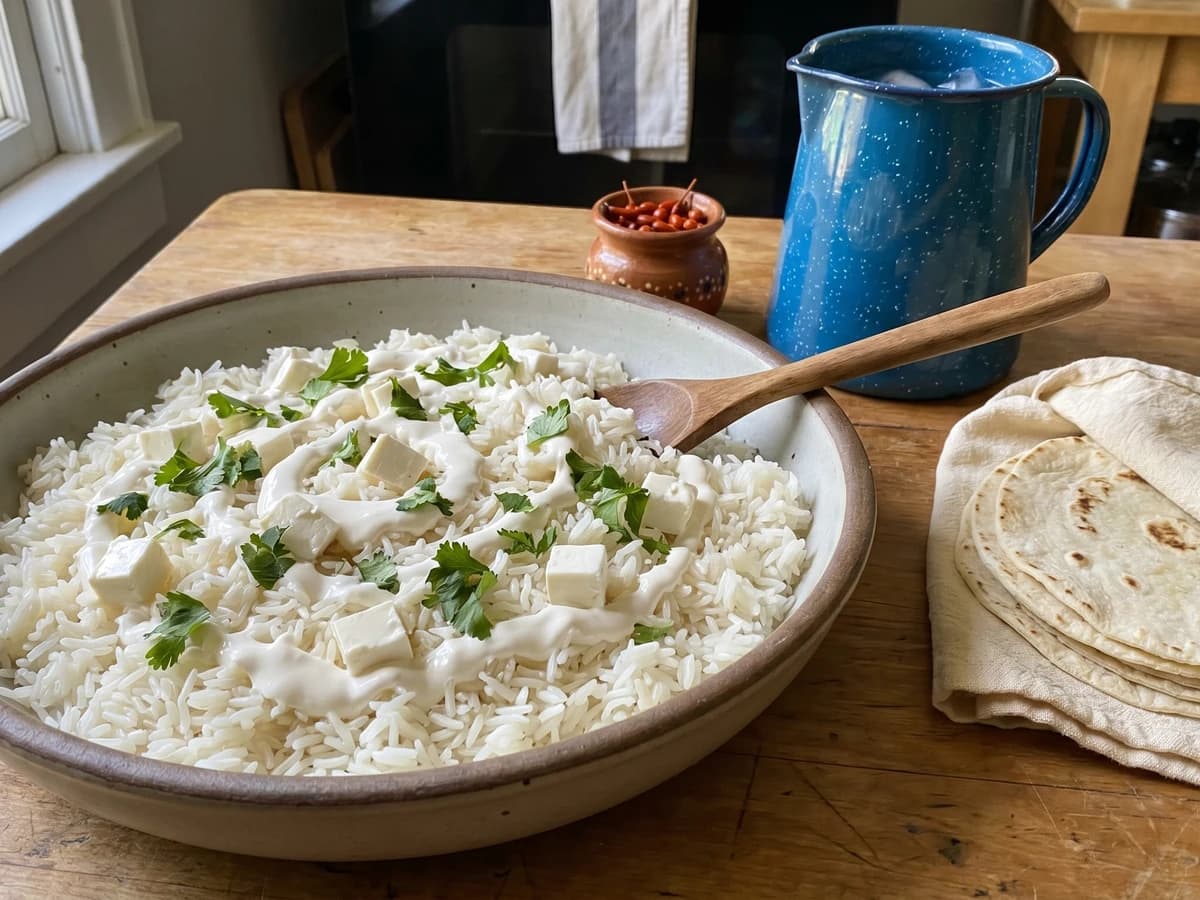
Sinaloa's home-cook white rice topped with cold cubes of cream cheese that soften into the warm grain, finished with crema and a sprinkle of chiltepin at the table. The trick that makes a side dish feel like a small luxury.
Chef Lupita
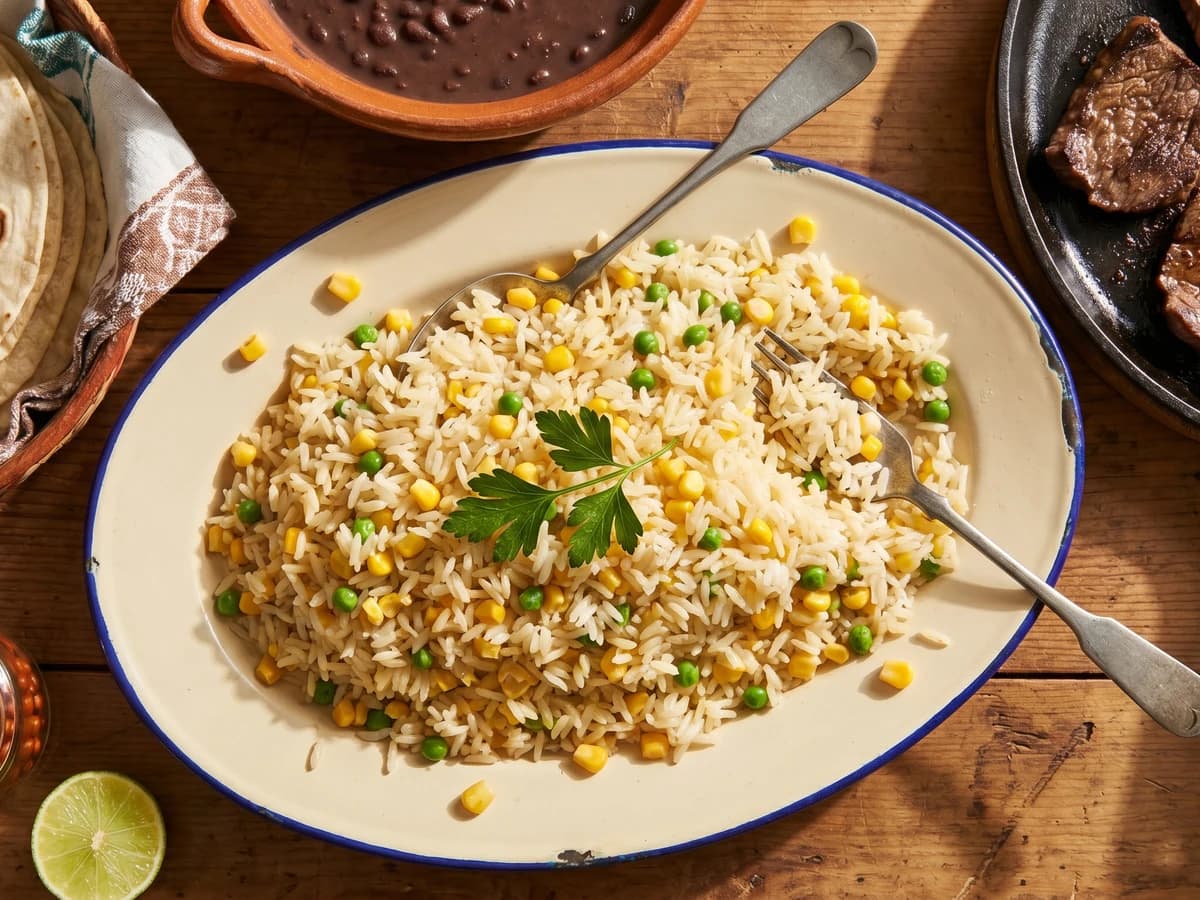
Sonora's white rice, toasted in butter and steamed with sweet corn and tender peas. The clean, quiet partner to a plate of carne asada, not the red rice of central Mexico.

Chef Lupita
Yucatán's white rice with sweet corn kernels, toasted in lard with garlic and onion. The quiet base that holds up against the peninsula's bold achiote-stained stews.