
Chef Lupita
Aguascalientes Beef Tongue Pozole (Pozole de Lengua)
Aguascalientes' Bajio pozole de lengua, built with cacahuazintle hominy, tender beef tongue, chile ancho and guajillo, with xoconostle brightness and table garnishes.
A cooking platform built around craft, culture, and the stories behind what we eat.
Created by
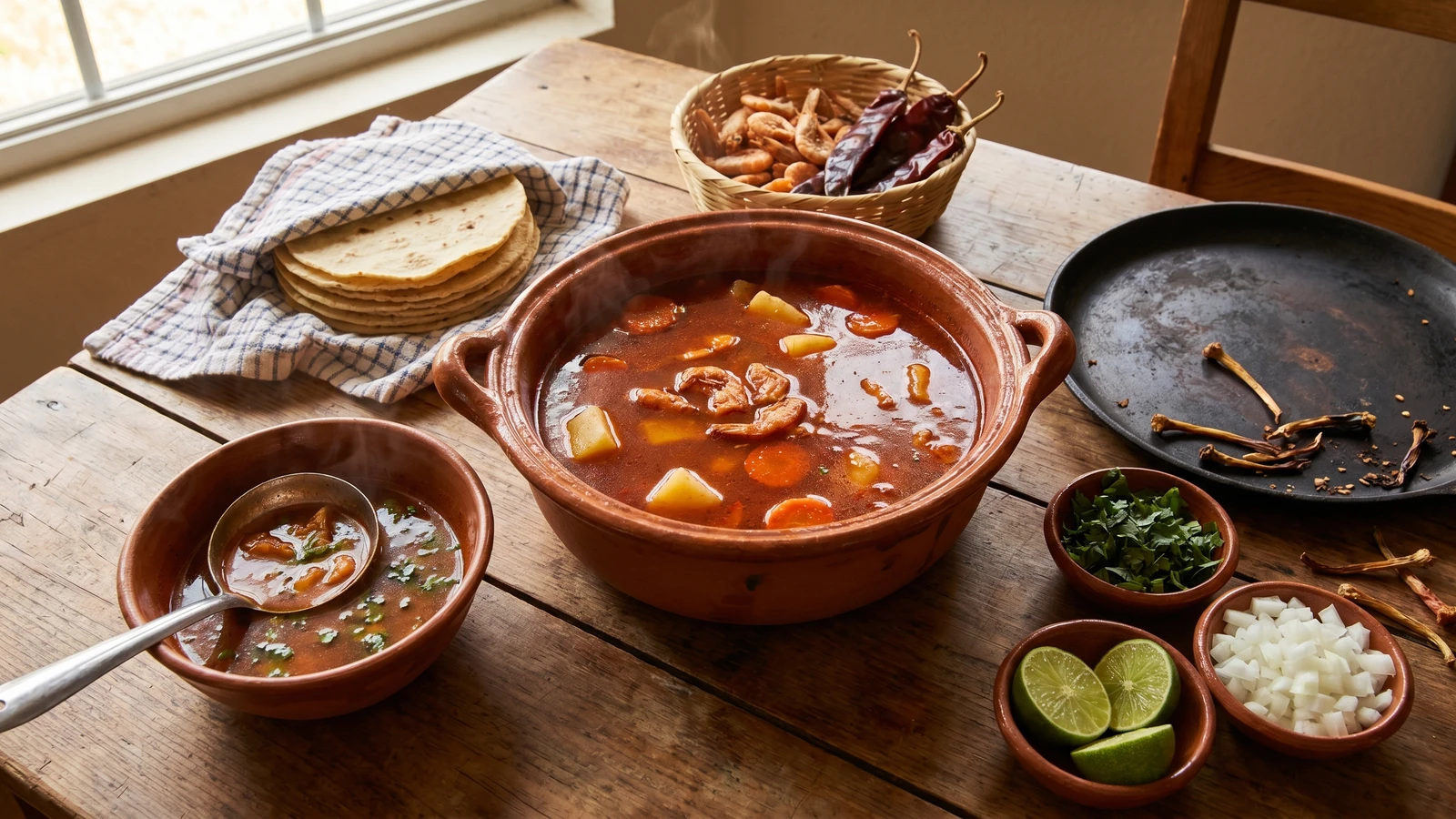
Veracruz's Gulf coast caldo de camarón seco is a red, salty, chile-built broth for Lent, cantina mornings, and kitchens that know dried shrimp is pantry strength.
Veracruz, especially the port, Boca del Rio, and the towns toward Alvarado, knows this caldo because the Gulf teaches people how to cook from what can be kept. Dried shrimp is not a poor substitute for fresh shrimp. It is its own ingredient, salty, marine, concentrated, the kind of thing a careful cook keeps in a jar and uses when the market money is thin.
The red color comes from chile guajillo, with one chile ancho for body and a little sweetness. Not tomato soup with shrimp thrown in. You toast the chiles, soak them in hot water, blend them with tomato, onion, and garlic, then fry that puree in oil until it darkens. Veracruz cooks do plenty with seafood during Cuaresma, so oil is correct here. No me vengas con atajos. Raw chile puree tastes raw in the pot.
Epazote is the herb that keeps the broth Mexican and clean. Potato and carrot make it a meal. Lime and raw white onion wake it up at the table. I learned this version from a señora near the Mercado Hidalgo in Veracruz, who told me the caldo must taste like the dried shrimp first, the chile second, and the lime only after you sit down. Cada estado, su propia cocina.
Dried shrimp entered many coastal and inland Mexican kitchens as a preservation method long before refrigeration made fresh seafood ordinary outside fishing towns. During Lent, caldo de camarón seco became practical because it gave Catholic households a meatless broth with real strength, especially in Gulf states like Veracruz where seafood commerce shaped everyday cooking. Veracruz versions often lean on guajillo, tomato, epazote, potato, and carrot, while central Mexican versions may use powdered dried shrimp or add nopales and xoconostle.
Quantity
4 ounces
Quantity
8 cups
divided
Quantity
5
stemmed and seeded
Quantity
1
stemmed and seeded
Quantity
2 medium
quartered
Quantity
1/2 medium
roughly chopped
Quantity
3
peeled
Quantity
2 tablespoons
Quantity
2 medium
peeled and cut into 1/2-inch cubes
Quantity
2 medium
peeled and sliced into 1/4-inch rounds
Quantity
1 large sprig
Quantity
1
Quantity
1 teaspoon, plus more only if needed
Quantity
1/2 teaspoon
rubbed between your palms
Quantity
2 tablespoons
chopped
Quantity
for serving
Quantity
for serving
Quantity
for serving
| Ingredient | Quantity |
|---|---|
| whole dried shrimp with shells and heads | 4 ounces |
| waterdivided | 8 cups |
| dried chile guajillostemmed and seeded | 5 |
| dried chile anchostemmed and seeded | 1 |
| Roma tomatoesquartered | 2 medium |
| white onionroughly chopped | 1/2 medium |
| garlic clovespeeled | 3 |
| neutral oil | 2 tablespoons |
| waxy potatoespeeled and cut into 1/2-inch cubes | 2 medium |
| carrotspeeled and sliced into 1/4-inch rounds | 2 medium |
| fresh epazote | 1 large sprig |
| bay leaf | 1 |
| kosher salt | 1 teaspoon, plus more only if needed |
| dried Mexican oreganorubbed between your palms | 1/2 teaspoon |
| fresh cilantrochopped | 2 tablespoons |
| diced raw white onion (optional) | for serving |
| lime halves (optional) | for serving |
| warm corn tortillas (optional) | for serving |
Pick through the dried shrimp and remove any grit or dark broken bits. Rinse them quickly under cool water, then place them in a bowl with 2 cups of warm water for 15 minutes. Do not throw away that soaking water. It is salty and strong, and once strained it becomes the spine of the caldo.
Drain the shrimp through a fine-mesh strainer set over a bowl and save the soaking liquid. Pull the heads and shells from about half the shrimp and place those shells and heads in a small pot with the strained soaking liquid and 3 more cups of water. Simmer gently for 15 minutes, then strain and press on the shells. This is where the flavor lives. Keep the peeled shrimp and whole shrimp aside for the soup.
Heat a dry comal over medium. Toast the guajillo chiles about 20 to 30 seconds per side, just until they darken slightly and smell fruity. Toast the ancho separately because it is fleshier and can take a few seconds more. Do not let them blacken. Burned chile makes bitter broth, and no lime at the table will save it.
Put the toasted chiles in a bowl and cover with hot water for 15 minutes. Drain them. Blend the softened chiles with the tomatoes, onion, garlic, and 1 cup of the shrimp broth until completely smooth. Strain through a fine-mesh sieve. The skins stay behind. The sauce should be red, clean, and thick enough to coat a spoon.
Heat the oil in a 4-quart clay cazuela or heavy pot over medium. Pour in the strained chile puree. It will sputter, so stand back and stir with discipline. Cook 8 to 10 minutes, until the red deepens, the raw tomato smell leaves, and the oil begins to show at the edges. This frying is not decoration. It is the difference between broth and water with color.
Add the remaining shrimp broth and enough water to make about 7 cups total liquid. Stir in the potatoes, carrots, epazote, bay leaf, Mexican oregano, and 1 teaspoon salt. Simmer gently for 18 to 22 minutes, until the potatoes are tender but not falling apart. Taste before adding more salt. Dried shrimp carries its own salt, and a careless hand can ruin the pot.
Add the reserved dried shrimp to the pot and simmer 5 minutes more. That is enough. The shrimp should soften but still have chew. If you boil them hard for half an hour, they turn tough and the broth gets muddy. Remove the bay leaf. Leave the epazote if you like the look, or pull it out before serving.
Ladle the caldo into deep bowls with plenty of potato, carrot, and shrimp in each serving. Scatter a little cilantro on top. Put diced raw white onion, lime halves, and warm corn tortillas on the table. The lime goes in at the last second, not in the pot. That bright edge belongs to the diner. Recetas probadas y garantizadas.
1 serving (about 500g)
Culinary guides, cultural storytelling, and the editorial depth that makes cooking meaningful.
Discover Culinary ExplorerChef Lupita
Aguascalientes' Bajio pozole de lengua, built with cacahuazintle hominy, tender beef tongue, chile ancho and guajillo, with xoconostle brightness and table garnishes.

Chef Lupita
Veracruz's Gulf coast rice from Alvarado, built with seafood stock, tomato, chile chipotle, epazote, shrimp, fish, jaiba, and pulpo, served loose and brothy in a clay cazuela.

Chef Lupita
Costa Chica's wet salt-beef stew, built from chile costeño, guajillo, tomato, manteca, yuca, plantain, and masa dumplings, the ranching pot of Cuajinicuilapa and Pinotepa.

Chef Lupita
Michoacán's P'urhépecha atápakua is a masa-thickened sauce and stew at once, built with pork, chile guajillo, and hierbabuena added only at the end.