
Chef Thomas
A Proper Chicken Broth
Sunday's roast chicken, simmered slowly on Monday with carrots, celery, leeks, and thyme into a bowl of clear, golden broth that smells like the kitchen is paying attention.
A cooking platform built around craft, culture, and the stories behind what we eat.

Created by Chef Thomas
Venison shoulder braised for hours in red wine with crushed juniper and bay, finished with redcurrant jelly, the kind of pot you carry to the table on the coldest evening of the year.
January. The garden is bare, the light has gone by four, and the kitchen window is running with condensation from the pot on the hob. This is the weather for venison. Not a neat fillet seared pink in a restaurant, but shoulder, braised slowly in red wine until it gives way to a fork and the sauce has gone dark and deep and slightly sticky.
Juniper is the quiet genius here. Crush the berries and the smell is immediate: pine forests, gin, cold air, something almost medicinal that becomes warm and resinous over three hours in the oven. It was made for game. The pairing is old and unsentimental, the kind of combination that exists because it works, not because someone clever invented it.
I make this when I want to feed people properly. When the evening calls for something that takes its time and fills the house with a smell that says the right things before anyone sits down. A casserole isn't a performance. It's a pot of food, left alone in a low oven, that does the work while you do something else. By the time you carry it to the table, the meat has surrendered, the wine has thickened into something almost jammy, and the redcurrant jelly you stirred in at the end has rounded every edge. We're only making dinner. But it's the kind of dinner worth writing down.
I wrote it down in the notebook last February: venison, juniper, red wine, rain on the window. That was enough.
Quantity
1kg
cut into large chunks
Quantity
2 tablespoons
seasoned with salt and pepper
Quantity
2 tablespoons
Quantity
a good knob
Quantity
2
peeled and roughly chopped
Quantity
2
peeled and cut into thick rounds
Quantity
2 sticks
sliced
Quantity
3 cloves
crushed
Quantity
1 tablespoon
Quantity
500ml
Quantity
500ml
Quantity
10
lightly crushed
Quantity
3
Quantity
a few sprigs
Quantity
2 tablespoons
Quantity
to taste
| Ingredient | Quantity |
|---|---|
| venison shouldercut into large chunks | 1kg |
| plain flourseasoned with salt and pepper | 2 tablespoons |
| olive oil | 2 tablespoons |
| butter | a good knob |
| onionspeeled and roughly chopped | 2 |
| carrotspeeled and cut into thick rounds | 2 |
| celerysliced | 2 sticks |
| garliccrushed | 3 cloves |
| tomato purée | 1 tablespoon |
| red wine | 500ml |
| beef or game stock | 500ml |
| juniper berrieslightly crushed | 10 |
| bay leaves | 3 |
| thyme | a few sprigs |
| redcurrant jelly | 2 tablespoons |
| fine sea salt and black pepper | to taste |
Set the oven to 150C/130C fan. Toss the venison chunks in the seasoned flour, shaking off the excess. Heat the olive oil and butter in a heavy casserole over a high heat. When the butter foams, brown the meat in batches. Don't crowd the pan. Each piece wants proper contact with the hot surface, a deep, dark crust on all sides. If you pile them in, they'll steam instead, and steamed meat is grey and joyless. Take your time. Move each batch to a plate when it's done.
Turn the heat down to medium. Add the onions, carrots, and celery to the same pan. There should be enough fat left; if not, add another small knob of butter. Let them soften for eight to ten minutes, stirring occasionally, scraping up the dark, sticky bits from the bottom of the pan. Those bits are flavour. When the onions are translucent and the kitchen smells of something worth making, add the garlic and tomato purée. Stir for a minute until the purée darkens slightly and loses its raw edge.
Pour in the red wine. It will hiss and bubble and the steam will smell extraordinary, like a cold evening being solved. Bring it to a good simmer and let it reduce by about a third. This concentrates the wine and cooks off the harsher alcohol. Five minutes or so. You'll know because the smell will shift from sharp and boozy to something rounder, deeper, more like the dish it's becoming.
Return the venison to the pan along with any juices that have gathered on the plate. Add the stock, the crushed juniper berries, the bay leaves, and the thyme. The liquid should come about two thirds of the way up the meat. It doesn't need to cover it completely. Give everything a gentle stir, bring it to a simmer, then put the lid on.
Transfer the casserole to the oven. Leave it for two and a half to three hours. Check it once, halfway through, just to make sure it's ticking along at a gentle blip rather than a rolling boil. The meat is ready when it yields to a fork without resistance, not falling apart, but giving way willingly. The sauce will have thickened and darkened, and the kitchen will smell like the kind of evening where nobody checks the time.
Take the casserole out of the oven. Fish out the bay leaves and the thyme stalks. Stir in the redcurrant jelly and let it melt into the sauce. It brings a quiet sweetness that rounds everything out, softening the tannins from the wine and balancing the iron depth of the venison. Taste it. Season again. The salt will probably need adjusting; it always does after a long braise. Serve straight from the pot, at the table, with something to soak up the sauce.
1 serving (about 420g)
Culinary guides, cultural storytelling, and the editorial depth that makes cooking meaningful.
Discover Culinary ExplorerChef Thomas
Sunday's roast chicken, simmered slowly on Monday with carrots, celery, leeks, and thyme into a bowl of clear, golden broth that smells like the kitchen is paying attention.
Chef Thomas
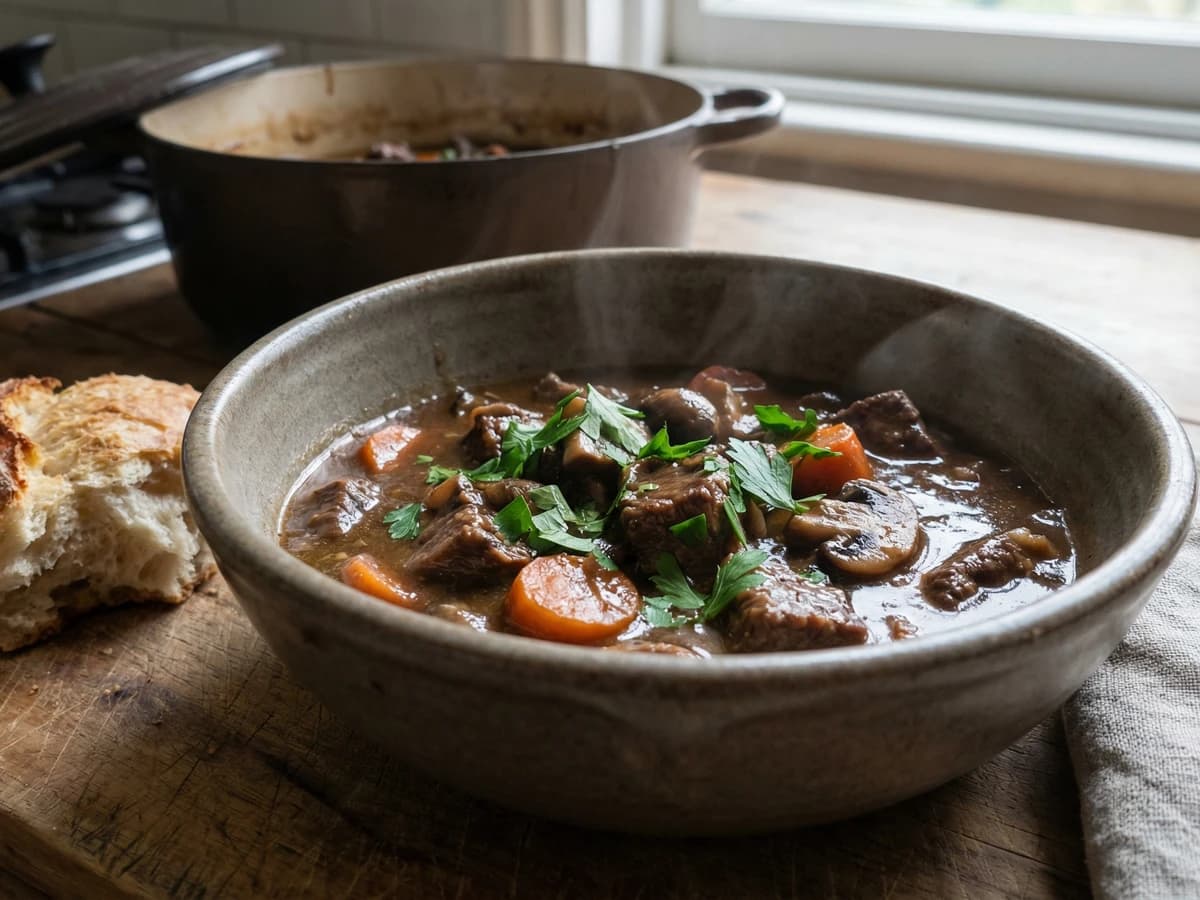
Braising steak surrendered to dark ale and slow time, with onions and mushrooms, until the gravy turns thick and malty and the kitchen smells like the kind of evening you want to stay in for.

Chef Thomas
Beef shin and pearl barley simmered low and slow with root vegetables until the meat gives way and the broth thickens into something between a soup and a stew, the kind of bowl that steadies you on a cold night.
Chef Thomas
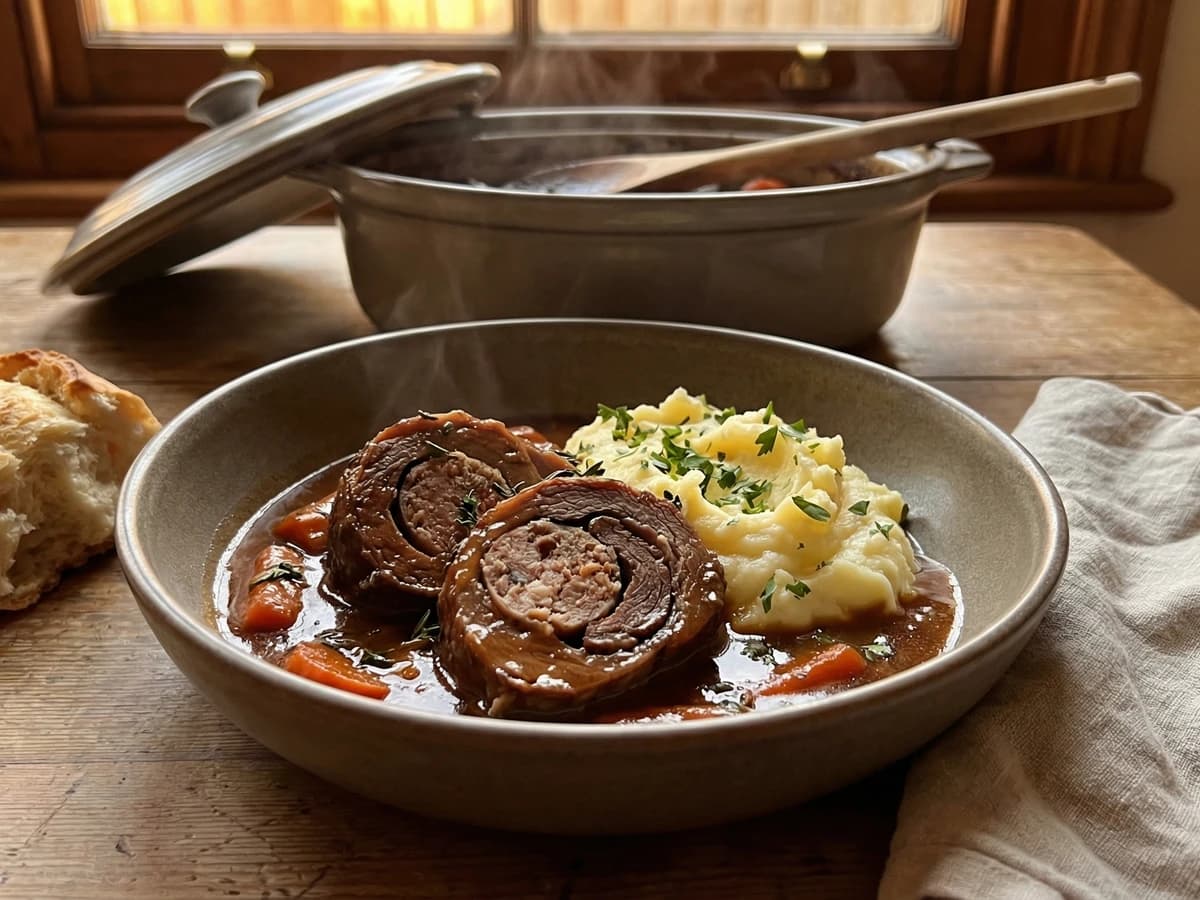
Thin slices of beef rolled around a stuffing of sausage meat and herbs, browned in butter, and braised for two patient hours until the meat yields and the gravy turns dark and rich and worth mopping up with bread.