
Chef Lesia
Buzhenyna (буженина, garlic-studded roast pork)
A whole pork neck takes garlic into little knife pockets, roasts until the crust goes dark and fragrant, then rests overnight so every cold slice tastes better than shop ham.
A cooking platform built around craft, culture, and the stories behind what we eat.
Created by
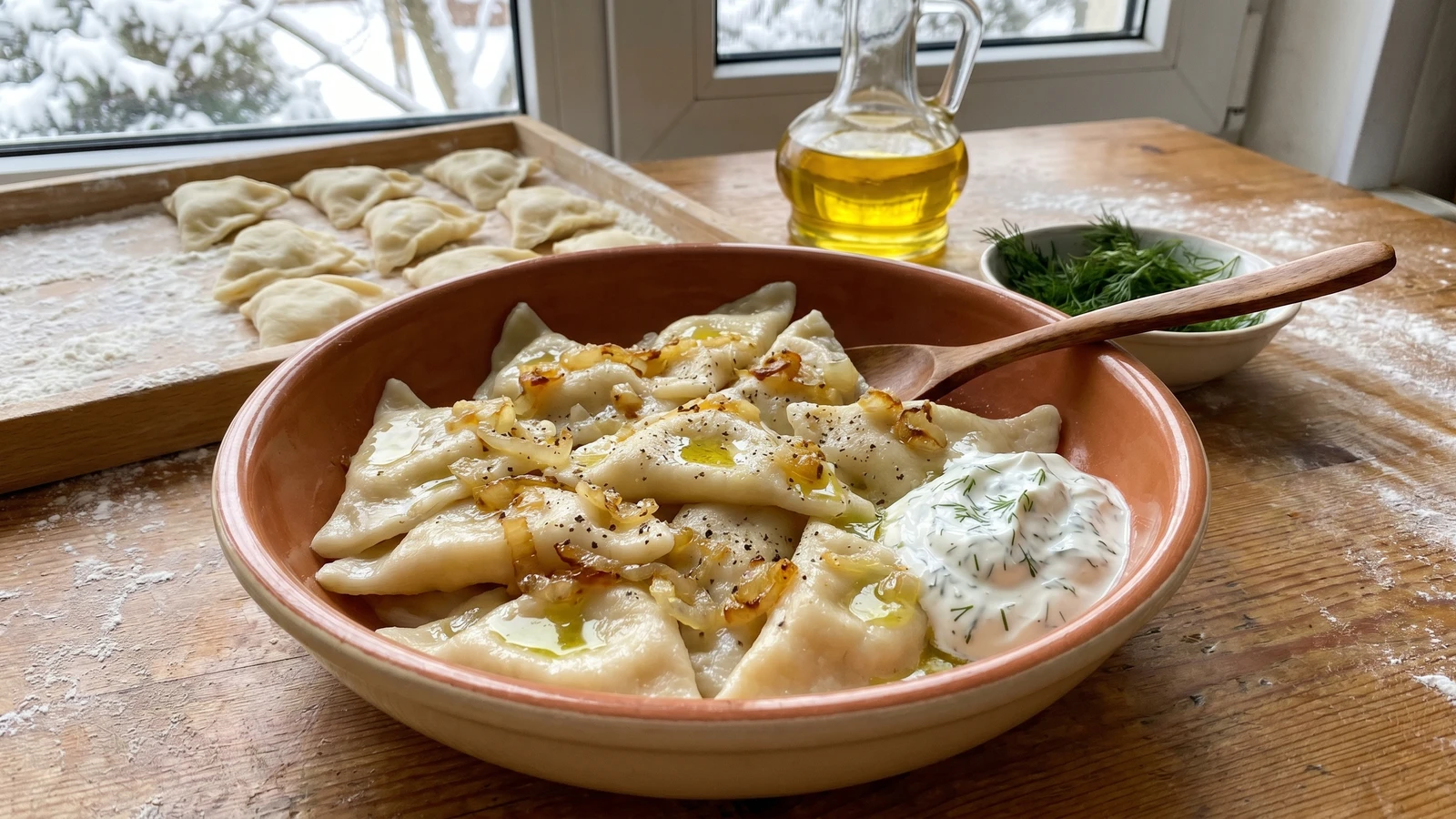
These are the dumplings you can fold almost blind: thin dough, potato mashed with salty curd, and buttered onion poured over while the cold smetana waits.
The first thing that announces these varenyky is not the dumpling. It's onion going sweet in butter and sunflower oil, soft enough to slump over the spoon, golden at the edges, ready to gloss every fold. Potato and salty curd are pale things, yes, but they carry the whole table once that onion hits them: hot, soft, sharp with black pepper, cold smetana waiting on the side.
The dish lives in the fold. The filling must be cool and dry before it touches dough, because hot potato sweats and wet cheese turns brave little dumplings into soup. Mash the potatoes while hot, add the syr, curd cheese, when the heat has gone, then fold thin enough that the seam feels like cloth between your fingers. My grandmother Vira gave me exactly one fold before we left, the family triangle; my hands remember, but a half-moon seals honestly too.
Make more than you think. Varenyky are never a single-plate mood; they are a tray on the table, a bag in the freezer, a neighbour sent home with six because you have hands and dough and somebody will be hungry tomorrow. Boil them until they bob and the water changes its sound from busy to gentle, then lift them straight into the onions. That's where they become supper.
Varenyky belong to Ukraine's old boiled-dough table, but the potato filling is younger than the dish itself: potatoes spread through Ukrainian village kitchens in the late eighteenth and nineteenth centuries, then settled into everyday dumplings beside older curd, cabbage, cherry, and buckwheat fillings. The potato and syr, curd cheese, pairing is especially at home in central and western household cooking, where dairy was worked into both savoury and sweet dumplings. Soviet canteens narrowed varenyky into a few uniform fillings, while home kitchens kept the regional arguments alive: half-moons or triangles, plain potato or cheese, onions browned hard or only softened.
Quantity
600g, plus more for rolling
Quantity
1 teaspoon
Quantity
300ml
Quantity
1 tablespoon
Quantity
1kg
peeled and cut into chunks
Quantity
250g
well drained
Quantity
3
1 finely diced for the filling, 2 thinly sliced for serving
Quantity
90g
divided
Quantity
3 tablespoons
divided
Quantity
1 teaspoon, plus more to serve
Quantity
to taste
Quantity
to serve
Quantity
small bunch
chopped
| Ingredient | Quantity |
|---|---|
| plain flour | 600g, plus more for rolling |
| fine sea salt | 1 teaspoon |
| warm water | 300ml |
| sunflower oil | 1 tablespoon |
| floury potatoespeeled and cut into chunks | 1kg |
| salty curd cheesewell drained | 250g |
| large onions1 finely diced for the filling, 2 thinly sliced for serving | 3 |
| butterdivided | 90g |
| unrefined sunflower oildivided | 3 tablespoons |
| black pepper | 1 teaspoon, plus more to serve |
| fine sea salt | to taste |
| smetana (sour cream) (optional) | to serve |
| fresh dill (optional)chopped | small bunch |
Stir the flour and salt in a wide bowl. Pour in the warm water and sunflower oil, mixing with a fork until the dough looks ragged, then knead on the table until it turns smooth and elastic under your palms. Add flour only if it truly sticks. Cover with an upturned bowl and let it rest while you make the filling; the dough should soften and stop arguing back.
Cover the potatoes with cold salted water and boil until a knife slides through without pushing. Drain them well, then return them to the warm pot and shake them over low heat until the edges look chalky and the watery smell disappears. Mash while hot until smooth, then spread the mash in a shallow bowl so the heat leaves it quickly.
Melt 30g butter with 1 tablespoon unrefined sunflower oil in a wide pan, then add the finely diced onion and a pinch of salt. Cook gently until the onion is soft, golden at the edges, and sweet enough that the smell changes from sharp to round. Scrape it into the potatoes, orange-gold fat and all.
When the potatoes are no longer hot, crumble in the salty curd cheese, black pepper, and enough salt to make the filling taste a little bolder than you think it should. Squeeze a spoonful in your hand: it should hold together and leave your palm clean, not wet. This is the step that decides the dish. Hot or damp filling bursts even a good fold.
Divide the rested dough into four pieces and keep three covered. Roll one piece on a lightly floured table until thin enough to see the shadow of your fingers through it, but not so thin it tears when lifted. For my family triangle, cut 8cm squares. For half-moons, cut 8cm circles. Both will feed people honestly.
Put a rounded teaspoon of filling in the centre of each square. Fold corner to corner into a triangle, press out the air around the filling, then pinch the seam firmly once and again with the side of your thumb. My grandmother Vira gave me exactly this fold before we left, and my hands remember. If a seam looks thin, pinch a little dough from the edge over it and move on.
While the folded varenyky wait under a towel, melt the remaining 60g butter with the remaining 2 tablespoons unrefined sunflower oil. Add the sliced onions and cook until they slump, turn golden in places, and smell sweet enough to pull people into the kitchen. Keep them warm in a big serving bowl.
Bring a big pot of salted water to a lively boil, then lower it slightly so the dumplings can move without being beaten up. Slide in the varenyky in batches and sweep a wooden spoon gently along the bottom so none stick. When they bob to the surface, wait until the seams look satin and the water changes from noisy to calm around them. Lift them straight into the onions.
Tumble the hot varenyky through the buttered onions so every fold shines. Spoon into deep bowls and serve with cold smetana, chopped dill, and more black pepper. Enough for eight guests or one hungry Ukrainian, and if you made too many, good. Tomorrow exists.
1 serving (about 360g)
Culinary guides, cultural storytelling, and the editorial depth that makes cooking meaningful.
Discover Culinary ExplorerChef Lesia
A whole pork neck takes garlic into little knife pockets, roasts until the crust goes dark and fragrant, then rests overnight so every cold slice tastes better than shop ham.
Chef Lesia
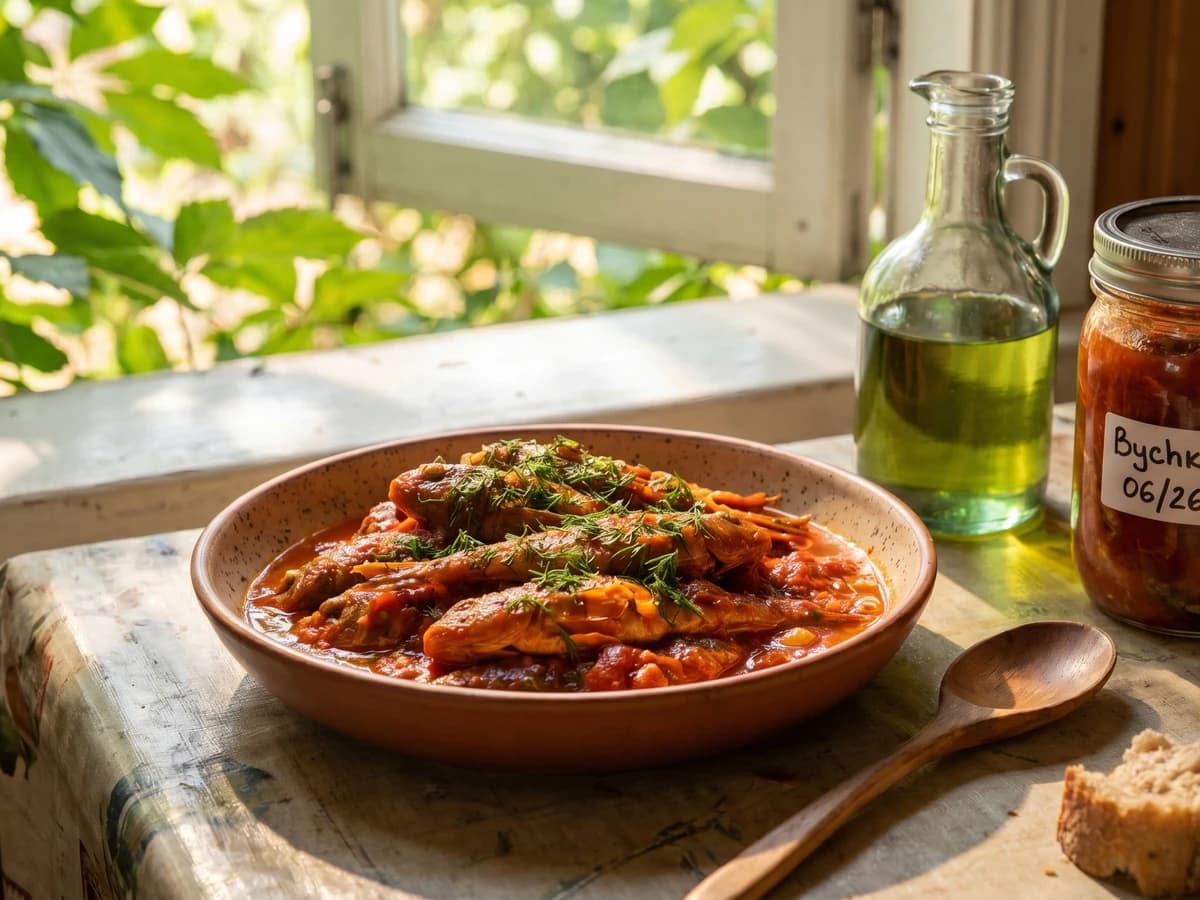
Small Azov gobies go into tomato bright as market cloth and come out soft enough that the bones give up. This is Mariupol food: cheap, red, generous, and better tomorrow.

Chef Lesia
The first sound is the meat against the board: flat, sharp, changing as the fibres loosen. Fry the cutlets fast, then let onion gravy do the soft finishing.

Chef Lesia
A heap of tiny silver fish becomes supper by the oldest Odesa trick: clean them, press them together, fry until the edges crackle, and let lemon and dill do the talking.