
Chef Lupita
Birria Tacos with Consome
Jalisco's goat birria, born around Cocula and carried into Guadalajara's markets, slow-braised in ancho, guajillo, cascabel, and chile de arbol, then tucked into corn tortillas crisped in its own red fat.
A cooking platform built around craft, culture, and the stories behind what we eat.
Created by
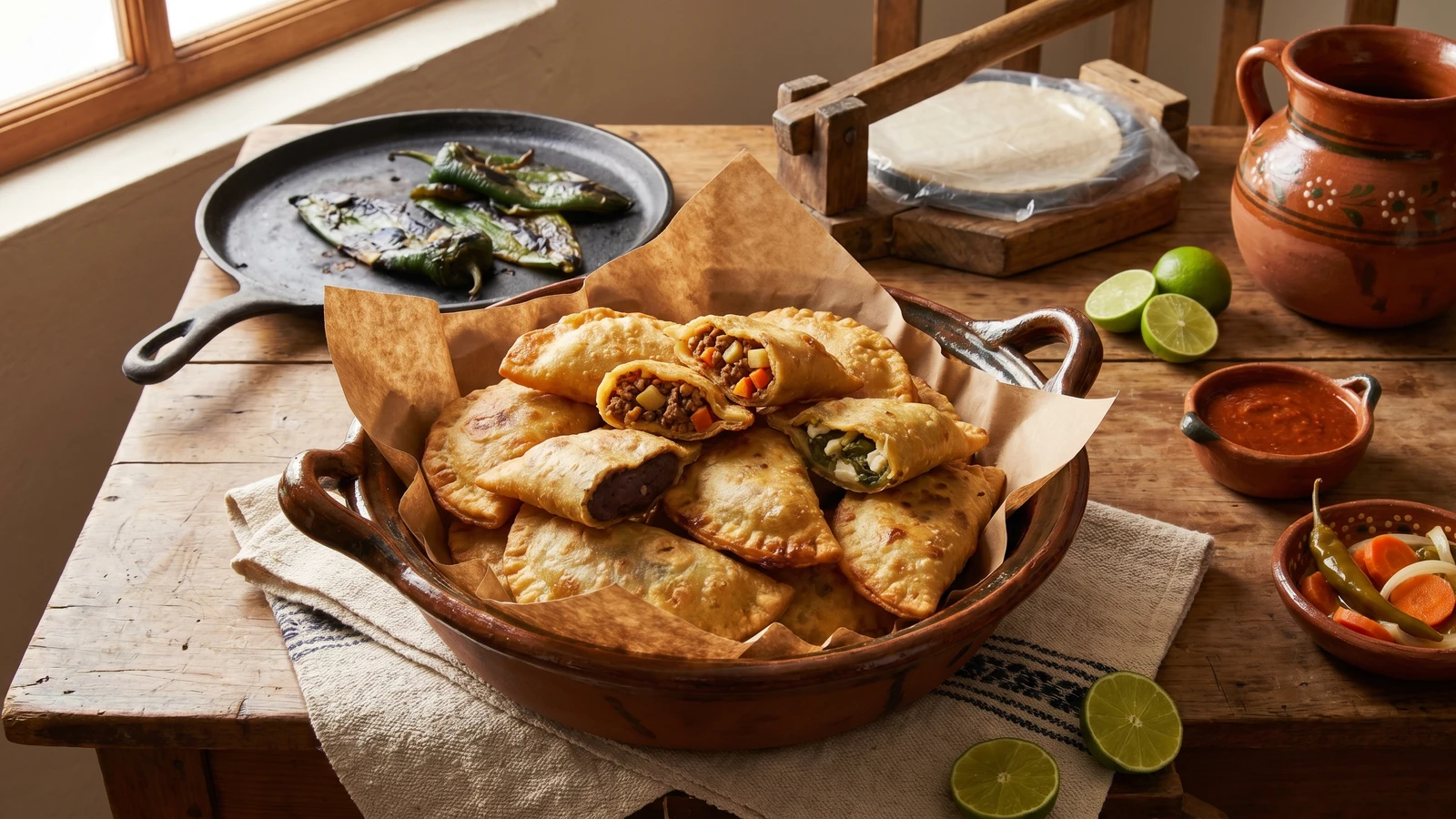
Guanajuato's Apaseo el Grande vaquitas are small masa pockets sealed like empanadas, fried until golden, and sold warm in brown paper for eating by hand.
Guanajuato, Bajio, Apaseo el Grande. That is where these vaquitas live, in a town sitting between Celaya and Queretaro, where the road food is practical, corn-based, and made to feed people without ceremony.
These are not burritos. No flour tortilla, no yellow cheese, no lettuce pretending it belongs. A vaquita is a small corn masa empanada, filled with picadillo, frijoles refritos, or rajas con queso, sealed by hand, then fried in manteca de cerdo until the surface turns golden and firm. The paper matters too. They are handed over warm in papel de estraza, that brown market paper that carries the shine of the fat and tells you this food was made to travel from the stall to your hand.
I first ate them near the Apaseo market, standing beside women who moved faster than anyone with a printed recipe ever will. One pressed the masa, one filled, one fried, one wrapped. That rhythm is the technique. Make the filling dry enough, seal the edge cleanly, keep the fat hot but not angry. Recetas probadas y garantizadas, but only if you respect the work.
Vaquitas de Apaseo el Grande are a late 20th-century market tradition documented locally since the 1980s, tied to Guanajuato's Bajio culture of corn masa snacks filled and fried for portable meals. Their form belongs to the broader central Mexican family of empanadas de masa, but the Apaseo version is identified by its small size, everyday fillings, and the practice of wrapping them warm in papel de estraza. The dish reflects the practical food economy of the Celaya-Apaseo-Queretaro corridor, where market cooks built filling, inexpensive meals around masa, beans, chile poblano, and lard.
Quantity
3 cups
Quantity
1/2 teaspoon, plus more to taste
Quantity
2 tablespoons
melted, for the masa
Quantity
3/4 to 1 cup
only if using masa harina
Quantity
1 pound
Quantity
2 medium
finely chopped
Quantity
1/2 medium
finely chopped
Quantity
2
minced
Quantity
1 small
peeled and finely diced
Quantity
1 small
peeled and finely diced
Quantity
1
finely chopped
Quantity
1/2 teaspoon
Quantity
2 tablespoons
for the picadillo
Quantity
1 1/2 cups
cooked thick
Quantity
2
roasted, peeled, seeded, and sliced into rajas
Quantity
1/2 cup
sliced thin
Quantity
1 cup
crumbled
Quantity
1 tablespoon
for the rajas
Quantity
2 cups or enough to fry 1 inch deep
Quantity
for serving
Quantity
for serving
| Ingredient | Quantity |
|---|---|
| fresh nixtamal masa or masa harina prepared for tortillas | 3 cups |
| fine sea salt | 1/2 teaspoon, plus more to taste |
| manteca de cerdomelted, for the masa | 2 tablespoons |
| warm wateronly if using masa harina | 3/4 to 1 cup |
| ground beef | 1 pound |
| Roma tomatoesfinely chopped | 2 medium |
| white onionfinely chopped | 1/2 medium |
| garlic clovesminced | 2 |
| carrotpeeled and finely diced | 1 small |
| potatopeeled and finely diced | 1 small |
| chile serranofinely chopped | 1 |
| dried Mexican oregano | 1/2 teaspoon |
| manteca de cerdofor the picadillo | 2 tablespoons |
| frijoles bayos refritoscooked thick | 1 1/2 cups |
| fresh chile poblanoroasted, peeled, seeded, and sliced into rajas | 2 |
| white onionsliced thin | 1/2 cup |
| queso ranchero or queso frescocrumbled | 1 cup |
| manteca de cerdofor the rajas | 1 tablespoon |
| manteca de cerdo | 2 cups or enough to fry 1 inch deep |
| salsa roja de chile guajillo (optional) | for serving |
| chiles en escabeche (optional) | for serving |
Put the fresh nixtamal masa in a bowl with the salt and melted manteca. Knead until it feels smooth, soft, and no longer cracks at the edge when pressed. If using masa harina, add warm water little by little until the dough feels like soft clay. Cover with a damp towel. Masa dries fast in the Bajio air, and cracked masa leaks filling into the fat.
Melt 2 tablespoons manteca in a skillet over medium heat. Add the onion and cook until it turns translucent. Add the garlic, ground beef, carrot, potato, chile serrano, tomato, oregano, and salt. Cook, stirring and breaking up the meat, until the vegetables are tender and the mixture is nearly dry, 18 to 22 minutes. Nearly dry means no puddle in the pan. Wet picadillo breaks the vaquita open.
Roast the chile poblanos directly over a flame or on a hot comal until the skins blister black in spots. Rest them in a covered bowl for 10 minutes, then peel, seed, and slice into strips. Melt 1 tablespoon manteca in a skillet, cook the sliced onion until soft, then add the rajas and a pinch of salt. Let them cool before mixing with the queso ranchero. Hot filling melts the cheese too early and makes a mess.
Put the picadillo, thick frijoles refritos, and rajas con queso in separate bowls. Taste each one for salt. The masa is plain, so the filling must speak clearly. Do not make the beans loose. Refry them until a spoon dragged through the pan leaves a clean trail.
Divide the masa into 18 balls, each about the size of a small lime. Line a tortilla press with plastic cut from a clean produce bag. Press one ball into a 4-inch round, not paper thin. Put 1 generous tablespoon filling on one side, fold the masa over, and press the edge closed with your fingers. The edge should look sealed, not pinched like decoration. La cocina no es decoración, es trabajo.
Heat the manteca in a deep skillet to 350F, or until a small scrap of masa bubbles steadily and rises. Fry 3 or 4 vaquitas at a time, turning once, until golden and firm, about 3 minutes per side. Keep the fat steady. Too cool and they drink grease. Too hot and the outside browns before the masa cooks through. La manteca es el sabor, but it has to be handled with discipline.
Lift the vaquitas onto a rack or brown paper to drain for one minute. Wrap them while still warm in papel de estraza, three or four to a bundle, the way they are sold in Apaseo. Serve with salsa roja de chile guajillo and chiles en escabeche on the side. Eat by hand. Así se hace y punto.
1 serving (about 125g)
Culinary guides, cultural storytelling, and the editorial depth that makes cooking meaningful.
Discover Culinary ExplorerChef Lupita
Jalisco's goat birria, born around Cocula and carried into Guadalajara's markets, slow-braised in ancho, guajillo, cascabel, and chile de arbol, then tucked into corn tortillas crisped in its own red fat.

Chef Lupita
Sonora's working morning burrito: chicharrón de cáscara stewed in chile colorado with diced potato, rolled tight in a paper-thin tortilla sobaquera and eaten standing up at the carreta.

Chef Lupita
Mocorito's pork chilorio, shredded and confited in lard with chile ancho and pasilla, rolled into a thin handmade flour tortilla. The burrito Sinaloa sends out into the world.

Chef Lupita
Sonora's morning burrito of mashed pinto frijoles puercos and melted queso asadero, wrapped in a paper-thin sobaquera and seared on the comal until the cheese pulls in long strings.