
Chef Dean
Kokosbusserl
Pillowy Austrian coconut macaroons with crisp edges and tender, chewy centers, finished with a glossy dark chocolate base that makes them as beautiful as they are irresistible.
A cooking platform built around craft, culture, and the stories behind what we eat.

Created by
Tender almond crescents from Vienna's legendary coffeehouses, rolled warm in fragrant vanilla sugar until they shatter at first bite and dissolve on your tongue like a whispered secret.
These little crescents have survived centuries for good reason. Vanillekipferl emerged from Austria's coffeehouse culture, where pastry chefs competed to create confections worthy of the afternoon ritual. The shape itself tells a story. Some historians trace it to Vienna's victory over the Ottoman siege in 1683, the crescent a quiet celebration baked into every curve. Whether or not that's true, the cookies themselves are beyond dispute: among the finest holiday treats ever conceived.
The magic lies in restraint. No eggs. No leavening. Just butter, flour, ground almonds, and sugar transformed through cold hands and patient shaping into something almost impossibly tender. When you bite through one, it offers no resistance. It simply yields, dissolving into vanilla-scented sweetness before you've finished the first chew. This is baking as architecture. Every ingredient serves a structural purpose.
I learned to make these from an Austrian grandmother who measured nothing and shaped hundreds without looking. Her hands moved like they were dancing. She told me the secret was cold butter, cold dough, and warm cookies meeting warm sugar. Get those temperatures right and you cannot fail. She was correct, as grandmothers usually are about matters of the kitchen.
These cookies demand your attention for perhaps ninety minutes, then reward you with treats that improve over several days and ship beautifully to distant family. They belong on every holiday cookie tray, tucked between the bold gingerbreads and assertive pfeffernusse, a gentle counterpoint that makes the whole spread sing.
Quantity
225g (1 cup)
cold and cubed
Quantity
100g (1 cup)
finely ground
Quantity
280g (2 1/4 cups)
Quantity
100g (1/2 cup)
Quantity
1/4 teaspoon
Quantity
1 teaspoon
Quantity
200g (1 2/3 cups)
for rolling
Quantity
1 tablespoon
or seeds from 1 vanilla bean
| Ingredient | Quantity |
|---|---|
| unsalted buttercold and cubed | 225g (1 cup) |
| blanched almondsfinely ground | 100g (1 cup) |
| all-purpose flour | 280g (2 1/4 cups) |
| granulated sugar | 100g (1/2 cup) |
| fine sea salt | 1/4 teaspoon |
| pure vanilla extract | 1 teaspoon |
| powdered sugarfor rolling | 200g (1 2/3 cups) |
| vanilla sugaror seeds from 1 vanilla bean | 1 tablespoon |
Pulse blanched almonds in a food processor until they resemble fine sand, about 30 seconds in short bursts. Stop before they turn to paste. You want powder, not almond butter. If any larger pieces remain, they'll create weak spots in your crescents. Sift if you're uncertain.
Whisk together the ground almonds, flour, granulated sugar, and salt in a large bowl. This takes thirty seconds and ensures even distribution. Uneven sugar means uneven sweetness. Uneven salt means some cookies taste flat while others surprise you.
Add cold butter cubes and vanilla extract to the flour mixture. Work with your fingertips or a pastry cutter until the mixture resembles coarse breadcrumbs with some pea-sized pieces remaining. Then press and knead briefly until the dough just comes together. It will look shaggy at first. Keep working. Within a minute it will form a cohesive mass. Do not overwork it once it holds together.
Divide dough in half and flatten each portion into a disc about an inch thick. Wrap tightly in plastic and refrigerate for at least 30 minutes or up to two days. The dough must be cold to shape properly. Warm dough sticks, tears, and produces dense cookies. Patience here pays dividends.
Position racks in upper and lower thirds of your oven and heat to 325°F (165°C). Line two baking sheets with parchment. Mix the powdered sugar with vanilla sugar or vanilla bean seeds in a shallow dish and set aside. This vanilla sugar bath awaits your warm crescents.
Working with one disc at a time (keep the other refrigerated), pinch off pieces roughly the size of a large grape. Roll each between your palms into a rope about 2 1/2 inches long, slightly thicker in the middle and tapered at the ends. Curve gently into a crescent and place on prepared sheet. Space them an inch apart. They spread very little.
Bake for 10 to 12 minutes, rotating sheets halfway through. The cookies are done when the bottoms turn light gold and the tops remain pale, almost unchanged from their raw state. They will feel soft when you touch them. This is correct. They firm as they cool. Overbaked vanillekipferl taste like sawdust.
Let cookies cool on the sheet for exactly 3 minutes. They must be warm but handleable. Working quickly, transfer each crescent to the vanilla sugar and roll gently to coat completely. The warmth helps the sugar adhere. Set coated crescents on a wire rack to cool. Once all cookies from the first batch are rolled, give them a second coating of sugar. The double layer creates that signature thick vanilla cloak.
Cool completely before storing. Layer vanillekipferl between sheets of parchment in an airtight tin. They keep at room temperature for two weeks and actually improve after three days as the flavors meld and the texture becomes even more tender. Dust with additional vanilla sugar before serving if the coating has absorbed.
1 cookie (about 22g)
Culinary guides, cultural storytelling, and the editorial depth that makes cooking meaningful.
Discover Culinary ExplorerChef Dean
Pillowy Austrian coconut macaroons with crisp edges and tender, chewy centers, finished with a glossy dark chocolate base that makes them as beautiful as they are irresistible.

Chef Juliette
A pale short-paste shell holds silken, lightly sweet carrot purée beneath neat glazed half-discs, their butter syrup catching the light: a classical tart poised between vegetable course and sweet.
Chef Juliette
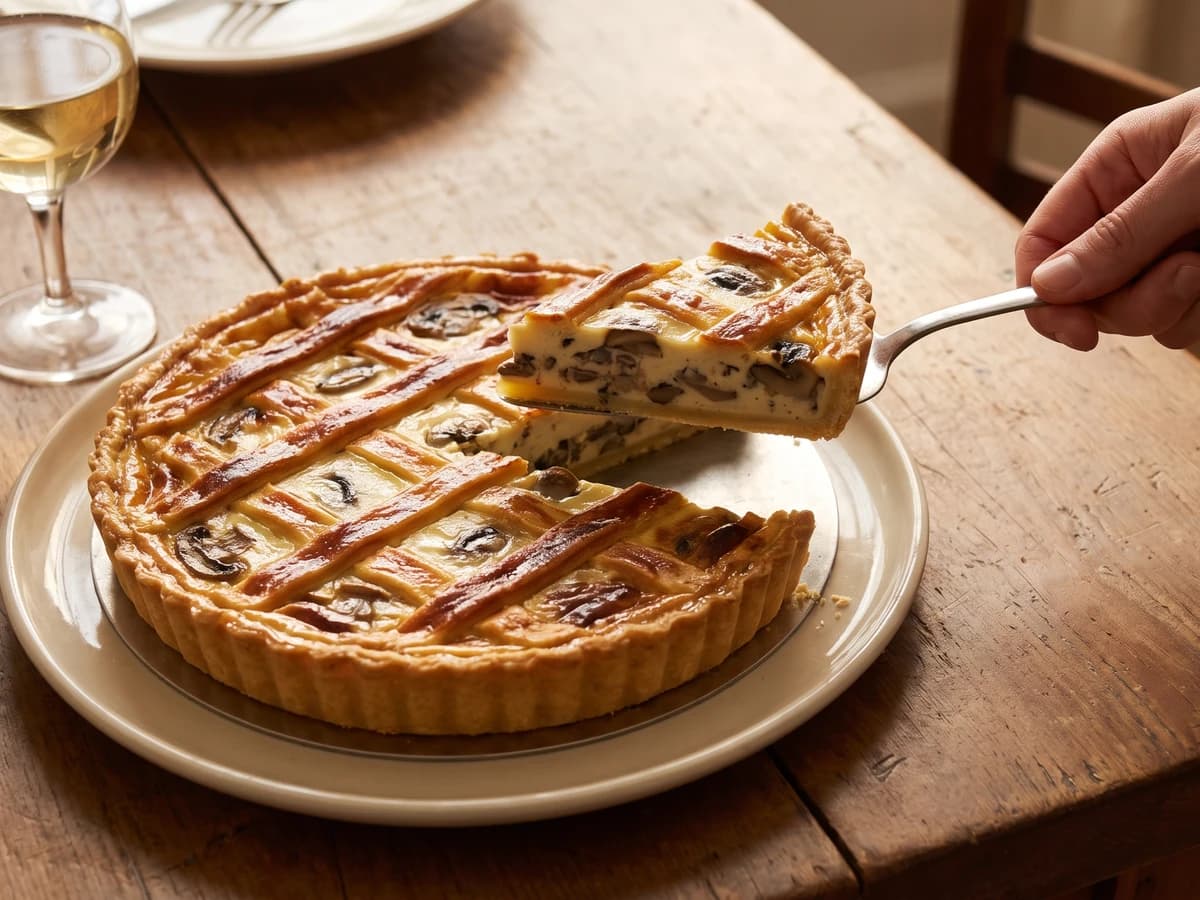
A hot mushroom flan under a butter-gold lattice, with cream reduced close around barely opened caps and a crisp short-paste base protected by one discipline: cool the filling completely.

Chef Juliette
Four little mushroom flans, latticed and gilded, baked hard and fast until butter-gold: a classical garnish scaled to the meat it accompanies and served before its crispness has time to fade.