
Chef Lupita
Agua de Alfalfa
Ciudad de México's highland market agua fresca, fresh alfalfa blended with pineapple and lime until bright green, strained clean, and poured cold from the vitrolero.
A cooking platform built around craft, culture, and the stories behind what we eat.
Created by
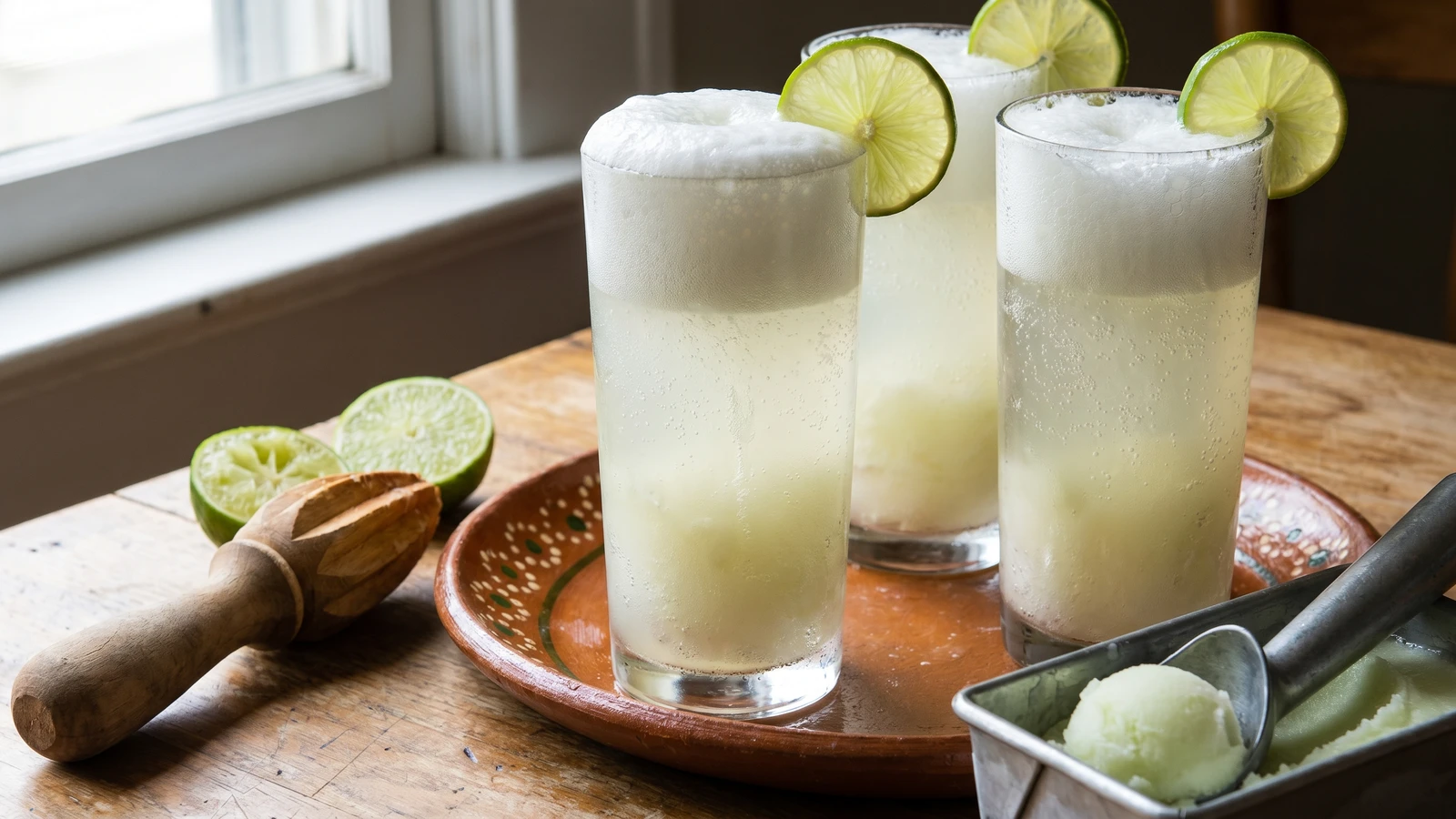
Guadalajara's vaca blanca is a cold refresqueria glass of nieve de limon and lemon-lime soda, fizzy, foamy, sharp with Mexican lime, and made for hot afternoons.
Jalisco, specifically Guadalajara and the Valles region around it, owns this glass. The vaca blanca lives in refresquerias, neverias, market counters, and hot sidewalks where a tapatio wants something cold, cheap, and sharp enough to wake up the mouth. This is not a milkshake. It is nieve de limon dropped into lemon-lime soda until the whole glass erupts into white foam.
The ingredient that matters is the Mexican lime. Small, green, thin-skinned, fragrant. At Mercado Libertad in Guadalajara, the good lime vendors don't need signs. You smell the crates before you see them. The sorbet should taste bright and a little bitter from the zest, because that peel is what keeps the drink from becoming candy. Sweet soda alone is for children. Lime gives it spine.
I learned this one from a woman near San Juan de Dios who worked a counter with three garrafas, limon, vainilla, and fresa. She told me the mistake people make is using soft ice cream and warm soda. She was right. The sorbet must be frozen hard enough to fight back, and the soda must be cold enough to bead on the glass. Así se hace y punto.
Cada estado, su propia cocina. Jalisco is not only birria, tortas ahogadas, and pozole rojo. It is also the everyday intelligence of the refresqueria: sugar, citrus, ice, fizz, and a glass that makes the heat more manageable. Saber cocinar es saber vivir.
Nieve de garrafa became a common Mexican market refreshment in the 19th and early 20th centuries, when hand-cranked wooden buckets packed with ice and salt made frozen desserts possible before household freezers were common. Guadalajara's refresquerias and neverias developed their own soda-counter vocabulary, including vaca negra for cola with ice cream and vaca blanca for clear lemon-lime soda with lime nieve or vanilla ice cream, depending on the stall. The lime version reflects Jalisco's everyday market cooking: citrus from western Mexico, sugar syrup, and cold soda served quickly in a tall glass.
Quantity
1 cup
Quantity
1 cup
Quantity
1 cup
strained, from about 18 to 24 small limes
Quantity
1 tablespoon
finely grated before juicing
Quantity
1/4 teaspoon
Quantity
3 cups
Quantity
6 cups
ice-cold
Quantity
6
for serving
| Ingredient | Quantity |
|---|---|
| granulated sugar | 1 cup |
| water for syrup | 1 cup |
| fresh Mexican lime juicestrained, from about 18 to 24 small limes | 1 cup |
| Mexican lime zestfinely grated before juicing | 1 tablespoon |
| fine sea salt | 1/4 teaspoon |
| cold water for sorbet base | 3 cups |
| Mexican lemon-lime sodaice-cold | 6 cups |
| thin lime wheels (optional)for serving | 6 |
Combine the sugar and 1 cup water in a small saucepan. Set over medium heat and stir just until the sugar dissolves, about 5 minutes. Do not boil it hard. You are making a clean syrup, not caramel. Pull it off the heat and let it cool completely.
Stir the lime juice, lime zest, salt, cold water, and cooled syrup together in a pitcher. Taste it before freezing. It should taste a little too sharp and a little too sweet because freezing dulls both. If your limes are weak, add another tablespoon of juice. If the market gave you good Mexican limes, you will smell the peel before the spoon reaches your mouth.
Churn the mixture in an ice cream maker until it holds like soft nieve, then pack it into a covered container and freeze until firm, 4 to 6 hours. No machine? Pour the base into a shallow metal pan, freeze for 45 minutes, scrape hard with a fork, and repeat every 30 minutes until the crystals are fine and scoopable. This is closer to nieve de garrafa, the texture you find in old neverias.
Put six tall glasses in the freezer for 10 minutes. The soda must be cold, the glass must be cold, and the sorbet must be firm. Warm glass gives you lazy foam. A vaca blanca should rise fast and thick.
Place one generous scoop of lime sorbet into each chilled glass. Slowly pour 1 cup of ice-cold lemon-lime soda down the side of the glass. It will foam up white and loud. Stop, let it settle for a few seconds, then top it off. Add a thin lime wheel if you want it. Serve immediately with a long spoon and a straw. No me vengas con atajos. If you pour warm soda over soft sorbet, you made sweet soup.
1 serving (about 440g)
Culinary guides, cultural storytelling, and the editorial depth that makes cooking meaningful.
Discover Culinary ExplorerChef Lupita
Ciudad de México's highland market agua fresca, fresh alfalfa blended with pineapple and lime until bright green, strained clean, and poured cold from the vitrolero.

Chef Lupita
Aguascalientes' Lenten agua fresca, jewel-red from cooked beet and full of apple, banana, orange, lettuce, and ground peanuts, served cold when Holy Week meets the Feria de San Marcos.

Chef Lupita
Sonora and Sinaloa's creamy malted barley water, built on toasted cebada perla, Mexican canela, vanilla from Papantla, and evaporated milk. Pink-beige, rich, and served cold over heavy ice in a heavy glass tumbler. Liquid cookie comfort the northwest way.

Chef Lupita
Yucatán's everyday tonic of boiled chaya leaves blended with lima agria, sugar, and ice. The bright green jarra that sits on every Peninsula table from Mérida to Valladolid.