
Chef Takumi
Aji Fry (アジフライ, panko-fried horse mackerel)
Aji fry is weeknight fish with no mystery: fresh horse mackerel opened cleanly, breaded lightly, and fried until the panko crackles while the flesh stays sweet.
A cooking platform built around craft, culture, and the stories behind what we eat.
Created by
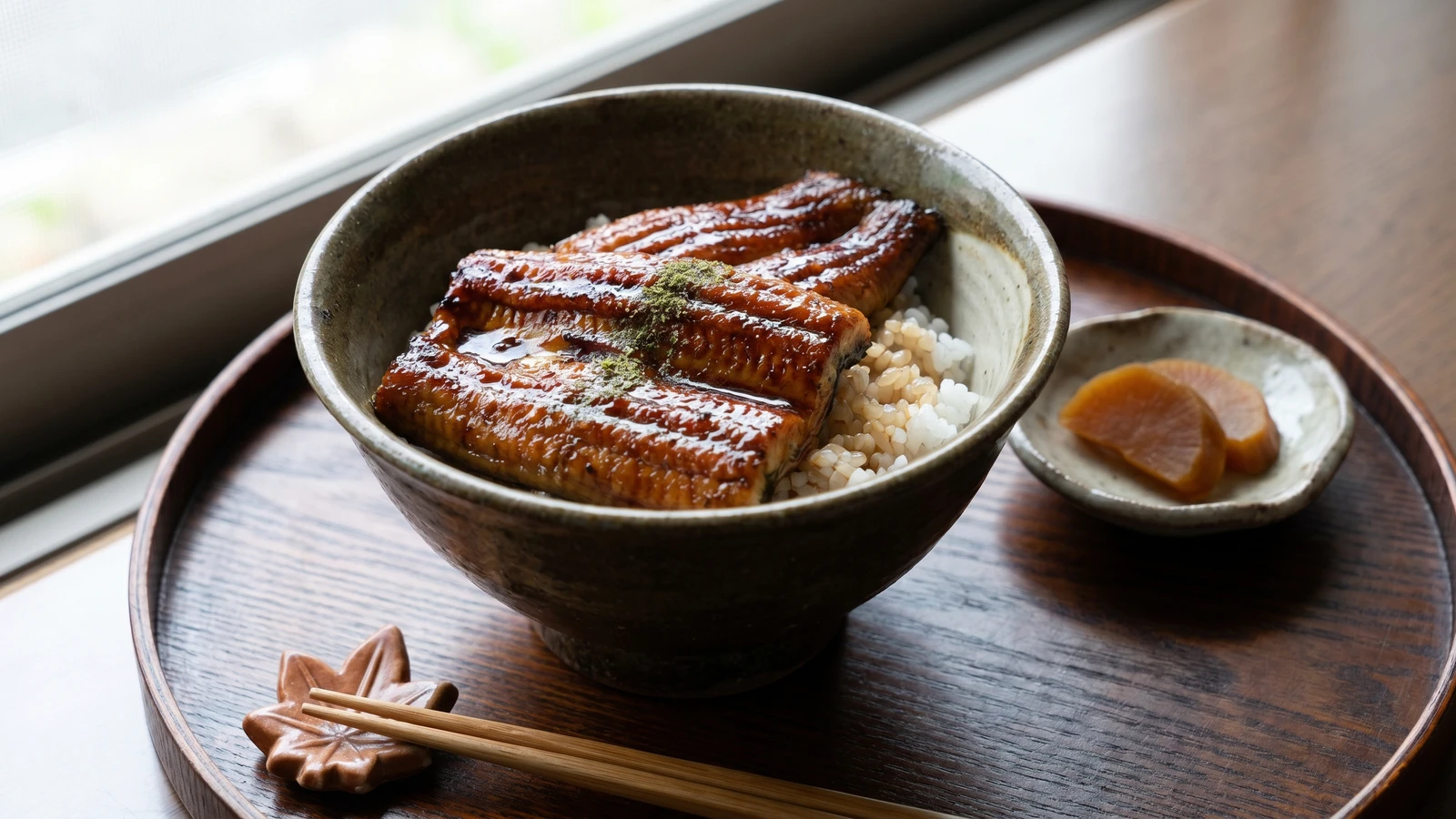
Unadon looks like a shopkeeper's secret, but the heart is plain: good eel, a soy-mirin glaze cooked to a shine, and hot rice ready to catch every drop.
Unadon carries a little fear with it, because eel sounds like a specialist's animal and, in Japan, it is. Let me be plain: the hard work belongs to the fishmonger. Ask for freshwater eel already split, boned, and cleaned, and the home cook's work is rice, tare, and patient heat.
Unagi has two clocks: the custom of eating it in midsummer on Doyō no Ushi no Hi, and the older cook's sense that wild eel grows fattest as the water cools. Farmed eel has made it a year-round shop dish, but the rule underneath is unchanged: buy the best eel you can, and don't ask tare to do the fish's work. It should look glistening fresh, smell clean, and feel firm. If it looks tired, change the meal. Nothing hidden under a sweet sauce ever becomes honmono.
The one detail that decides the dish is the second grill. First you grill the eel plain to set the flesh, then steam it in Kantō fashion until tender, then grill again while brushing on tare, the soy, mirin, sugar, and sake glaze. The sauce is not meant to bury the eel. It should tighten into a thin lacquer, shining on the ridges, while the rice underneath stays hot enough to catch what runs down.
Unadon is a donburi, a bowl meal, but not a careless one. Keep the rice level low, lay the eel neatly, add a little tare, and finish with sanshō if you like its green bite. Leave it room. The bowl should feel generous in the hand, not defeated by its own abundance.
Unadon is often cited as the earliest donburi, appearing in Edo in the Bunka era (1804-1818) and associated with Ōkubo Imasuke, who had kabayaki eel set over rice so it would stay warm while he watched theater in Sakai-chō. The summer custom of eating eel on Doyō no Ushi no Hi is popularly linked to the eighteenth-century scholar Hiraga Gennai, though the attribution is debated. Kantō shops usually grill, steam, then grill eel again with tare, while Kansai shops often grill it directly, a regional difference still argued with feeling.
Quantity
2 rice-cooker cups (360ml / about 300g)
Quantity
to the cooker line, or about 400ml for stovetop cooking
Quantity
4 fillets (about 600g total)
butterflied and boned by the fishmonger
Quantity
6 tablespoons
divided
Quantity
1 teaspoon
for the grill grate
Quantity
1/2 cup
Quantity
1/2 cup
Quantity
3 tablespoons
Quantity
as available
rinsed
Quantity
for serving
Quantity
for serving
| Ingredient | Quantity |
|---|---|
| Japanese short-grain rice | 2 rice-cooker cups (360ml / about 300g) |
| water | to the cooker line, or about 400ml for stovetop cooking |
| raw freshwater eel (unagi) filletsbutterflied and boned by the fishmonger | 4 fillets (about 600g total) |
| sakedivided | 6 tablespoons |
| neutral oilfor the grill grate | 1 teaspoon |
| koikuchi shōyu (standard dark soy sauce) | 1/2 cup |
| mirin | 1/2 cup |
| sugar | 3 tablespoons |
| eel head and bones (optional)rinsed | as available |
| sanshō pepper powder (optional) | for serving |
| Japanese pickles (optional) | for serving |
Rinse the rice in several changes of water until the water runs almost clear, then soak it for 20 minutes and drain. Cook it in a rice cooker with water to the proper line, or combine it with about 400ml water in a heavy pot, bring to a boil, cover, cook over low heat for 12 minutes, and rest off the heat for 10 minutes. Donburi rice should be hot and a little firm. Soft rice collapses under tare, and cold rice makes the glaze sit on top like paint.
If you have eel head and bones, grill or broil them until browned. Combine the shōyu, mirin, 4 tablespoons sake, sugar, and the browned bones if using in a small saucepan. Simmer uncovered for 12 to 15 minutes, until the sauce reduces to about 3/4 cup and lightly coats a spoon. Strain if you used bones, then divide the tare into a clean serving bowl and a separate brushing bowl. The split matters: any brush that touches eel should not go back into the sauce you spoon over the rice.
Pat the eel dry and cut the fillets into bowl-sized portions if needed. Run two skewers across each piece to hold it flat. As eel heats, the flesh tightens and wants to curl; the skewers keep the surface even so the grill and the glaze meet it cleanly.
Heat a charcoal grill to medium-high, or set an oven broiler with a rack close to the heat. Lightly oil the grate or rack. Grill or broil the eel without tare, turning once, 2 to 3 minutes per side, until both surfaces firm up, take a little color, and smell clean and sweet. This plain grilling is shirayaki. Add sweet tare now and the sugar burns before the eel is ready.
Set the grilled eel in a steamer basket, or on a rack in a lidded skillet with a little water below it. Keep the eel above the water, not sitting in it. Brush or sprinkle with the remaining 2 tablespoons sake, cover, and steam for 10 to 12 minutes, until a skewer slides in with little resistance and the flesh looks plump. This Kantō step is why the eel lies soft over the rice: the first grill sets the shape, and the steam loosens the flesh and renders the fat.
Return the eel to the grill or broiler, flesh-side up. Brush on a thin layer of tare, cook for 30 to 60 seconds, then repeat two or three times, turning briefly to set the skin side as well. Watch the edges. The second grill tightens the tare into a soy-dark lacquer; thick coats slide off and scorch, while thin coats build a quiet shine.
Warm the donburi bowls if you can. Fluff the rice, spoon a little clean tare into each bowl, then add rice to just below the rim and drizzle a little more tare over the top. Don't flood it. The top layer should be seasoned, while the lower grains stay clean enough to balance the eel.
Slide out the skewers and lay the eel over the rice, skin-side down, in slightly overlapping pieces. Spoon on a narrow line of clean tare and finish with a small dusting of sanshō. Serve at once with pickles beside the bowl. Sanshō is not decoration; its citrus-pepper bite cuts the richness and wakes the glaze.
1 serving (about 350g)
Culinary guides, cultural storytelling, and the editorial depth that makes cooking meaningful.
Discover Culinary ExplorerChef Takumi
Aji fry is weeknight fish with no mystery: fresh horse mackerel opened cleanly, breaded lightly, and fried until the panko crackles while the flesh stays sweet.
Chef Takumi
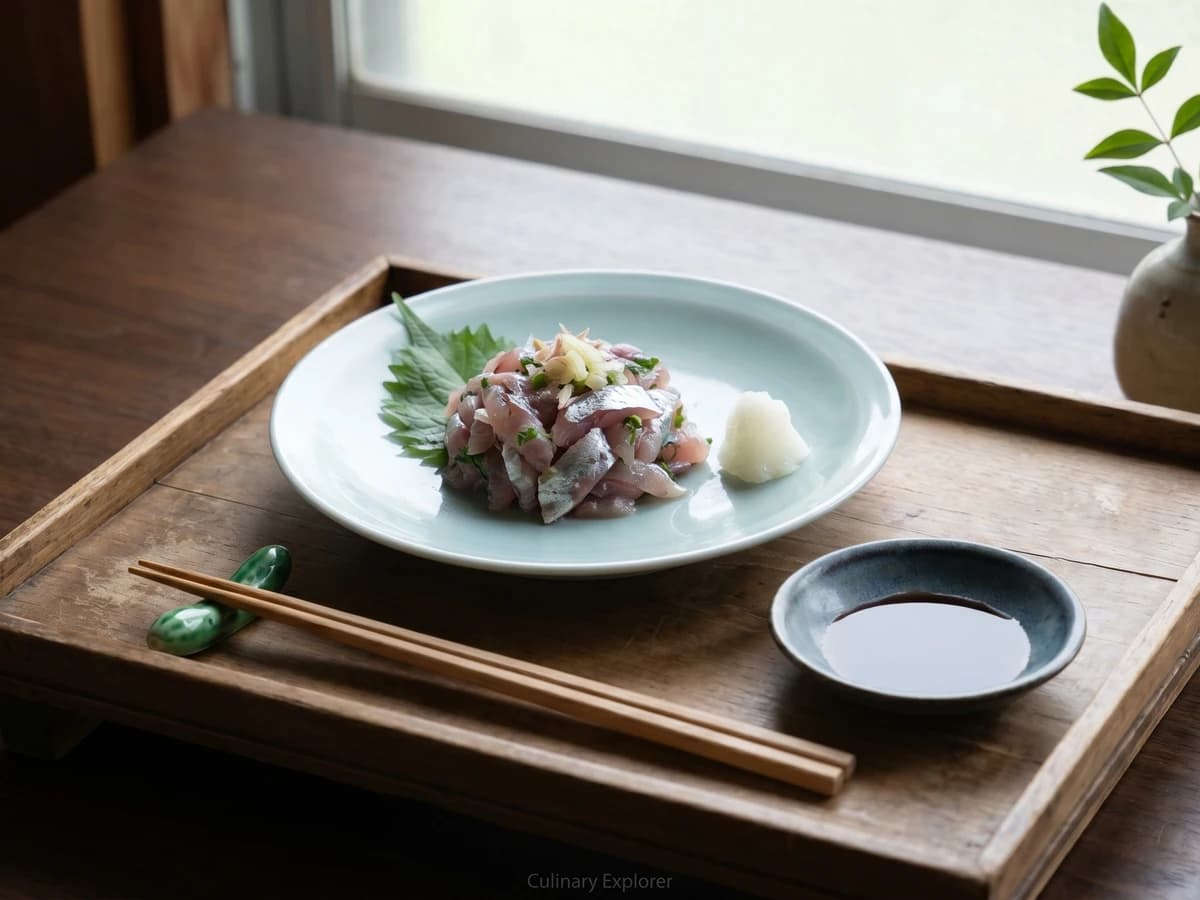
Summer horse mackerel, chopped just enough to catch ginger and scallion, becomes a cool, clean main dish with rice. The secret is fresh fish and a knife that does not bruise it.
Chef Takumi
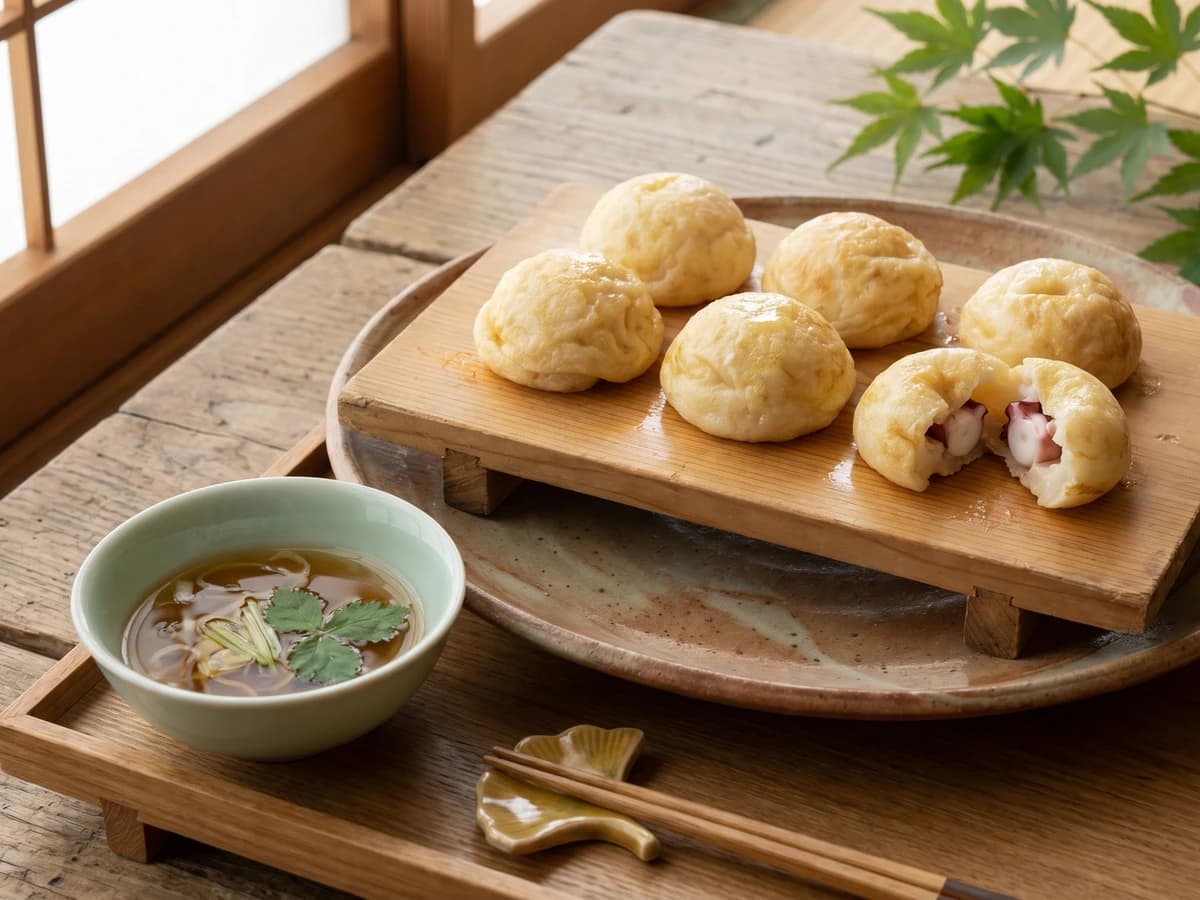
Akashi-yaki is not sauced takoyaki. It is egg-rich batter, tender octopus, and clear dashi, cooked pale and soft so each ball can be dipped like a small custard dumpling.

Chef Takumi
A whole anago looks like a test of nerve. It is mostly good sourcing, a dry skin, cold batter, and oil hot enough to leave the eel sweet under its lace.