Chef Makoa
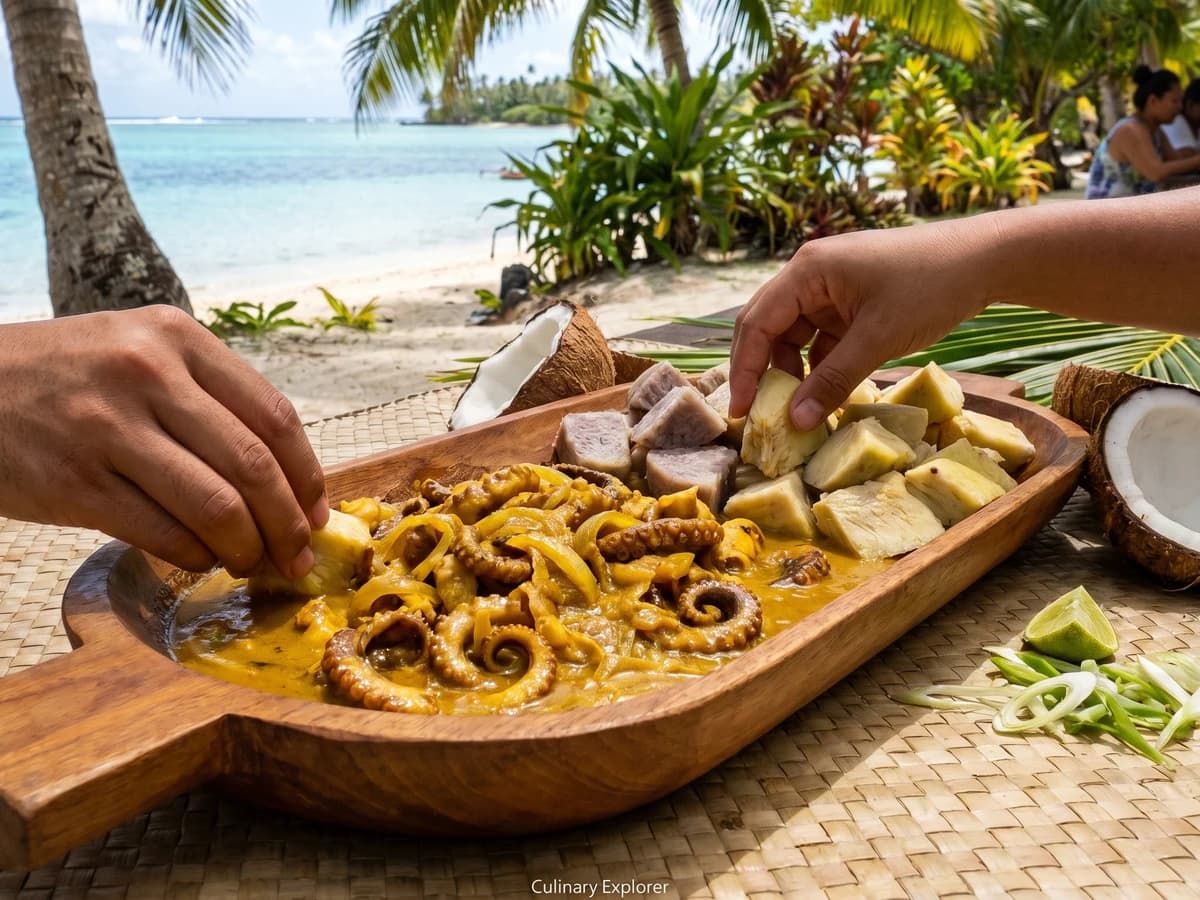
Eke Takare (Cook Islands Curried Octopus)
Rarotonga's reef catch brought home to the pot: tender eke simmered with onion, garlic, turmeric, curry powder, and coconut cream until the sauce turns gold and rich.
A cooking platform built around craft, culture, and the stories behind what we eat.

Created by
Pork, chicken, taro, rukau, kūmara and breadfruit laid in the Cook Islands umukai, sealed under leaf and earth until the meat pulls glossy and the canoe crops go sweet.
The canoe made a family out of islands, and in the Cook Islands that family still feeds itself from the umukai, also written umu kai, the earth-oven feast. I first learned to stand quiet around it in Rarotonga, not because nobody was talking, Cook Islands cousins can talk plenty, but because when the leaf and earth come off the pit, you can feel everyone remembering where the food came from. Taro from the ground. Coconut from the tree. Pork and chicken from the yard. Breadfruit holding the old canoe inside it.
Back home in Hawaiʻi, my hands know the imu from inside my own yard. In the Cooks, this is umukai. Sāmoa and Tonga say umu, Tahiti says ahimaʻa, Aotearoa says hāngī, Rapa Nui says umu pae. The umu by any name is one oven, but each island has its own hand, and this one belongs to the Cook Islands. Same with the leaf parcel: Cook Islands rukau, taro leaves cooked down with coconut cream, sits beside Sāmoan palusami, Tongan lū and Hawaiian laulau. One ocean, one canoe, one root, but never one nameless plate.
The reason you layer the hard roots close to the stones and keep the rukau higher is not fancy technique. It is listening. Taro needs the long heat to give up its bite, breadfruit wants time to turn sweet and dense, and the meat needs the leaf and the sealed earth to hold its juices. If you rush it, the taro stays chalky and the pork stays tight. No blame the taro. You hurried the elder brother.
Most of us can't dig a pit every weekend, so I give you the outdoor way and the kitchen path. The deep order of an umukai, who serves first, what prayers are spoken, what belongs to an ariki, a chief, or to an old family line, that I don't pretend to own. I cook this open-handed from what Cook Islands relatives and elders have shared at their table, and for the sacred parts I send you to them. They should tell their own story.
In Cook Islands Māori, umu is the earth oven and kai is food; umukai, also written umu kai, names the feast cooked under heated stones, leaf and earth on islands such as Rarotonga, Aitutaki, Atiu and Mangaia. Its cousins are the Hawaiian imu, the Sāmoan and Tongan umu, the Tahitian ahimaʻa, the Māori hāngī and the Rapa Nui umu pae, all branches of the same voyaging kitchen carried with canoe crops like taro, kūmara, breadfruit and coconut. Church calendars, wage work and imported foods changed when and what people cooked, but the umukai still holds the old grammar of rank and sharing: the best food goes first to elders, ariki, guests and then the whole family eats.
Quantity
1 (5 to 6 pounds)
Quantity
8 (about 3 pounds)
Quantity
3 tablespoons
plus more to taste
Quantity
1 tablespoon
Quantity
8
crushed
Quantity
2
sliced
Quantity
2 tablespoons
for rubbing the meat
Quantity
6 medium
scrubbed
Quantity
6 medium
scrubbed
Quantity
2 firm
quartered and cores trimmed, or about 4 pounds pieces
Quantity
24 to 30
thick ribs removed
Quantity
2 cups
squeezed from grated mature coconut, or thick canned coconut cream
Quantity
1
finely diced
Quantity
1/2 teaspoon
Quantity
12 to 16
thawed if frozen and wiped clean
Quantity
as needed
for modern wrapping or the kitchen adaptation
Quantity
2 cups
for the kitchen adaptation
| Ingredient | Quantity |
|---|---|
| bone-in pork shoulder (puaka) | 1 (5 to 6 pounds) |
| bone-in chicken thighs (moa) | 8 (about 3 pounds) |
| coarse sea saltplus more to taste | 3 tablespoons |
| cracked black pepper | 1 tablespoon |
| garlic clovescrushed | 8 |
| large onionssliced | 2 |
| neutral oil (optional)for rubbing the meat | 2 tablespoons |
| taro cormsscrubbed | 6 medium |
| kūmara (sweet potatoes)scrubbed | 6 medium |
| breadfruit (kuru)quartered and cores trimmed, or about 4 pounds pieces | 2 firm |
| young taro leaves for rukauthick ribs removed | 24 to 30 |
| fresh coconut creamsqueezed from grated mature coconut, or thick canned coconut cream | 2 cups |
| small onion for rukaufinely diced | 1 |
| sea salt for rukau | 1/2 teaspoon |
| banana leaves or ti leavesthawed if frozen and wiped clean | 12 to 16 |
| foil and parchmentfor modern wrapping or the kitchen adaptation | as needed |
| waterfor the kitchen adaptation | 2 cups |
Set your place first. For an outdoor umukai, choose legal, safe ground with bare earth, good drainage, no overhanging branches and room for the fire to burn down for about two hours. If you are cooking indoors, still keep the leaf, coconut, salt and time. Eat what you have, but understand what you are standing in for.
Build a hardwood fire over clean, dry volcanic stones or fire bricks and let it burn 1 1/2 to 2 hours, until the stones are hot all the way through and the fire has settled into a strong bed of coals. Do not use wet river stones. Trapped water can split them, and nobody needs that trouble near food or family.
Rub the pork shoulder and chicken thighs with the sea salt, pepper, garlic, sliced onion and oil if using. Let the meat sit while the stones heat, long enough for the salt to start drawing in. Lay each meat bundle on banana or ti leaves, fold the leaves close, then wrap in foil if you are using the modern way. The leaf is doing work here: holding moisture, giving its green smell and keeping the meat from taking the fire too hard.
Stack the young taro leaves four or five deep in your palm, with the larger leaves outside, then spoon in the diced onion, a pinch of salt and a generous pour of coconut cream. Fold the leaves over themselves into tight parcels and wrap them in banana leaf, then foil if needed. Rukau, the Cook Islands taro-leaf and coconut-cream dish, must cook until the leaf goes dark, silky and fully soft. Raw or undercooked taro leaf can bite the throat, so don't serve it short.
Wrap the scrubbed taro, kūmara and breadfruit pieces in banana leaves, keeping each kind together so you can read them when the oven opens. Taro wants to be tender to the center with no chalky core. Breadfruit should split creamy and sweet. These are canoe crops, not filler on the side. Cook them like kin.
Rake away active flame, leaving the hot stones and coals in the pit. Line the oven with banana trunks or a thick bed of leaves if you have them, then set the taro, kūmara and breadfruit closest to the heat. Place the pork next, the chicken above or beside it, and the rukau parcels higher where the heat is gentler. Cover with more leaves, then a damp clean cloth or burlap, then 3 to 4 inches of earth. Seal every crack. A thin leak steals the oven's patience.
Let the outdoor umukai cook 3 1/2 to 4 1/2 hours, depending on the size of the pit, the stones and the meat. Don't keep opening it. The sealed earth is the pot now. When you uncover it, the chicken should be at least 165F, and the pork should pull with little fight. If anything is underdone, move it straight into a covered pan in a 300F oven until it finishes. No shame. Feeding people safely comes first.
If you are cooking indoors instead of steps 6 and 7, line two heavy roasting pans or Dutch ovens with banana leaves. Put the pork in one pan with 1 cup water, cover tight and cook at 300F for 4 1/2 to 5 hours, until it pulls glossy and soft. Put the chicken, taro, kūmara and breadfruit in the second pan with the remaining water for the last 2 to 2 1/2 hours. Bake the rukau parcels covered at 350F for 1 1/2 to 2 hours, until the leaves are dark and silky and the coconut cream has cooked into them.
Lift away the earth, cloth and leaves carefully, then open the bundles. The pork should pull in wet, glistening strands, the chicken should be tender at the bone, the taro and kūmara should take a knife with no resistance, and the breadfruit should look dense and creamy where it splits. The rukau should be deep green-black with a coconut-cream shimmer. That is the oven telling you it did its work.
Pull the pork into big pieces and fold some of its salty juices back through. Cut the chicken, split the roots and breadfruit, and open the rukau so the cream shows. Lay everything family-style on banana leaves or in wooden kumete, Cook Islands carved bowls. Feed elders and guests first, then let everybody come in. Deep food is not precious. It is communal. Always enough for one more.
1 serving (about 630g)
Culinary guides, cultural storytelling, and the editorial depth that makes cooking meaningful.
Discover Culinary ExplorerChef Makoa
Rarotonga's reef catch brought home to the pot: tender eke simmered with onion, garlic, turmeric, curry powder, and coconut cream until the sauce turns gold and rich.

Chef Makoa
The Cook Islands bowl: fresh fish just turned in lime, softened with thick coconut cream, and kept crisp with cucumber, onion, and tomato. Same fish, different bowl.
Chef Makoa
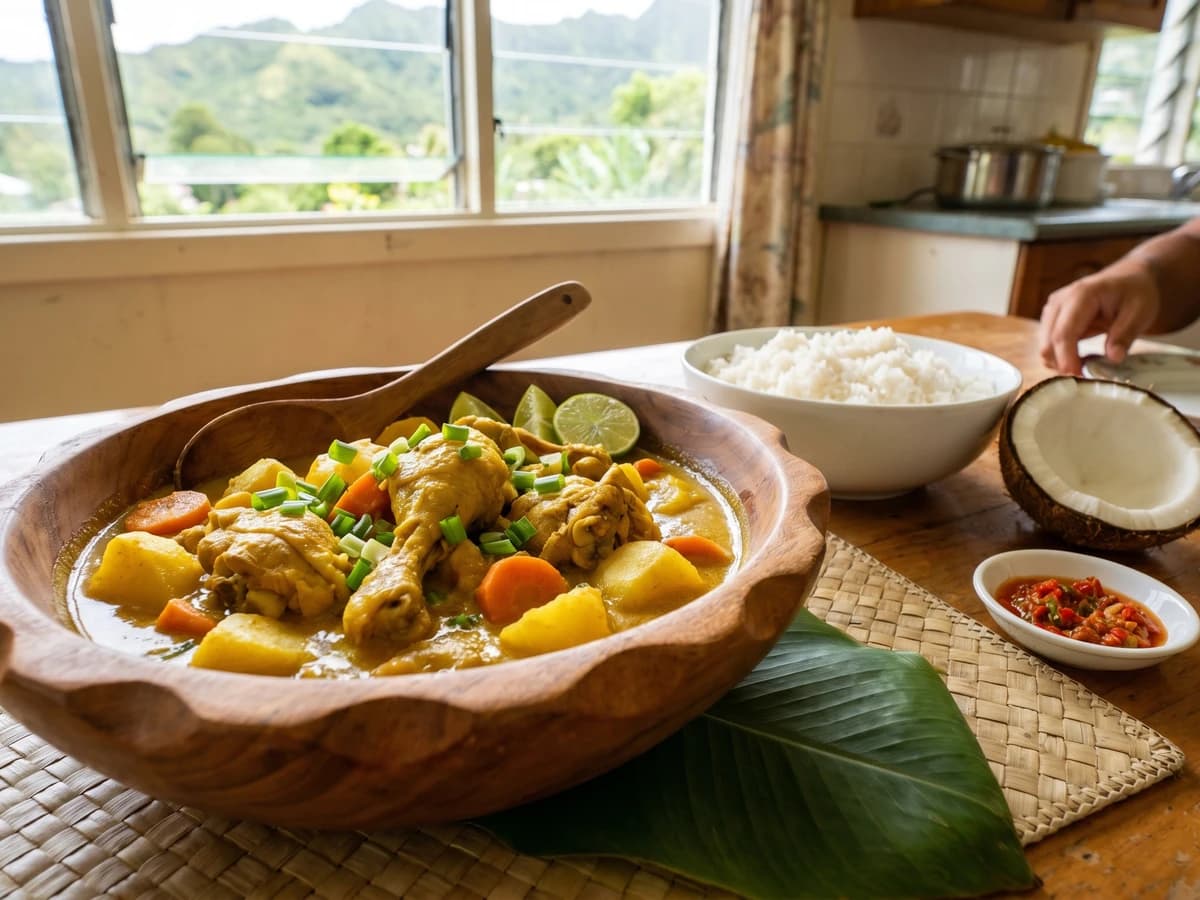
Cook Islands kare moa, chicken curry softened in coconut milk with turmeric, ginger, garlic, potato, and carrot, the kind of weeknight pot that feeds the family twice.
Chef Makoa
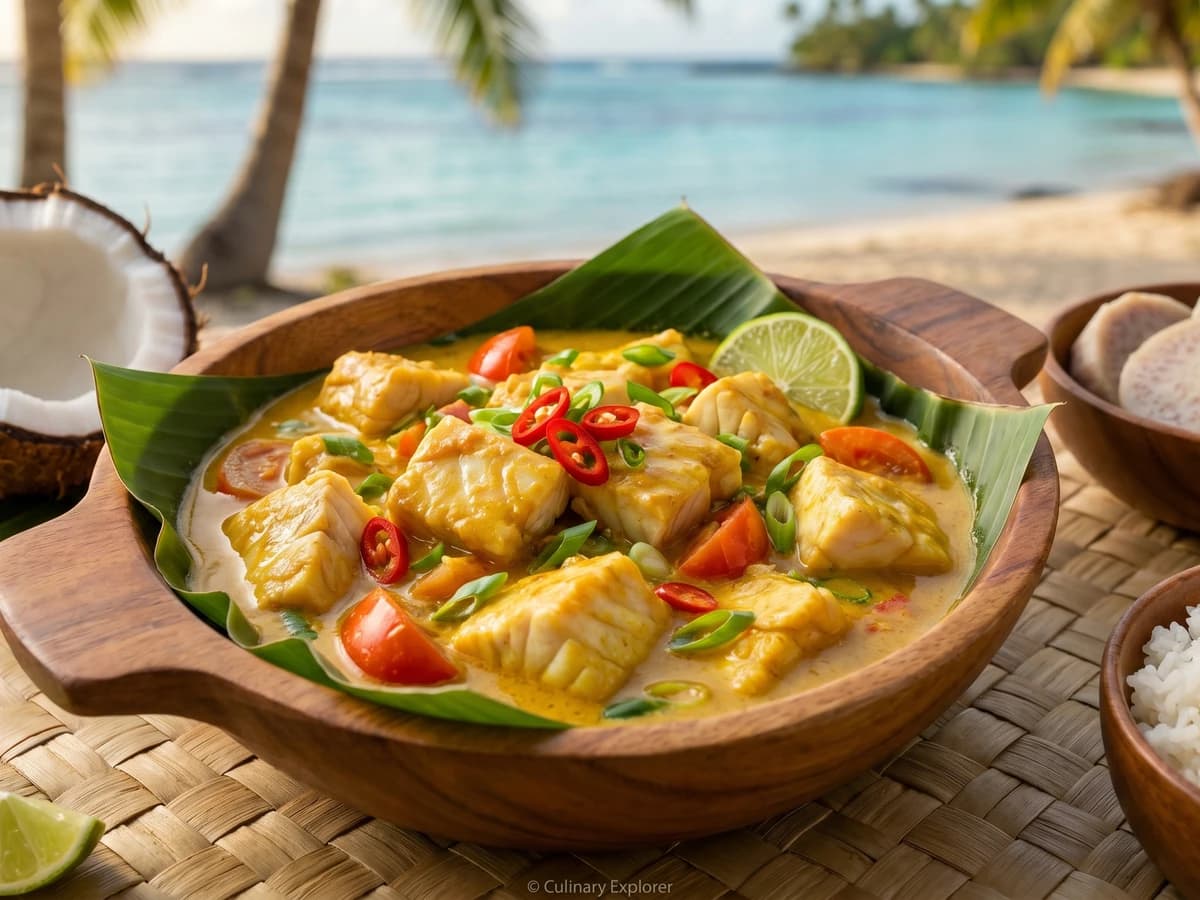
Firm white fish simmered gently in coconut milk, curry, chilli, onion, and tomato. The Cook Islands call this kari ika, British curry made local by the lagoon.