
Chef Makoa
Popoi Mā (Marquesan Fermented Breadfruit Paste)
Marquesan popoi starts as mā, breadfruit kept sour in the old pit tradition, then pounded smooth with coconut cream until it sits soft, tangy, and ready for the whole table.
A cooking platform built around craft, culture, and the stories behind what we eat.

Created by
Whole Sāmoan ʻulu cooked in the umu until the skin chars black and the flesh goes golden and soft. One ocean, one canoe, one root, brought home to the table.
The canoe carried ʻulu like a promise. In Sāmoa, that promise still sits in the umu, the above-ground hot-stone oven, until the skin goes black and the inside turns soft and golden. This is Sāmoan food, my cousins' hand, and I cook it open-handed. For the deeper parts of the umu and the family order around it, go sit with Sāmoan elders, a matai or an auntie who carries that work.
Breadfruit is not just a starch you roast because the plate needs filling. ʻUlu is a canoe crop, one of the old foods that traveled with the people, feeding aiga, the family, when rice and flour were not yet the center. Back home in Hawaiʻi we know it too as ʻulu, and in Tahiti it is ʻuru, in the Marquesas mei, in the Cooks kuru. One ocean, one canoe, one root, but every island cooks it with its own hand.
The method is simple and it is not small. You blacken the outside so the inside can soften without drying out. You wait until the green smell turns to warm bread. Then you open it and feed everybody from the same fruit, with salt, coconut cream if you have it, maybe next to palusami, sapasui, fish, corned beef, whatever the table is carrying that day. Deep food can live right beside everyday food. No need make it precious.
Breadfruit was one of the major canoe crops carried through Polynesia, planted from western islands such as Sāmoa and Tonga eastward to Tahiti, the Marquesas, the Cook Islands, Rapa Nui, and north to Hawaiʻi. In Sāmoa, whole ʻulu cooked in the umu belongs to the older starch grammar of the table, before imported rice and flour became everyday staples. Its cousins across the Triangle, Hawaiian imu-roasted ʻulu, Tahitian ʻuru, Cook Islands kuru, and Marquesan mei, show how one carried tree became many island foods without becoming one blurred dish.
Quantity
2 (2 to 3 pounds each)
Quantity
2 tablespoons
for the cut flesh after cooking
Quantity
1 teaspoon
or to taste
Quantity
as needed
for wrapping or lining
Quantity
for serving
| Ingredient | Quantity |
|---|---|
| mature firm breadfruit (ʻulu) | 2 (2 to 3 pounds each) |
| coconut oil (optional)for the cut flesh after cooking | 2 tablespoons |
| sea saltor to taste | 1 teaspoon |
| banana leavesfor wrapping or lining | as needed |
| fresh coconut cream (optional) | for serving |
Pick mature firm ʻulu, breadfruit, with green to yellow-green skin and a little give, not soft and collapsing. If the fruit is hard as a stone, it will cook starchy and plain. If it is too ripe, it turns sweet and custardy, good for another day but not this Sāmoan umu table.
Wash the ʻulu well and dry it. Cut a shallow cross into the stem end and prick the skin in a few places with a knife tip so the heat has somewhere to go. No need peel it. The black skin is the wrapper, the same way the leaf protects palusami in the umu.
For a true umu, the Sāmoan above-ground hot-stone oven, heat clean dry cooking stones over a hardwood fire until they hold fierce steady heat. Use stones known for fire cooking, never wet river rocks. When the flames die down and the stones are hot, rake a few aside for the ʻulu.
Set the whole ʻulu right among the hot stones, turning every 20 minutes with tongs or a stick, until the skin is blackened all over and the fruit feels heavy-soft when pressed. The smell changes from green sap to warm bread and nut. That is the fruit telling you it's ready.
If you don't have an umu, heat the oven to 425F. Set the vented ʻulu on a banana-leaf-lined sheet pan and roast 75 to 90 minutes, turning once, until the skin is deeply blackened in patches and a skewer slides through the center without fight. Eat what you have. The oven is not the umu, but it can still feed the family.
Rest the cooked ʻulu for 10 minutes so the flesh settles. Split it open, pull out the core, and cut the golden flesh into big wedges. Brush with coconut oil if you like, salt it while it is warm, and serve with fresh coconut cream on the side.
1 serving (about 220g)
Culinary guides, cultural storytelling, and the editorial depth that makes cooking meaningful.
Discover Culinary ExplorerChef Makoa
Marquesan popoi starts as mā, breadfruit kept sour in the old pit tradition, then pounded smooth with coconut cream until it sits soft, tangy, and ready for the whole table.
Chef Makoa
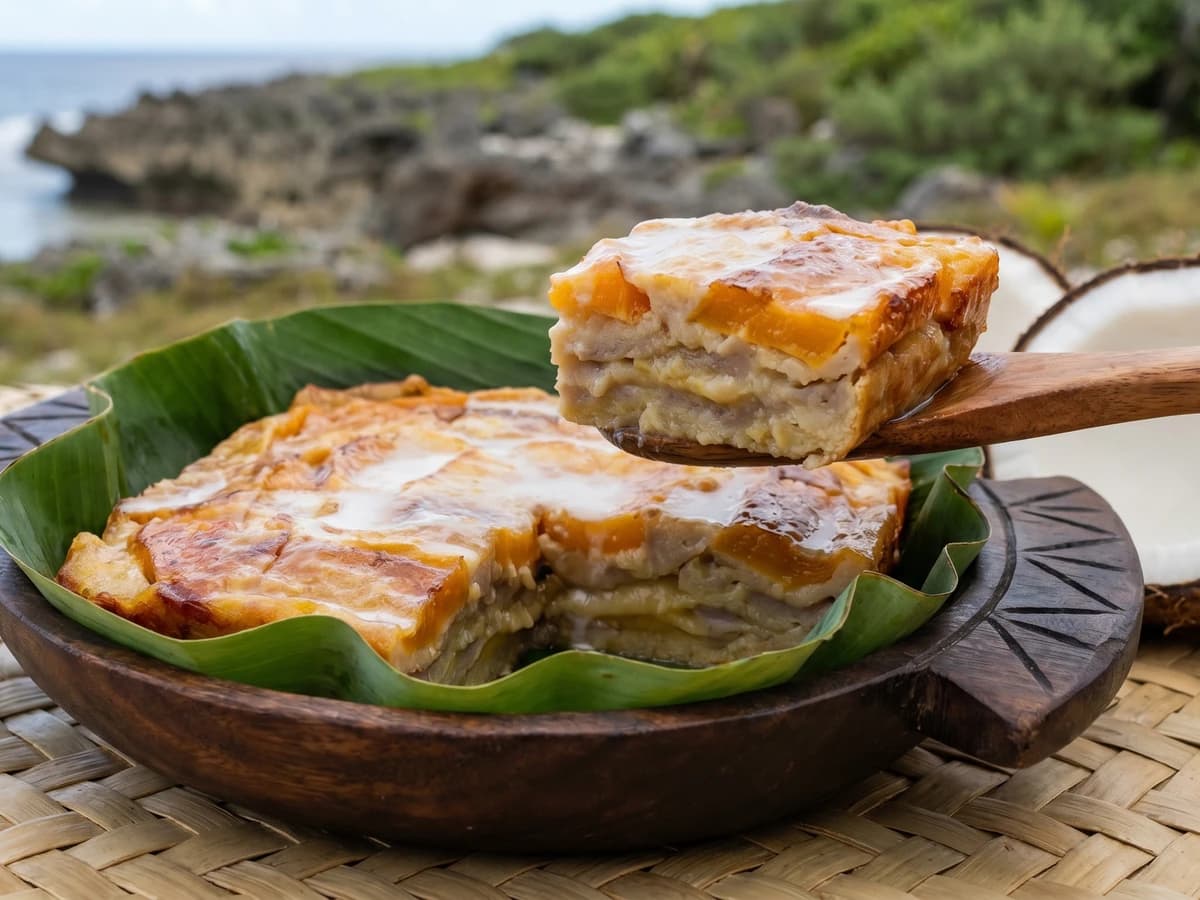
Niue's takihi layers the elder taro with ripe pawpaw and coconut cream, then bakes it slow until the starch softens, the fruit melts, and the whole pan turns glossy and gentle.
Chef Makoa
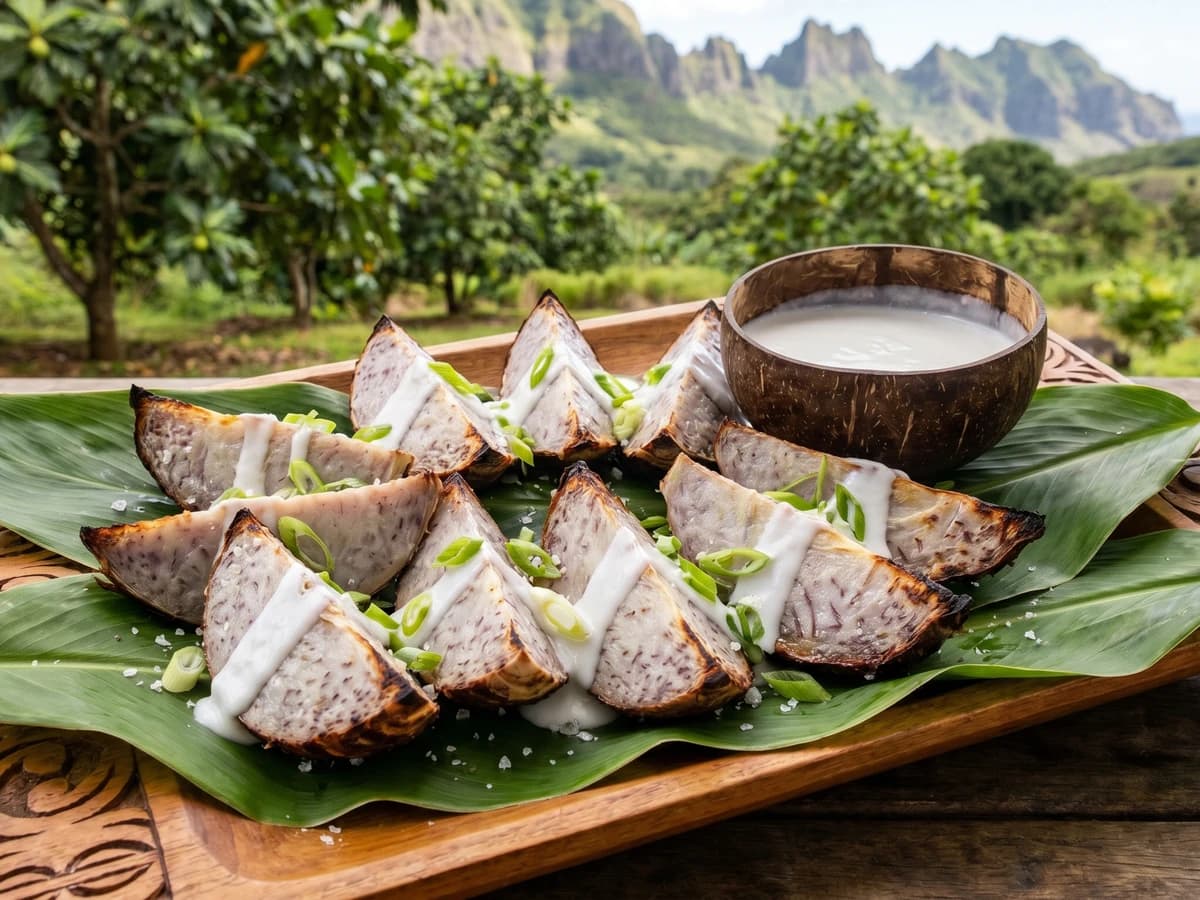
Whole taro roasted firm the Marquesan way, peeled warm, salted simply, and served beside fish with fresh miti haari, the coconut sauce that keeps the table generous.
Chef Juliette
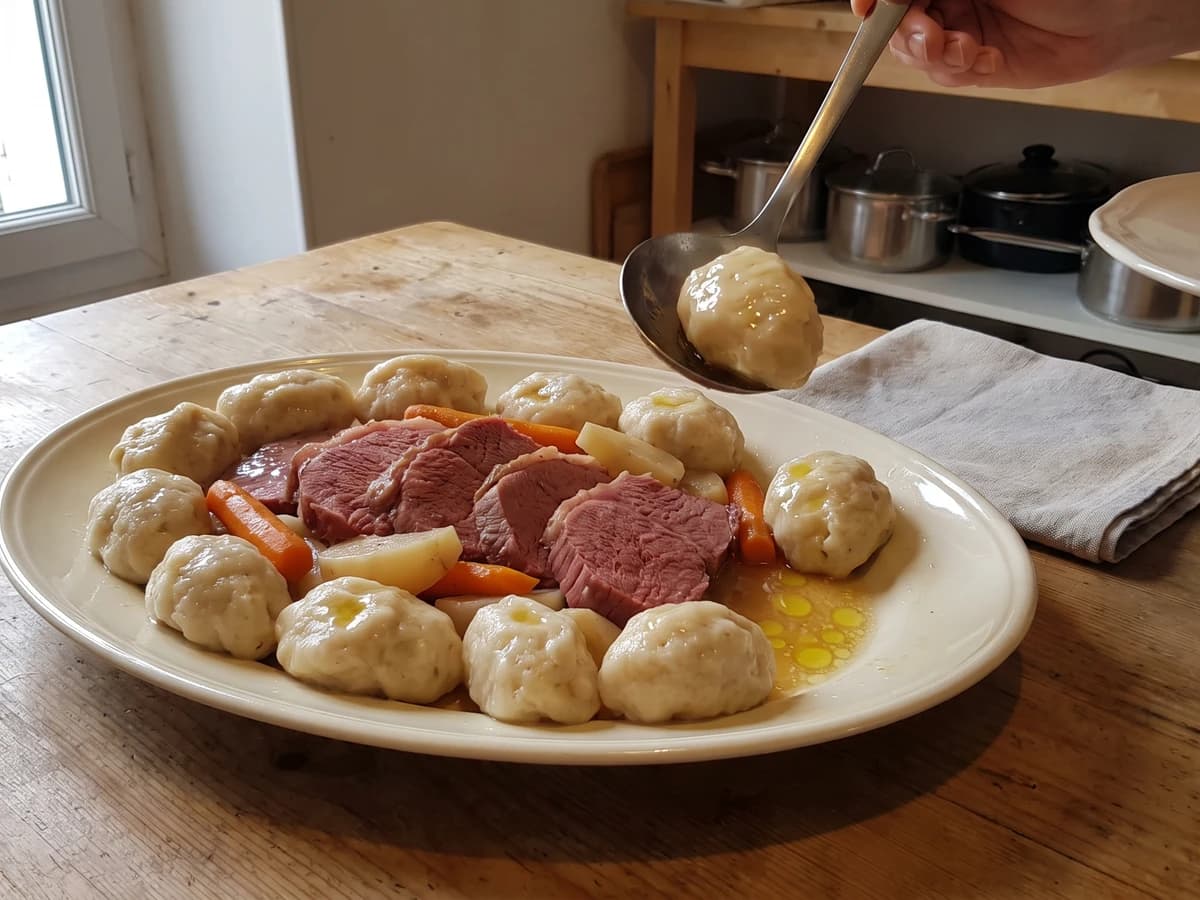
Boulettes au suif, poached beside salt beef, turn equal weights of flour and finely chopped suet into tender, rich dumplings. Keep the beef liquor at a bare tremble and the old garnish works beautifully at home.