Culinary Explorer
A cooking platform built around craft, culture, and the stories behind what we eat.
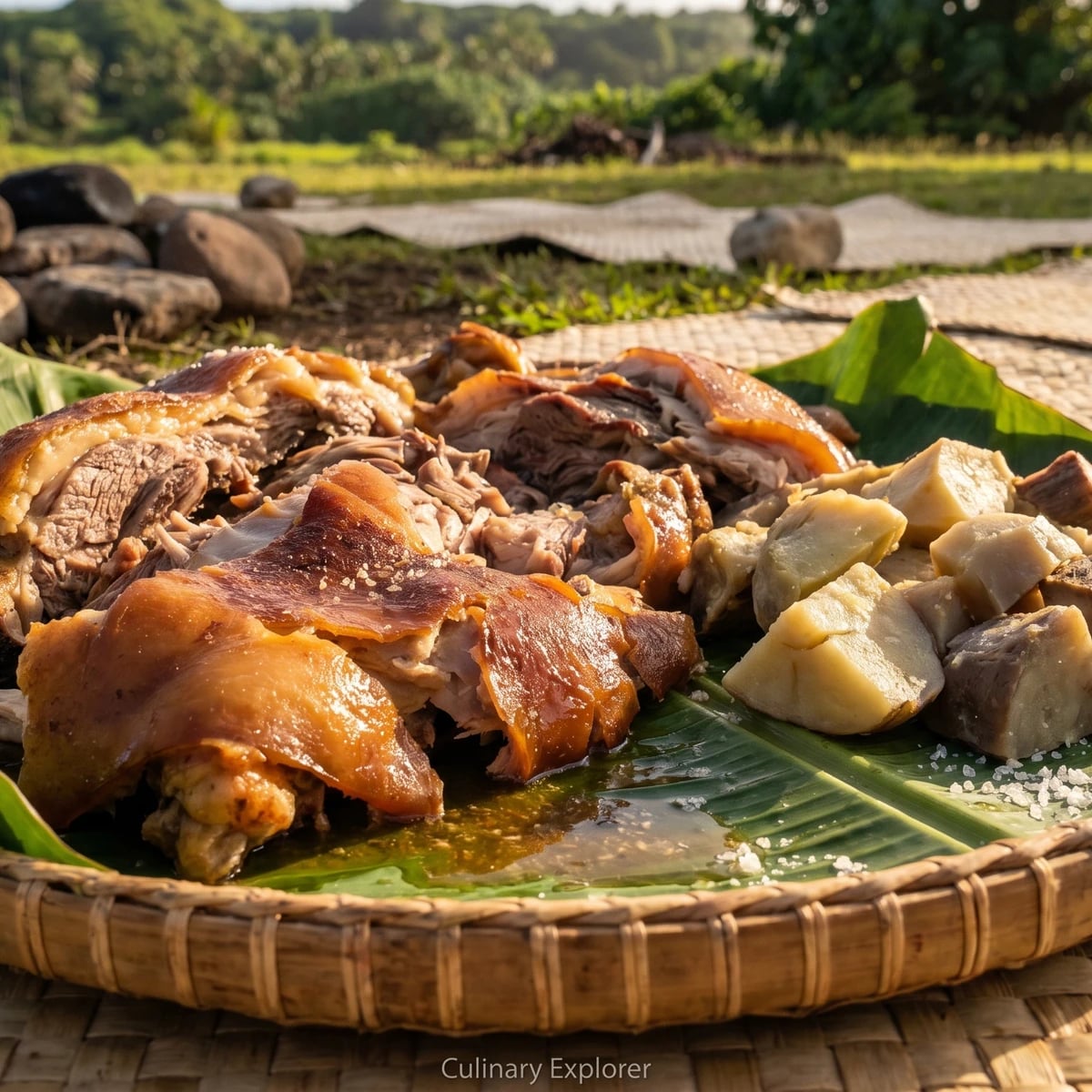
ʻUmu Puaka (Tongan Earth-Oven Pig)
Created by Chef Makoa
Tonga's Sunday pō pig, salted plain and laid over hot stones in the ʻumu until the meat goes soft, glossy, and ready for the whole kāinga.
The first time I sat beside a Tongan ʻumu, the old men didn't talk like they were showing off a technique. They talked like they were feeding the kāinga, the extended family, and that tells you where this dish lives. ʻUmu puaka is Tonga's hand: puaka, pig, laid with heat and leaf and patience so the meat feeds everybody, not one fancy plate.
Back home in Hawaiʻi we say imu, the pit oven. Tonga says ʻumu, built above ground with hot stones, like Sāmoa does too. Tahiti has the ahimaʻa, the Cook Islands the umukai, Aotearoa the hāngī, Rapa Nui the umu pae. The umu by any name is one oven, but the hand is not the same from island to island. This one belongs to Tonga, and I cook it open-handed, with respect, and for the deep parts of the pō, the Sunday evening feast and its family meaning, I send you to Tongan elders and aunties who carry it.
The method is simple, and that can fool you. Salt the meat well. Give it leaf. Give it sealed heat. Then leave it alone. No sauce trying to speak over the pig, no rushing the fire, no turning a day-long oven into a cookout. When it is ready, the meat pulls apart with two fingers and the fat shines through the strands.
Most homes don't have an ʻumu yard or the stones for it, so I give you both ways: the outdoor Tongan-style path for those who can do it safely, and a covered oven version for the rest of us. Eat what you have. Keep the patience. Feed the table.
Ingredients
bone-in pork shoulder or fresh ham (puaka)
Quantity
1 (8 to 10 pounds)
skin on if possible
coarse sea salt
Quantity
3 tablespoons
plus more to taste
cracked black pepper (optional)
Quantity
1 tablespoon
| Ingredient | Quantity |
|---|---|
| bone-in pork shoulder or fresh ham (puaka)skin on if possible | 1 (8 to 10 pounds) |
| coarse sea saltplus more to taste | 3 tablespoons |
| cracked black pepper (optional) | 1 tablespoon |
Where cooking meets culture.
Culinary guides, cultural storytelling, and the editorial depth that makes cooking meaningful.
Discover Culinary Explorer