Chef Makoa
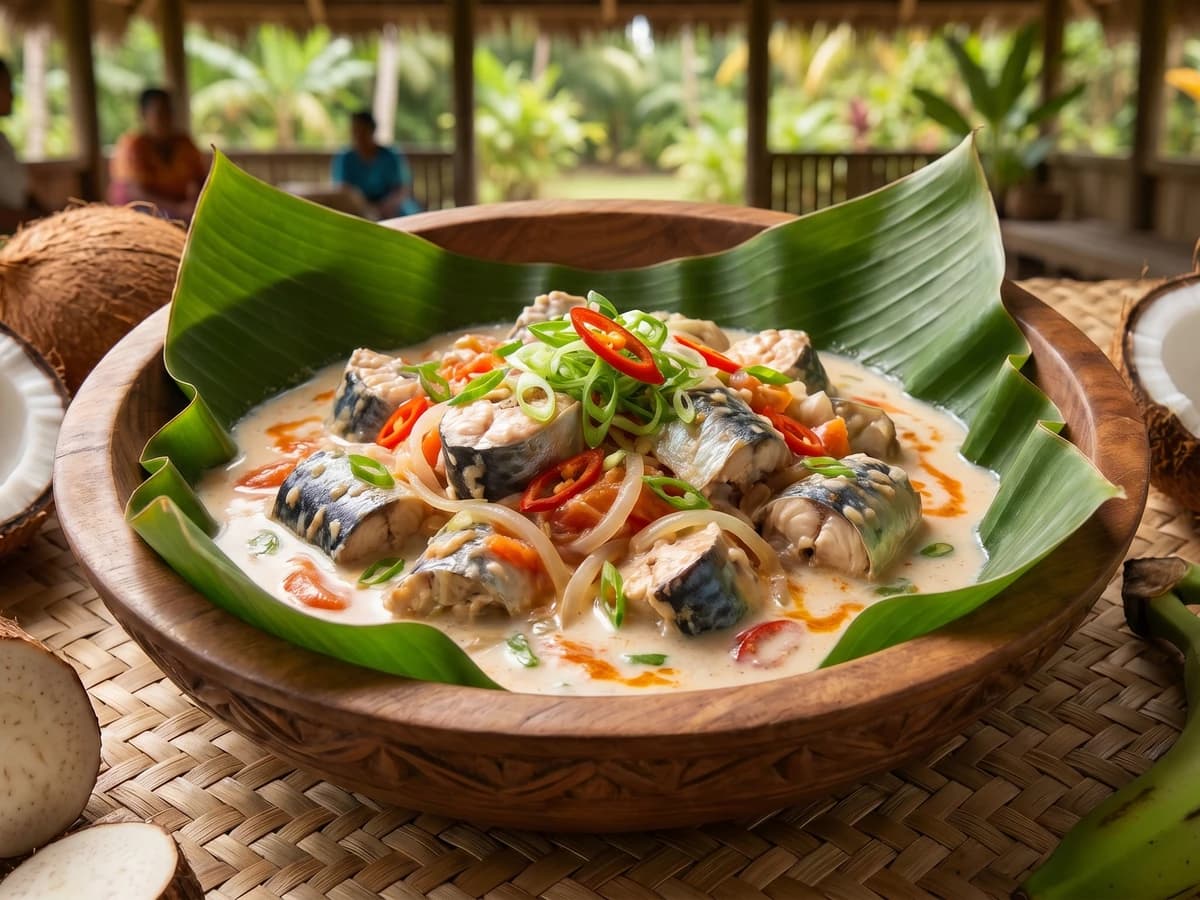
Faiʻai Eleni (Sāmoan Mackerel in Coconut Cream)
Sāmoa's faiʻai eleni turns tinned mackerel, onion, and coconut cream into a quick, generous supper, the pantry fish that feeds the whole ʻaiga beside talo, ʻulu, green banana, or rice.
A cooking platform built around craft, culture, and the stories behind what we eat.

Created by
Sāmoa's umu moa, whole chicken salted plain and cooked over hot stones stacked above ground, then brought home with banana leaf, tight wrapping, and patient oven heat.
The first time a Sāmoan uncle let me stand close to the umu, he didn't explain much. He just pointed with his chin. Watch the stones. Watch the leaves. Watch who eats first. This is Sāmoa's hand, not mine, and I hold it open-handed: moa, chicken, cooked in the umu, the above-ground hot-stone oven that feeds the aiga, the family, especially for Sunday toʻonaʻi, the meal after church.
Back home in Hawaiʻi, the imu is a pit. In Sāmoa and Tonga, the umu is built above the ground, hot stones heaped and food laid over them, then covered thick with banana leaf. Tahiti has the ahimaʻa, the Cooks the umukai, Aotearoa the hāngī. The umu by any name is one oven, but each island keeps its own way. Don't smear them together. This one belongs to Sāmoa.
The chicken doesn't need to dress fancy. Salt it well, tuck onion inside if you like, wrap it in leaf, and give it time until the skin goes golden where it meets the heat and the meat pulls juicy from the bone. If you don't have stones and a yard, no shame. A hot oven, a heavy pot, and banana leaf will carry the lesson close enough for a real kitchen.
For the deep parts of building an umu, who lays the stones, who serves, what the feast means, go sit with Sāmoan elders, a matai, an auntie, somebody who carries it. They should tell their own story. I can help you cook the chicken. They can teach you the world around it.
The Sāmoan umu is part of the old Polynesian earth-oven family, but its form is western: hot stones stacked above ground rather than buried in a Hawaiian imu pit. In Sāmoa, umu cooking remains tied to toʻonaʻi, the Sunday family meal, where chicken, pig, fish, taro, breadfruit, and palusami come from the same stone fire. The method reaches back to the canoe age, while the everyday table now also welcomes rice, corned beef, sapasui, and store-bought chicken because living foodways move with the people.
Quantity
1 (4 to 5 pounds)
Quantity
1 tablespoon
plus more to taste
Quantity
1 teaspoon
Quantity
1 medium
sliced
Quantity
3 cloves
crushed
Quantity
2 tablespoons
Quantity
6 to 8
thawed if frozen, thick ribs trimmed
Quantity
1/2 cup
for the pot
Quantity
1/2 cup
for serving or basting
| Ingredient | Quantity |
|---|---|
| whole chicken (moa) | 1 (4 to 5 pounds) |
| coarse sea saltplus more to taste | 1 tablespoon |
| freshly ground black pepper | 1 teaspoon |
| onionsliced | 1 medium |
| garlic (optional)crushed | 3 cloves |
| neutral oil or softened butter | 2 tablespoons |
| banana leavesthawed if frozen, thick ribs trimmed | 6 to 8 |
| water or chicken stockfor the pot | 1/2 cup |
| thick coconut cream (optional)for serving or basting | 1/2 cup |
Pat the chicken dry, inside and out, then rub the salt and pepper all over the skin and inside the cavity. Work the seasoning into the joints and under the wings. Simple food asks you to do the simple part well.
Tuck the sliced onion and garlic, if using, into the cavity. Rub the outside with oil or butter, then tie the legs together so the bird cooks evenly. In the old stone oven, the leaf and the heat do most of the talking, so don't bury the chicken under too much seasoning.
Pass the banana leaves briefly over a burner flame or lay them in a warm oven until they turn flexible and glossy. Trim the stiff center ribs. The leaf is the wrapper, the scent, and the memory of the umu all at once.
Lay the leaves in a wide cross, set the chicken breast-side up in the middle, and fold the leaves around it snugly. If your leaves are torn, patch them with another piece. Wrap the bundle in foil for the home oven, because your kitchen doesn't have a pile of hot stones and banana leaves holding everything down.
Heat the oven to 375F. Set the wrapped chicken in a heavy Dutch oven or roasting pan with the water or stock in the bottom, cover tight, and cook for 1 hour 20 minutes. Don't keep opening it. The job is moist heat, leaf scent, and time.
Open the foil and leaves carefully, folding them back so the top of the chicken is exposed. Return it to the oven uncovered for 20 to 25 minutes, until the skin is golden and glossy and the thickest part of the thigh reaches 165F. The juices should run clear, not pink.
Rest the chicken 15 minutes in the opened leaves so the juices settle back into the meat. Spoon over a little thick coconut cream if you want that modern table richness, or leave it plain with its salty pan juices. Carve it for the whole spread, with taro, breadfruit, rice, palusami, or whatever your table has that day.
1 serving (about 245g)
Culinary guides, cultural storytelling, and the editorial depth that makes cooking meaningful.
Discover Culinary ExplorerChef Makoa
Sāmoa's faiʻai eleni turns tinned mackerel, onion, and coconut cream into a quick, generous supper, the pantry fish that feeds the whole ʻaiga beside talo, ʻulu, green banana, or rice.
Chef Makoa
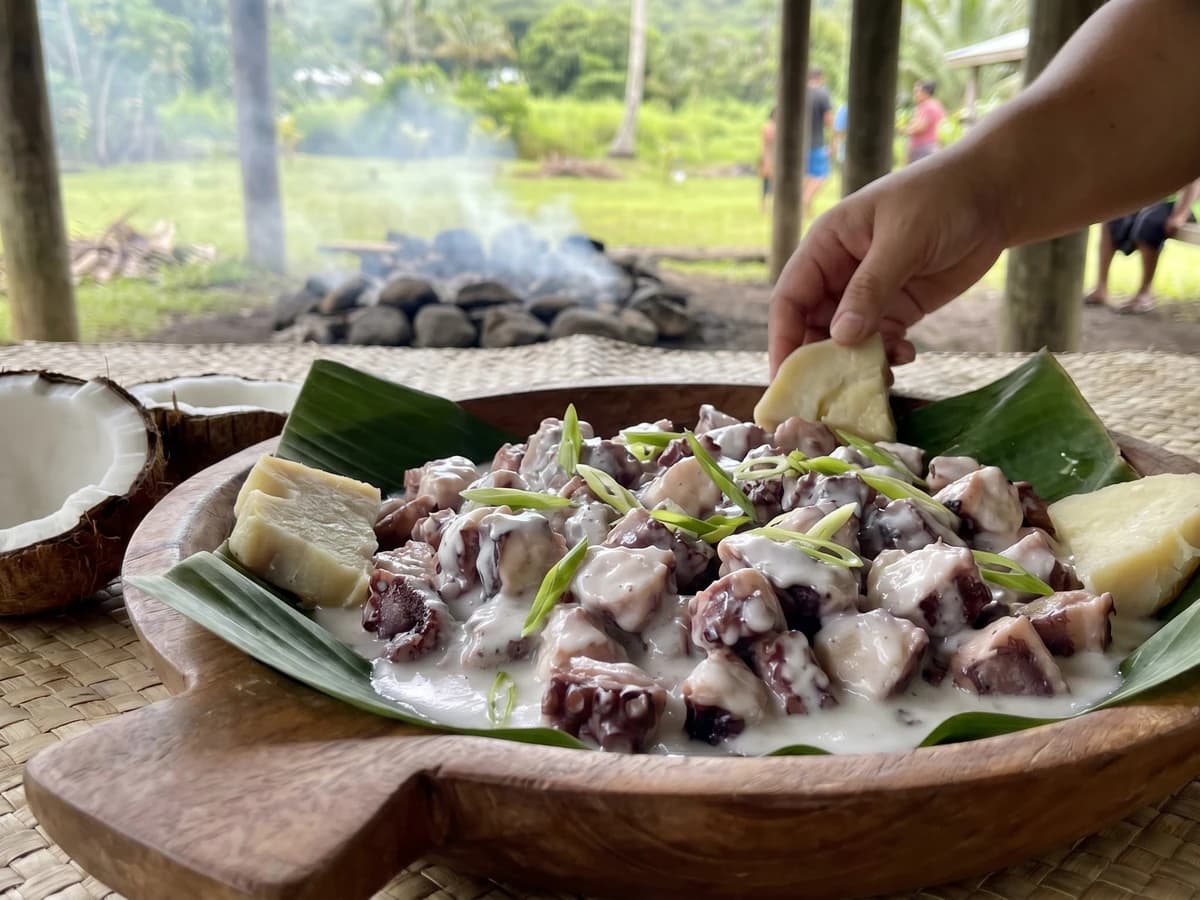
Sāmoa's faiʻai feʻe is reef octopus simmered patient in fresh coconut cream, rich and glossy enough to eat beside talo at toʻonaʻi, with the ocean feeding the whole aiga.
Chef Makoa
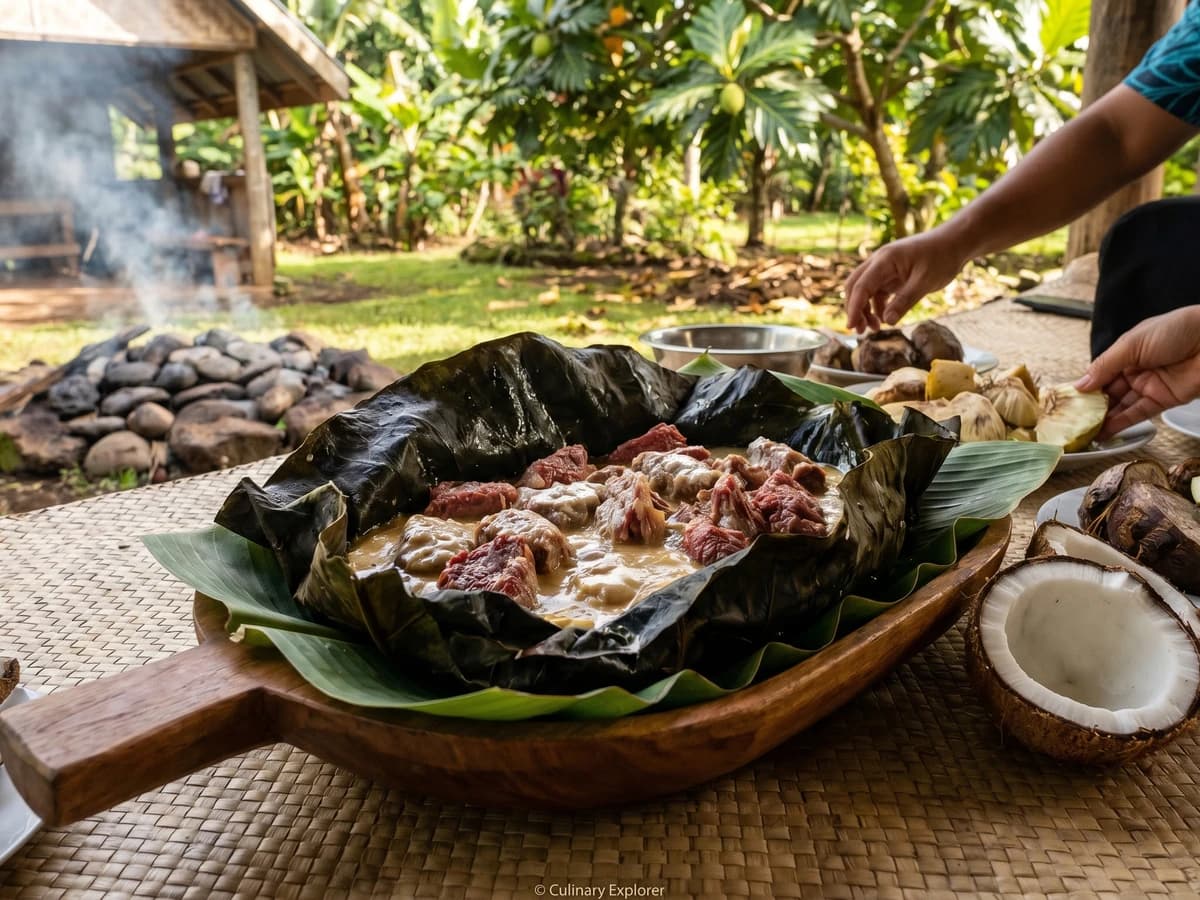
Sāmoa's taro-leaf parcel made generous with pisupo, coconut cream, and time: a toʻonaʻi kind of comfort, with Tonga's lū pulu and Hawaiʻi's laulau sitting close as cousins.
Chef Makoa
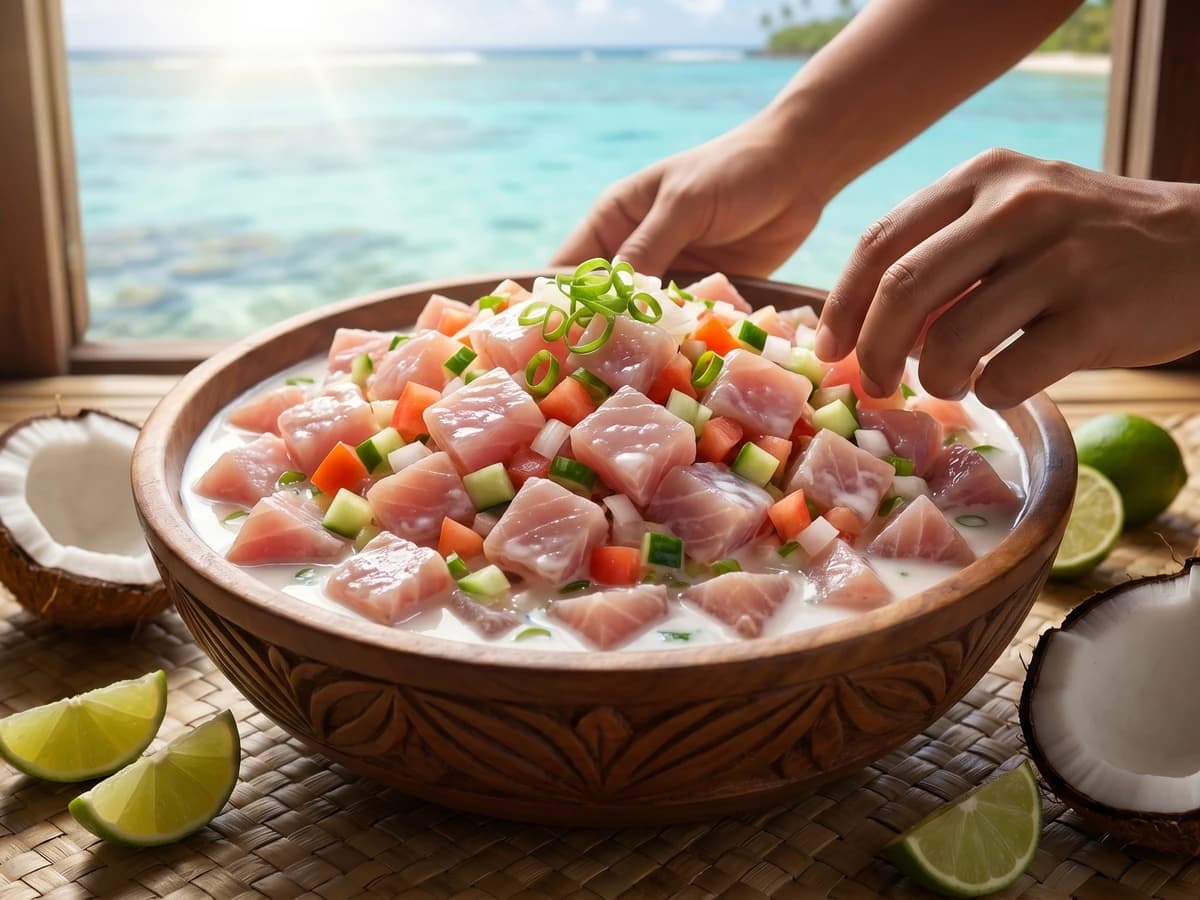
Sāmoa’s oka iʻa bathes fresh fish in citrus and peʻepeʻe, fresh coconut cream, then runs tomato, cucumber, and onion through it cold. Same fish as Tahiti’s ʻia ota, different bowl.