
Chef Takumi
Azuki Bar (あずきバー, frozen red bean popsicle)
Azuki bar asks for patience twice: once while the beans soften, and once while the frozen bar yields. That hardness is not a flaw. It is the character of the thing.
A cooking platform built around craft, culture, and the stories behind what we eat.
Created by
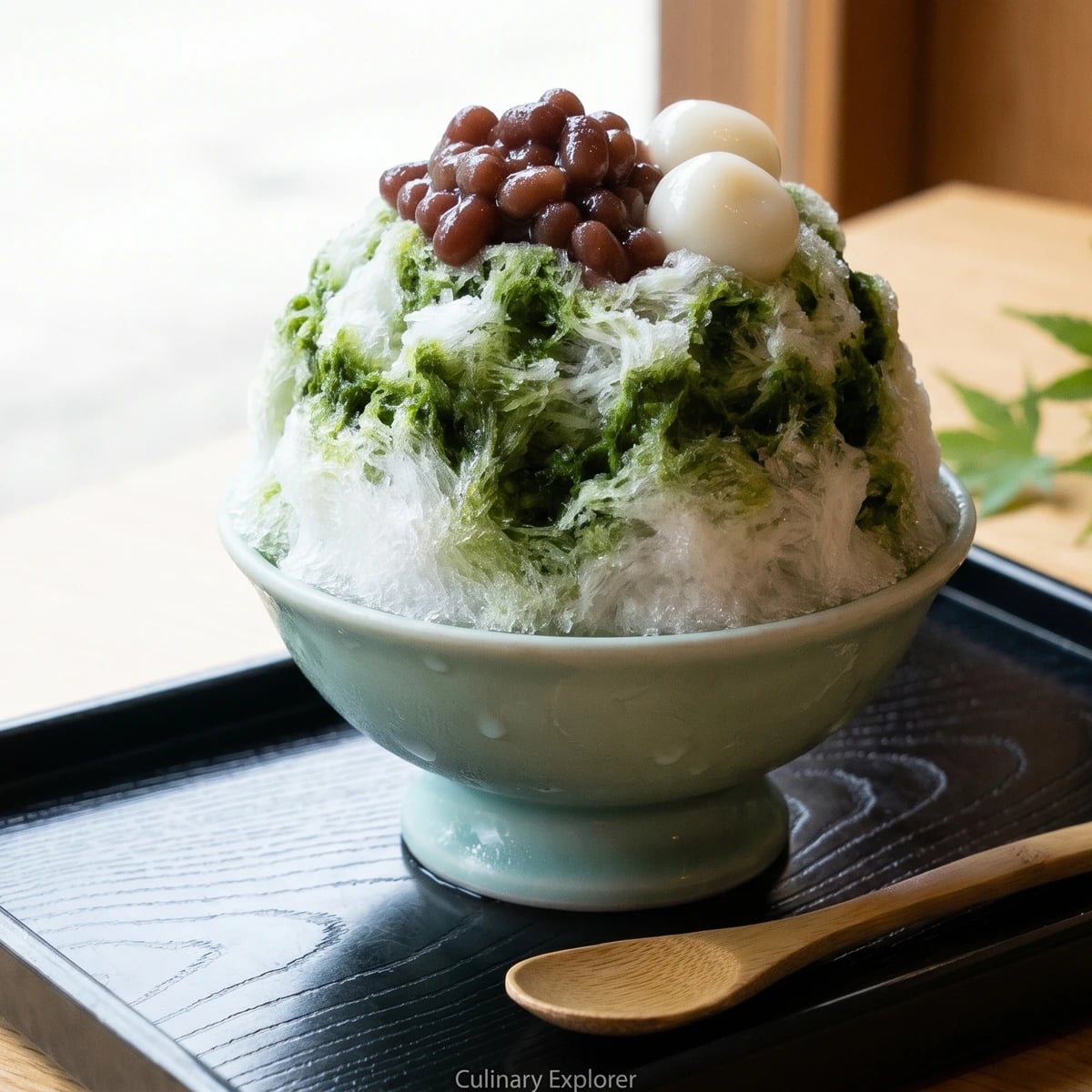
Ujikintoki looks like a confectioner has been clever. It is only shaved ice, matcha syrup, and sweet azuki, each kept clean enough to taste.
Ujikintoki belongs to summer. The bowl should look cool before you taste it: a soft mound of shaved ice, deep green matcha running down the ridges, sweet azuki waiting at the heart. It is a dessert, yes, but not a loud one. The pleasure is the bittersweet pull between tea and bean, nothing hidden under cream unless you choose that later.
The one detail that decides it is the ice. You want fine shaved ice, kakigōri, not crushed ice. Crushed ice eats like little stones. Shaved ice catches the syrup, softens quickly on the tongue, and lets the matcha spread through the bowl instead of sinking straight to the bottom. A hand-cranked ice shaver is the proper tool. An electric home shaver is a sensible stand-in. A blender is for another day.
Make the syrup with real matcha, whisked first with a little hot water so it blooms smooth before sugar joins it. If you dump dry matcha into syrup, it clumps, and then you spend the rest of the afternoon chasing green freckles around a bowl. The azuki should be sweet but still taste of beans, with some shape left. That is the kintoki part, and it gives the ice its quiet depth.
Serve it as soon as you build it. This is outdoor dining at its best, but it waits for no one. Pack a spoonful of azuki into the middle, shave the ice high and light, pour the matcha over the top, and leave it room in the bowl. The real thing is simple. It just melts honestly.
Ujikintoki combines two older Japanese food words: Uji, the Kyoto region famous for tea from the Muromachi period onward, and kintoki, a name used for sweet red azuki beans associated with the red-faced folk hero Sakata no Kintoki. Kakigōri, shaved ice with syrup, became widely available in the Meiji period as manufactured ice spread beyond elite households. The pairing of matcha syrup and sweet beans is especially tied to Kyoto tea culture, though it is now a standard summer dessert across Japan.
Quantity
1/2 cup
Quantity
3 cups, plus more
for simmering, rinsing, and syrup
Quantity
1/3 cup
for the azuki
Quantity
1 pinch
Quantity
2 tablespoons
sifted
Quantity
1/2 cup
about 80 C
Quantity
1/2 cup
for the matcha syrup
Quantity
1/2 cup
for the syrup
Quantity
enough for 4 bowls
made for a shaved-ice machine
Quantity
4 tablespoons
Quantity
8
| Ingredient | Quantity |
|---|---|
| dried azuki beans | 1/2 cup |
| waterfor simmering, rinsing, and syrup | 3 cups, plus more |
| sugarfor the azuki | 1/3 cup |
| sea salt | 1 pinch |
| matchasifted | 2 tablespoons |
| hot waterabout 80 C | 1/2 cup |
| sugarfor the matcha syrup | 1/2 cup |
| waterfor the syrup | 1/2 cup |
| ice block or ice cubesmade for a shaved-ice machine | enough for 4 bowls |
| sweetened condensed milk (optional) | 4 tablespoons |
| shiratama dango (optional) | 8 |
Rinse the azuki, cover with plenty of water, and bring to a boil. Boil five minutes, then drain. This first boil removes harshness from the skins, so the finished beans taste clean, not muddy. Return the beans to the pot with 3 cups fresh water and simmer gently until tender, about 50 to 60 minutes, adding water if the beans peek above the surface.
When the azuki are tender enough to crush between your fingers, stir in 1/3 cup sugar and the salt. Simmer 10 minutes more, then cool in the syrup. Sugar tightens beans if it goes in too early, so let tenderness come first and sweetness second.
Sift the matcha into a bowl. Whisk in the hot water a little at a time until smooth and deep green. In a small pan, warm 1/2 cup water with 1/2 cup sugar just until dissolved, then whisk it into the matcha. Sifting and blooming the tea first keeps the syrup smooth, because matcha clumps the moment it meets too much liquid at once.
Chill the azuki, matcha syrup, serving bowls, and ice-shaver parts if your machine allows it. Cold tools keep the shaved ice light for a few precious minutes. This dish is simple, but it is not patient.
Spoon a little azuki into the bottom of each chilled bowl. Shave ice over it in a high, loose mound, then tuck more azuki into one side or the center. Do not press the ice down. Pressing makes it dense, and dense ice drinks syrup badly.
Pour matcha syrup over the top in a slow circle so it stains the ridges of the ice. Add shiratama dango or a little condensed milk only if you want that common shop style, and serve at once. The matcha should taste brisk and slightly bitter against the sweet beans. That balance is the whole dish.
1 serving (about 360g)
Culinary guides, cultural storytelling, and the editorial depth that makes cooking meaningful.
Discover Culinary Explorer
Chef Takumi
Azuki bar asks for patience twice: once while the beans soften, and once while the frozen bar yields. That hardness is not a flaw. It is the character of the thing.

Chef Takumi
Black sesame ice cream is decided before the custard thickens: toast the seeds until fragrant, grind them while warm, and the dark gray color tells you it came from seed, not flavoring.

Chef Takumi
Kuromitsu kinako kakigōri is summer pared down: ice shaved fine, black-sugar syrup poured slowly, and roasted soybean flour settling over the top like toasted snow.

Chef Takumi
Kanten cubes, sweet azuki, shiratama, fruit, and vanilla ice cream are stacked cold, then tied together with kuromitsu. The pleasure is contrast in each spoonful, not complication.