Uga (Tuvaluan and Tokelauan Coconut Crab in Coconut Cream)
Created by
Coconut crab from Tuvalu and Tokelau, simmered gently with fresh coconut cream until the meat turns rich, sweet, and glossy. A celebration food from low coral islands where the sea feeds the table.
Main Dishes
Polynesian
Celebration
Special Occasion
35 min
Active Time
35 min cook•1 hr 10 min total
Yield4 to 6 servings
Pulaka comes first in Tuvalu and Tokelau, the giant swamp-taro dug from pits cut down into coral, tended like a family line because that low land gives hard and asks plenty back. The pits are going salty now in too many places. That hurts. Food on a barge is the wound; feeding the island from its own ground is the repair.
Uga, the coconut crab, belongs to that same atoll world. Not everyday food. Not something you take because you feel like showing off. In Tuvalu and Tokelau, where the lagoon, reef, coconut, toddy tapped from the tree, pulaka pit, pandanus, and breadfruit all have to hold the people up, uga is a celebration food, taken few and rarely. The old people knew that a reef can feed you only if you feed the relationship back.
This is not Hawaiian food, and I no pretend it came from my own yard. I cook it open-handed and send you to Tuvaluan and Tokelauan elders for the deep ways of harvest, sharing, and ceremony. Across the Triangle the cousins keep the same law in different bowls: Sāmoa has its own uga, Tonga has ʻota ʻika for raw fish, Tahiti has ʻia ota, the Cooks have ika mata, and back home in Hawaiʻi we'd talk about crab and coconut beside kalo and ʻulu. Same ocean feeding different hands.
In a home kitchen, the work is simple. Start only with legal, sustainably taken coconut crab, or use a lawful crab substitute if uga is protected where you live. Simmer it gently with fresh coconut cream, onion, a little salt, and the crab's own fat if you have it. Don't drown it. Don't fuss it. Let the sweetness of the crab and the coconut sit together.
Tuvalu and Tokelau are coral-atoll food worlds, where pulaka, a giant swamp-taro grown in pits dug below the freshwater lens, anchors identity in soil that is almost all coral. Coconut crab, called uga in Tokelau and also known across nearby Polynesian islands by related names, has long been a high-value celebration food because it is slow-growing and easy to overtake. Today sea-level rise, salinized pulaka pits, import dependence, and conservation rules all sit on the same table, so the old instruction is still the right one: take few, take rarely, and do not cook what your island says to leave alone.
The technique, the tradition, and the story behind every dish.
legal, sustainably harvested, cleaned and cracked, fat reserved if available
fresh coconut cream
Quantity
2 cups
squeezed from grated mature coconut, or thick canned coconut cream
onion
Quantity
1 small
thinly sliced
garlic (optional)
Quantity
2 cloves
lightly crushed
fresh ginger (optional)
Quantity
1 small piece, about 1 inch
sliced
sea salt
Quantity
1/2 teaspoon, plus more to taste
water or light crab cooking liquid
Quantity
1/2 cup
fresh lime juice (optional)
Quantity
2 tablespoons
pulaka, taro, breadfruit, or plain rice
Quantity
for serving
Ingredient
Quantity
coconut crab (uga)legal, sustainably harvested, cleaned and cracked, fat reserved if available
1 (about 3 to 4 pounds live weight)
fresh coconut creamsqueezed from grated mature coconut, or thick canned coconut cream
2 cups
onionthinly sliced
1 small
garlic (optional)lightly crushed
2 cloves
fresh ginger (optional)sliced
1 small piece, about 1 inch
sea salt
1/2 teaspoon, plus more to taste
water or light crab cooking liquid
1/2 cup
fresh lime juice (optional)
2 tablespoons
pulaka, taro, breadfruit, or plain rice
for serving
Equipment Needed
•Heavy 5-quart pot with tight lid
•Crab cracker or small mallet
•Coconut grater or strong blender and clean cloth, if squeezing fresh coconut cream
Instructions
1
Check the taking
Before the pot comes out, check the law and the relationship. Use uga only where harvest is legal, seasonal, and sustainable, and never take females with eggs, undersized crabs, or more than the family needs. If coconut crab is protected where you live, use a lawful crab instead. Eat what you have, and no blame the reef for being tired.
Live coconut crab is strong and dangerous to handle. Let an experienced local fisher or market cleaner prepare it, or buy it already cleaned where that is legal.
2
Clean and crack
Clean the crab well, crack the claws and heavy leg sections so the coconut cream can reach the meat, and save any clean orange fat from the body. That fat is powerful, rich and sweet, so use it with a light hand. The dish should taste like crab and coconut, not like a pot you tried to make fancy.
3
Start the pot
Set a heavy pot over medium-low heat. Add the reserved crab fat, if you have it, with the onion, garlic, and ginger. Stir until the onion softens and turns glossy, about 5 minutes. If you have no crab fat, use a few spoonfuls of the thick top of the coconut cream. Keep the heat gentle, because coconut cream can split when you bully it.
4
Simmer the uga
Add the cracked crab pieces, salt, and water or light crab cooking liquid. Cover and simmer gently for 12 to 15 minutes, turning the pieces once, until the shell reddens and the meat is just firm. You want the crab sweet and full, not cooked until it dries out and sulks in the shell.
5
Add coconut cream
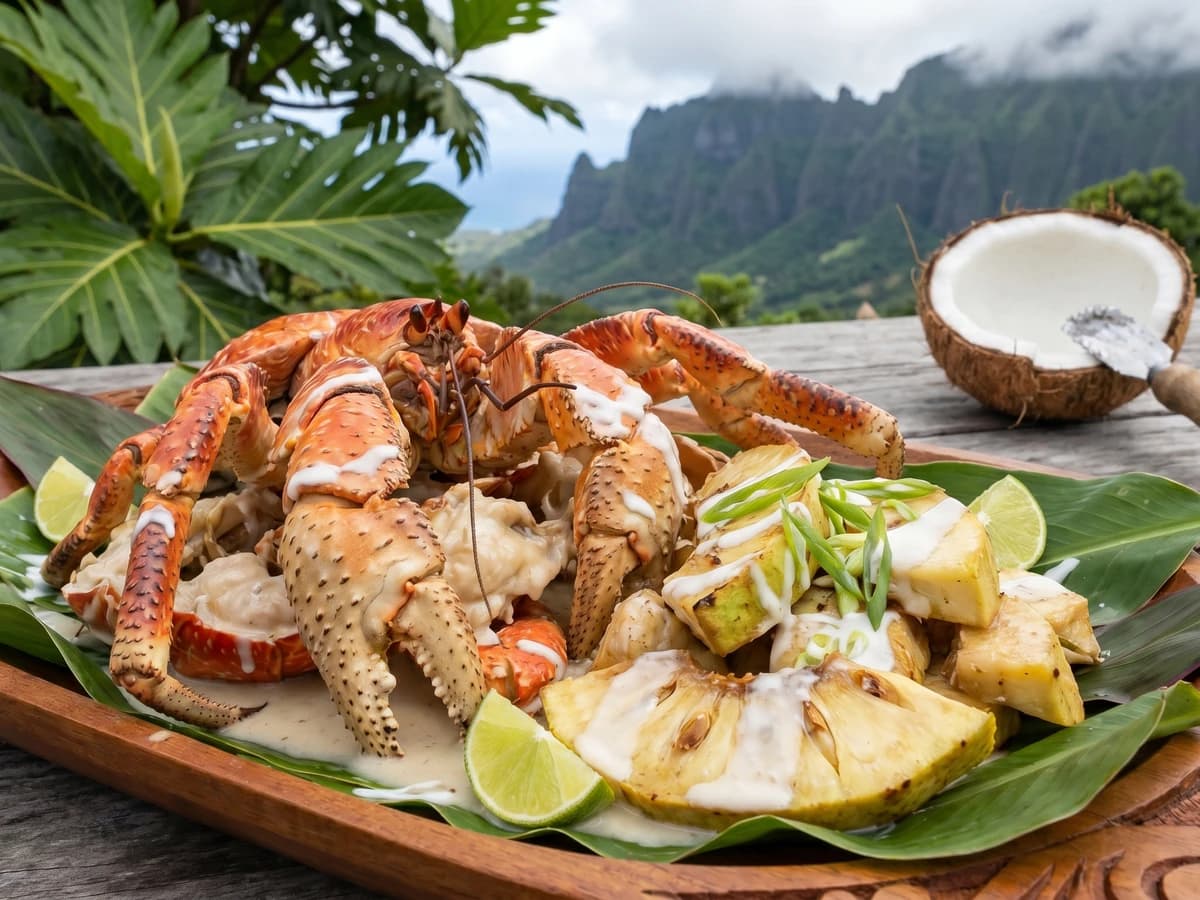
Lower the heat and pour in the coconut cream. Simmer uncovered for 8 to 12 minutes, spooning the cream over the crab, until the sauce thickens enough to coat the shell with a white-gold sheen. Do not boil hard. Fresh coconut cream is the soul here, and it turns rough when you rush it.
If using canned coconut cream, shake it hard, then stir it smooth before adding. A good can does the weeknight job, but fresh cream carries the old taste better.
6
Taste and finish
Taste the cream and add salt only if it asks. Finish with lime if your table wants that brightness, or leave it plain and rich. The finished sauce should cling to the crab, glossy and thick, with the sweetness of coconut and the deep savor of the uga coming through clean.
7
Serve the table
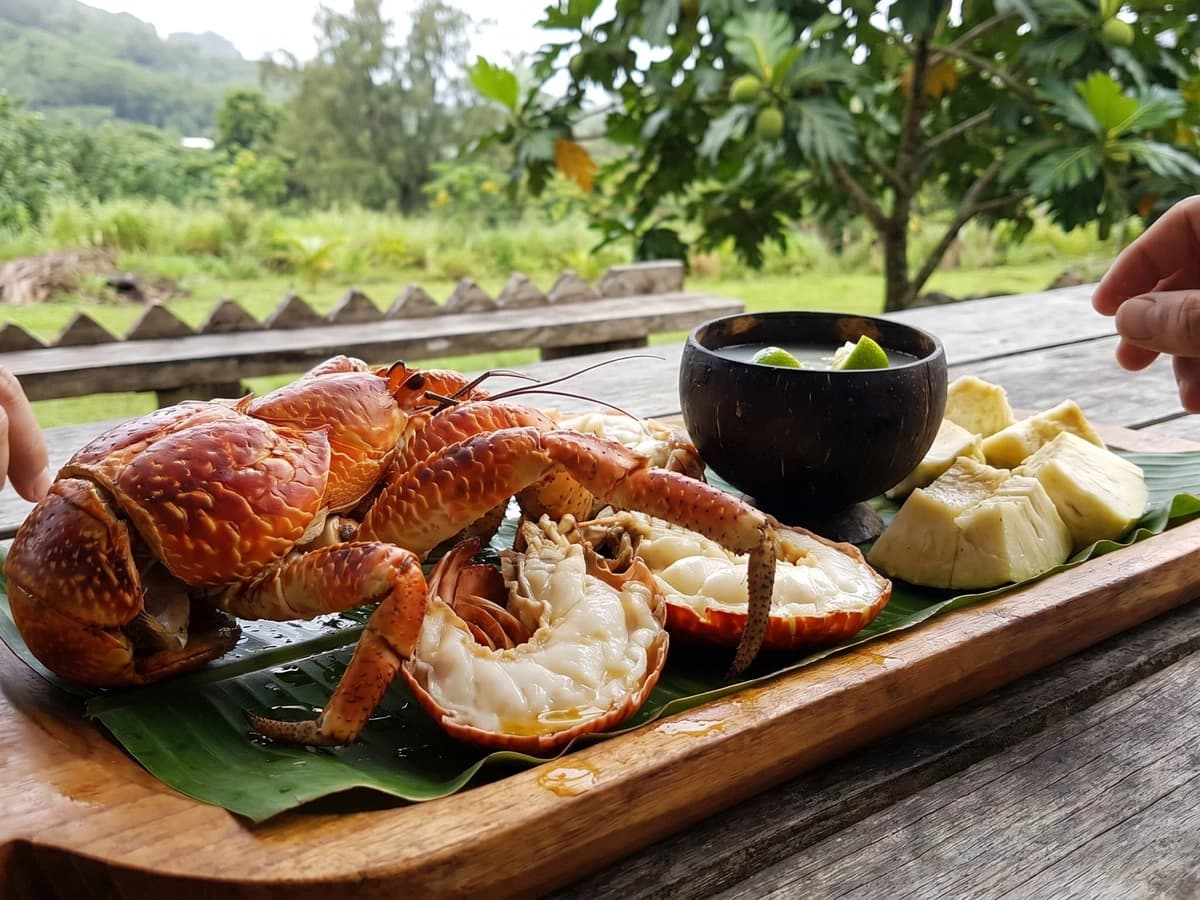
Lay the crab out family-style on banana leaf or a woven pandanus mat with pulaka if you can get it, or taro, breadfruit, and rice if that's what you have. Corned beef and rice off the barge, pulaka from the pit, crab from the reef, all of that is the truth of Tuvalu and Tokelau now. Feed the people in front of you.
Chef Tips
•Sourcing first, always. Coconut crab grows slow and can disappear fast from a small island. If you cannot say it was taken legally and sparingly, don't buy it.
•Fresh coconut cream matters here. Grate mature coconut, squeeze with a little warm water, then use the first thick pressing for the pot. That's the richness the dish is built on.
•No uga where you live? Use a legal, sweet crab like Dungeness, mud crab, blue crab, or stone crab claws. Say what it is, though. That is a crab in the style of Tuvalu and Tokelau, not uga itself.
•Serve with pulaka if you have a Tuvaluan or Tokelauan source. If not, taro, ʻulu, or rice will hold the sauce. No need make it precious. Just don't pretend the substitute is the same as the pit crop.
Advance Preparation
•Squeeze the coconut cream the morning of the meal and keep it chilled. Fresh cream separates and sours if it sits too long.
•Clean and crack the crab up to 4 hours ahead, then keep it covered and cold until cooking.
•Cook this close to serving. Reheated coconut cream can split, and crab toughens when it waits too long.
Frequently Asked Questions
Nutrition Information
1 serving (about 230g)
Calories
445 calories
Total Fat
35 g
Saturated Fat
29 g
Trans Fat
0 g
Unsaturated Fat
5 g
Cholesterol
60 mg
Sodium
600 mg
Total Carbohydrates
9 g
Dietary Fiber
2 g
Sugars
3 g
Protein
24 g
Where cooking meets culture.
Culinary guides, cultural storytelling, and the editorial depth that makes cooking meaningful.