
Chef Makoa
Baked ʻUala (Hawaiian Sweet Potato in the Embers)
Whole Hawaiian ʻuala baked in embers or a hot oven until the skins char and the flesh goes honey-soft, finished plain with paʻakai so the canoe crop tastes like itself.
A cooking platform built around craft, culture, and the stories behind what we eat.

Created by
Purple Hawaiian ʻuala roasted until soft at the center and crisp at the edges, then glossed with island honey, butter, and paʻakai for the sweet side of the lūʻau plate.
My kumu used to say, eat what you have, and he wasn't only talking about hunger. He meant know what the ʻāina, the land, already put in your hand. In Hawaiʻi, ʻuala, the sweet potato, is one of those old foods that fed people when kalo was scarce, when the dry fields had to carry the family, when the table needed one more good thing and nobody had time for ceremony.
This is Hawaiian, from my home waters, and the cousins know this root too: kūmara in Aotearoa, kumara on Rapa Nui, kumala in Tonga, umala in Sāmoa. One ocean, one canoe, one root, though the scholars still argue how the sweet potato first crossed that water from South America into Polynesian hands. The old people grew it in dry places where taro wouldn't stand wet, and they knew every patch by what it could give.
Here we roast the purple ʻuala slow enough that the inside goes creamy and dense, then finish it with honey, a little butter, and paʻakai, Hawaiian sea salt. Kō means sugarcane in ʻōlelo Hawaiʻi, and that sweetness belongs here, but no need drown the root. The honey should shine on it, not bury it. Let the ʻuala still taste like itself.
Put it beside kālua puaʻa, poke, laulau, and poi, or bring it to a potluck in a pan with foil over the top. Deep food is not fancy. It's not precious. It's food that remembers where it came from, then feeds the people right now.
ʻUala, the Hawaiian sweet potato, was one of the great dryland staple crops of old Hawaiʻi, especially important in leeward places where wet kalo terraces were harder to keep. Across the Triangle, its cousins carry related names, kūmara in Aotearoa, kumara on Rapa Nui, kumala in Tonga, and umala in Sāmoa, and its presence in Polynesia before European contact remains one of the clearest food clues of long-distance voyaging and exchange. Honey and butter are later kitchen companions, but the root underneath is older, a canoe-age food brought forward into the lūʻau and potluck table.
Quantity
3 pounds
scrubbed and cut into 1 1/2-inch chunks
Quantity
3 tablespoons
or coconut oil
Quantity
2 tablespoons, plus 1 tablespoon more if needed
Quantity
1 tablespoon
Quantity
1 teaspoon
or coarse sea salt
Quantity
1/2 teaspoon
grated
Quantity
1 tablespoon
| Ingredient | Quantity |
|---|---|
| Okinawan or Hawaiian purple sweet potatoes (ʻuala)scrubbed and cut into 1 1/2-inch chunks | 3 pounds |
| melted butteror coconut oil | 3 tablespoons |
| island honey | 2 tablespoons, plus 1 tablespoon more if needed |
| neutral oil | 1 tablespoon |
| paʻakai ʻalaea (Hawaiian red sea salt)or coarse sea salt | 1 teaspoon |
| fresh ginger (optional)grated | 1/2 teaspoon |
| fresh lime juice (optional) | 1 tablespoon |
Set the oven to 425F and line a rimmed sheet pan with parchment. Give the ʻuala room on the pan. Crowding makes them soften without browning, and we want tender centers with a little crisp edge.
Cut the scrubbed ʻuala into even chunks, about one and a half inches, so they finish together. Toss them with the melted butter, oil, honey, paʻakai, and ginger if you're using it. The pieces should look lightly glossed, not swimming.
Spread the ʻuala cut-side down and roast for 25 minutes. Turn the pieces, then roast 10 to 15 minutes more, until a knife slides through without a fight and the edges are browned in spots. No blame the ʻuala if it's slow. Big pieces take their time.
While the ʻuala is still warm, drizzle with the extra honey only if it needs more shine, then toss gently so the glaze catches on the rough roasted edges. Add the lime juice if the honey tastes too heavy. Sweet needs salt and a little brightness to stand up straight.
Taste once more for paʻakai and set the ʻuala out warm or room temperature, family-style. It belongs beside the deep foods, but it also knows the everyday table: plate lunch, potluck, grilled fish, leftover pork and rice. Enough for one more.
1 serving (about 205g)
Culinary guides, cultural storytelling, and the editorial depth that makes cooking meaningful.
Discover Culinary ExplorerChef Makoa
Whole Hawaiian ʻuala baked in embers or a hot oven until the skins char and the flesh goes honey-soft, finished plain with paʻakai so the canoe crop tastes like itself.
Chef Makoa
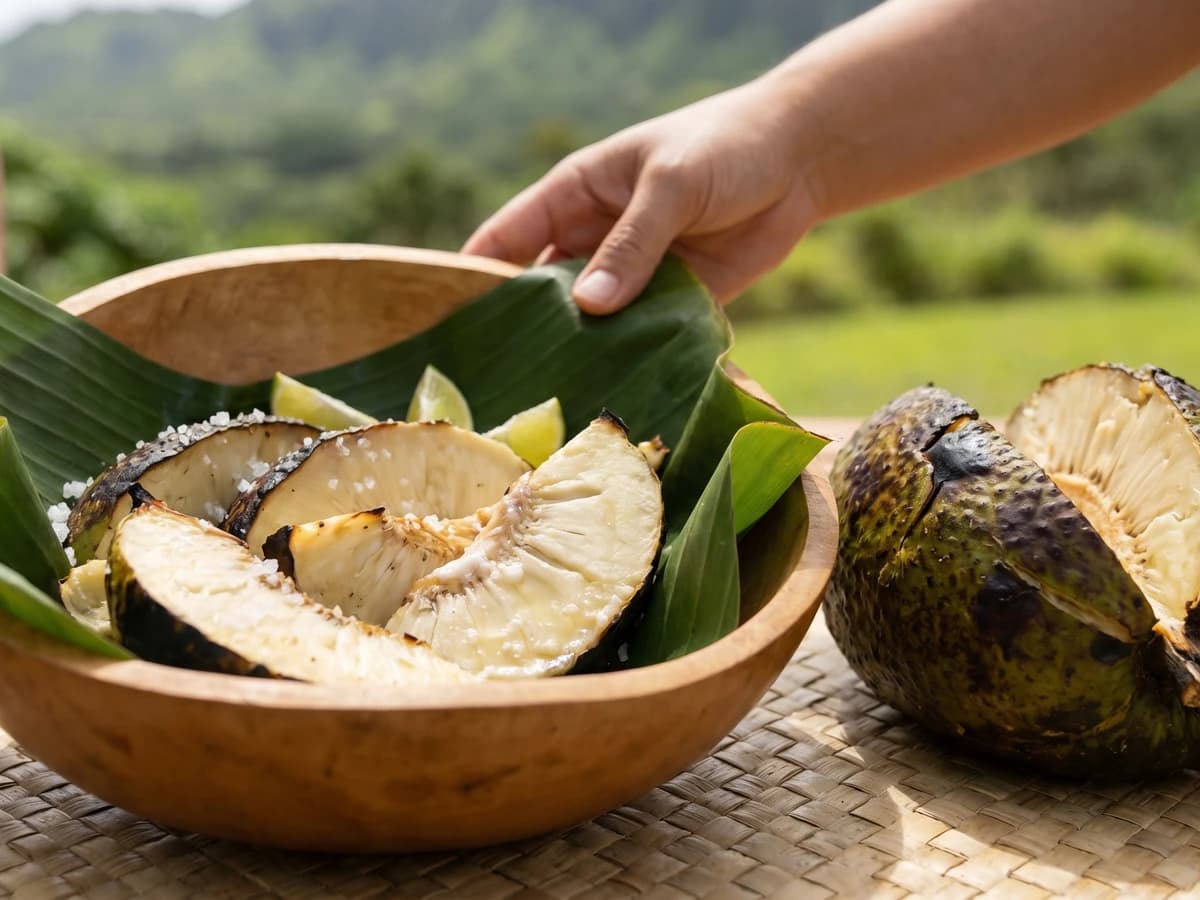
Hawaiʻi's ʻulu, breadfruit, roasted whole until the skin blackens and the inside turns soft and bread-like, the old canoe crop made real for a weeknight oven.
Chef Makoa
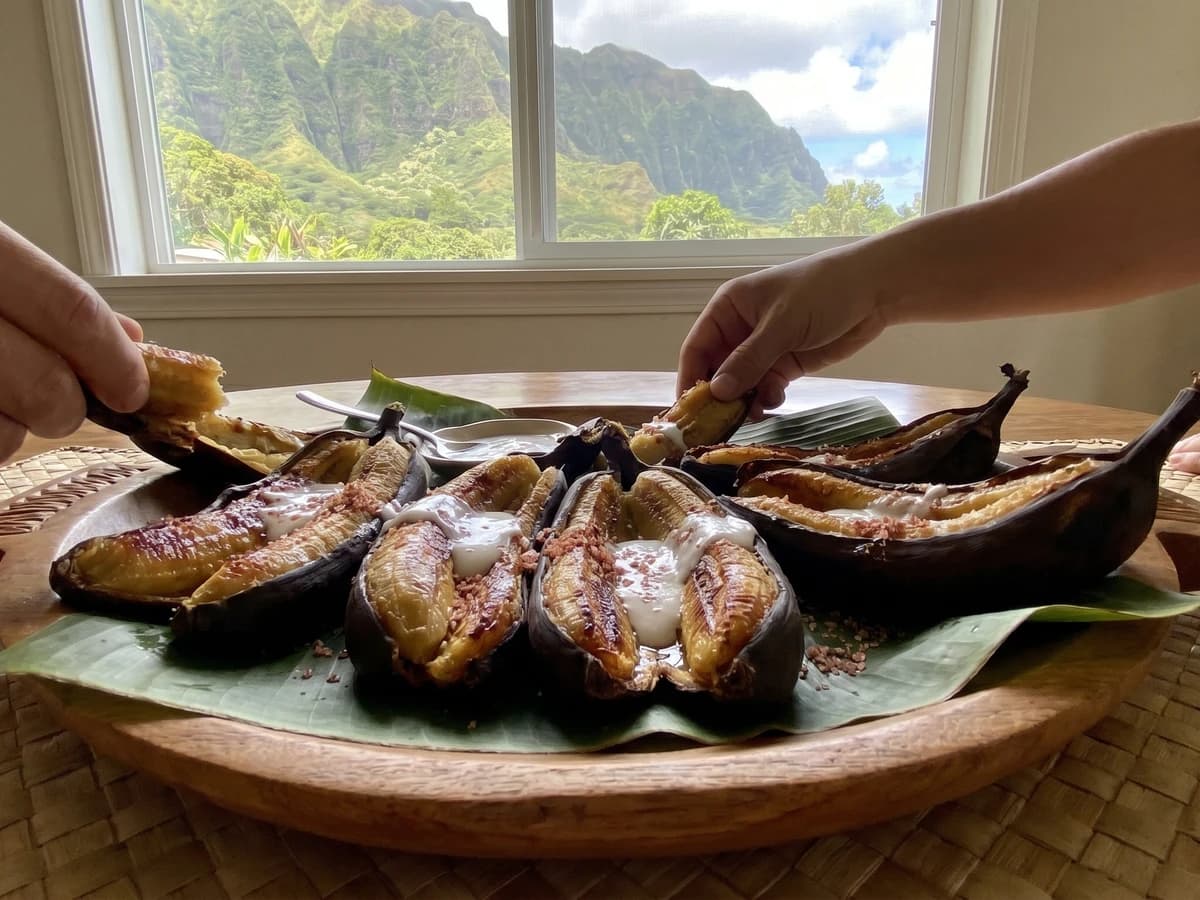
Firm Hawaiian maiʻa baked in its own skin until the starch relaxes into quiet sweetness, split open with coconut cream and paʻakai, a canoe-crop side for weeknight rice or a lūʻau table.
Chef Makoa
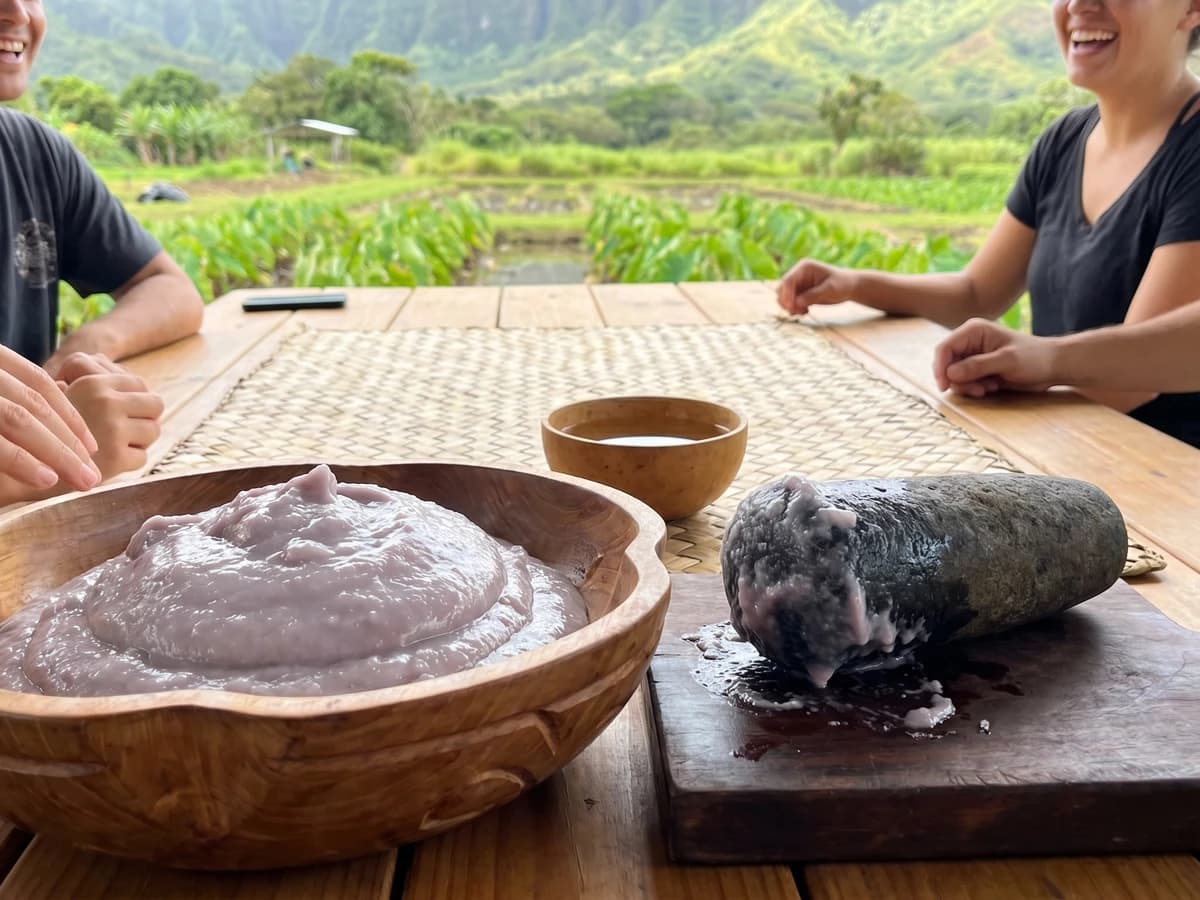
Hawaiian paʻiʻai is kalo steamed soft, cleaned, and pounded by hand until it shines, thick enough to lift from the stone, ready to eat as is or loosen into poi.