
Chef Dean
Classic Potato Latkes
Shatteringly crisp potato pancakes with lacy golden edges and tender, onion-flecked centers. This is the latke your grandmother made if she knew her way around a box grater and a heavy skillet.
A cooking platform built around craft, culture, and the stories behind what we eat.
Created by
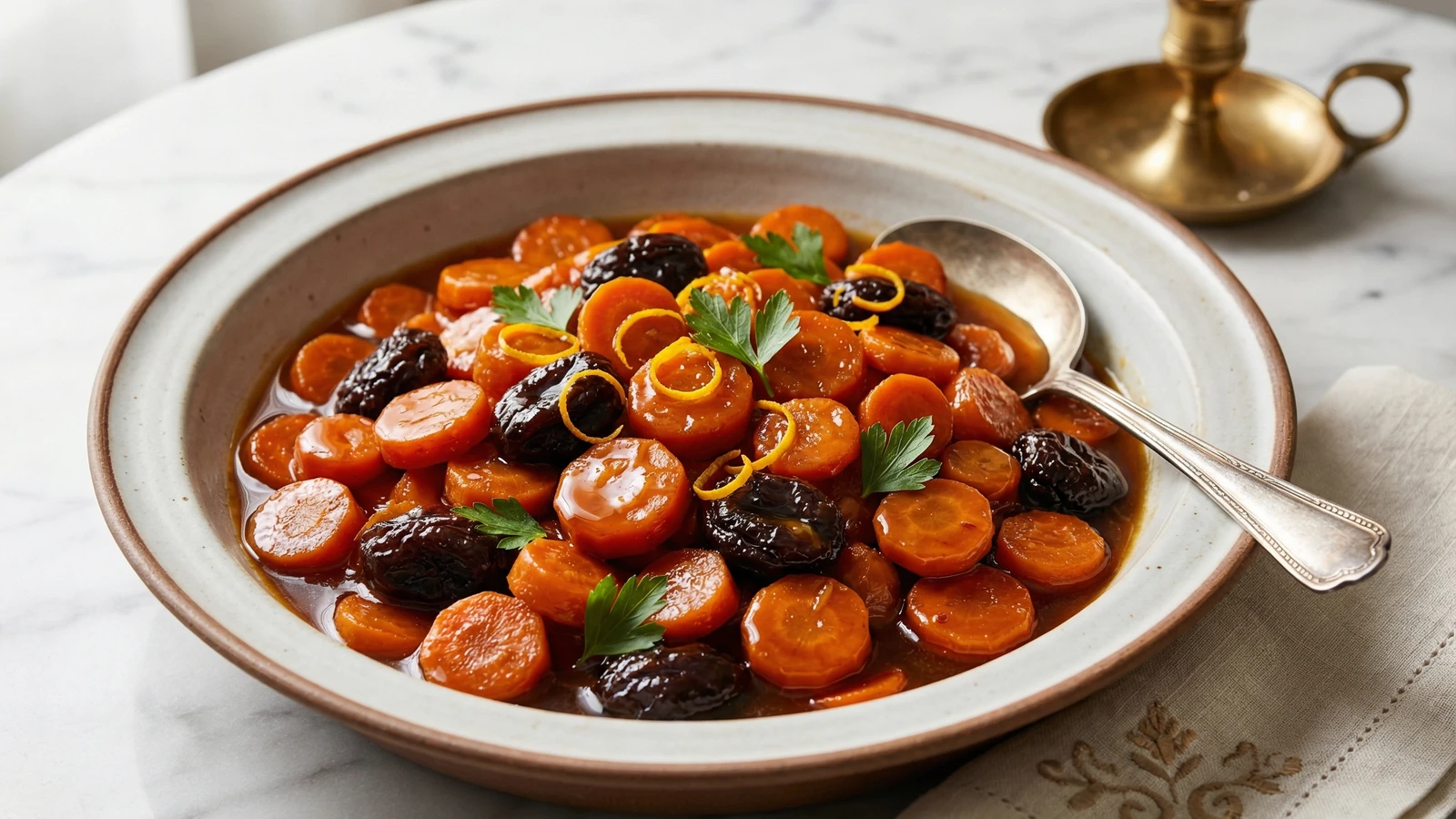
Tender carrots and plump prunes braised low and slow in honey and warm spices, a dish that honors generations of Jewish grandmothers who understood that sweetness is both flavor and blessing.
Tzimmes is the kind of dish that arrives at the table with history on its plate. Jewish grandmothers have been making versions of this sweet braise for centuries, the recipe traveling from Eastern Europe to American kitchens where it found new life alongside brisket and challah. The name itself comes from Yiddish, roughly meaning 'to make a big fuss.' And this dish deserves the fuss.
The carrots are cut into coins deliberately. This isn't about convenience. Those golden rounds represent prosperity, a visual prayer for abundance in the year ahead. The prunes add a depth that surprises people who think of them only as their grandmother's remedy. Here they become silk, melting into a sauce that tastes of cinnamon, honey, and something harder to name. Comfort, maybe. Memory.
I've watched home cooks overthink this recipe, convinced that something so symbolic must be complicated. It isn't. You cut carrots. You add prunes and honey and spice. You let time and gentle heat do the work your great-grandmother understood without a thermometer or a timer. Three hours in a low oven transforms humble ingredients into something worthy of your best serving dish.
Make it the day before your gathering. Tzimmes improves overnight, the flavors deepening as everything sits together. Reheat it gently and watch your guests reach for seconds before they've finished their first helping.
Quantity
3 pounds
peeled and sliced into 1/2-inch coins
Quantity
1 cup
Quantity
1/2 cup
Quantity
1/4 cup
packed
Quantity
2 tablespoons
Quantity
1 teaspoon
Quantity
1/2 teaspoon
Quantity
1/4 teaspoon
Quantity
1 teaspoon
Quantity
1/2 teaspoon
Quantity
1
zested
Quantity
1/2 cup
Quantity
1 cup
Quantity
for garnish
| Ingredient | Quantity |
|---|---|
| carrotspeeled and sliced into 1/2-inch coins | 3 pounds |
| pitted prunes | 1 cup |
| honey | 1/2 cup |
| brown sugarpacked | 1/4 cup |
| unsalted butter | 2 tablespoons |
| ground cinnamon | 1 teaspoon |
| ground ginger | 1/2 teaspoon |
| ground nutmeg | 1/4 teaspoon |
| kosher salt | 1 teaspoon |
| freshly ground black pepper | 1/2 teaspoon |
| orangezested | 1 |
| fresh orange juice | 1/2 cup |
| water or vegetable stock | 1 cup |
| fresh parsley (optional) | for garnish |
Set your oven to 325°F. This low temperature is essential. You want the carrots to braise slowly, absorbing the honey and spices over hours rather than minutes. Rushing this dish defeats its purpose entirely. While the oven heats, peel your carrots and slice them into coins about half an inch thick. Uniformity matters here because you want everything to finish cooking at the same time.
In a small saucepan over medium heat, combine the honey, brown sugar, butter, cinnamon, ginger, nutmeg, salt, and pepper. Stir gently until the butter melts and everything dissolves into a fragrant syrup. This takes about three minutes. Your kitchen will begin to smell like the holidays. Add the orange zest and juice, then the water or stock. Bring just to a simmer, then remove from heat.
Spread the carrot coins in an even layer in a 9x13 baking dish or Dutch oven. Scatter the prunes throughout, tucking them between the carrots so they're distributed evenly. Don't pile the carrots too deep. Two layers maximum. The braising liquid needs to reach everything.
Pour the warm honey mixture evenly over the carrots and prunes. Tilt the dish gently to distribute the liquid. It won't cover everything completely, and that's correct. The carrots will release their own moisture as they cook, and the liquid will reduce into a glaze. Cover the dish tightly with a lid or aluminum foil, pressing the foil against the rim to seal.
Place the covered dish in the oven and braise for 2 hours without opening the lid. Resist the urge to check. The carrots need this uninterrupted time in their humid environment to become truly tender. After 2 hours, remove the lid and continue cooking for another 45 minutes to 1 hour. The liquid will reduce and thicken into a glossy glaze. The carrots should be fork-tender but not falling apart.
Remove from the oven and let the tzimmes rest for 10 minutes. The sauce will thicken slightly as it cools. Taste and adjust seasoning. Sometimes a pinch more salt or a drizzle of honey brings everything into focus. Gently stir to coat all the carrots with the glaze.
Transfer to a warm serving dish if you braised in a baking dish, or serve directly from your Dutch oven. Scatter fresh parsley over the top for color and a bright counterpoint to all that sweetness. Serve warm alongside brisket, roasted chicken, or as part of a holiday spread. The prunes will be silky and collapsed into the sauce. The carrots will hold their shape but yield completely to a fork.
1 serving (about 69g)
Culinary guides, cultural storytelling, and the editorial depth that makes cooking meaningful.
Discover Culinary ExplorerChef Dean
Shatteringly crisp potato pancakes with lacy golden edges and tender, onion-flecked centers. This is the latke your grandmother made if she knew her way around a box grater and a heavy skillet.

Chef Dean
A golden-topped casserole of tender egg noodles bound in sweet custard, studded with plump raisins, and crowned with a shattering cinnamon streusel that fills the kitchen with warmth.

Chef Dean
Golden-crusted potato casserole with crispy edges and a tender, onion-laced interior. This is the kugel that silences a table of relatives, the one they'll ask you to bring every year.

Chef Dean
Burnished orange latkes with lacey crisp edges and tender centers, honoring the Hanukkah tradition of foods fried in oil while bringing the natural sweetness of American sweet potatoes to the holiday table.