Chef Lupita
Acúmara Tatemada al Comal
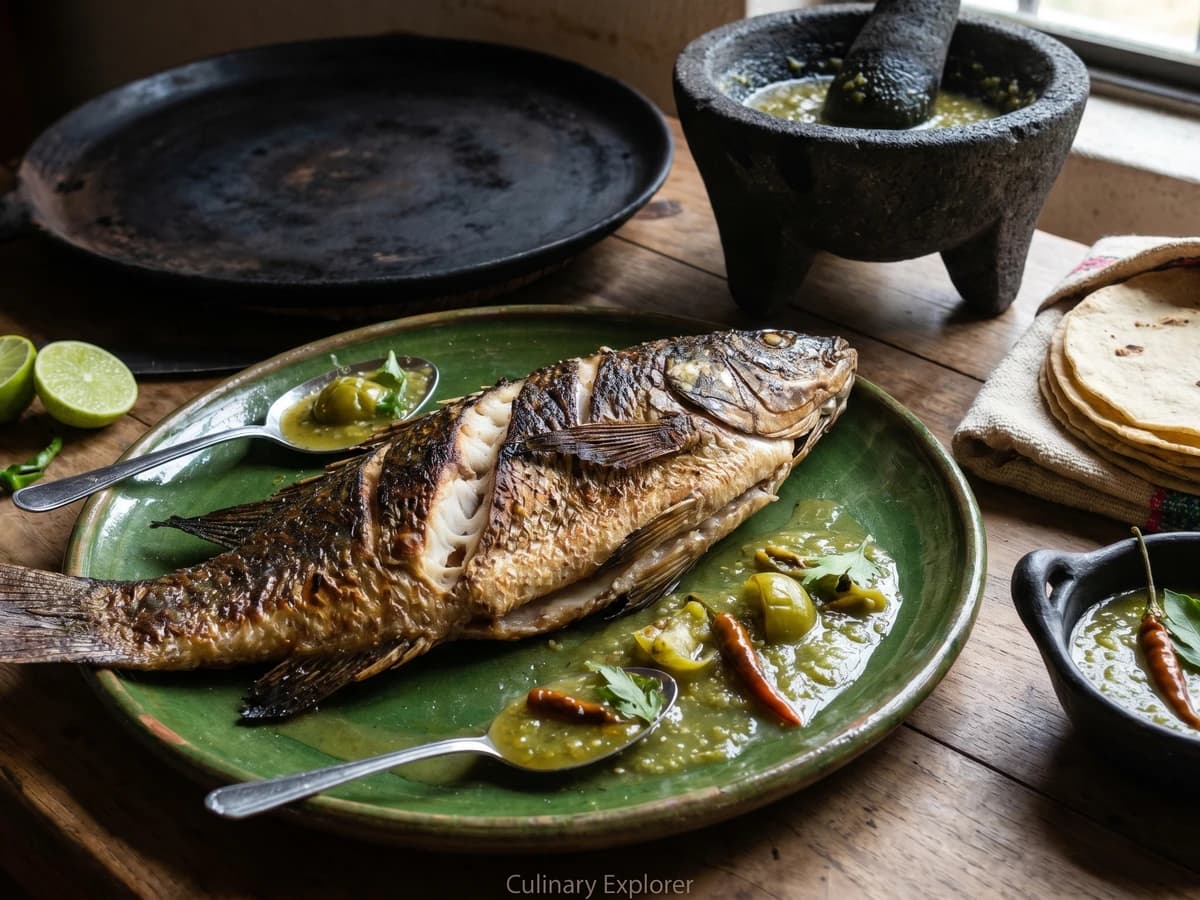
Michoacán's Lake Pátzcuaro acúmara, a whole kurucha from the lago tatemada on a comal de leña and served with chile perón atápakua, corn tortillas, and P'urhépecha discipline.
A cooking platform built around craft, culture, and the stories behind what we eat.

Created by
Central Chiapas in one deep bowl: beef shank simmered until tender with chayote, corn, cabbage, and ripe plantain in Tuxtla's clear chile-tomato broth.
Chispola belongs to Chiapas, to Tuxtla Gutiérrez and the central valley where beef broth, plantain, chayote, cabbage, and corn meet in the same pot without asking permission from anyone. This is not mole. This is not a thick guisado. It is a clear home stew with a red-gold broth, the kind that appears on a Sunday table and tastes even better on Monday.
The defining thing here is the balance between beef shank and plantain. The chambarete gives the broth bone, collagen, and patience. The plátano macho gives sweetness, but only if you add it late enough that it holds its shape. Throw everything in at once and you'll get muddy broth and broken vegetables. No me vengas con atajos. The order matters.
In Tuxtla, the women who make this well know how to keep the broth clean. They toast chile ancho and chile guajillo lightly, blend them with roasted jitomate, then strain the sauce so the chile gives color and depth without turning the pot heavy. Epazote goes in near the end because Chiapas uses herbs with a firm hand. My mother did not cook this dish, she was jalisciense, but in my notebooks from Tuxtla I have the same instruction written three times from three different señoras: do not boil the plantain to death. They were right.
Serve it in barro, with lime, warm corn tortillas, and a spoon big enough to catch meat, broth, and cabbage in one move. Cada estado, su propia cocina.
Chispola is part of the broad Chiapanecan tradition of clear meat broths enriched with local vegetables, a practical form shaped by the cattle economy of the central valley and the tropical produce of southern Mexico. The use of plantain reflects Chiapas's long connection to humid lowland agriculture and trade routes that tied the state to Guatemala and the broader Mesoamerican tropics. Unlike northern beef stews built around flour tortillas and wheat culture, chispola sits firmly in corn country, served with warm corn tortillas and vegetables from the mercado.
Quantity
3 pounds
cut into 2-inch pieces
Quantity
10 cups, plus more as needed
Quantity
1 medium
halved
Quantity
5
3 smashed and 2 left whole
Quantity
2
Quantity
1 tablespoon, plus more to taste
Quantity
2
stemmed and seeded
Quantity
3
stemmed and seeded
Quantity
2 medium
Quantity
1 tablespoon
Quantity
2 ears
cut into 3-inch rounds
Quantity
2
peeled, pitted, and cut into thick wedges
Quantity
2
peeled and cut into thick rounds
Quantity
1 small
cut into 6 wedges through the core
Quantity
1 large
peeled and cut into 2-inch pieces
Quantity
2 sprigs
Quantity
1/2 teaspoon
rubbed between your palms
Quantity
for serving
Quantity
for serving
Quantity
for serving
| Ingredient | Quantity |
|---|---|
| bone-in beef shank (chambarete)cut into 2-inch pieces | 3 pounds |
| cold water | 10 cups, plus more as needed |
| white onionhalved | 1 medium |
| garlic cloves3 smashed and 2 left whole | 5 |
| bay leaves | 2 |
| kosher salt | 1 tablespoon, plus more to taste |
| dried chile anchostemmed and seeded | 2 |
| dried chile guajillostemmed and seeded | 3 |
| Roma tomatoes (jitomates) | 2 medium |
| pork lard (manteca de cerdo) | 1 tablespoon |
| fresh corncut into 3-inch rounds | 2 ears |
| chayotespeeled, pitted, and cut into thick wedges | 2 |
| carrotspeeled and cut into thick rounds | 2 |
| green cabbagecut into 6 wedges through the core | 1 small |
| ripe plantain (plátano macho)peeled and cut into 2-inch pieces | 1 large |
| fresh epazote | 2 sprigs |
| dried Mexican oreganorubbed between your palms | 1/2 teaspoon |
| lime halves (optional) | for serving |
| warm hand-pressed corn tortillas (optional) | for serving |
| chile de Simojovel or crushed chile de arbol (optional) | for serving |
Put the beef shank in a heavy stockpot with the cold water, halved onion, 3 smashed garlic cloves, bay leaves, and salt. Bring it slowly to a simmer over medium heat. Skim the gray foam during the first 15 minutes. Do not let it roar. A hard boil gives you cloudy broth and tough meat, and chispola needs a clean broth.
Lower the heat until the broth bubbles gently. Cover the pot halfway and cook for 1 hour 45 minutes to 2 hours, until the meat is tender but still attached to the bone. Add hot water if the liquid drops below the meat. The marrow and collagen need time. This is where the body of the stew is built.
While the beef cooks, heat a dry comal over medium. Toast the chile ancho and chile guajillo for about 20 to 30 seconds per side, just until they soften, darken slightly, and smell sweet. Do not blacken them. Soak the toasted chiles in hot water for 15 minutes, then drain them.
Roast the tomatoes and the remaining 2 whole garlic cloves on the same comal until the tomato skins blister and the garlic softens. Blend the drained chiles with the roasted tomatoes, roasted garlic, and 1 cup of beef broth until completely smooth. Strain through a fine-mesh sieve. Press hard on the solids, then discard the skins and seeds left behind.
Melt the manteca de cerdo in a small cazuela or skillet over medium heat. Pour in the strained chile-tomato sauce. It will sputter. Cook for 6 to 8 minutes, stirring often, until the sauce darkens to brick red and the fat shines at the edges. La manteca es el sabor. Frying the sauce keeps the broth from tasting raw.
Remove and discard the cooked onion, bay leaves, and smashed garlic from the beef broth. Stir the fried chile-tomato sauce into the pot. Add the corn rounds and simmer for 15 minutes. Taste the broth now. It should be savory, lightly red, and clear enough that you can still see the meat under the surface.
Add the chayote and carrots. Simmer for 12 to 15 minutes, until they are just tender when pierced with a knife. Keep the bubbles gentle. These vegetables should hold their edges. Chispola is generous, not careless.
Add the cabbage wedges, plantain pieces, epazote, and Mexican oregano. Simmer 10 to 12 minutes more, until the cabbage softens and the plantain is tender but not falling apart. This is the step people ruin. Plantain is not potato. Treat it with respect.
Taste for salt one last time. Ladle each bowl with one piece of beef shank, corn, chayote, cabbage, carrot, and plantain. Serve with lime halves, warm corn tortillas, and chile de Simojovel or crushed chile de arbol at the table for the person who wants heat. The stew itself is not supposed to punish anyone. Saber cocinar es saber vivir.
1 serving (about 720g)
Culinary guides, cultural storytelling, and the editorial depth that makes cooking meaningful.
Discover Culinary ExplorerChef Lupita
Michoacán's Lake Pátzcuaro acúmara, a whole kurucha from the lago tatemada on a comal de leña and served with chile perón atápakua, corn tortillas, and P'urhépecha discipline.

Chef Lupita
Puebla's weekday adobo of pork shoulder braised in a thick guajillo and ancho sauce sharpened with vinegar, cumin, and clove. The deep red of a market spice stall, the dish a poblana cooks without thinking.

Chef Lupita
Loreto's pit-roasted clams, planted hinge-up in beach sand and tatemadas under a fast fire of dried romerillo brush, the resinous Baja desert shrub that gives this dish its smoke.

Chef Lupita
Oaxaca's eighth mole, the silky, almond-and-cinnamon almendrado, served over poached chicken. Mild, sweet, restrained, and a quiet rebuttal to anyone who thinks Mexican food has to be hot to be Mexican.