
Chef Lesia
Hrechka z Hrybamy (гречка з грибами, mushroom buckwheat)
Buckwheat is the color people mistake for dull until the mushrooms give it their black forest juices, the onion turns sweet, and every grain starts shining with green sunflower oil.
A cooking platform built around craft, culture, and the stories behind what we eat.
Created by
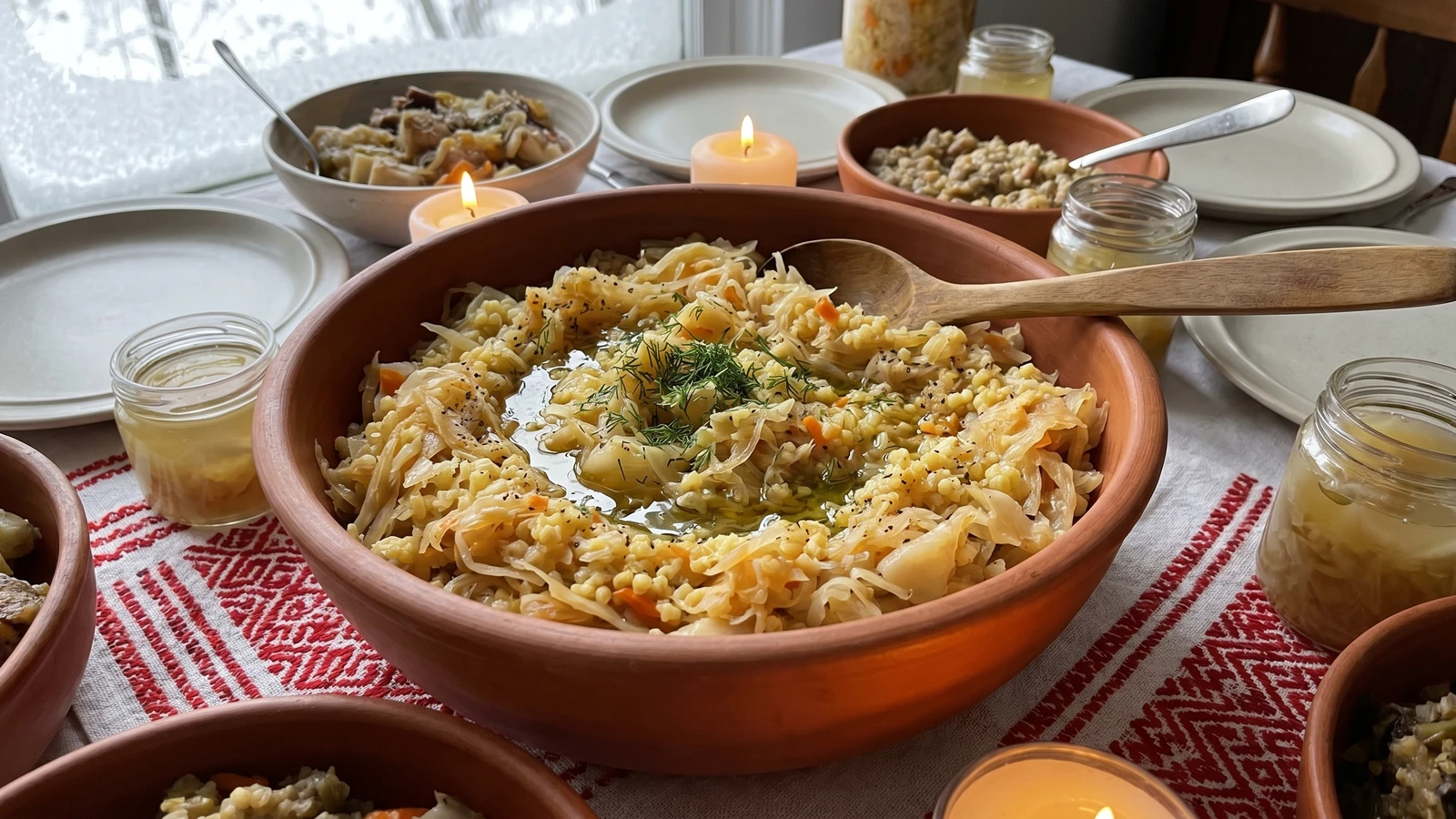
Millet disappears into the cabbage like little golden beads, drinking the sourness, thickening the pot, and turning a winter vegetable into something soft, sweet, and worth waiting for.
The arresting thing is how the millet vanishes. You pour it over the cabbage, zasypaty means to scatter or cover, and at first it sits there like yellow grit, not promising much. Then the pot softens, the cabbage gives up its sharp winter smell, and those small grains swell until they hold the whole dish together.
This is old Christmas Eve food, the kind that sits on the table beside mushrooms, beans, uzvar, and too many plates because nobody wants an empty corner. In my aunt Nadia's letters this sort of dish always came with the same helpful instruction: cook it until it sounds right. She meant when the spoon stops scraping through loose liquid and begins to move through something soft, thick, and alive.
The one thing that decides it is the zasmazhka, the slow-sweated onion and carrot in unrefined sunflower oil. Add it near the end. Its sweetness sits brightly on the cabbage instead of disappearing into the cooking water, and the whole pot wakes up. Make plenty. There is no tradition of a small one, and tomorrow it will be better.
Zasypana kapusta, literally cabbage that has been covered or scattered with grain, is especially associated with western Ukrainian Christmas Eve cooking, where millet made lean winter dishes filling without meat or dairy. Versions differ by region and household: some use only sauerkraut, some mix fresh and sour cabbage, and some soften the finished pot with cream outside the strict fasting table. The dish belongs to the same preservation kitchen as fermented cabbage leaves for holubtsi and barrel sauerkraut, where winter flavor came from what had already been saved.
Quantity
700g
finely shredded
Quantity
400g
lightly squeezed, brine reserved
Quantity
120g
rinsed until the water runs mostly clear
Quantity
2 medium
finely diced
Quantity
2 medium
coarsely grated
Quantity
4 tablespoons
Quantity
2 dried
Quantity
8
Quantity
1 teaspoon
Quantity
600ml
Quantity
1 teaspoon, plus more to taste
Quantity
to taste
Quantity
small bunch
chopped, to finish
Quantity
2 tablespoons
to sharpen
| Ingredient | Quantity |
|---|---|
| white cabbagefinely shredded | 700g |
| sauerkrautlightly squeezed, brine reserved | 400g |
| milletrinsed until the water runs mostly clear | 120g |
| onionsfinely diced | 2 medium |
| carrotscoarsely grated | 2 medium |
| unrefined sunflower oil | 4 tablespoons |
| bay leaves | 2 dried |
| black peppercorns | 8 |
| sweet paprika | 1 teaspoon |
| mushroom stock, vegetable stock, or water | 600ml |
| sea salt | 1 teaspoon, plus more to taste |
| black pepper | to taste |
| dillchopped, to finish | small bunch |
| sauerkraut brine (optional)to sharpen | 2 tablespoons |
Put the millet in a sieve and rinse it under cold running water, rubbing it gently with your fingers, until the water runs mostly clear. Drain it well. This keeps the finished cabbage soft and nutty, not bitter at the back of the tongue.
Put the fresh cabbage, sauerkraut, bay leaves, peppercorns, and stock into a wide heavy pot. Bring it to a lively simmer, then turn it down until it murmurs. Cover and cook until the cabbage loses its raw squeak under the spoon and the smell changes from sharp cabbage to something rounder and sweet.
Sprinkle the drained millet evenly over the cabbage, then stir it through so no dry clumps hide on top. Keep the pot low and gentle, adding a splash more water if the bottom catches. The millet should swell into the cabbage, not sit separately like porridge.
While the cabbage softens, warm the sunflower oil in a wide pan and add the onions with a pinch of salt. Let them go translucent and sweet before the carrot joins them, then cook slowly until the oil turns orange and the carrot collapses. Stir in the paprika at the end, just long enough for the oil to bloom red-gold.
Scrape the zasmazhka into the cabbage and stir until the whole pot turns glossy and golden in places. Cook uncovered until the spoon moves through thick, soft cabbage and millet with only a little shine of liquid left at the bottom. Taste for salt, black pepper, and sourness; if it tastes sleepy, wake it with a spoon or two of the reserved sauerkraut brine.
Take out the bay leaves and let the cabbage sit off the heat before serving. Ten minutes helps, overnight helps more. Finish with dill at the table, not buried in the pot, so it stays green and loud.
1 serving (about 255g)
Culinary guides, cultural storytelling, and the editorial depth that makes cooking meaningful.
Discover Culinary ExplorerChef Lesia
Buckwheat is the color people mistake for dull until the mushrooms give it their black forest juices, the onion turns sweet, and every grain starts shining with green sunflower oil.

Chef Lesia
Buckwheat is never grey if you treat it properly: toast it until it smells nutty, then fold it through onions gone sweet and glossy in green sunflower oil.
Chef Lesia
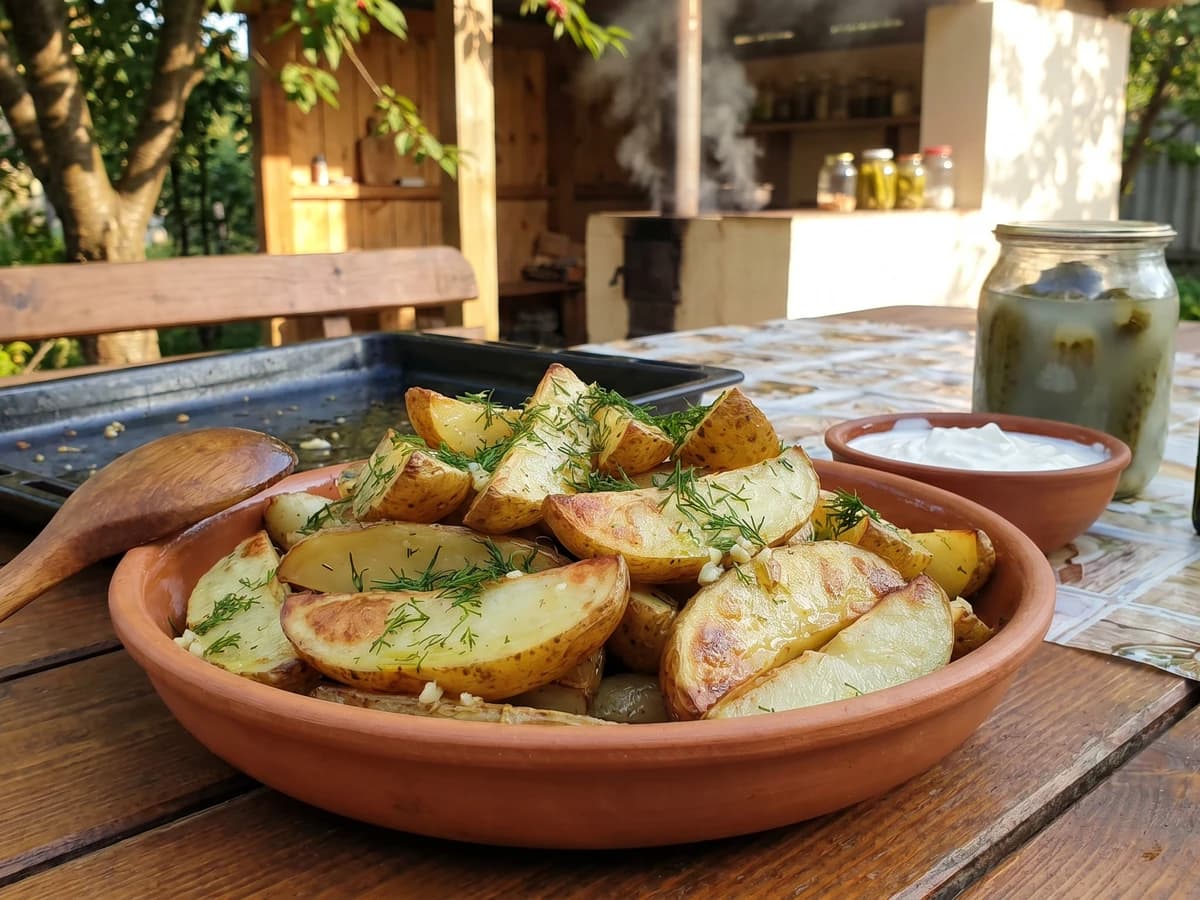
The trick is not the potato, it's the cracked edge: rough wedges roast until golden, then drink garlic, dill, and unrefined sunflower oil while still hot.

Chef Lesia
Flour and warm water sit overnight until the bowl smells like rye bread and orchard fruit, then the batter cooks into a glossy sweet-sour pudding. Almost nobody makes it now. We will.