Chef Makoa
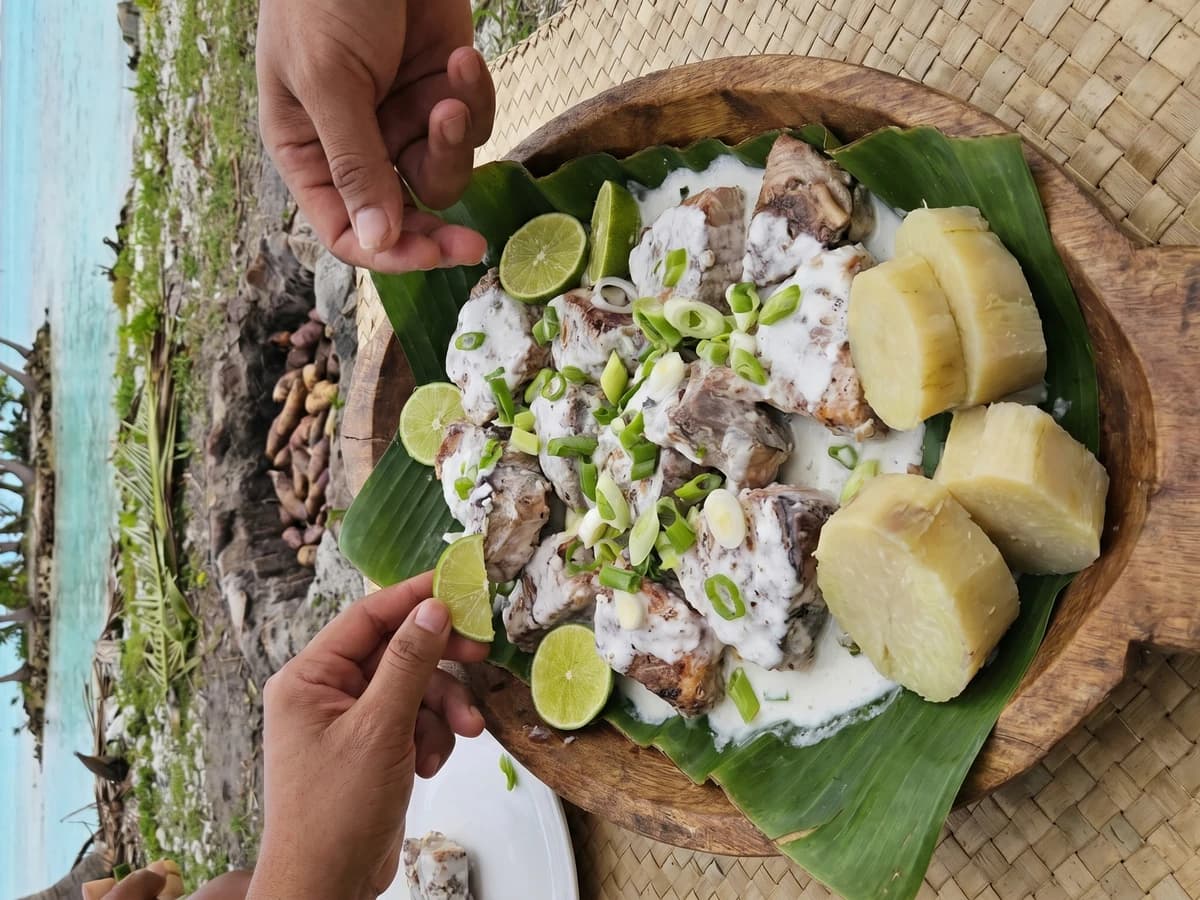
Faikai Ika (Tuvaluan Baked Tuna in Coconut)
Tuvalu's faikai ika bakes fresh tuna in coconut cream until the fish flakes soft and drinks the nut in, lagoon catch and palm brought together on one low coral island plate.
A cooking platform built around craft, culture, and the stories behind what we eat.
Created by
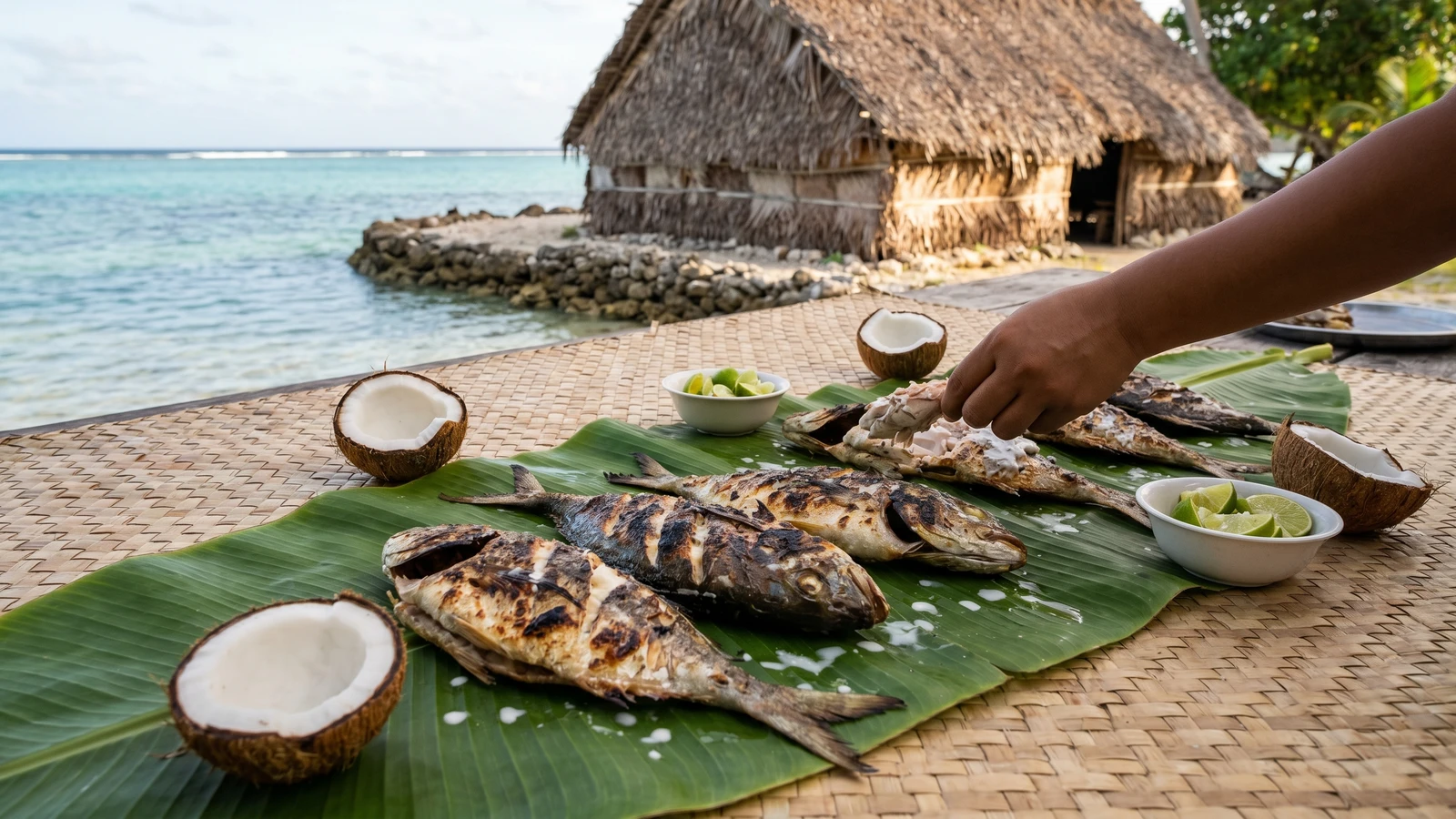
Tuvalu's tunu keeps the day's reef fish close to the fire and closer to the lagoon: salt, lime, coconut, and no fuss beyond sourcing it right.
Pulaka is the elder sitting under the coral ground, dug from deep pits where Tuvaluan families coax food out of land that looks like it shouldn't feed anybody. That giant swamp taro, and the reef fish brought in from the lagoon, are the old anchors of Tuvalu's table. I come to this as a Hawaiian cousin, so I name the hand straight: this is Tuvaluan tunu, grilled fish, from the low atolls of Tuvalu, not a nameless ocean plate.
On a good day the fish comes from the reef, cleaned simply, salted, and laid over coals until the skin crisps and the flesh lifts from the bone. The finish is lime, coconut cream if you have it, and maybe the sweetness of toddy tapped from the coconut tree somewhere else on the table. No need dress it up. The fish already knows where it came from.
Tokelau, just as distinct from Tuvalu, knows that same coral-soil hunger and the same hard truth of feeding people where the sea is most of the larder. Across the Triangle the cousins answer with their own bowls and fires: Tahiti's ʻia ota in coconut and lime, the Cook Islands ika mata, Sāmoa's oka, Tonga's ʻota ʻika, and back home in Hawaiʻi we might take reef fish to the grill or make poke when the fish is right. Same ocean, different hands.
Cook this in a yard, on a small grill, or under a broiler if that's what your weeknight gives you. Eat what you have. But ask where the fish came from, and don't waste it, because food on a barge is the wound and feeding the island from its own ground and reef is the repair.
Tuvalu's food world is built on coral atolls where breadfruit, coconut, pandanus, reef fish, and pulaka, the giant swamp taro grown in excavated pits, carried families long before imported rice and tinned meats filled the store shelves. As sea level rise and saltwater intrusion threaten pulaka pits, the dish sits inside a sharper present truth: the reef and the pit are identity, not scenery. Tokelau shares a related atoll food ecology with its own people and names, while Tuvaluan tunu remains Tuvalu's hand at the fire, simple grilled fish shaped by the lagoon, the coconut tree, and the day's catch.
Quantity
2 pounds
scaled and cleaned, such as snapper, parrotfish, or grouper
Quantity
1 1/2 teaspoons
plus more to finish
Quantity
2 tablespoons
Quantity
2
1 juiced and 1 cut into wedges
Quantity
1/2 cup
or thick canned coconut cream
Quantity
1 small handful
grated or shaved
Quantity
for serving
| Ingredient | Quantity |
|---|---|
| whole reef fishscaled and cleaned, such as snapper, parrotfish, or grouper | 2 pounds |
| sea saltplus more to finish | 1 1/2 teaspoons |
| coconut oil or neutral oil | 2 tablespoons |
| limes1 juiced and 1 cut into wedges | 2 |
| fresh coconut creamor thick canned coconut cream | 1/2 cup |
| fresh coconut (optional)grated or shaved | 1 small handful |
| banana leaf or pandanus mat | for serving |
Use the freshest reef fish you can get, one that smells like clean ocean and almost nothing else. If your fishmonger can't tell you when it came out of the water, ask harder. Sourcing first, always, because the cleanest fire can't fix tired fish.
Pat the fish dry, cut two or three shallow slashes into each side, and rub the salt into the skin, the belly, and the cuts. Let it sit 10 minutes while the grill heats. The salt wakes the fish up and helps the skin tighten before it meets the fire.
Build a medium-hot charcoal fire, or heat a gas grill to medium-high, then oil the grates well. You want steady heat, not a wild flame. The fish should hiss when it lands, then settle into a quiet sizzle.
Rub the fish with coconut oil, lay it on the grill, and leave it alone for 5 to 6 minutes. No poking, no chasing it around. When the skin has crisped and releases cleanly, turn it once and grill the second side until the flesh near the backbone flakes with gentle pressure and still looks moist.
Move the fish to banana leaf and spoon over the lime juice while the skin is still glossy. Drizzle with coconut cream, scatter fresh coconut if you're using it, and finish with a pinch of salt. The cream should shine on the fish, not drown it.
Serve the tunu whole, with lime wedges on the side, rice if that's the weeknight table, or pulaka and breadfruit when you can get them. Let people lift the flesh from the bone themselves. That's how the fish stays generous.
1 serving (about 180g)
Culinary guides, cultural storytelling, and the editorial depth that makes cooking meaningful.
Discover Culinary ExplorerChef Makoa
Tuvalu's faikai ika bakes fresh tuna in coconut cream until the fish flakes soft and drinks the nut in, lagoon catch and palm brought together on one low coral island plate.
Chef Makoa
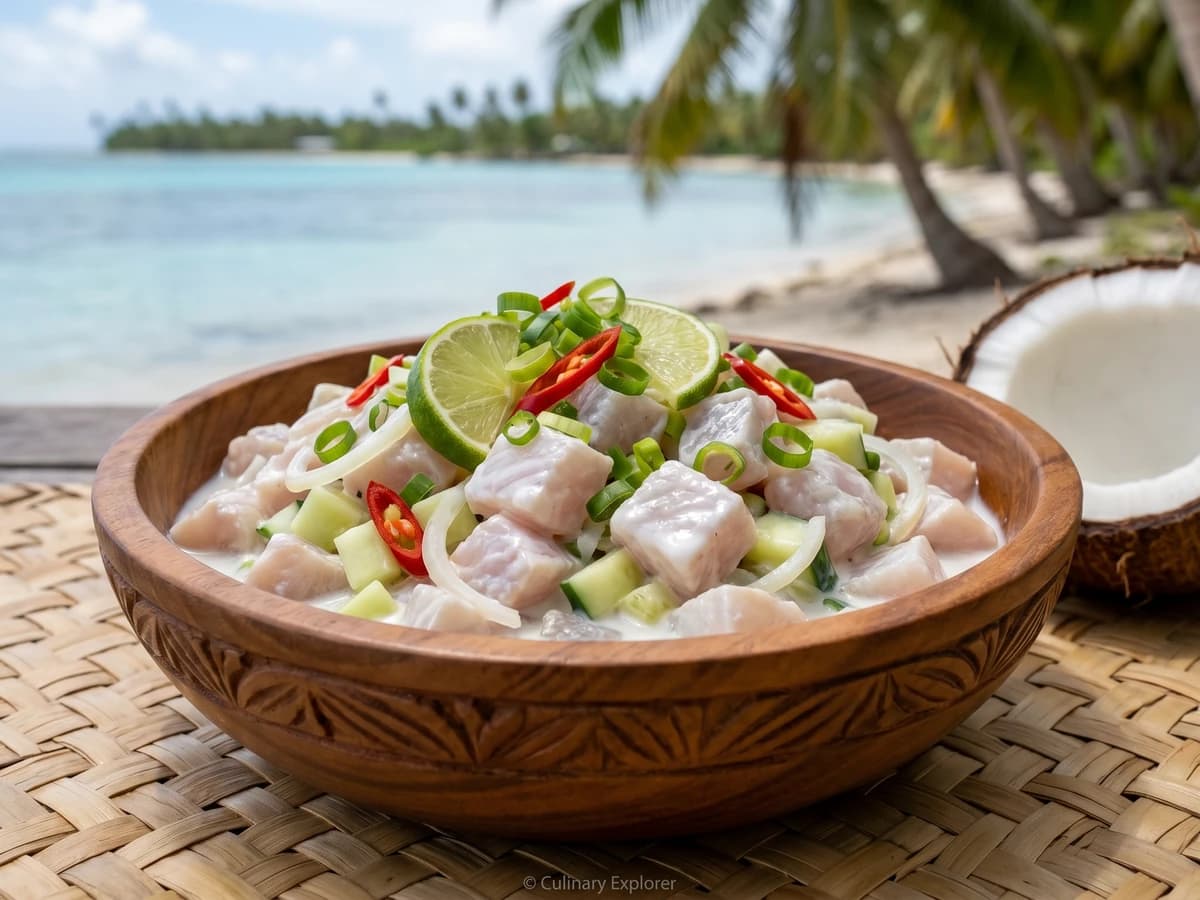
Tuvalu's ʻika mata is the atoll bowl: fresh reef fish, lime, coconut cream, onion, and cucumber, made close to the table where ocean feeds the kāiga.
Chef Makoa
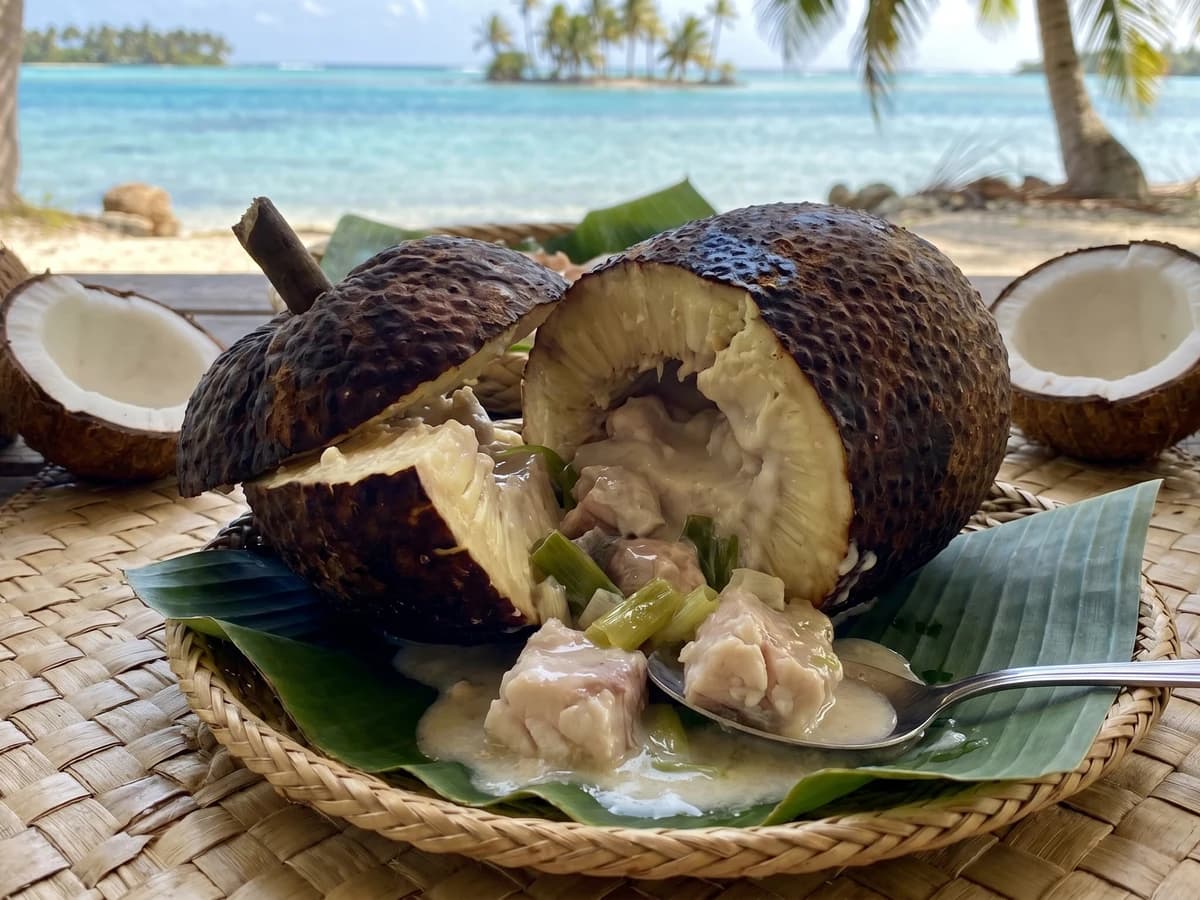
Tuvalu hollows a whole breadfruit, fills it with fresh fish, onion, and coconut cream, then bakes it until the shell darkens and the inside turns rich and soft.

Chef Juliette
John Dory has the delicacy of sole and the firmness of turbot. A light flouring, a quick butter sauté, and nut-brown beurre noisette show exactly why looks never mattered.