
Chef Makoa
Carpaccio de Atún Kahi (Rapa Nui Tuna Carpaccio)
Rapa Nui's kahi, tuna from the far eastern corner of the Triangle, sliced thin and dressed with lemon, olive oil, and capers. Same ocean fish, this island's modern bowl.
A cooking platform built around craft, culture, and the stories behind what we eat.
Created by
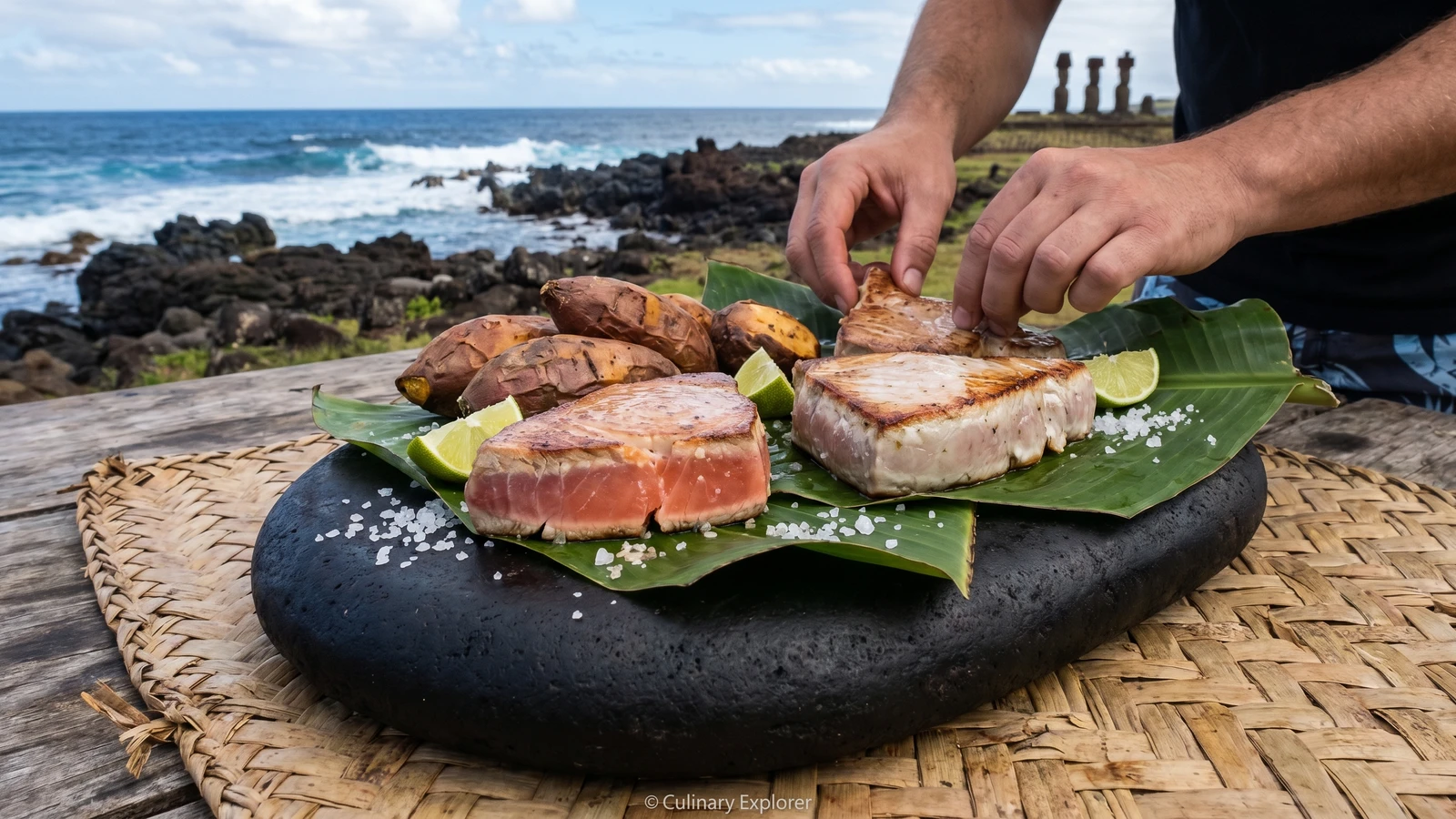
Rapa Nui fish seared on black volcanic stones, salted simply and eaten with kumara by the water. Ahi means fire here, and the old way still fits a weeknight grill.
The canoe carried our family farther than most people can imagine, all the way to Rapa Nui, the eastern corner where the ocean feels like it has no edge. That island is not my home seat, so I come to this tunu ahi with open hands: tunu is to cook or roast, ahi is fire, and the old people there put the day's fish right on volcanic stone by the shore.
The fish teaches you to stop fussing. Dry it, salt it, heat the stone until it can mark the flesh fast, then let the fire speak. The outside takes that dark bite from the basalt, the inside stays moist if you don't bully it, and the whole thing tastes like the ocean came straight to the table with no disguise.
Across the Triangle, the cousins know fire and stone in their own languages. Hawaiʻi has the imu, Sāmoa and Tonga the umu, Tahiti the ahimaʻa, the Cook Islands the umukai, Aotearoa the hāngī, and Rapa Nui its umu pae, the stone earth oven. The umu by any name is one oven. But this tunu ahi is smaller, quicker, everyday, Rapa Nui fish straight to stone, brought forward now on a grill or a cast-iron slab when the shoreline is far away.
So no make it precious. Buy good fish, use a dry food-safe stone, cook it clean, and feed the people standing around you. One ocean, one canoe, one root, and one more cousin's way of letting fire do just enough.
Rapa Nui was settled by Polynesian voyagers, likely in the 12th to 13th centuries, at the far eastern point of the Triangle, with canoe crops like kumara and taro and a food system built around fish, seabirds, and stone cooking. Tunu ahi belongs to the everyday side of that food grammar: not the larger umu pae, the Rapa Nui stone earth oven, but quick fish cooked against volcanic heat near the water. On an island with no fired pottery and a hard volcanic landscape, stone was not a prop, it was the pan, the hearth, and the memory of how people made enough from a difficult, beloved place.
Quantity
1 1/2 pounds
cut 1 to 1 1/4 inches thick
Quantity
1 1/2 teaspoons
plus more for serving
Quantity
1 tablespoon
for brushing
Quantity
2
cut into wedges
Quantity
as needed
for resting and serving
Quantity
for serving
| Ingredient | Quantity |
|---|---|
| very fresh tuna or sierra fillets or steakscut 1 to 1 1/4 inches thick | 1 1/2 pounds |
| coarse sea saltplus more for serving | 1 1/2 teaspoons |
| coconut oil or neutral oil (optional)for brushing | 1 tablespoon |
| limes or lemons (optional)cut into wedges | 2 |
| banana leaves (optional)for resting and serving | as needed |
| cooked kumara (Rapa Nui sweet potato), taro, or breadfruit (optional) | for serving |
Pat the fish dry until the surface feels clean and a little tacky, then salt both sides and let it sit 10 to 15 minutes while the stone heats. This is not a dish with plenty hiding places. The fish, the salt, the fire, that's it, so start with fish you'd trust with almost nothing on it.
Set food-safe basalt grilling stones on an outdoor grill over hardwood charcoal or a strong gas flame and heat them slowly, lid closed, 35 to 45 minutes, until the surface is ripping hot, about 500F to 600F. No use wet river stones, beach stones, or stones from protected places. On Rapa Nui you don't take from an ahu, a ceremonial stone platform, and in your kitchen you don't gamble with a stone that can crack.
Lay banana leaves on a wooden platter or a clean board, and set the cooked kumara, taro, or breadfruit close by. Rapa Nui's tunu ahi is quick food, shoreline food, not a one-plate performance. Have the table ready before the fish touches the stone.
Brush the fish with the thinnest film of oil if it needs help releasing, then lay it on the hot stone away from you. Leave it alone 1 to 2 minutes, until the underside marks dark and the edge turns opaque. Don't scrape and fuss. The stone is doing its work.
Turn the fish once. For tuna sold for raw eating, pull it while the center is still rosy and glossy, around 115F to 125F. For sierra or any fish you don't know that well, cook until the flesh flakes and reaches 145F. Eat what you have, but know what you're serving.
Move the fish onto the banana leaf and let it rest 3 minutes, just long enough for the juices to settle back into the flesh. Finish with a pinch of coarse salt and lime or lemon if your table wants it. Serve with kumara, taro, or breadfruit, and let people pull from the same platter.
1 serving (about 260g)
Culinary guides, cultural storytelling, and the editorial depth that makes cooking meaningful.
Discover Culinary ExplorerChef Makoa
Rapa Nui's kahi, tuna from the far eastern corner of the Triangle, sliced thin and dressed with lemon, olive oil, and capers. Same ocean fish, this island's modern bowl.
Chef Makoa
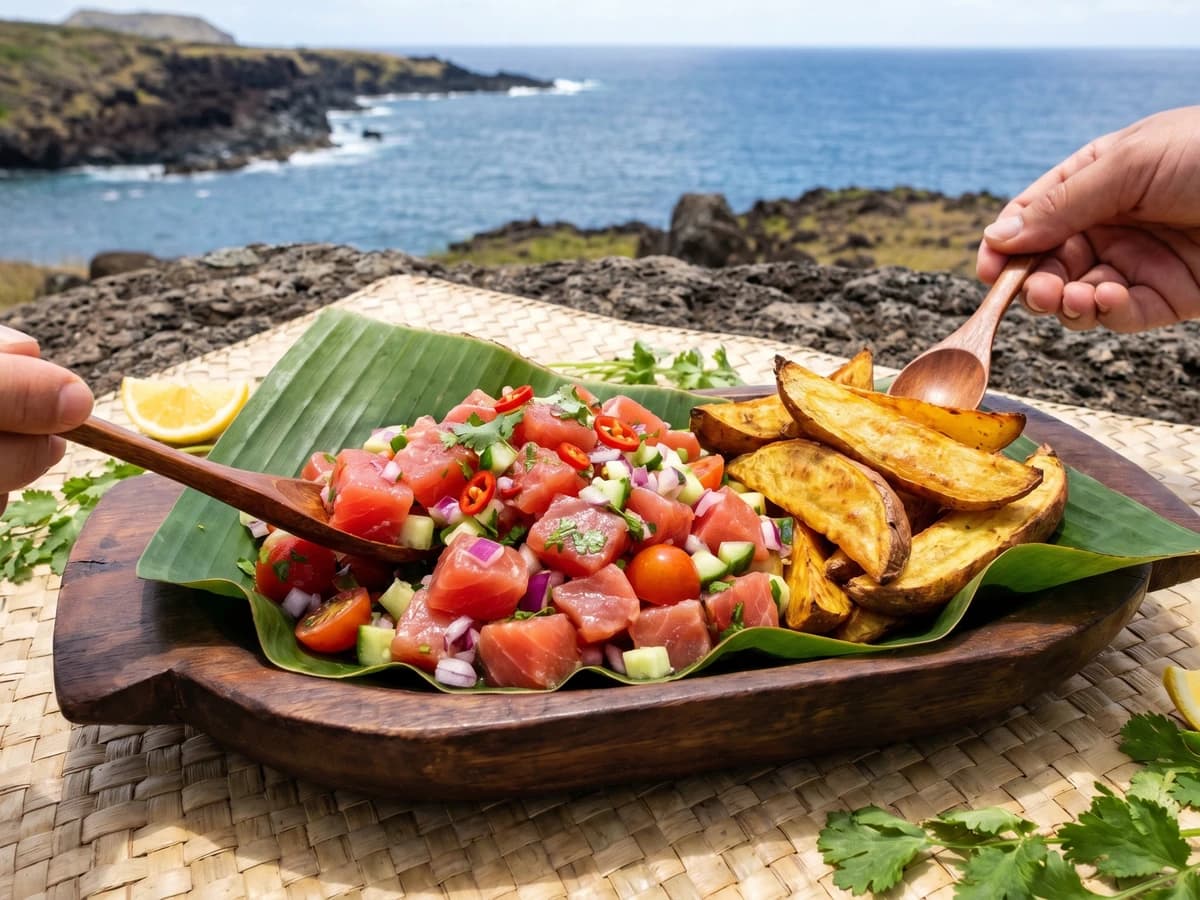
Fresh kahi from Rapa Nui, turned bright in lemon with onion, chili, and cilantro, then served with sweet kumara. A Chilean overlay, yes, but eaten in the island's own hand.
Chef Makoa
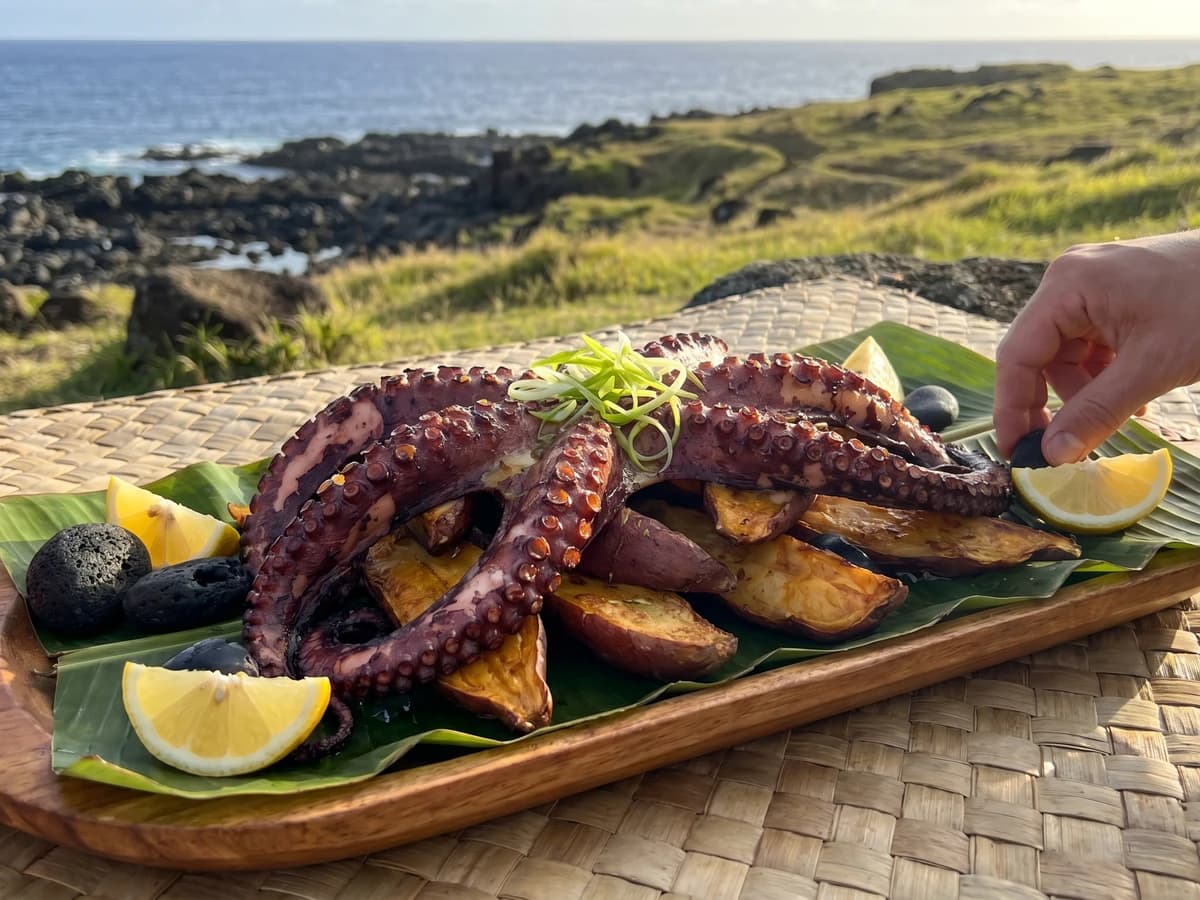
At Rapa Nui's far ocean edge, heke, reef octopus, is simmered tender, grilled until glossy and charred, then served with kumara and lemon, the cousin of Hawaiian heʻe and Māori wheke.

Chef Makoa
Rapa Nui's kana kana, the long sierra fish of the cold current, grilled simple over coals with boiled kumara. The far corner's weeknight plate, plain, good, and close to the sea.