
Chef Takumi
Agedashi Tofu (揚げ出し豆腐)
Agedashi tofu looks like a fryer test. It is only drained tofu, potato starch, clean oil, and a hot dashi broth waiting nearby.
A cooking platform built around craft, culture, and the stories behind what we eat.
Created by
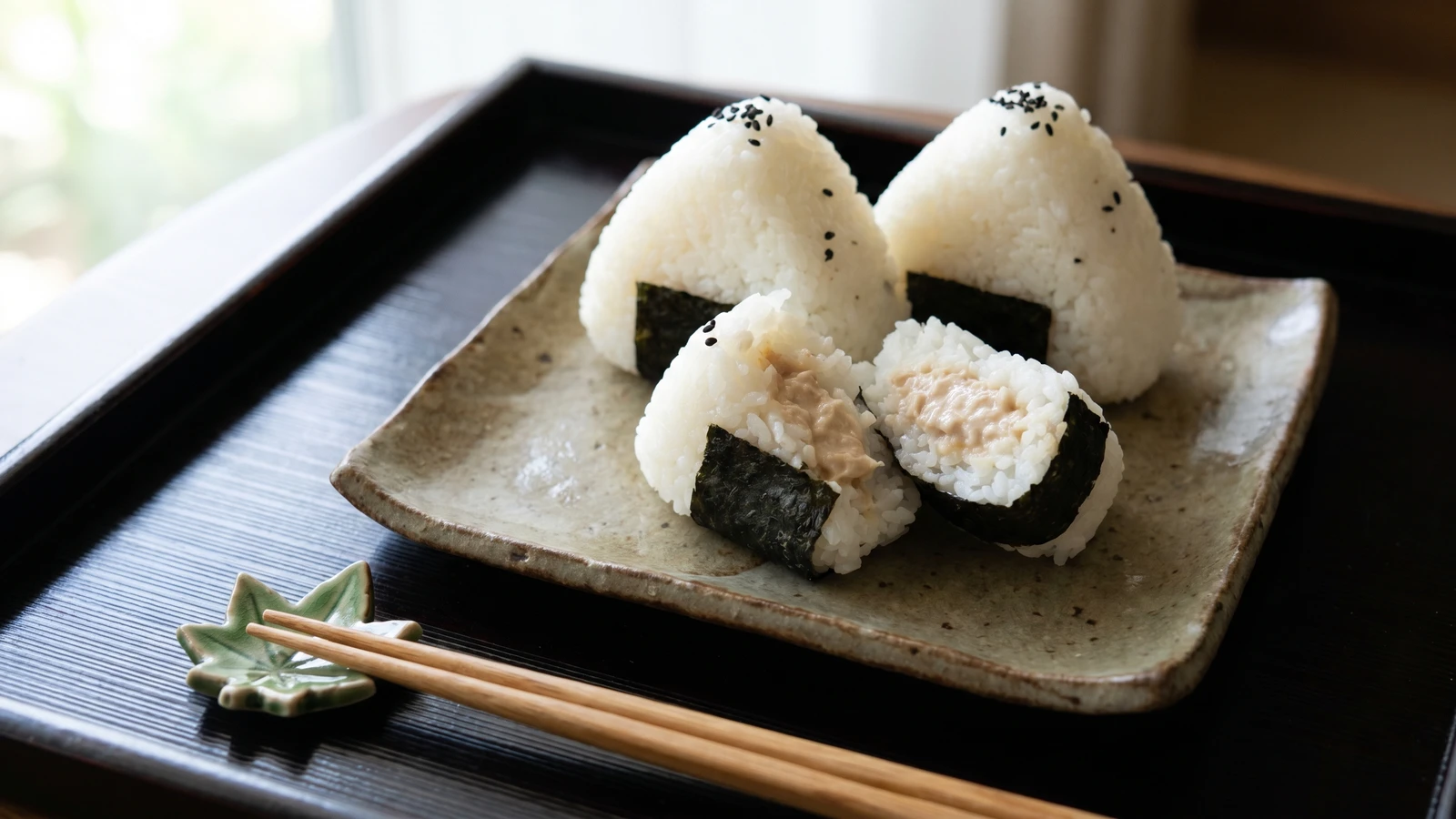
This is the modern onigiri that taught a whole country how good canned tuna could be: warm rice, clean salt, rich mayo, and a center that stays tucked away.
Tuna mayo sounds almost too ordinary to deserve ceremony. Good. Onigiri is everyday food, and everyday food is where a cuisine shows whether it knows what it's doing. Here the filling is canned tuna, Japanese mayonnaise, and one small drop of soy sauce. Nothing grand. Nothing hidden.
The one detail that decides it is the rice. Shape it while it's warm, not hot enough to burn your hands and not cold enough to turn stiff. Warm rice clings to itself without being crushed, and it lets the salt on your palms season the outside cleanly. Press too hard and you make a brick. Press too timidly and the center wanders out like it has an appointment elsewhere.
We make onigiri by touch, not by force. Wet your hands so the rice doesn't stick, salt them because the outside should taste alive, then cup the rice around the tuna mayo and shape it in three or four gentle presses. The nori goes on at the end if you want it crisp, or around the rice early if you're packing it and like it soft. Both ways are honest. The rice just has to hold, and the filling has to stay quietly in the middle.
Tuna mayo onigiri became widely known after 7-Eleven Japan introduced it in 1983, pairing canned tuna with mayonnaise inside the convenience-store rice ball. The filling suited the new style of individually wrapped onigiri, where the nori could stay separate from the rice until opened. It is now one of Japan's standard konbini, or convenience store, flavors, a modern household filling rather than an old regional one.
Quantity
2 cups
Quantity
2 1/4 cups
for cooking rice
Quantity
1 can (about 140g)
drained very well
Quantity
3 tablespoons
Quantity
1/2 teaspoon
Quantity
1/4 teaspoon, plus more for hands
Quantity
3 sheets
cut in half
Quantity
1 teaspoon
| Ingredient | Quantity |
|---|---|
| Japanese short-grain white rice | 2 cups |
| waterfor cooking rice | 2 1/4 cups |
| canned tunadrained very well | 1 can (about 140g) |
| Japanese mayonnaise | 3 tablespoons |
| soy sauce | 1/2 teaspoon |
| sea salt | 1/4 teaspoon, plus more for hands |
| nori sheetscut in half | 3 sheets |
| toasted sesame seeds (optional) | 1 teaspoon |
Put the rice in a bowl, cover with water, and stir with your fingers. Pour off the cloudy water and repeat until the water is only lightly cloudy, usually three or four washes. This removes loose surface starch so the cooked rice tastes clean and clings without turning pasty.
Cook the rice with 2 1/4 cups water in a rice cooker, or bring it to a boil in a covered heavy pot, lower the heat, cook 15 minutes, then rest off the heat 10 minutes. Resting lets the moisture settle evenly, which matters because dry edges crack and wet rice collapses.
Drain the tuna hard, pressing out excess liquid with a fork. Stir it with the Japanese mayonnaise, soy sauce, and 1/4 teaspoon salt until just combined. The filling should be rich but not loose, because wet tuna seeps into the rice and makes the onigiri fall apart.
Fluff the rice and let it cool until warm enough to handle. Set a bowl of water and a small dish of salt beside you. Wet your hands, then rub a pinch of salt across your palms. The water keeps the rice from sticking, and the salt seasons the outside where your tongue meets it first.
Take about 1/2 cup warm rice in one palm and make a shallow hollow in the center. Add 1 heaped teaspoon of tuna mayo, then cover with a little more rice. Don't overfill it. A generous center is pleasant, but an escaped center is only lunch trying to leave.
Cup both hands around the rice and press it into a triangle, turning it after each press. Use three or four firm, gentle presses, not kneading. You are asking the grains to hold together while keeping their shape, not crushing them into paste.
Wrap each onigiri with a half sheet of nori just before eating if you want the seaweed crisp. For meal prep or a picnic, wrap the rice balls separately and add the nori later, or wrap them early and accept the softer texture. Both are common; choose the one that suits the eating.
1 serving (about 175g)
Culinary guides, cultural storytelling, and the editorial depth that makes cooking meaningful.
Discover Culinary ExplorerChef Takumi
Agedashi tofu looks like a fryer test. It is only drained tofu, potato starch, clean oil, and a hot dashi broth waiting nearby.

Chef Takumi
Aspara-bacon is late-spring asparagus treated with common sense: thin bacon, hot grill, and a last brush of shōyu and mirin so the spear stays sweet while the wrap crisps.

Chef Takumi
This is Osaka street food at its plainest and best: good beef cut small, a thin batter, fine panko, hot beef tallow, and one clean dip in sauce.

Chef Takumi
Buta-bara is not a trick of the grill. Good pork belly, even cutting, steady heat, and the patience to let the fat turn glossy do most of the work.