Chef Makoa
Fekei (Tuvaluan Grated Pulaka in Coconut Cream)
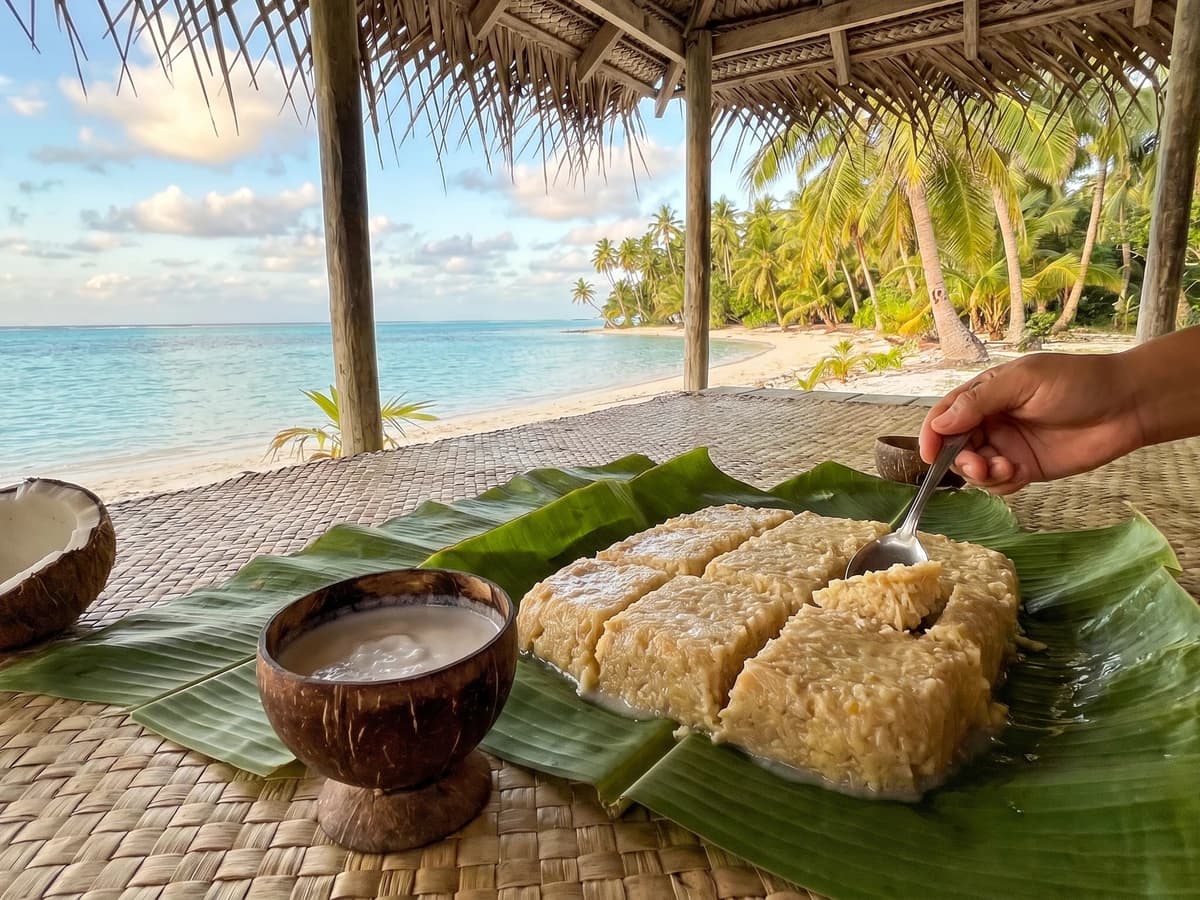
Tuvalu grates pulaka from the pit, folds it with rich coconut cream, then cooks it in leaves until it sets dense and tender, coral-island food with the old root still holding the table.
A cooking platform built around craft, culture, and the stories behind what we eat.

Created by
Tuvaluan tulolo is pulaka from the coral pit, cooked until it gives, mashed slow, and crowned with fresh lolo, coconut cream. Two Tuvalu foods, one bowl, enough for the family.
An elder's hand doesn't start with the bowl. It points back to the pit. On a Tuvaluan island like Funafuti, pulaka, the giant swamp-taro, comes from pits dug down through coral into the freshwater lens, a dark wet garden under land so narrow the lagoon is always in your eye. When a Tuvaluan auntie mashes that pulaka with lolo, coconut cream, she's not making a spare starch. She's feeding the kaiga, the family, from the little ground the fenua, the land, can still give.
This is Tuvalu's hand, and I hold it with respect. Tokelau keeps its own pulaka pits too, close by and distinct, its own old people and its own table. Across the Triangle the cousins answer in their own ways: Hawaiʻi pounds kalo into paʻiʻai and poi, Sāmoa wraps talo leaf as palusami, Tonga as lū, and the Cook Islands as rukau. One ocean, one canoe, one root, but nobody gets blurred.
The method is plain because the low coral land asks for plain. Cook the pulaka all the way until no chalky heart is left, because underdone taro bites the throat. Mash it slow, feed it coconut cream little by little, and let the bowl stay heavy and glossy, not whipped full of air. No blame the taro. If it fights you, it needs more time, or more lolo, or a softer hand.
In a contemporary kitchen, true pulaka may be hard to find. Eat what you have. Mature taro will carry you close, even if it is not the same elder from the same pit, and a thick can of coconut cream will do when no one is grating coconut that morning. Serve tulolo beside grilled fish, or beside corned beef and rice when that's what came off the barge and what the family has. Food on a barge is the wound; feeding the island from its own ground is the repair.
Pulaka (Cyrtosperma merkusii) is the giant swamp-taro of Tuvalu, grown in pits cut through coral to reach the freshwater lens, because ordinary garden soil is scarce on the low islands. Tokelau keeps its own pulaka pit foodways too, close cousins with their own elders and table, and both Tuvalu and Tokelau now face saltwater intrusion that turns the pits brackish. Rice and corned beef off the barge are part of today's food truth, but tulolo keeps the deep-food line visible: feed the fenua, the land, from itself first, then welcome the everyday beside it.
Quantity
2 1/2 pounds
peeled and cut into 2-inch chunks, or mature taro if pulaka is unavailable
Quantity
2
grated, plus 1 cup hot water for squeezing, or use 1 1/2 cups thick canned coconut cream
Quantity
1 1/2 teaspoons
plus more to taste
Quantity
1/2 to 3/4 cup
as needed
Quantity
1
rinsed and dried, for lining the serving bowl
| Ingredient | Quantity |
|---|---|
| pulaka (giant swamp-taro)peeled and cut into 2-inch chunks, or mature taro if pulaka is unavailable | 2 1/2 pounds |
| mature coconutsgrated, plus 1 cup hot water for squeezing, or use 1 1/2 cups thick canned coconut cream | 2 |
| sea saltplus more to taste | 1 1/2 teaspoons |
| reserved pulaka cooking wateras needed | 1/2 to 3/4 cup |
| banana leaf (optional)rinsed and dried, for lining the serving bowl | 1 |
Put on gloves if raw taro irritates your skin, then peel the pulaka and cut it into 2-inch chunks. Keep the pieces in cool water as you work so they don't darken. Pulaka is tougher and heavier than the kalo I know back home, so no fight it. Use steady hands and let the knife do its job.
Put the pulaka in a heavy pot, cover with water by 2 inches, and add 1 teaspoon of the salt. Bring it to a boil, then lower to a steady simmer and cook 60 to 90 minutes, until a fork slides through the center with no dry, chalky core. Break one piece open and look. It should crush easily between your fingers.
If you're using fresh coconut, pour the hot water over the grated coconut and work it with your hands until the milk turns thick and white. Wring it through a clean cloth or nut-milk bag. That first squeeze is the rich lolo, coconut cream, and it should smell sweet and clean. If you're using canned coconut cream, stir it smooth before it touches the pulaka.
Drain the pulaka, saving 3/4 cup of the cooking water. Return the pieces to the warm pot over low heat for 1 to 2 minutes, shaking the pot until the edges look dry and floury. Dry root takes the coconut cream better. Wet root turns loose before it turns rich.
Mash or pound the pulaka while it is still hot, adding about 1 cup of the lolo in three additions. Work it until the lumps give way and the mash turns dense, soft, and glossy. Add warm reserved cooking water by the spoonful only if it gets too stiff. You're not whipping air into it. You're helping the root and coconut sit together.
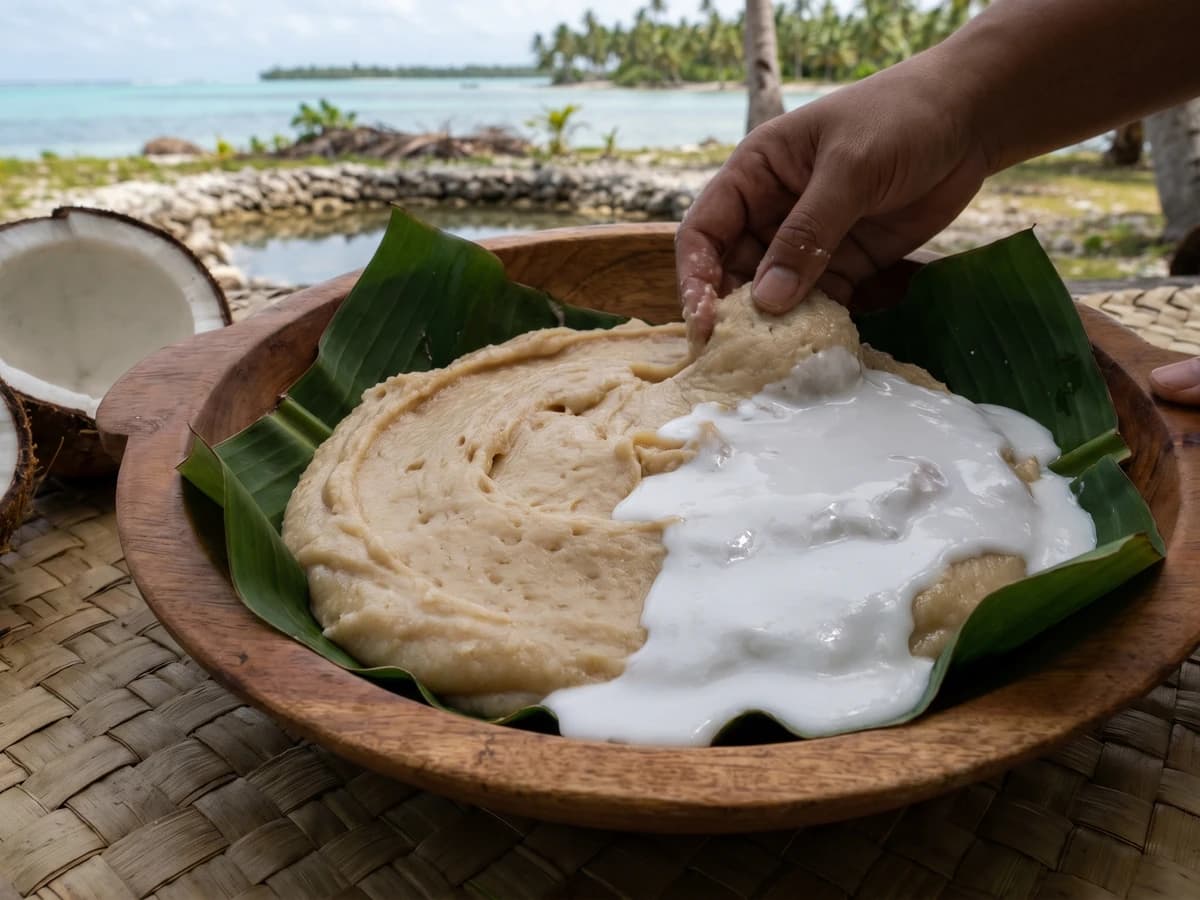
Taste and season with the remaining salt, adding more only if the pulaka tastes flat. Line a wooden bowl with banana leaf if you have it, mound the tulolo in the center, and spoon the remaining coconut cream over the top so it settles into the ridges. Serve warm and family-style, beside fish, greens, or the everyday corned beef and rice that may be on the table too.
1 serving (about 265g)
Culinary guides, cultural storytelling, and the editorial depth that makes cooking meaningful.
Discover Culinary ExplorerChef Makoa
Tuvalu grates pulaka from the pit, folds it with rich coconut cream, then cooks it in leaves until it sets dense and tender, coral-island food with the old root still holding the table.
Chef Makoa
Ripe breadfruit folded into leaf, weighted, and left to sour into mā, Tuvalu's old keeping-paste for the lean season, served warm with coconut cream beside pulaka and fish.
Chef Makoa
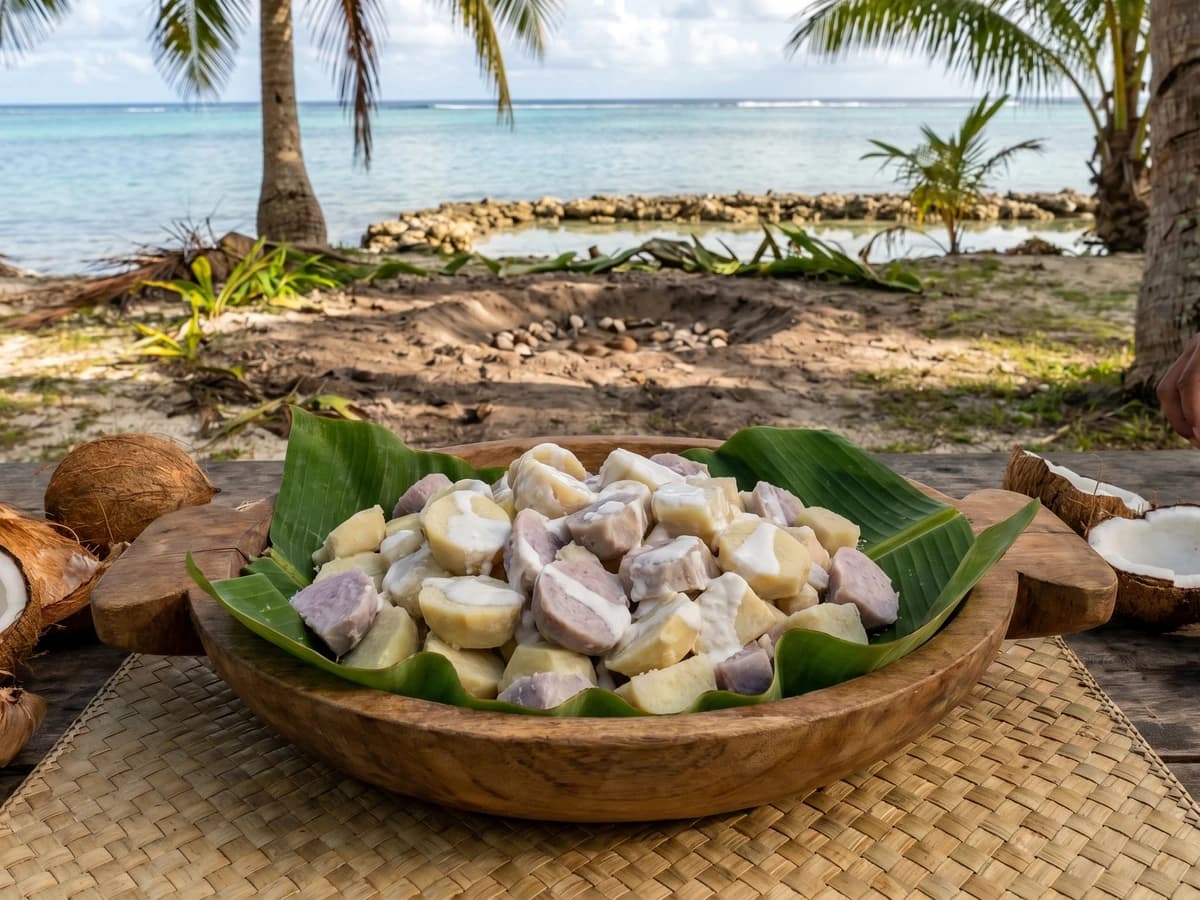
Tuvaluan pulaka, giant swamp taro hauled from coral pits, boiled until its bite softens, then eaten with lolo, coconut cream, fish, or whatever the kaiga, the family, has that day.
Chef Juliette
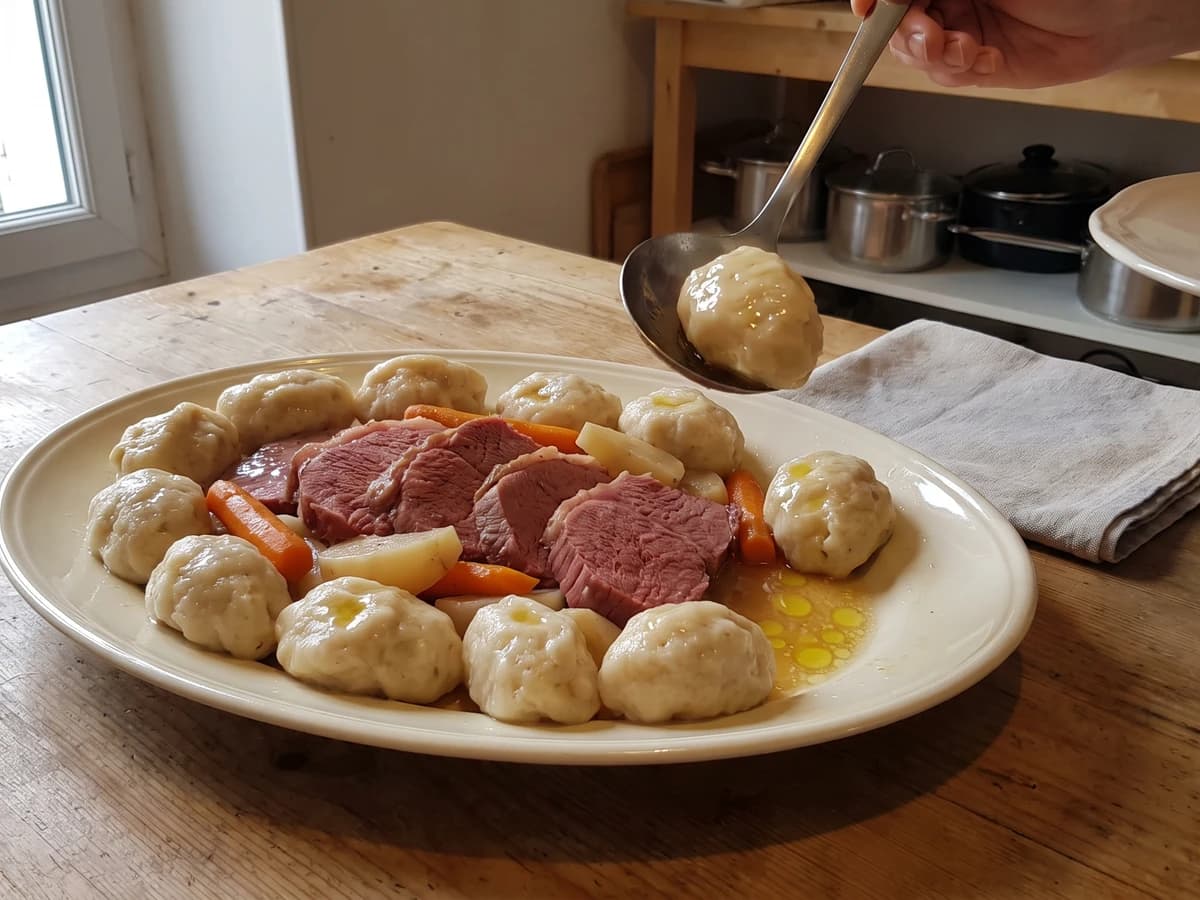
Boulettes au suif, poached beside salt beef, turn equal weights of flour and finely chopped suet into tender, rich dumplings. Keep the beef liquor at a bare tremble and the old garnish works beautifully at home.