Culinary Explorer
A cooking platform built around craft, culture, and the stories behind what we eat.
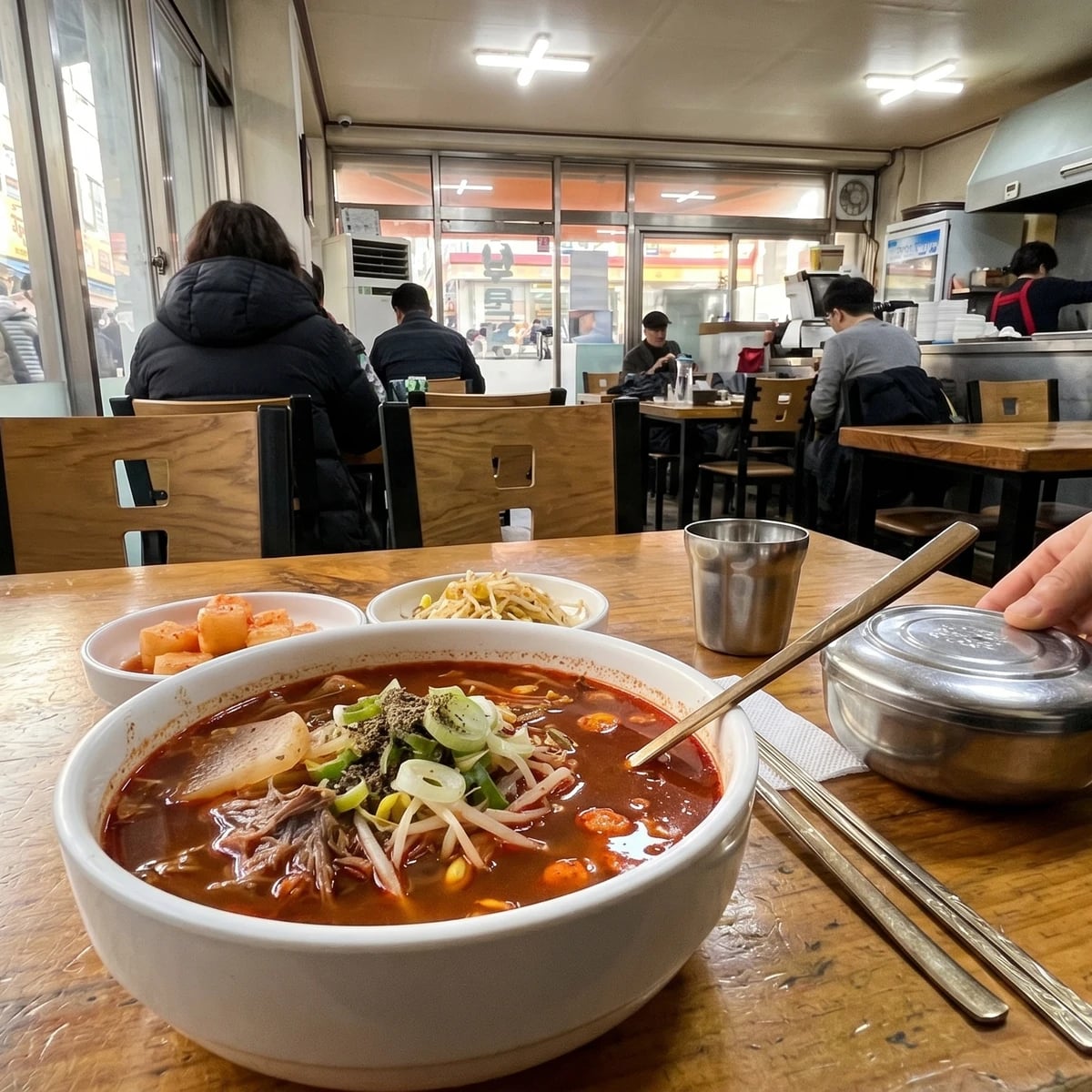
Ttaro-gukbap (Daegu Separated Rice Soup)
Created by Chef Jeong-sun
Daegu's red beef soup with brisket, radish, and scallion, served the stubbornly practical way: soup in one bowl, rice beside it, so the grains stay firm to the last spoonful.
Ttaro is the word people miss. It doesn't mean taro root. It means separate, and in Daegu that separation is the pride of the bowl: red beef soup in one vessel, white rice beside it, so each spoonful stays your choice.
Master Seong-nyeo corrected this once with only her chopsticks. She pushed a soft, swollen spoon of rice to the edge of the bowl and said, 'That one was fed too early.' A gukbap can be rice already in the soup, but ttaro-gukbap keeps the rice alive. The broth must be strong enough to meet plain rice, and the rice must stay firm enough to answer back.
Tonight the dish asks for a real broth, not rushed red water. Simmer beef until it gives up body, bloom gochugaru gently in oil, season the meat before it returns to the pot, and keep the vegetables plain: radish for sweetness, scallion for bite, soybean sprouts for crunch. Use gochugaru, not gochujang. Sugar has no work here.
Notebook 68 says seven cups finished broth for four bowls. That number matters. Too much broth and the seasoning goes thin; too little and the salt crowds the beef. 손맛 is real; I measure it anyway, so the Daegu bowl can travel without losing itself.
Ingredients
beef brisket (yangji) or beef shank
Quantity
500g
in 2 large pieces
cold water
Quantity
10 cups, plus more as needed
onion
Quantity
1/2 medium
peeled
| Ingredient | Quantity |
|---|---|
| beef brisket (yangji) or beef shankin 2 large pieces | 500g |
| cold water | 10 cups, plus more as needed |
| onionpeeled | 1/2 medium |
Where cooking meets culture.
Culinary guides, cultural storytelling, and the editorial depth that makes cooking meaningful.
Discover Culinary Explorer