Chef Thomas
All-Butter Shortbread Fingers
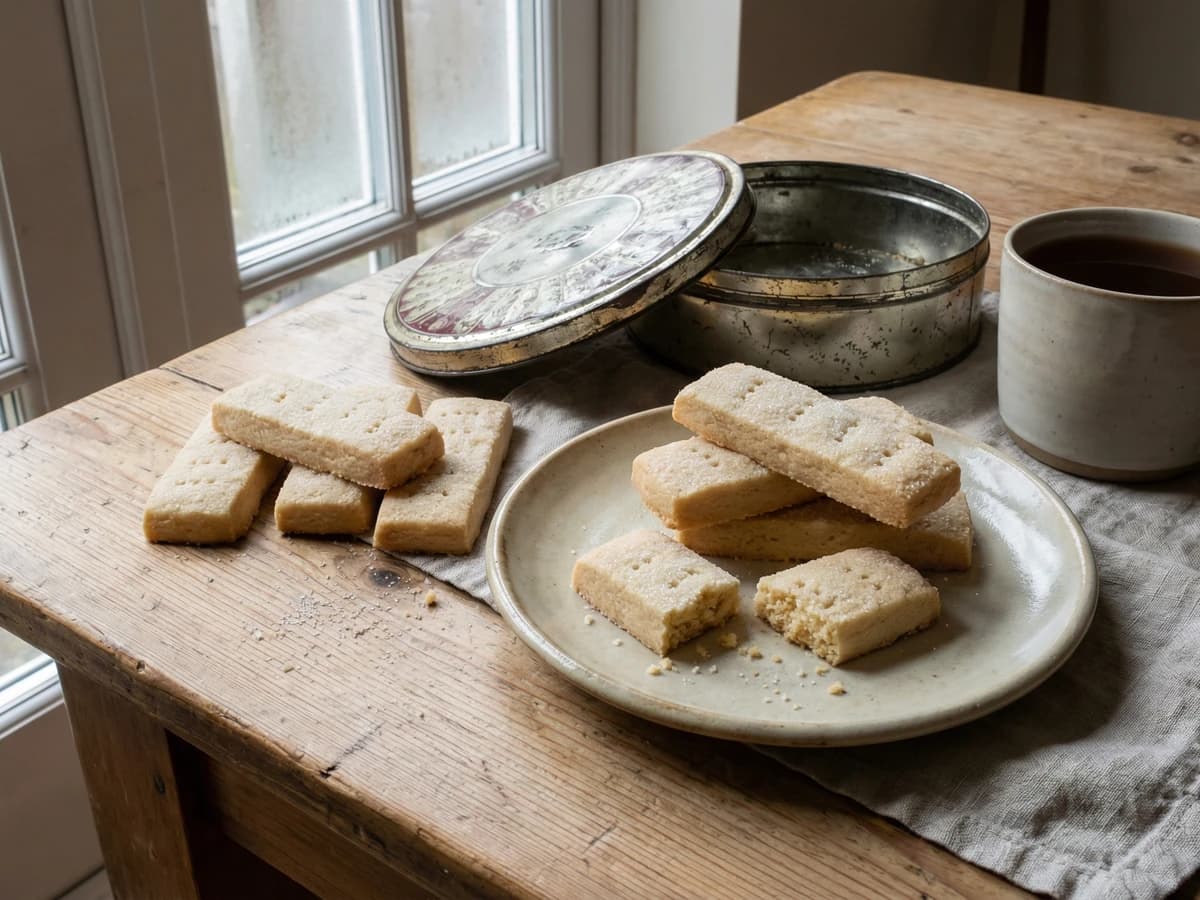
The plainest biscuit in the tin and the hardest one to stop eating, three ingredients and a slow oven turning good butter into something quietly perfect with a cup of tea.
A cooking platform built around craft, culture, and the stories behind what we eat.
Created by Chef Thomas
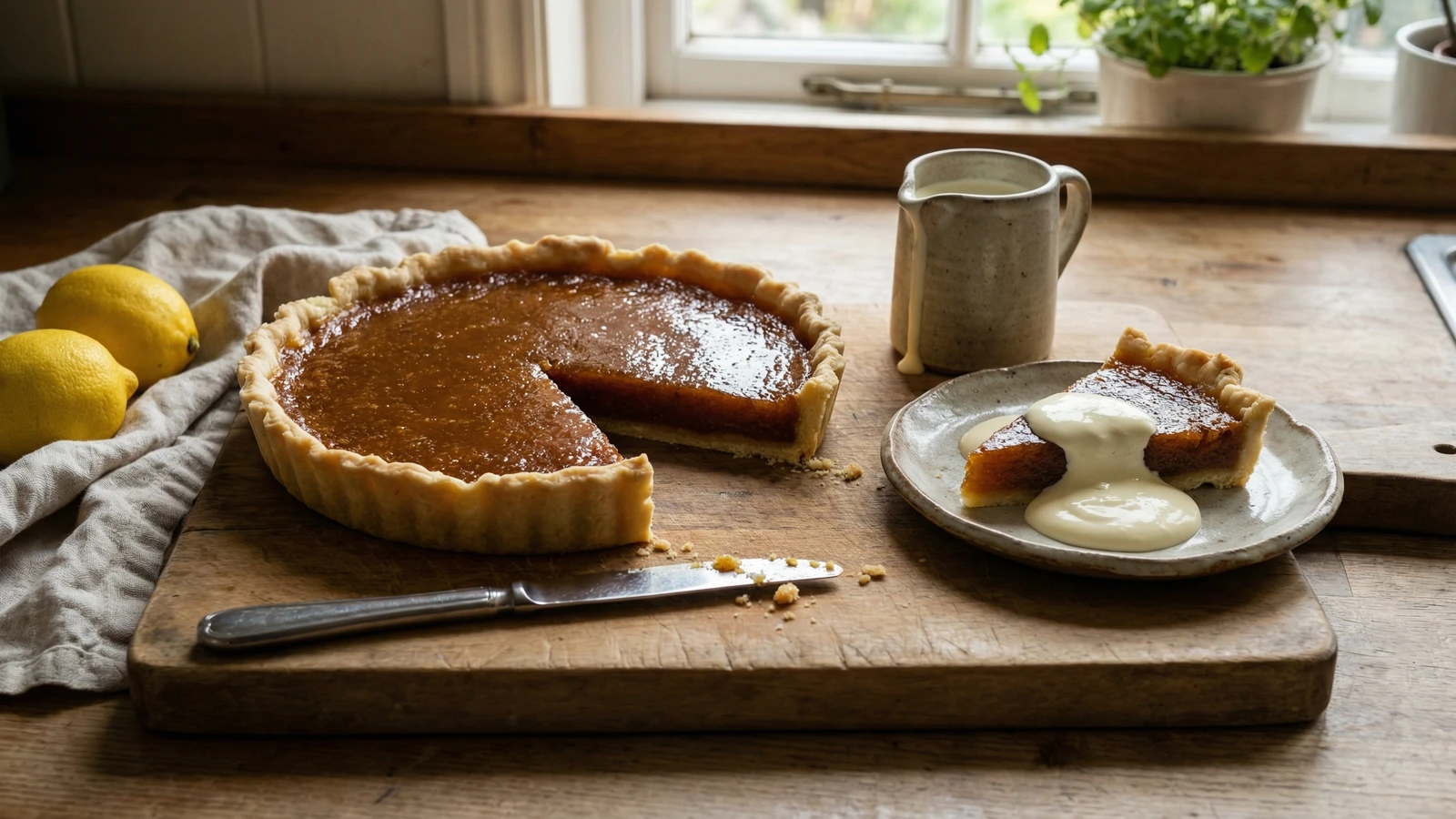
A proper treacle tart with a crisp shortcrust base and a sticky, lemon-bright filling, the kind of pudding that turns a wet Sunday into something worth staying in for.
There's a particular kind of January evening when the rain has been at the windows for hours and the only honest thing to do is bake. Not a project. Not a centrepiece. Something old and sweet and uncomplicated that smells of golden syrup and warm pastry and makes the whole house feel half a degree warmer than the thermometer says.
Treacle tart isn't really treacle at all. It's golden syrup, soaked into fresh breadcrumbs, lifted with the zest of two lemons so it doesn't turn cloying. That lemon is the whole secret. Without it, the filling is just sweet. With it, the filling has a brightness that cuts through and makes you want a second slice. The Victorians worked this out and the recipe has barely changed since, because there was nothing left to fix.
I make this most often in the deep middle of winter, when there's nothing in the garden and the market is quiet and the kitchen needs a reason to be on. A bag of flour, a tin of golden syrup, the heel of yesterday's loaf, two lemons from the bowl. That's the whole shopping list. We're only making dinner, and afterwards, we're making this.
I wrote it down in the notebook years ago: "Treacle tart. Cold rain. Cream from a jug. Enough." I haven't needed to revise the entry.
Quantity
200g
Quantity
100g
cubed
Quantity
1 tablespoon
Quantity
pinch
Quantity
1
Quantity
2-3 tablespoons
Quantity
450g
Quantity
175g
Quantity
2
zested
Quantity
2 tablespoons
Quantity
1
lightly beaten
Quantity
to serve
| Ingredient | Quantity |
|---|---|
| plain flour | 200g |
| cold unsalted buttercubed | 100g |
| caster sugar | 1 tablespoon |
| fine sea salt | pinch |
| large egg yolk | 1 |
| cold water | 2-3 tablespoons |
| golden syrup | 450g |
| fresh white breadcrumbs | 175g |
| unwaxed lemonszested | 2 |
| lemon juice | 2 tablespoons |
| large egglightly beaten | 1 |
| double cream or clotted cream (optional) | to serve |
Tip the flour, sugar, and salt into a large bowl. Add the cold butter and rub it in with your fingertips until the mixture looks like coarse breadcrumbs. Don't overwork it. You want to see flecks of butter still in there. Stir in the egg yolk, then add the cold water a tablespoon at a time, mixing with a knife until the dough just comes together. Press it into a flat disc, wrap it, and put it in the fridge for at least thirty minutes.
Roll the chilled pastry out on a lightly floured surface to about three millimetres thick. Lift it carefully into a 23cm loose-bottomed tart tin, easing it into the corners without stretching. Trim the edges, but leave a slight overhang for shrinkage. Prick the base lightly with a fork and put the tin back in the fridge for another twenty minutes. This second chill is the difference between a crisp base and a soggy one.
Heat the oven to 180C/160C fan. Line the chilled pastry case with baking parchment and fill with baking beans or rice. Bake for fifteen minutes, then lift out the parchment and beans and bake for another five minutes until the base looks dry and pale gold. Take it out and trim any pastry that's risen above the rim with a small sharp knife.
Put the golden syrup in a saucepan over a low heat. You're not cooking it, just loosening it so it pours easily and mixes properly. When it's runny and warm, take it off the heat. Stir in the breadcrumbs, the lemon zest, and the lemon juice. Let it sit for a few minutes. The breadcrumbs need to drink in the syrup before you add the egg. They should look swollen and glossy.
Once the breadcrumb mixture has cooled to barely warm, beat in the egg. Pour the filling into the pastry case and spread it level. It should come almost to the top. Don't worry if the surface looks a bit lumpy with breadcrumbs. It evens out as it bakes.
Bake for twenty-five to thirty minutes. The top should turn a deep, freckled gold and the filling should look set around the edges with the faintest wobble in the very centre when you nudge the tin. The kitchen will smell of warm lemon and burnt sugar, which is to say, of childhood for anyone who grew up in this country. Let the tart cool in the tin for at least twenty minutes before slicing. It needs to settle, or it'll run.
Cut into generous wedges and serve warm or at room temperature with a jug of cold double cream, or a spoonful of clotted cream if you're feeling deliberate about it. Custard works too, but the cold cream against the sticky, sweet filling is the version I keep coming back to.
1 serving (about 120g)
Culinary guides, cultural storytelling, and the editorial depth that makes cooking meaningful.
Discover Culinary ExplorerChef Thomas
The plainest biscuit in the tin and the hardest one to stop eating, three ingredients and a slow oven turning good butter into something quietly perfect with a cup of tea.
Chef Thomas
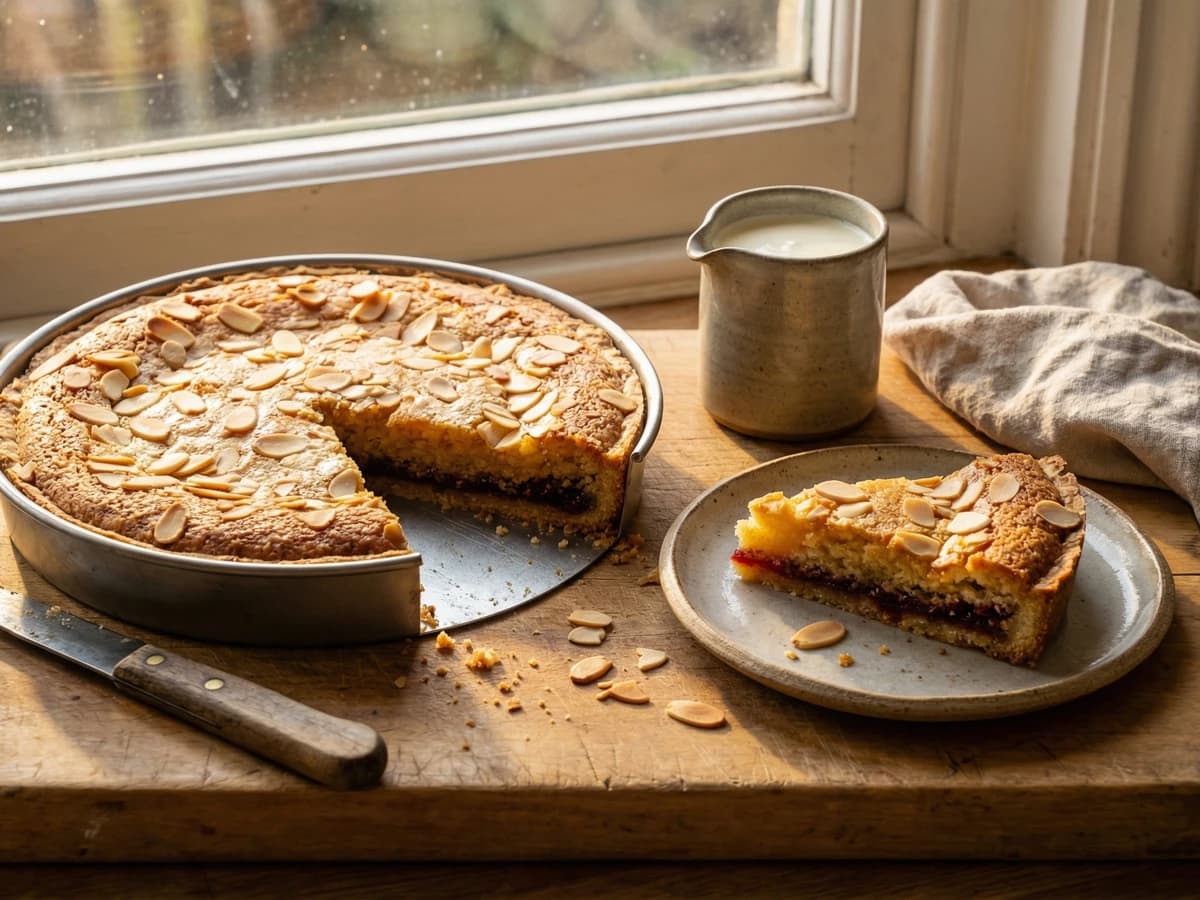
A proper Bakewell tart with buttery shortcrust, a thick layer of raspberry jam, and almond frangipane baked golden under a scattering of flaked almonds. No icing. No nonsense.
Chef Thomas
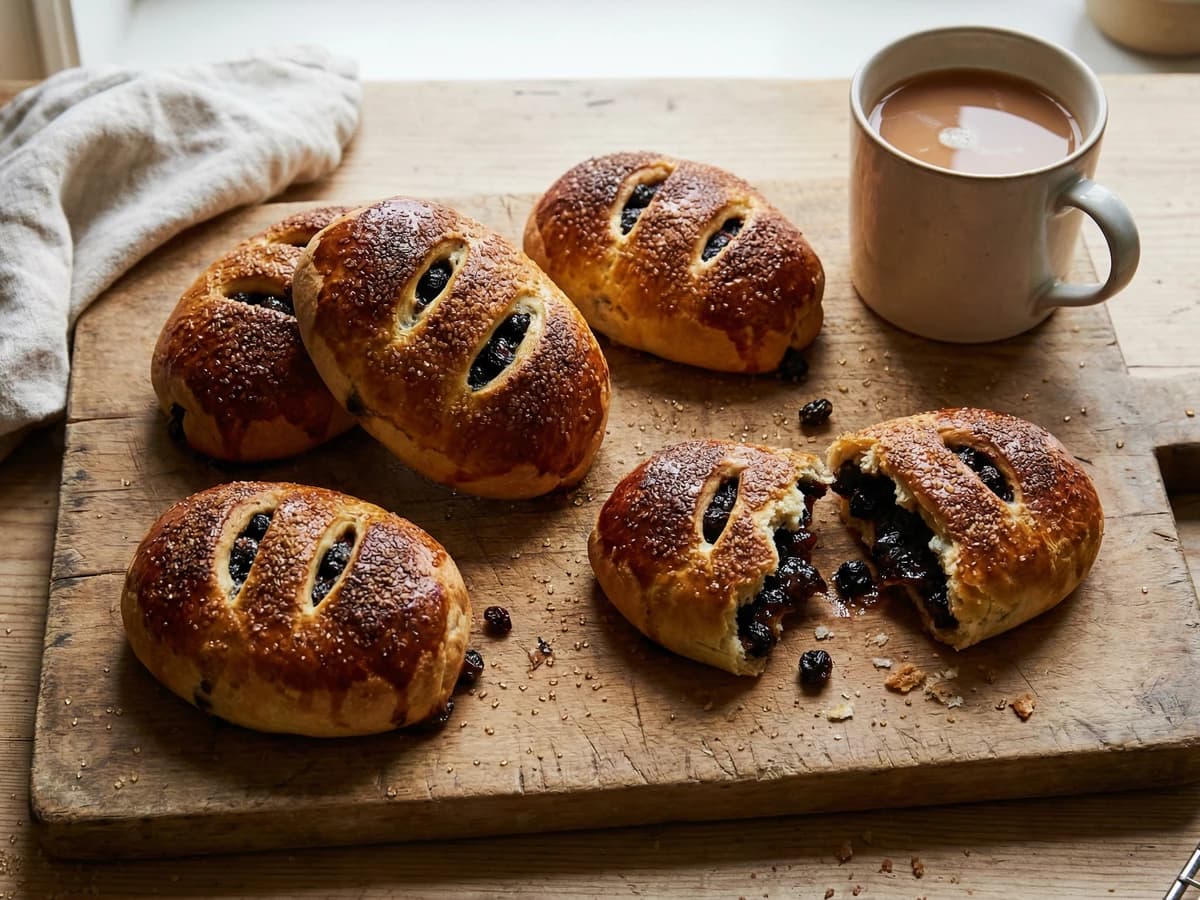
Oval pastries filled with rum-soaked currants and spice, baked until the tops crackle with sugar. The kind of thing to make on a wet Sunday afternoon when you want the kitchen to smell of something.
Chef Thomas
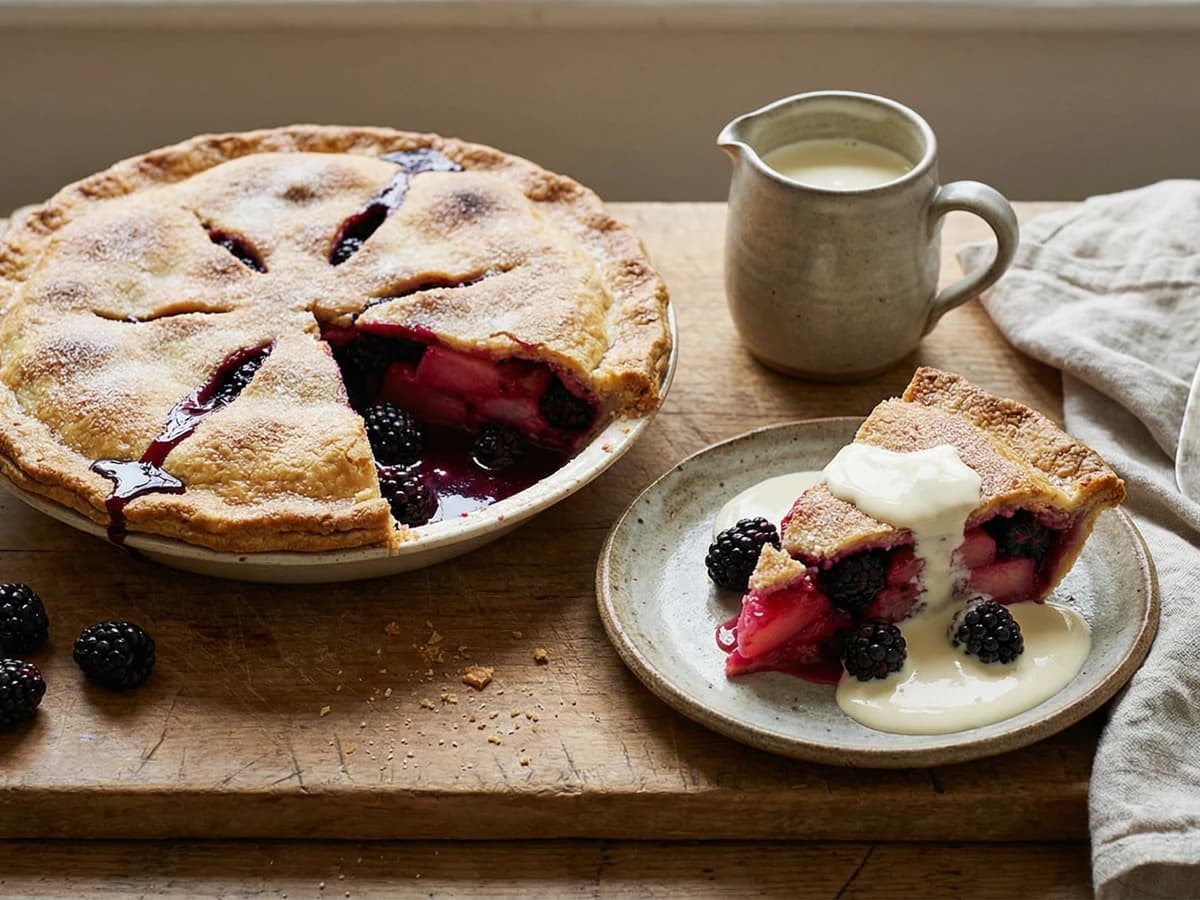
A proper hedgerow pie of Bramley apples and blackberries under a sugar-crusted pastry lid, the kind of pudding that turns a Sunday in September into something you'll remember.