Chef Lupita
Acúmara Tatemada al Comal
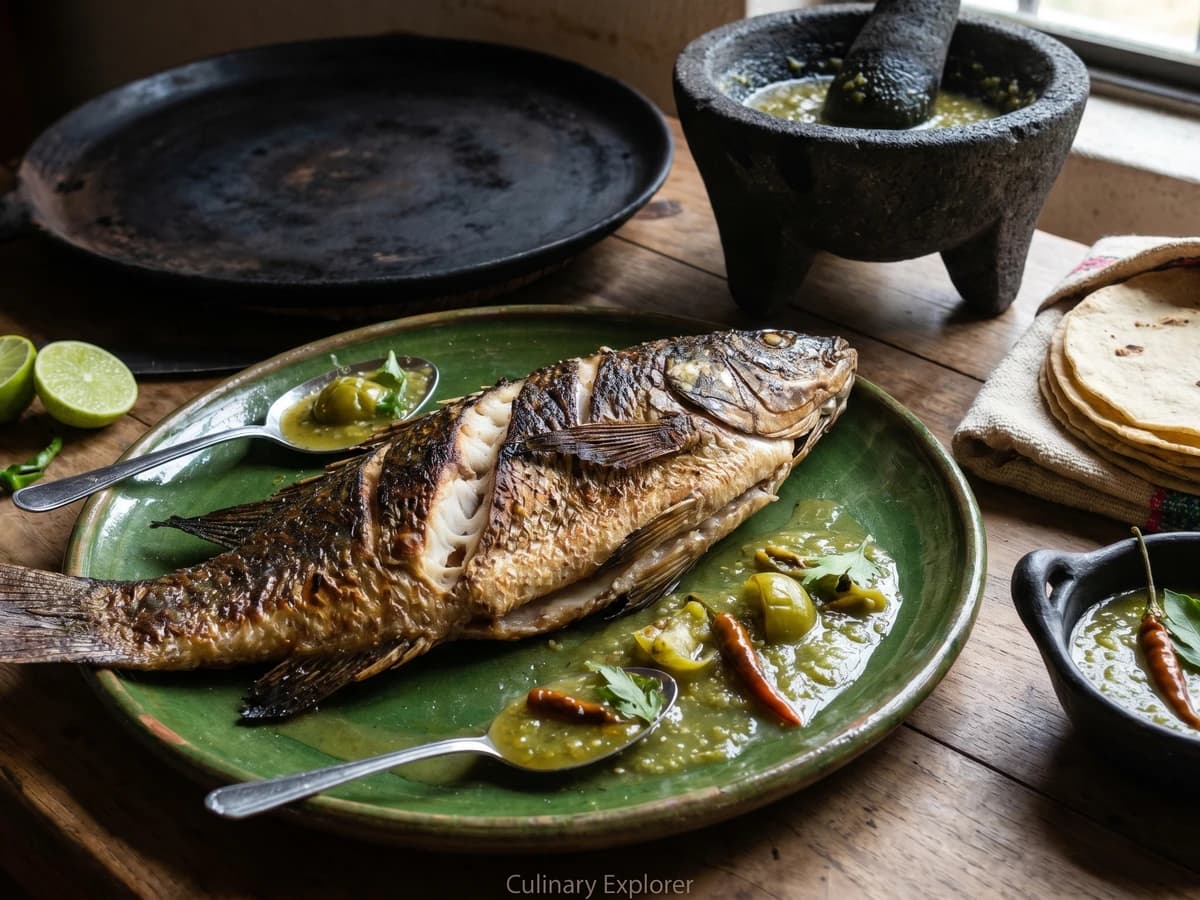
Michoacán's Lake Pátzcuaro acúmara, a whole kurucha from the lago tatemada on a comal de leña and served with chile perón atápakua, corn tortillas, and P'urhépecha discipline.
A cooking platform built around craft, culture, and the stories behind what we eat.

Created by
Papantla's Totonac chicken broth keeps itself clear and green with chayote, tomate de milpa, cebollina, cilantro, and epazote, a Veracruz pot that proves not every Mexican dish needs chile.
Veracruz, Totonacapan, Papantla and the villages around El Tajin, that is where pollo en achuchutl lives. Not the port dish with olives and capers. Not a red adobo. This is the inland Totonac table, the pot that smells like chayote vines, tomate de milpa, cebollina, cilantro, and epazote.
The broth is the discipline. You simmer chicken gently until the liquid stays clear and the fat rises in small golden beads. Then the milpa ingredients go in: chayote for body, tomate de milpa for clean acidity, cebollina for its green onion bite, epazote for that sharp smell that tells you you are not cooking from a supermarket packet. No chile ancho. No chipotle in the pot. Not every Mexican dish is red, and not every Mexican dish is hot. This is a 32-state cuisine.
A Totonac señora in Papantla taught me to bruise the herbs instead of blending them. She used the side of a knife on a wooden board because the molcajete was being used for salsa. Practical women built this cuisine. They were not decorating plates, they were feeding families with what grew near the house and what the mercado sold that morning.
Serve it in barro, with corn tortillas and black beans on the side. The broth should taste like restraint. Saber cocinar es saber vivir.
Totonacapan is the cultural region of northern Veracruz and neighboring Puebla, with El Tajin flourishing as a major Totonac center from roughly 600 to 1200 CE. Achuchutl belongs to domestic Totonac cooking, where pre-Columbian ingredients such as chayote, tomate de milpa, and epazote meet introduced herbs like cilantro in a clear household broth. Papantla is better known outside the region for vanilla, but its everyday cooking preserves the quieter milpa-based dishes that rarely travel as far as the famous ones.
Quantity
3 pounds
preferably thighs, drumsticks, and split breasts
Quantity
9 cups, plus more if needed
Quantity
1/2 medium
left in one piece
Quantity
4
lightly crushed
Quantity
1 tablespoon, plus more to taste
Quantity
2 medium
cut into 1-inch wedges, skin peeled only if tough
Quantity
12
husked, rinsed, and halved
Quantity
1 bunch
roots trimmed, 2 tablespoons finely sliced for serving and the rest cut into 2-inch lengths
Quantity
1 packed cup
2 tablespoons reserved for serving
Quantity
4 sprigs
leaves and tender tips picked
Quantity
for serving
warmed
Quantity
for serving
| Ingredient | Quantity |
|---|---|
| bone-in, skin-on chicken piecespreferably thighs, drumsticks, and split breasts | 3 pounds |
| cold water | 9 cups, plus more if needed |
| white onionleft in one piece | 1/2 medium |
| garlic cloveslightly crushed | 4 |
| kosher salt | 1 tablespoon, plus more to taste |
| chayotescut into 1-inch wedges, skin peeled only if tough | 2 medium |
| tomate de milpa (tomate milpero, small tomatillos)husked, rinsed, and halved | 12 |
| fresh cebollinaroots trimmed, 2 tablespoons finely sliced for serving and the rest cut into 2-inch lengths | 1 bunch |
| fresh cilantro leaves and tender stems2 tablespoons reserved for serving | 1 packed cup |
| fresh epazoteleaves and tender tips picked | 4 sprigs |
| hand-pressed corn tortillas (optional)warmed | for serving |
| frijoles negros de olla (optional) | for serving |
Put the chicken, cold water, onion, garlic, and salt in a heavy pot or clay olla. Bring it slowly to a bare simmer over medium heat. Skim the gray foam that rises in the first 10 minutes. This broth must stay clear. A hard boil makes it cloudy and rough, and that is not achuchutl.
Lower the heat until the surface barely moves. Cook uncovered for 30 minutes, skimming when you need to. The chicken skin will give the broth a light golden fat, enough for this dish. No lard here. La manteca es el sabor when the dish asks for it. This one asks for clean chicken broth.
While the chicken cooks, cut the chayotes into wedges and halve the tomate de milpa. Wash the cebollina, cilantro, and epazote well. Market herbs carry dirt, especially the tender ones. Pregúntale a las señoras del mercado and they will tell you the same thing: rinse twice, then taste what you bought.
Add the chayote wedges and halved tomate de milpa to the pot. Simmer gently for 20 to 25 minutes, until the chayote is tender but not collapsing and the tomate de milpa has softened into the broth. The tomato should give acidity, not turn the pot into salsa verde.
In a molcajete, pound the 2-inch pieces of cebollina with the cilantro stems, half of the cilantro leaves, the epazote leaves, and a pinch of salt until the herbs are bruised and wet, not pureed. If you do not have a molcajete, chop them finely with a heavy knife and press them with the side of the blade. You are opening the herbs so they season the broth without making it muddy.
Stir the bruised herb mixture into the pot and simmer for 5 minutes. Taste for salt. The broth should be clean, lightly tart from the tomate de milpa, green from the herbs, and gentle enough that you can taste the chicken. Epazote turns bitter when bullied, so do not cook it for half an hour. Así se hace y punto.
Turn off the heat and let the pot rest for 10 minutes. Remove the onion and garlic if they have not dissolved. Ladle a piece of chicken, chayote, tomate de milpa, and clear broth into deep clay bowls. Finish with the reserved sliced cebollina and cilantro. Serve with warm corn tortillas and frijoles negros de olla. Flour tortillas belong to the north. This is Veracruz, Totonacapan. Cada estado, su propia cocina.
1 serving (about 520g)
Culinary guides, cultural storytelling, and the editorial depth that makes cooking meaningful.
Discover Culinary ExplorerChef Lupita
Michoacán's Lake Pátzcuaro acúmara, a whole kurucha from the lago tatemada on a comal de leña and served with chile perón atápakua, corn tortillas, and P'urhépecha discipline.

Chef Lupita
Puebla's weekday adobo of pork shoulder braised in a thick guajillo and ancho sauce sharpened with vinegar, cumin, and clove. The deep red of a market spice stall, the dish a poblana cooks without thinking.

Chef Lupita
Loreto's pit-roasted clams, planted hinge-up in beach sand and tatemadas under a fast fire of dried romerillo brush, the resinous Baja desert shrub that gives this dish its smoke.

Chef Lupita
Oaxaca's eighth mole, the silky, almond-and-cinnamon almendrado, served over poached chicken. Mild, sweet, restrained, and a quiet rebuttal to anyone who thinks Mexican food has to be hot to be Mexican.